
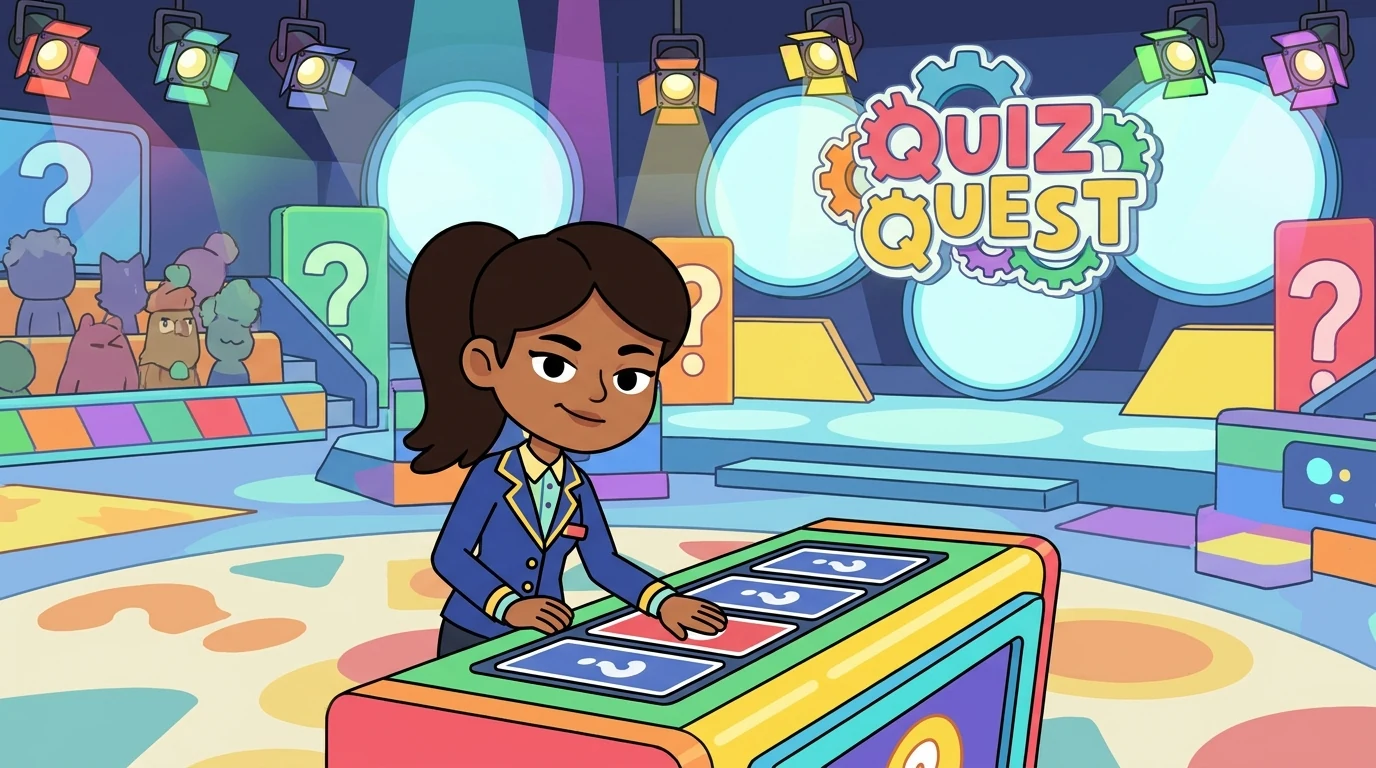
Recalla
RETRIEVAL PRACTICE (Advanced) — 'reach before you peek' still holds, but the advanced learner tunes the DIFFICULTY and DEPTH of the reach: retrieval helps most at the EDGE of recall (a reach that's too easy teaches little, one that's impossible just frustrates — aim for effortful-but-achievable); FREE recall (produce it with no cue) is stronger than CUED recall, which is stronger than mere RECOGNITION (picking it from a list); and ELABORATIVE retrieval (recall the fact AND explain why/how it connects) builds far more durable, transferable memory than bare fact-recall. The move deepens from 'reach' to 'reach at the right difficulty, with the least cueing you can manage, and explain as you go.'
Chapter — Recalla and the Reach That Was Too Easy to Count
Recalla’s rule — cover, reach, check — retired the beginner’s re-reading habit. The advanced contestants already pull answers from memory before peeking. What she teaches them now is that not all reaching is equal: a reach can be too easy to teach anything, the kind of reaching matters enormously, and the deepest retrieval isn’t recalling a fact at all — it’s recalling it and explaining it. The beginner learns to reach. The advanced learner learns to reach at the right difficulty, in the strongest form.
“You think reaching always works,” she says, hand over the cards. “But a reach for something you just saw, ten seconds ago, is barely a reach — the fact never left, so pulling it back builds almost nothing. And a reach for something you’ve never encountered is just a blank wall — frustrating, not useful. Retrieval does its real work in a narrow band: effortful but achievable. Too easy teaches nothing. Too hard teaches nothing. The edge teaches everything.”
The reach that taught her was one that felt great and did nothing.
She’d re-read a fact, then immediately covered it and “reached” for it — and got it instantly, smoothly, correctly. She felt productive: I retrieved it! But the next day it was gone. Emcee explained why. “You retrieved it one second after reading it. It hadn’t gone anywhere — you weren’t reaching, you were just holding. Retrieval strengthens memory in proportion to the effort of the reach, and there was no effort. An easy reach right after studying is almost as useless as re-reading.” Recalla was stunned — she’d been doing the right technique at the wrong difficulty. “Wait until it’s starting to fade,” Emcee said, “so the reach is real. And when it comes back too easily — stretch the gap, or make the reach harder, until it’s work again. The struggle isn’t a side effect of retrieval. The struggle is the retrieval.”
So advanced Recalla tuned her cover-reach-check on three dials:
Difficulty — aim for the edge. Reach for a fact when it’s starting to slip, not while it’s fresh. If a reach is effortless, lengthen the gap or drop the cues until it’s effortful-but-achievable. “Comfortable retrieval is a warning sign. Mild struggle is the sweet spot. Total blankness means back off — you needed to learn it first.”
Form — reach with the fewest cues. There’s a strength ladder: recognition (pick it from a list — weakest), cued recall (a hint jogs it — medium), free recall (produce it from nothing — strongest). “Multiple-choice lets you recognize. But if you can only recognize a fact, you don’t really have it — you have a doorbell that rings when you see it. Practice free recall — cover everything, produce it cold — and the fact becomes yours, summonable without a menu.”
Depth — reach AND explain. Don’t just retrieve the fact — retrieve why it’s true, how it connects. “Bare recall gives you a fact on a string. Elaborative recall — ‘the answer is X, because Y, which connects to Z’ — ties the fact into a net, and nets hold. Explaining as you reach is the difference between memorizing and understanding.”
The nervous kid, Sam, came back for the advanced season and proudly showed Recalla his new habit: multiple-choice self-quizzing, reaching before checking, every time. “I do exactly what you said!” Recalla smiled — and gently raised the bar.
“You’re recognizing,” she said. “Watch.” She gave him a fact via multiple-choice; he picked it right, pleased. Then she took the options away and asked him to produce it cold. He couldn’t — not without the menu. “You can pick it from four,” she said, “but you can’t summon it from zero. That’s recognition, the weakest rung. On the real quiz, some questions won’t hand you a menu — and even the ones that do, recognition-only knowledge crumbles under a good distractor.” She had him free-recall it — cover everything, say it from nothing — and then, the advanced step, explain why. He struggled, produced it, explained it haltingly. “That one you’ll have next month,” she said. “Recognition is a doorbell. Free recall with an explanation is ownership.”
An advanced contestant objected on efficiency. “Free recall and explaining takes way longer than just checking a box. Isn’t recognition-practice faster?” Recalla nodded — the fluency trap, back in advanced clothes. “Faster, and weaker — the same trade you learned as a beginner, one level up,” she said. “Recognition-practice feels efficient because it’s easy and you get lots of ’right’s. But easy retrieval is weak retrieval — you already know that. Free recall is slower and harder per fact, and each rep is worth several recognition reps because the reach is real.” She tapped the cards. “And explaining-as-you-recall isn’t extra time wasted — it’s the step that makes the fact transfer to a question worded differently than you practiced. Bare recall gets you the fact you drilled. Elaborative recall gets you the fact and its neighbors, so a reworded question can’t dodge you.” She handed him a card, face down. “Cold. No menu. And tell me why.” He did — slowly, effortfully, completely. “That felt like actual work,” he said. “The work is the point,” said Recalla. “It always was. Now it’s aimed better.”
That night Recalla ran her review the advanced way: she waited until each fact was starting to fade (the edge), covered everything and produced it free (no menu, no cues), and for each one added the elaborative step — and here’s why, and here’s what it connects to. It was slower and harder than her beginner reaching, and every rep bit deeper. The facts she practiced this way didn’t just survive to the next quiz — they connected to each other, so reworded questions couldn’t shake them loose.
“Reach before you peek — that’s the floor,” she said, resting her hand over the cards. “But the advanced reach is tuned: aim for the edge of forgetting where the struggle is real, pull with the fewest cues you can manage — free recall over recognition — and don’t just retrieve the fact, retrieve why. An easy reach teaches nothing. A hard, cue-free, explained reach teaches everything. The struggle isn’t the cost of learning. It is the learning.”
The QuizQuest ensemble
Recalla is part of QuizQuest's distributed-narrative cast. Each character embodies a different curricular primitive; together they teach the full subject.
-

Nix
Elimination — crosses out the options that can't be right to narrow the field down to the answer
-

Gauge
Confidence calibration — checks HOW sure you are before you lock in, so your certainty matches your correctness
-

Bluff
The confident-wrong contestant — gives a fast, sure, WRONG answer; the one the host must catch (misconception-spotting)
-

Switcheroo
Interleaving — jumps between subjects round to round so recall stays flexible instead of crammed
-

Tick
Speed-vs-accuracy — the buzzer-timer who trades a little speed to get the answer right
-
Encore
Spaced recall — brings a fact BACK a few rounds later so it moves into long-term memory
-

Facta
Fact vs. opinion — sorts what is checkable and true from what is only a view
-

Hinta
Clue-reading — reads the question stem for the hint hidden inside it before answering
-

Nuance
The almost-right answer — knows the close-but-not-complete answer and why the full answer is better