
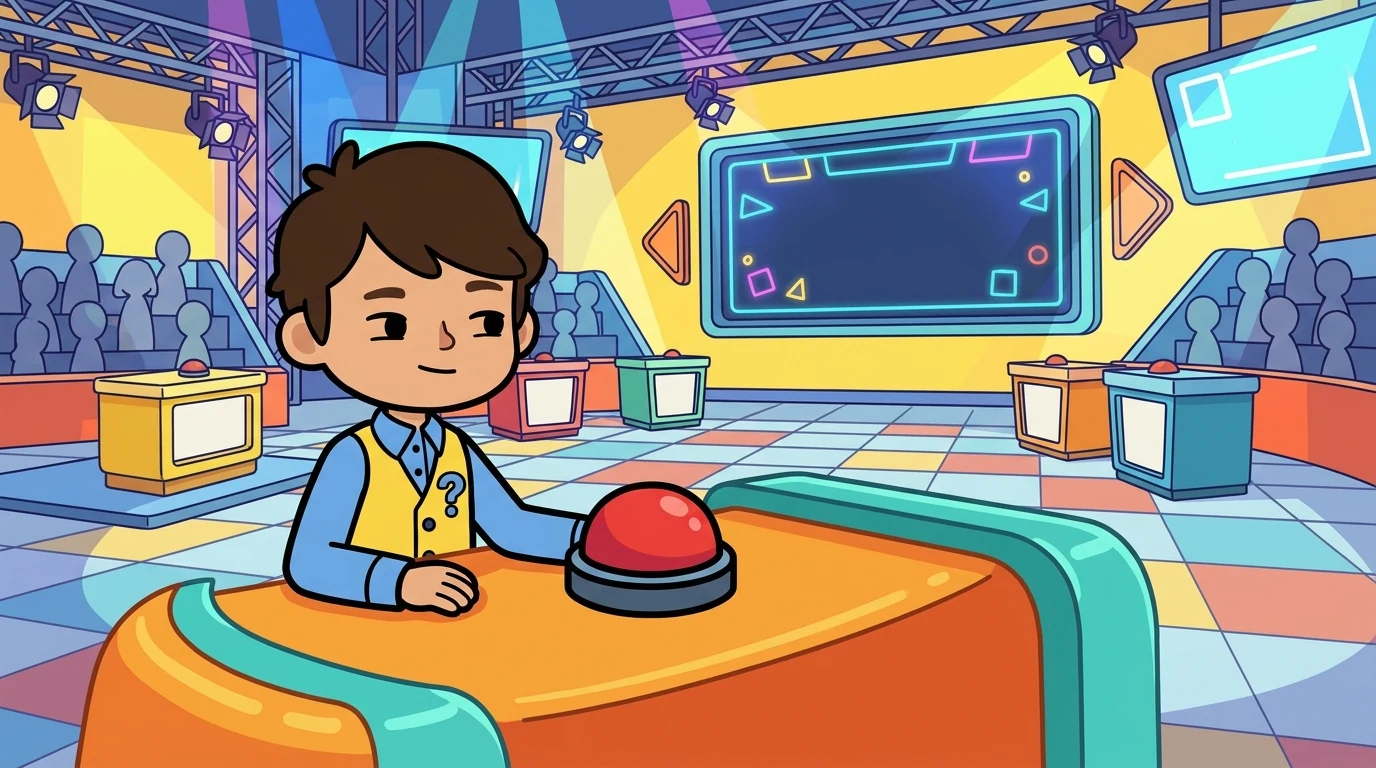
Tick
SPEED-VS-ACCURACY (Advanced) — 'read the whole question before committing' still holds, but the advanced skill is TIME ALLOCATION across a whole test: budgeting time per question by difficulty, skipping-and-returning instead of grinding on one, knowing when to guess-and-move (don't spend five minutes on a two-point question), and avoiding the over-check (re-reading an easy answer you already got right wastes the time a hard question needs). The advanced move shifts from 'slow down on THIS question' to 'spend each unit of time where it earns the most points across the WHOLE test.'
Chapter — Tick and the Question He Learned to Walk Away From
Tick’s first lesson tamed his lightning hand: read the whole question, catch the NOT and the EXCEPT, trade one second for accuracy. The advanced contestants no longer rush single questions. What wrecks them now is the opposite failure — and it’s invisible while it’s happening: they read carefully, answer accurately, and still lose, because they spent their careful minutes in the wrong places. They ground for six minutes on one impossible question while eight easy points sat unanswered at the end, waiting for time that never came.
“You learned not to rush a question,” he says, hand resting beside the buzzer. “Now learn something harder: your time is a budget for the whole test, not for each question one at a time. A minute spent rescuing one brutal question is a minute stolen from three easy ones you’d have aced. Accuracy on this question can cost you points on those three. The advanced race isn’t ‘right on each question.’ It’s ‘most points across all of them.’”
The round that taught him, he answered every question he attempted correctly — and lost badly.
There’d been one monster question early on, and Tick, proud of his new carefulness, refused to leave it unsolved. He read it, re-read it, worked it, checked it — five full minutes of careful, accurate effort — and got it right. And then the round ended with a third of the questions blank, untouched, because his five careful minutes on one hard question had eaten the time for six easy ones. He’d been accurate and disastrous at once.
Emcee showed him the scoreboard. “Every question you answered, you got right,” he said. “And you scored last. You budgeted like each question deserved infinite time. But a two-point question doesn’t deserve five minutes — not when there are ten easy two-pointers you never reached. Careful on one question isn’t the goal anymore. Careful across the whole test is.” Tick was stunned — his hard-won carefulness had become a new way to lose.
So advanced Tick built the time-allocation move on top of his read-fully habit:
Budget by difficulty and points. Fast questions get seconds; hard ones get a capped investment. “Decide, before you’re deep in it, how much a question is worth spending. A two-pointer gets a two-pointer’s worth of time — then you move, answered or not.”
Skip and return. Hit a wall? Mark it, put down a best-guess if guessing is free, and move on — collect the easy points first, come back to the monster with whatever time remains. “The easy points at the end are worth exactly as much as the hard ones at the start. Get the cheap ones before they expire.”
Know the guess-and-move moment. When more time won’t help (you genuinely don’t know, and staring won’t change that — Nix would agree), guess if guessing is free and leave. “Grinding a question you can’t crack isn’t persistence. It’s donating your test to the clock.”
Don’t over-check. Re-reading an easy answer you already nailed, three times, out of anxiety — that’s the quiet time-thief. “Over-checking feels responsible. It’s not. It spends a hard question’s minutes reassuring you about an easy one you already had. Check enough, then trust it and move.”
The confident contestant handed Tick a whole mock-test and a running clock. Bluff, naturally, buzzed instantly on everything and finished first with a terrible score. Tick played it his new way — and narrated.
Question 1, easy: answered in seconds, no re-check (“I got it; re-reading is theft”). Question 2, a NOT-trap: read fully, caught the NOT, answered — the old lesson, still on. Question 3, a monster: Tick felt the old urge to conquer it, then checked his budget. “Not worth five minutes with eight questions left. Best guess, mark it, move.” Questions 4–10, mostly easy: swept them fast, banked the cheap points. Then — with time deliberately reserved — he returned to the monster and gave it the minutes he’d saved, not stolen.
Final score: far ahead of the accurate-but-stuck version of himself. “Same carefulness per question I chose to answer,” he said. “But I spent the time where it earned points, skipped the money-pit until last, and refused to over-check the easy ones. Reading fully was lesson one. Spending wisely is lesson two.”
An advanced contestant worried at the tension. “But skipping a question feels like giving up. And leaving a hard one unsolved to do easy ones feels lazy — like I’m avoiding the challenge.” Tick nodded, because pride is exactly the trap. “Skipping the monster to bank the easy points isn’t avoiding the challenge,” he said. “It’s refusing to let one question hold the other ten hostage. The hard question will still be there when you come back — now with reserved time and a calmer head, and sometimes an answer that clicked while you were doing the easy ones. Grinding it first, out of pride, is how you leave a third of the test blank.” He tapped the clock. “Persistence has a place — at the end, with the time you saved, not at the start, spending time you’ll need. Bank the sure points first. Fight the monster with what’s left.”
The contestant admitted, “I always attack the hardest one first to ‘get it over with.’” “And it eats the time the easy ones needed,” said Tick. “Easy points first. Always. The monster waits.”
That night Tick ran a full timed mock-test the advanced way: fast answers uncheck-and-move, trap-questions read fully, monsters capped and skipped-to-the-end, easy points swept before they expired, and every reserved minute spent on the hard questions last. He answered fewer questions perfectly than his over-careful self — and scored far higher, because the points landed where the time was worth the most.
“A right answer a beat late beats a fast wrong one — that’s still true, per question,” he said, resting his hand on the buzzer. “But across a whole test, the advanced truth is different: spend each minute where it earns the most points. Budget by difficulty, skip-and-return to the monster, guess-and-move when staring won’t help, and stop over-checking the easy ones you already got. Careful on one question was lesson one. Careful with your whole clock is the one that wins the round.”
The QuizQuest ensemble
Tick is part of QuizQuest's distributed-narrative cast. Each character embodies a different curricular primitive; together they teach the full subject.
-

Recalla
Retrieval practice — pulls a fact from memory instead of re-reading it; recalling it (the testing effect) is what makes it stick
-
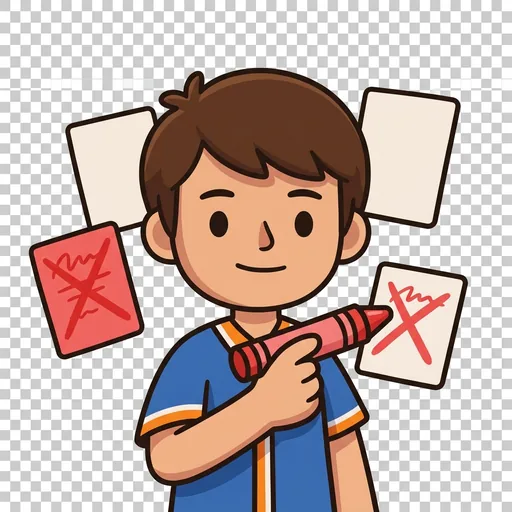
Nix
Elimination — crosses out the options that can't be right to narrow the field down to the answer
-
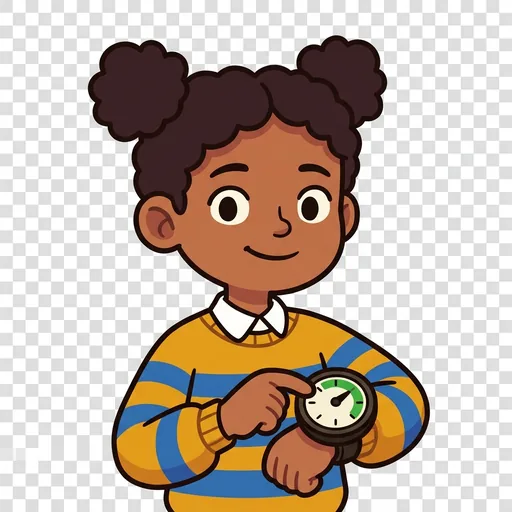
Gauge
Confidence calibration — checks HOW sure you are before you lock in, so your certainty matches your correctness
-

Bluff
The confident-wrong contestant — gives a fast, sure, WRONG answer; the one the host must catch (misconception-spotting)
-

Switcheroo
Interleaving — jumps between subjects round to round so recall stays flexible instead of crammed
-
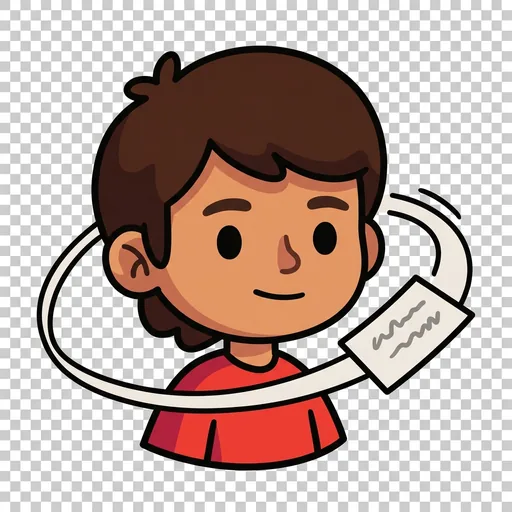
Encore
Spaced recall — brings a fact BACK a few rounds later so it moves into long-term memory
-

Facta
Fact vs. opinion — sorts what is checkable and true from what is only a view
-

Hinta
Clue-reading — reads the question stem for the hint hidden inside it before answering
-

Nuance
The almost-right answer — knows the close-but-not-complete answer and why the full answer is better