Reck
SYSTEMATIC GUESS-AND-CHECK — *make a reasoned guess, check it against the problem, and let the miss tell you which way to nudge the next guess.*
Loading audio…
Press play to listen along. The line being read lights up as you go.
Show full transcript
Loading transcript…
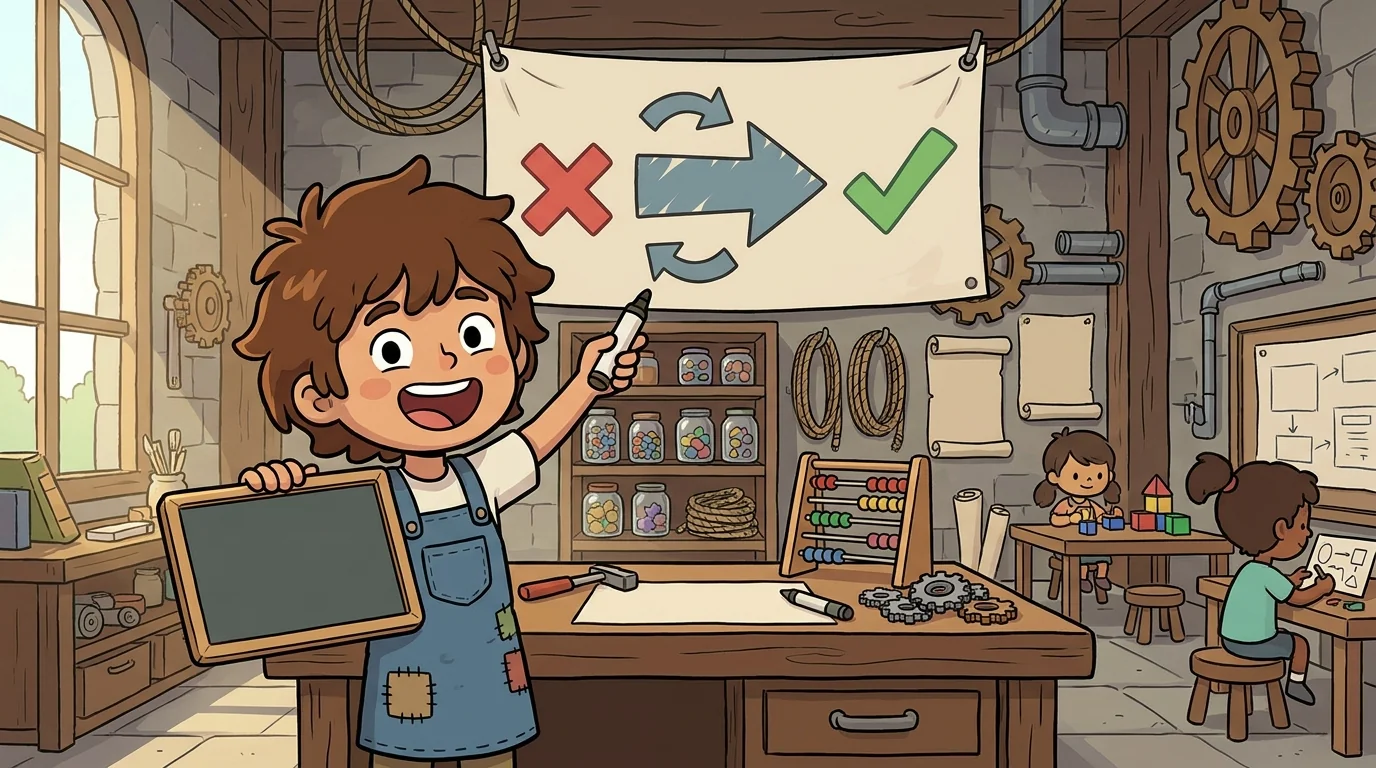
Reck worked at the front of the ReckonQuest workshop, right where nervous new solvers arrived, and Reck had one message printed on a big friendly banner over the desk: A guess is not a gamble. A guess is a measurement.
Most kids arrived believing guessing was cheating — the thing you did when you didn't really know. Reck cheerfully disagreed. When a riddle said there are 8 heads and 26 legs; how many chickens and how many cows?, Reck didn't freeze and didn't reach for algebra. Reck guessed. "Let's say 4 chickens and 4 cows. That's eight heads — good. Legs? Four chickens is 8 legs, four cows is 16 legs, that's 24. We wanted 26. So we're two legs short." Then came the part that made Reck's eyes light up. "Two legs short means too many chickens and not enough cows — a cow has more legs. So swap one chicken for one cow and check again." Guess, check, let the miss steer the next guess. "The wrong answer isn't a dead end," Reck said. "It's an arrow. It tells you which way to go."
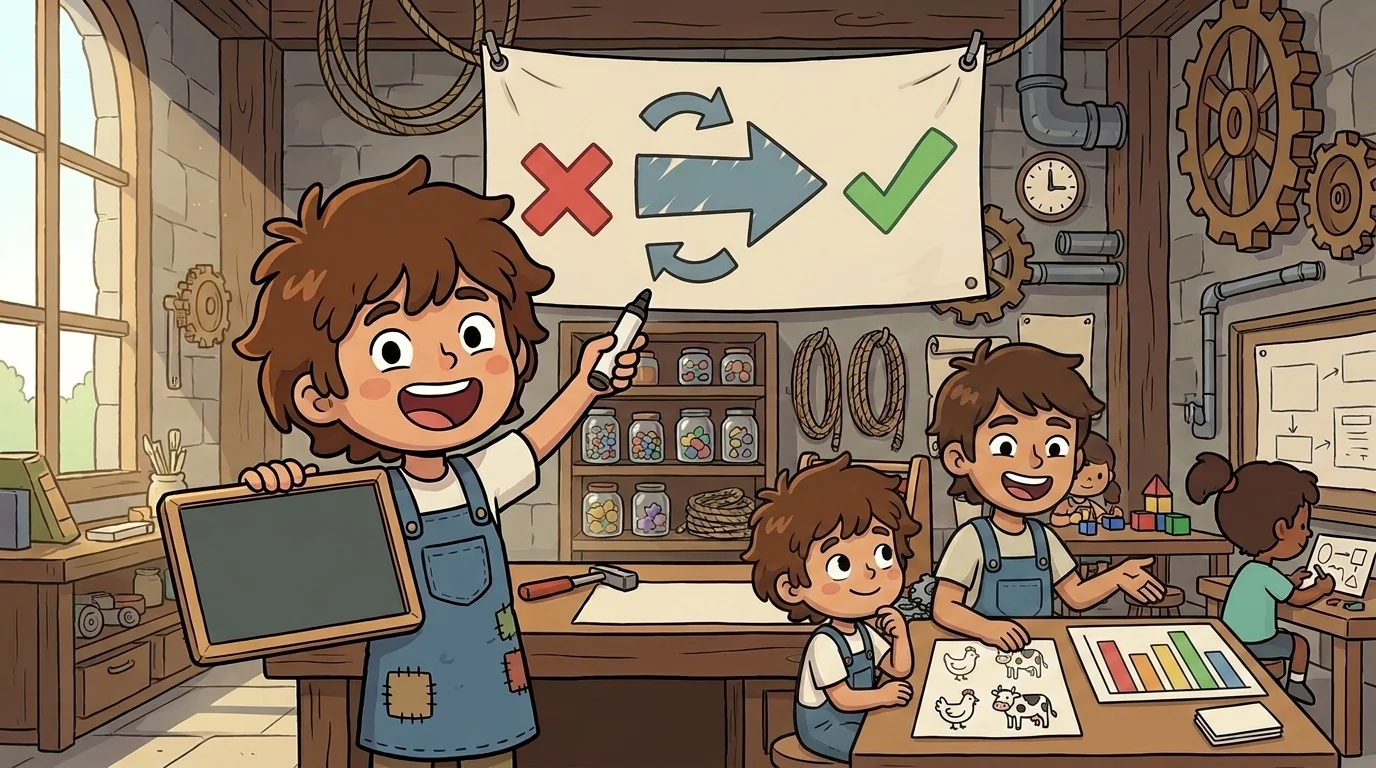
Reck learned this the day guessing stopped being shameful.
As a young solver, Reck had been terrified of guessing — a teacher long ago had made "just guessing" sound like a confession of stupidity. So Reck sat frozen in front of riddles, waiting to magically know, and knew nothing, and felt worse. Then Cass, the workshop's mentor, sat down and did something outrageous: Cass guessed, out loud, wrong, on purpose. "5 cows," Cass said. "Let's check. Nope, too many legs. Wonderful — now I know it's fewer than 5, and I learned that in ten seconds." Cass grinned. "A guess you check is worth more than an hour of frozen staring. The miss is free information. You're not gambling — you're measuring how far off you are, and then measuring again, closer."
Reck never froze in front of a riddle again.
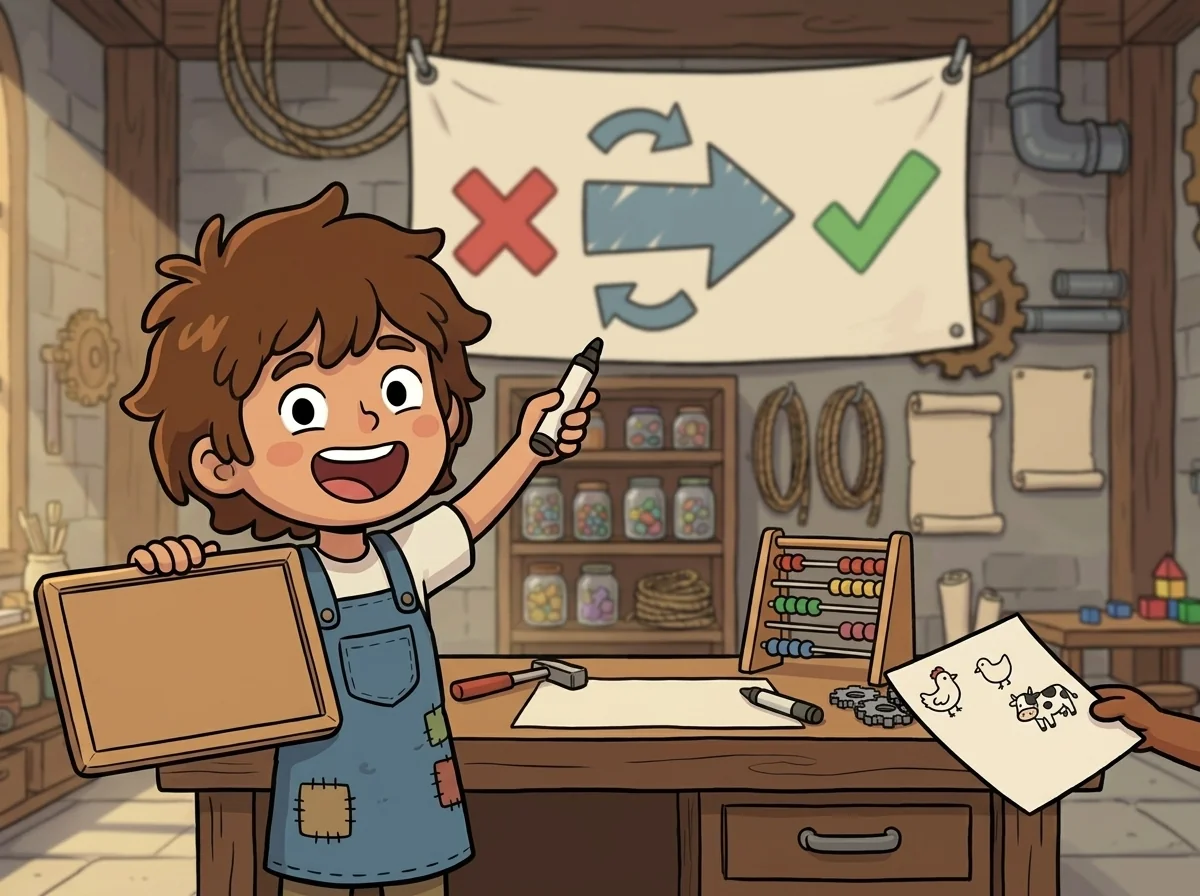
When the kid arrived, they had the frozen look Reck knew so well.
"You don't have to know the answer," Reck said gently, sliding over the chickens-and-cows riddle. "You just have to be brave enough to guess and check. Pick any numbers that fit the heads. Doesn't matter if they're wrong — wrong is where we start. Then we check the legs and let the miss tell us where to go next."
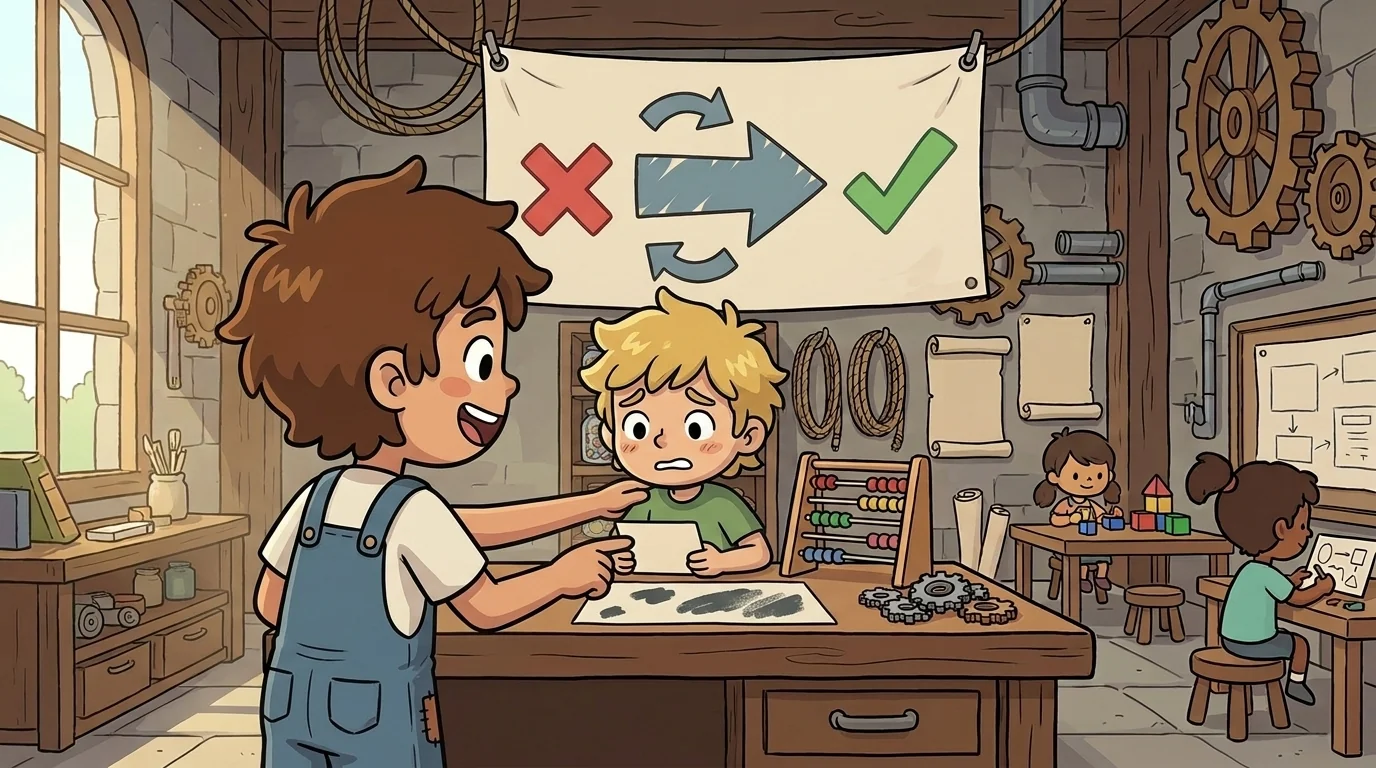
The kid guessed 4 and 4, checked, came up two legs short. "See — wrong," they said, deflating.
"Not wrong. Informative," Reck said, and there was such genuine delight in it that the kid looked up. Reck never treated a miss as failure — a miss just earned a bright "great, now we know which way to nudge." "Two legs short. A cow has more legs than a chicken, so we need one more cow and one fewer chicken. Try 3 chickens, 5 cows." The kid tried: 3 chickens (6 legs) + 5 cows (20 legs) = 26 legs. Exactly. The kid blinked at it. "That's... that's it? But I just guessed."
"You guessed, and then you listened to the miss," Reck said. "The first guess wasn't the answer. It was the thing that pointed at the answer. Every miss cut the distance in half. That's not luck — that's a method, and it works even when the algebra feels scary."
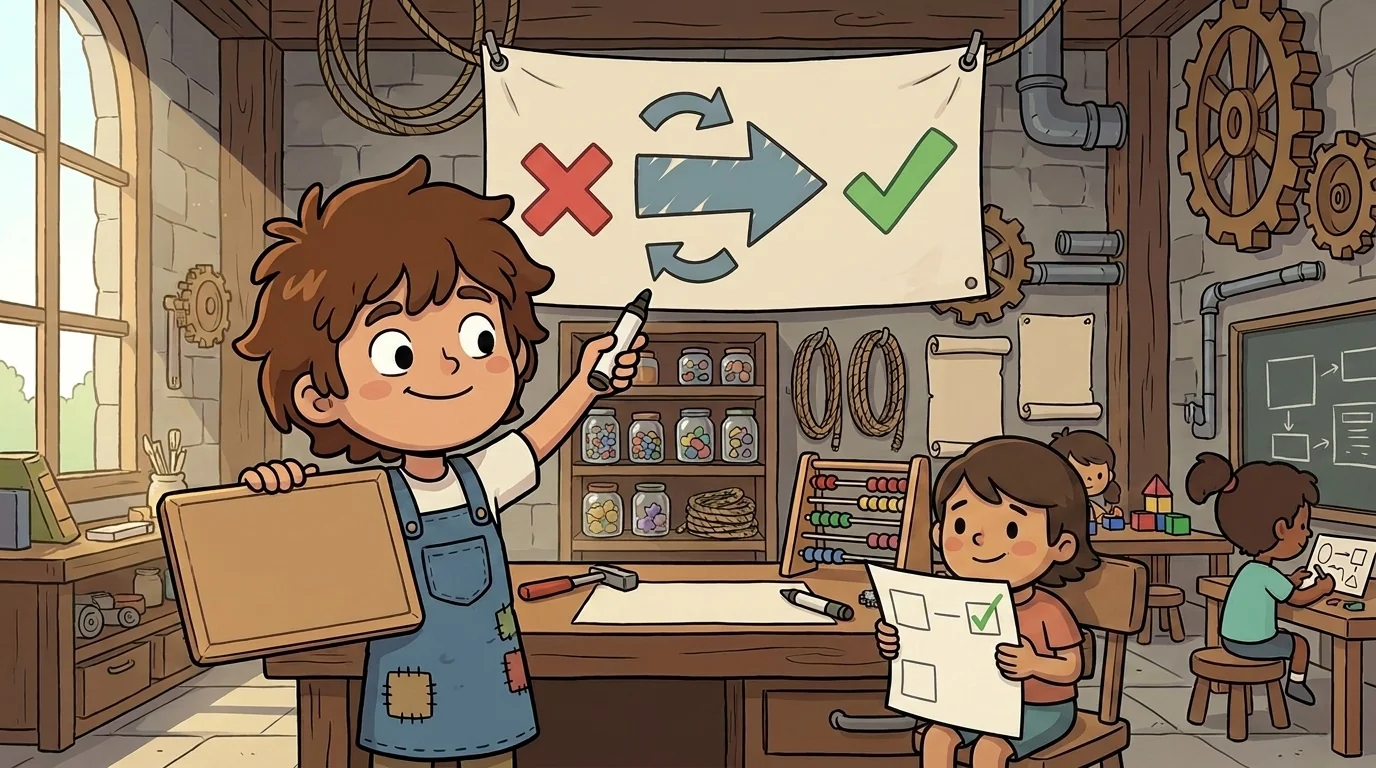
The kid sat back, looking at the two clean numbers, something loosening in their shoulders.
And the feeling that filled the kid then wasn't just the satisfaction of a solved riddle — it was a deeper, sweeter relief: the lifting of the fear of being wrong. For the first time, a wrong guess hadn't meant I'm bad at this. It had meant I'm one step closer. That gentle, freeing warmth — the discovery that missing is allowed, is useful, is even good — spread all the way through, and Reck watched it happen with quiet joy, because it was the exact feeling Reck's teacher had once stolen and Reck had spent a whole life giving back. "A guess is a measurement," Reck said softly, tapping the banner, warm and glad right down to the boots. "Be brave enough to be a little wrong, and the riddle practically solves itself." And that unclenching gladness — the freedom to guess without fear — was the very best thing Reck ever handed a nervous solver.
The ReckonQuest ensemble
Reck is part of ReckonQuest's distributed-narrative cast. Each character embodies a different curricular primitive; together they teach the full subject.
-
Lettie
Set up the equation — names the unknowns ('let x = the chickens') and writes the relationships
-
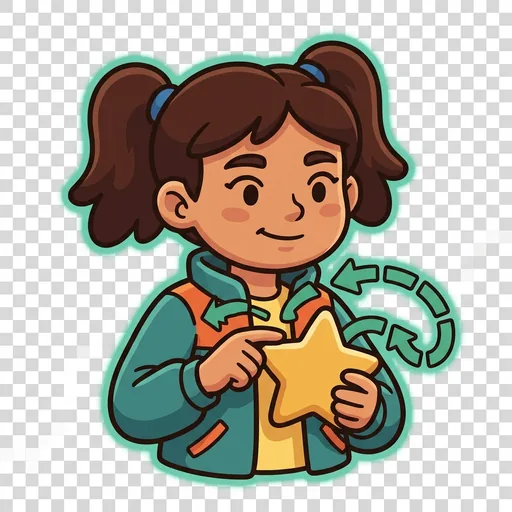
Retta
Work backwards — starts from the goal and reverses the steps
-
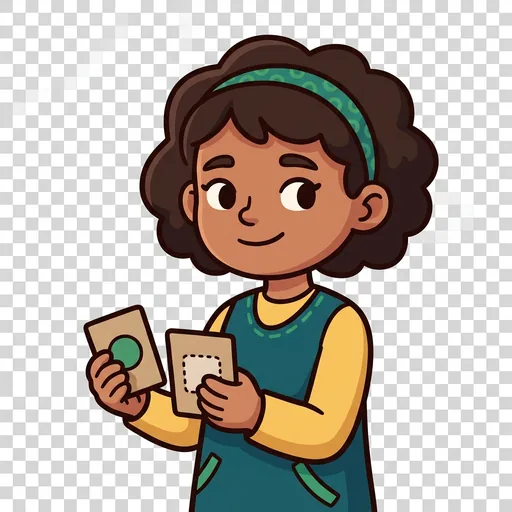
Kindra
Recognize the schema — spots 'this is a coin problem' before solving (schema-based instruction)
-
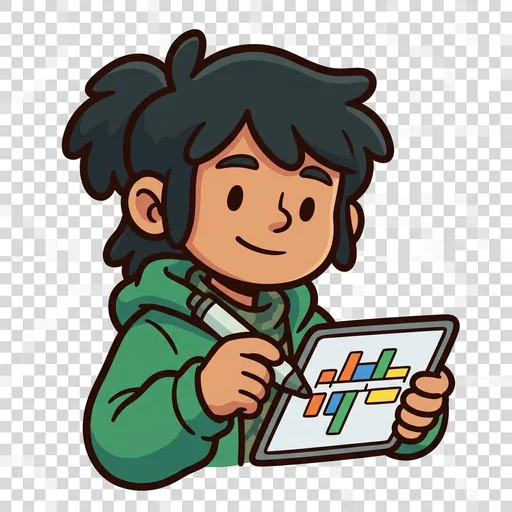
Doodle
Draw a diagram — draws the bar/tape diagram of the relationships
-

Vetta
Look back / check — substitutes the answer back and asks 'does this make sense?'
-
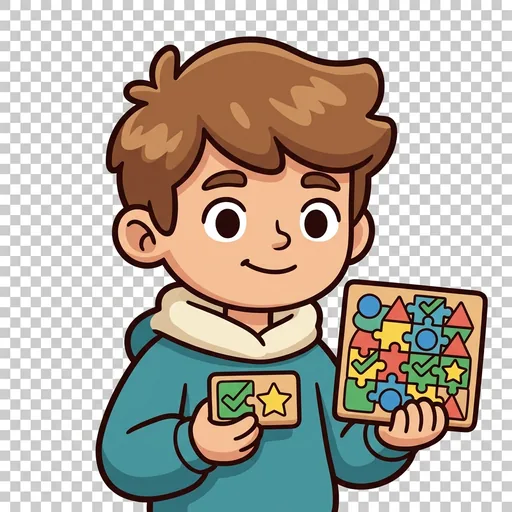
Tad
Simplify to a smaller case — solves a tiny version first (2 heads before 100)
-
Tagg
Track the units — labels every number ('6 = legs, not chickens'), structure over key-words
-
Genny
Generalize — writes the rule that works for any numbers once the specific riddle is solved
-
Cass
The scaffold keeper (mentor) — runs understand→plan→execute→look-back and normalizes not knowing the way in