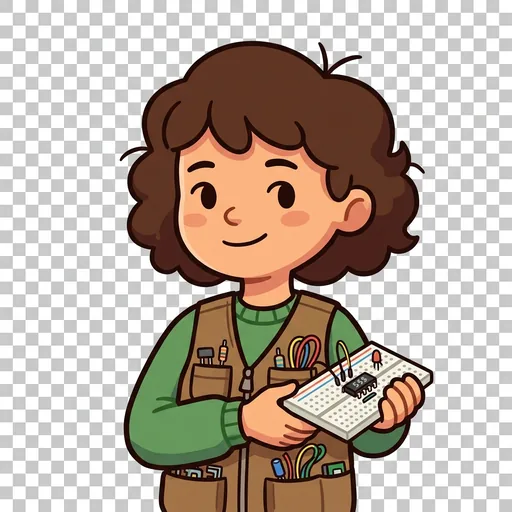
Doodle
DRAW A DIAGRAM — *draw the bar/tape diagram of the relationships so the problem becomes a picture you can see, not just words you must hold in your head.*
Loading audio…
Press play to listen along. The line being read lights up as you go.
Show full transcript
Loading transcript…
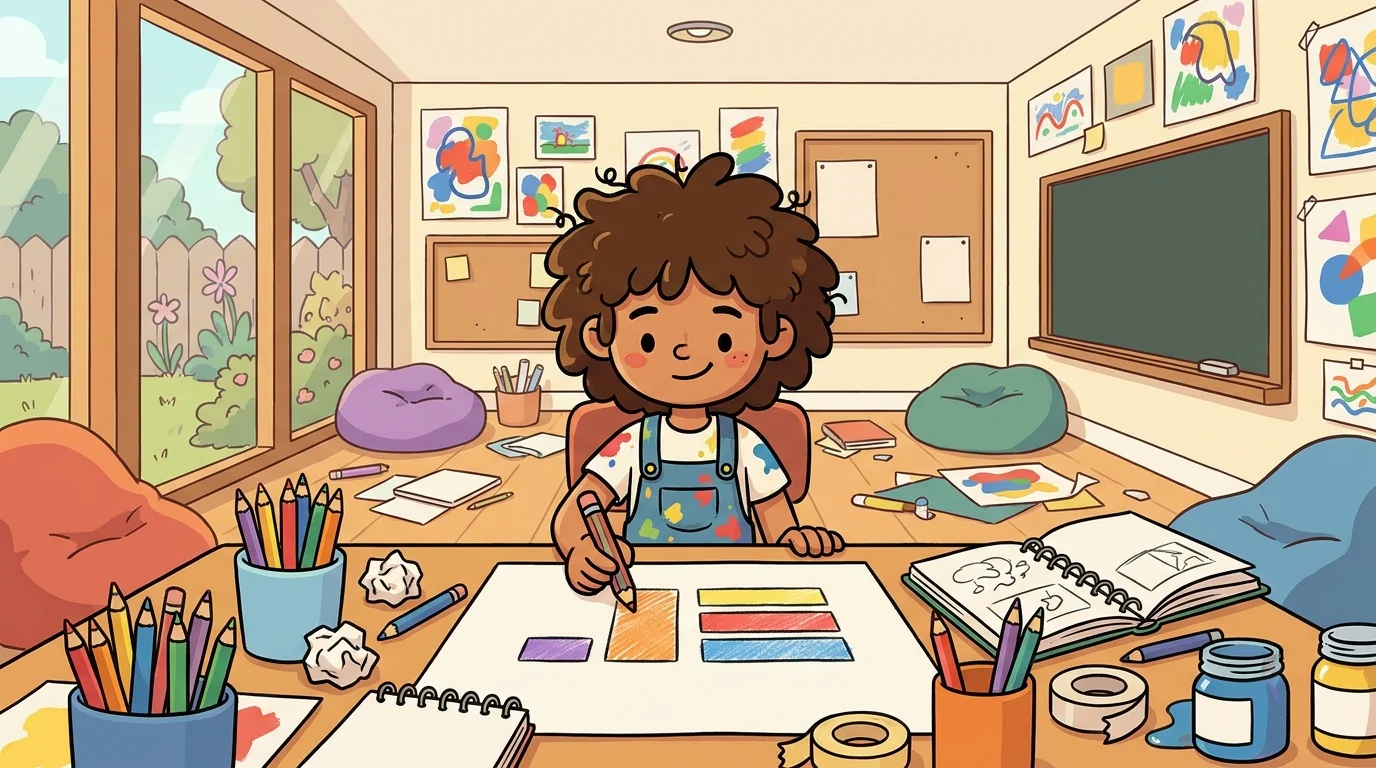
Doodle worked at a desk buried in scrap paper and colored pencils, and Doodle solved almost nothing with numbers first. Doodle drew.
Word problems, Doodle believed, were hard mostly because they asked you to juggle too many relationships in your head at once. Maya has twice as many stickers as Jon, and together they have 18. Hold "twice" and "together" and "18" all at once and something slips. So Doodle drew it: a short bar for Jon, a bar twice as long for Maya, the two bars stacked to reach a total of 18. Suddenly the picture had three equal chunks (one Jon, two Maya), and 18 split into three chunks meant each chunk was 6 — Jon has 6, Maya has 12, done, almost without arithmetic. "The words make you hold everything at once," Doodle said, shading a bar. "The picture holds it for you. You just read the answer off the drawing."
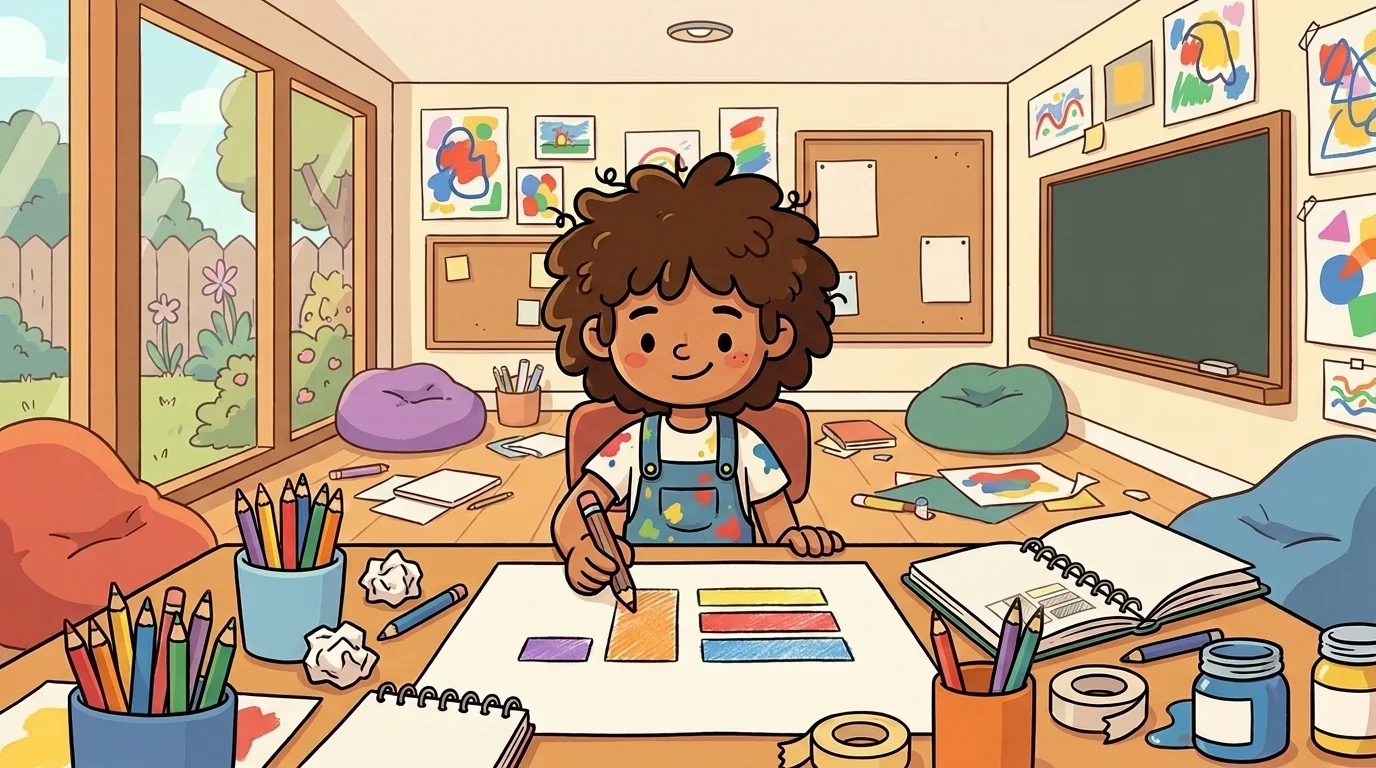
Doodle learned to draw after losing one too many relationships mid-problem.
As a young solver, Doodle tried to keep every relationship in mind and kept dropping one — forgetting the "twice" halfway through, or losing track of who had more. Doodle felt scatterbrained and slow. Then Cass handed young Doodle a colored pencil and said, "Stop carrying it all in your head — your head has better things to do. Put it on the paper. Draw Jon as a bar. Draw Maya as two of those bars. Now the 'twice' is sitting there in the picture — you don't have to remember it, you can see it." The first time Doodle drew a bar diagram and watched the answer fall out of the picture, it felt like cheating in the best possible way. "The paper remembers so you don't have to," Cass said. Doodle has drawn every hard problem ever since.
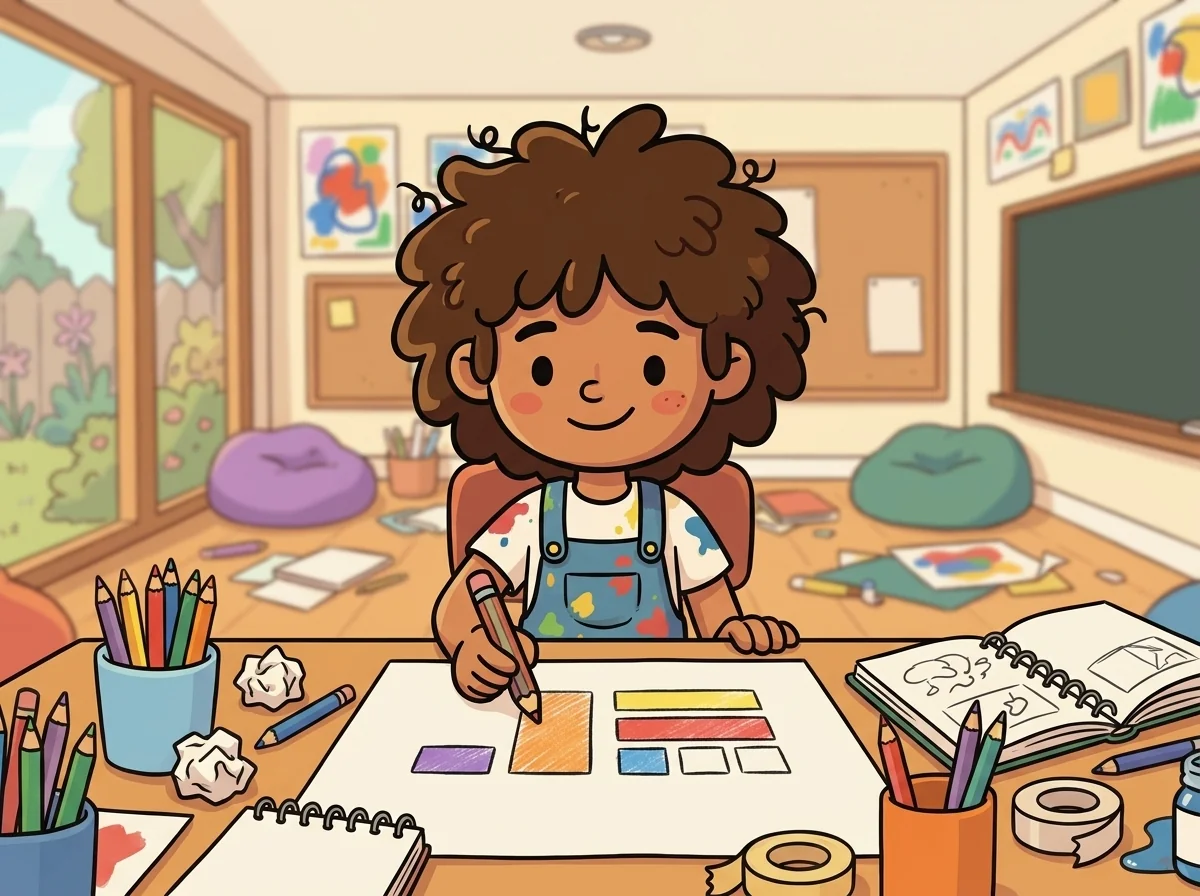
When the kid arrived, tangled in a relationship problem, Doodle slid over a pencil before a single number.
"Don't hold it in your head," Doodle said. "Let's draw it. Who's the smaller amount? Draw them as a bar. Now — the bigger amount is how many of those bars? Draw that. Now where's the total?" Bar by bar, the kid sketched the chickens-and-cows relationship as blocks — a block of legs for the chickens, a block for the cows, adding up to a bar of 26.
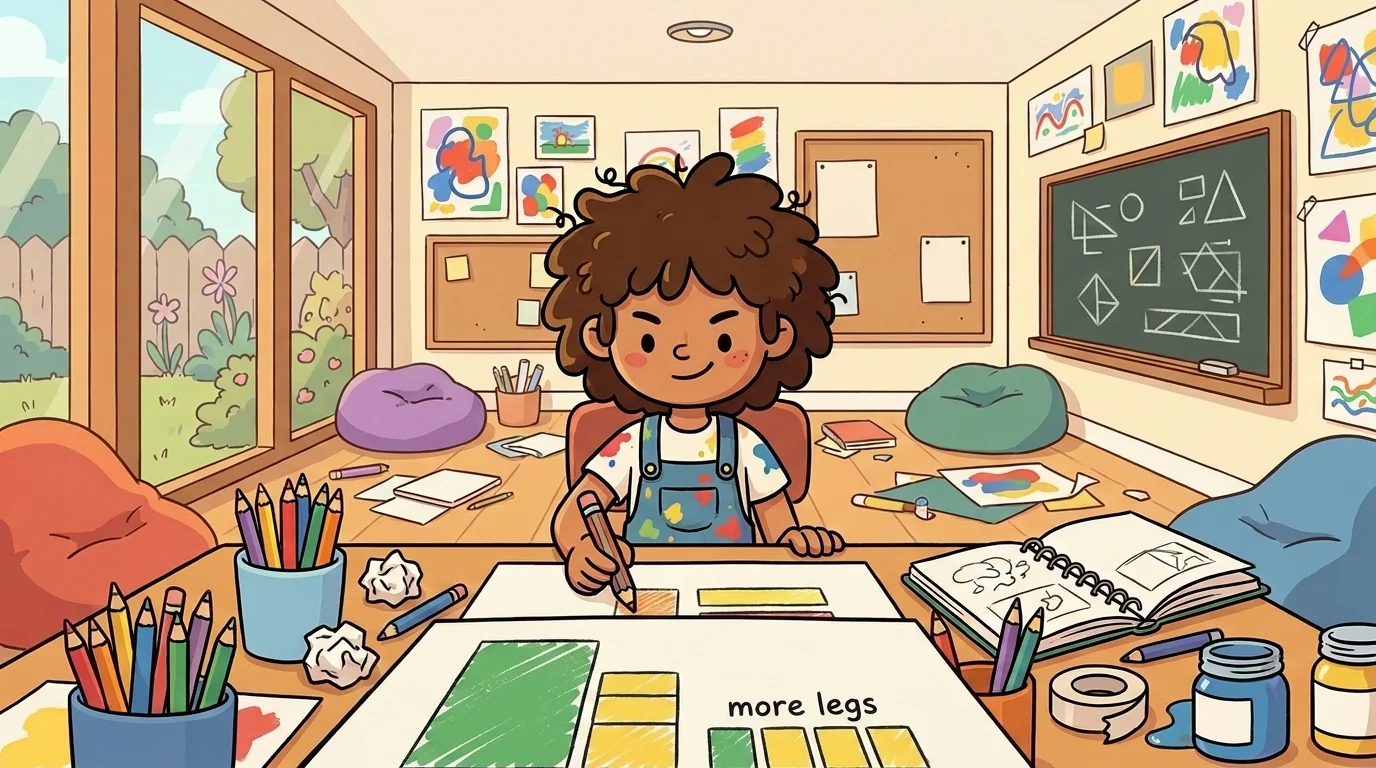
The picture grew, and something wonderful happened: the kid stopped frowning at words and started pointing at the drawing. "If all 8 were chickens, that's this much of the bar... and the extra legs up to 26 have to come from cows having two more legs each..." Doodle never called a sketch wrong — a muddled bar just earned "let's redraw that part bigger," and clarity followed. The answer didn't need to be computed so much as read off the picture the kid had made.
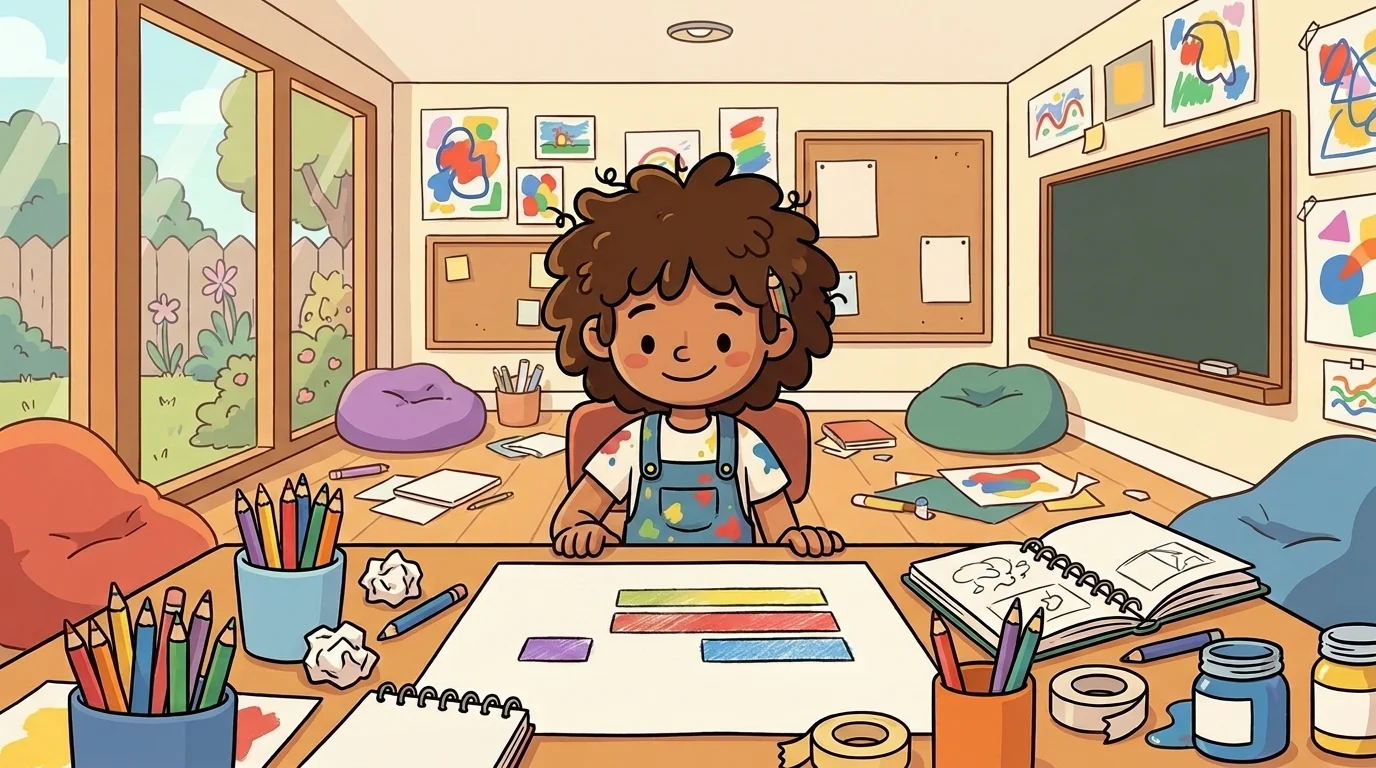
The kid sat back and looked at their own drawing — messy, colorful, and completely clear.
And the feeling that washed over them was a bright, uncluttered lightness — the specific relief of a crowded, juggling mind suddenly emptying onto the page, of not having to hold everything at once anymore because the paper was holding it for them. The scatterbrained panic Doodle knew so well simply lifted, replaced by the calm clarity of seeing instead of straining. Doodle watched that lightness arrive and felt it warmly, gladly echo, because handing someone a quiet, un-crowded mind was the best thing a picture could do. "The paper remembers so you don't have to," Doodle said softly, tucking a fresh pencil behind the kid's ear, content and warm. "Draw the problem, and let the picture do the worrying." That uncluttered lightness — a mind emptied onto the page — was the very best part of drawing for Doodle.
The ReckonQuest ensemble
Doodle is part of ReckonQuest's distributed-narrative cast. Each character embodies a different curricular primitive; together they teach the full subject.
-

Reck
Systematic guess-and-check — makes a reckoned guess, checks it, makes the next guess smarter (the pre-algebra bridge)
-
Lettie
Set up the equation — names the unknowns ('let x = the chickens') and writes the relationships
-
Retta
Work backwards — starts from the goal and reverses the steps
-
Kindra
Recognize the schema — spots 'this is a coin problem' before solving (schema-based instruction)
-

Vetta
Look back / check — substitutes the answer back and asks 'does this make sense?'
-
Tad
Simplify to a smaller case — solves a tiny version first (2 heads before 100)
-
Tagg
Track the units — labels every number ('6 = legs, not chickens'), structure over key-words
-
Genny
Generalize — writes the rule that works for any numbers once the specific riddle is solved
-
Cass
The scaffold keeper (mentor) — runs understand→plan→execute→look-back and normalizes not knowing the way in