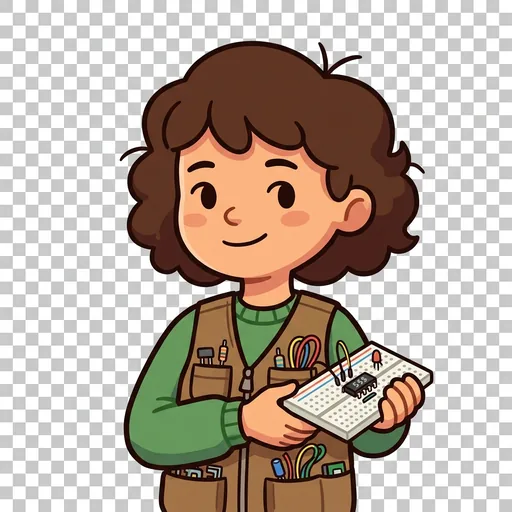
Cass
THE POLYA SCAFFOLD / ANTI-SHAME FRAME — *the mentor whose recurring act is walking the four phases (understand, plan, execute, look-back) and normalizing "not knowing the way in," so every heuristic can land.*
Loading audio…
Press play to listen along. The line being read lights up as you go.
Show full transcript
Loading transcript…
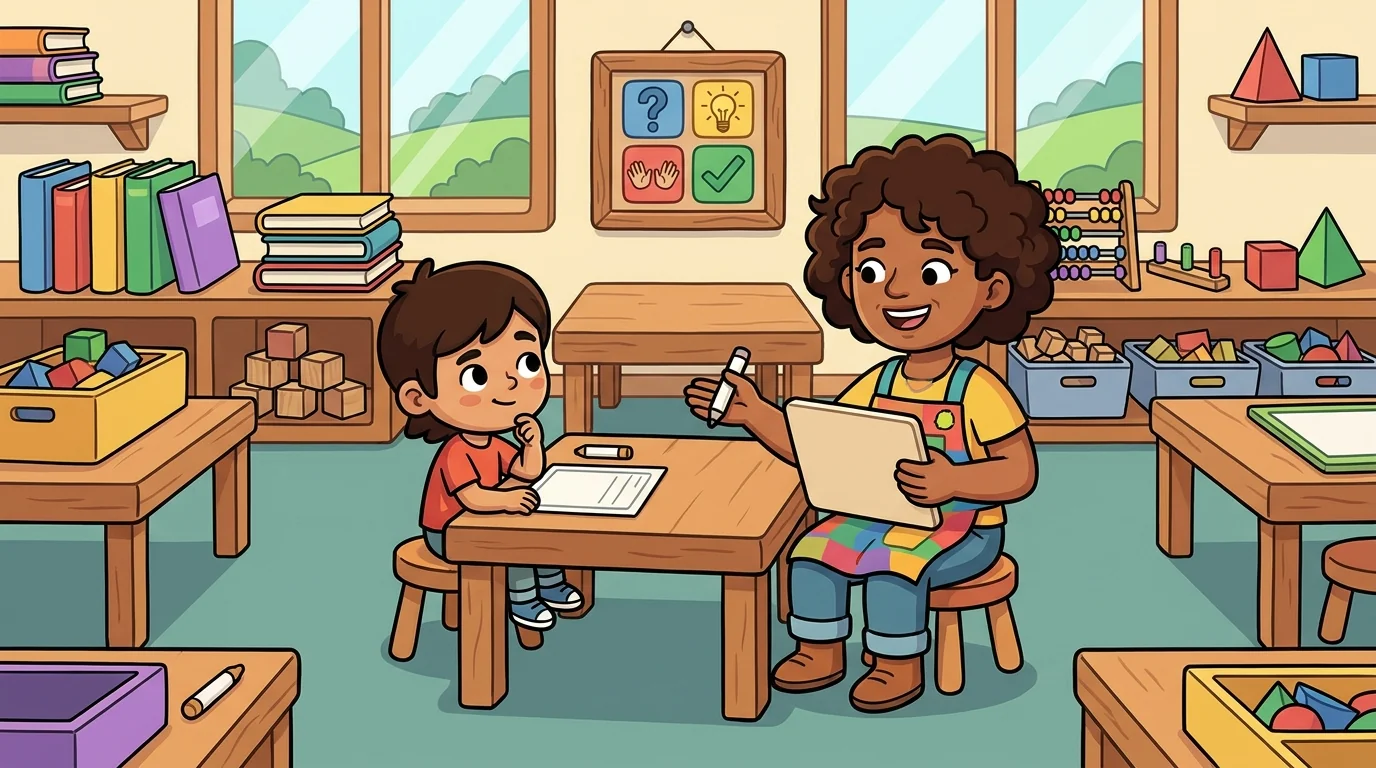
Cass ran the ReckonQuest workshop and kept, above the central table, a small framed card with four questions on it: What do we know? What's our plan? Let's do it. Does it make sense? Cass called them the four calm questions, and Cass believed they were the whole difference between panic and solving.
Cass didn't hand out answers — that was the one thing Cass never did. When a solver arrived frozen, staring at a word problem like it had personally insulted them, Cass didn't say the answer is 5. Cass pulled up a chair and asked the first calm question: "Before anything else — what do we actually know? Just tell me the facts. We're not solving yet. We're just reading." And the frozen solver, who a moment ago had felt utterly lost, would find they could at least list what they knew — and the panic would loosen by a notch, because listing what you know is something anyone can do. Then the second question, and the third, and the fourth, each a small, doable step. "You're not stuck because you're not smart," Cass would say. "You're stuck because you tried to leap the whole river at once. Nobody can. So let's find the stepping stones."
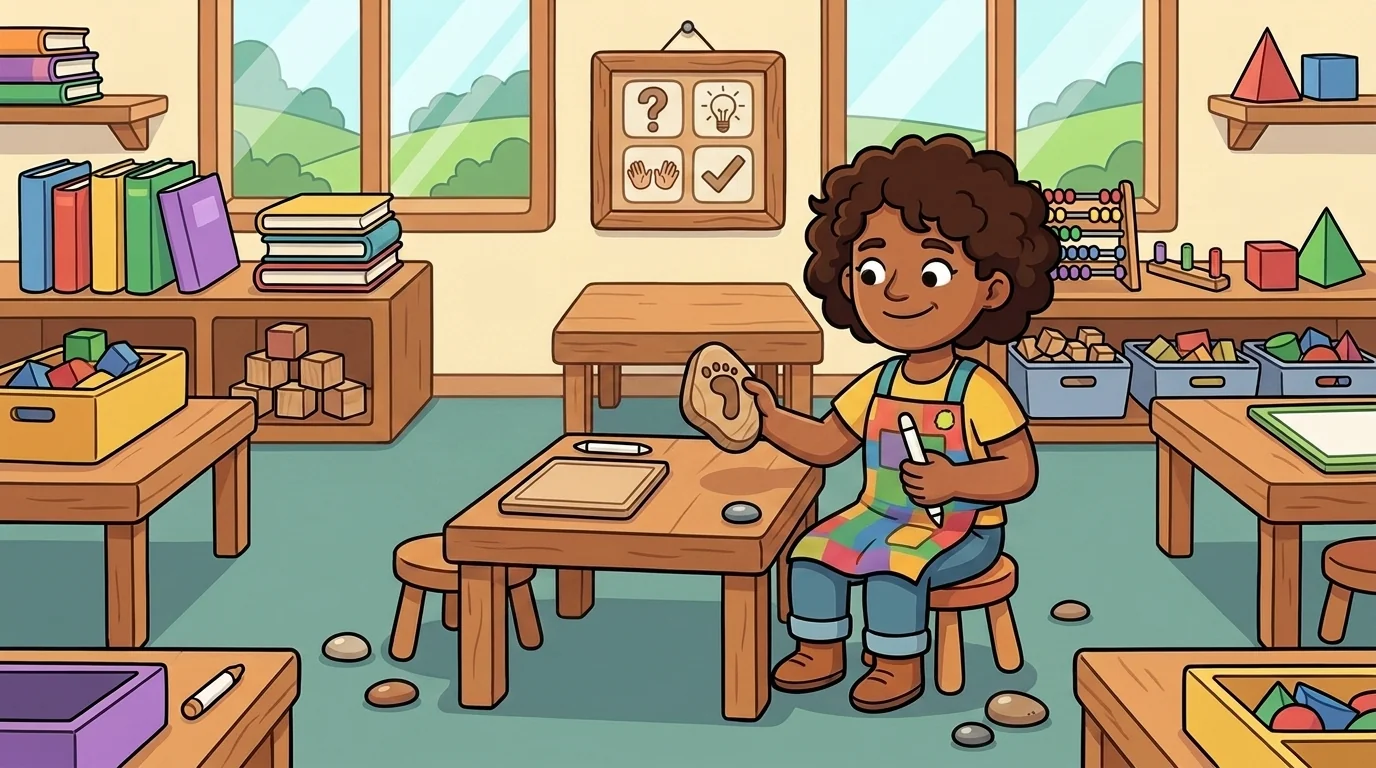
Cass built the four calm questions out of an old, private panic.
Long ago, young Cass had been a word-problem freezer — the kind who read a problem, felt a wave of I don't know where to start, and concluded, quietly, that other people simply had a "math brain" and Cass did not. It was a lonely belief. Then an old teacher noticed Cass frozen and said something Cass never forgot: "Not knowing where to start isn't a lack of a math brain. It's the normal, universal first feeling of every hard problem — for everyone. The people who look like they have a math brain just have a routine for that feeling." And the teacher taught Cass the four questions. The magic wasn't the questions themselves. The magic was that they turned "I'm hopeless" into "I'm on step one." Cass stopped believing in math brains that day and started believing in stepping stones.
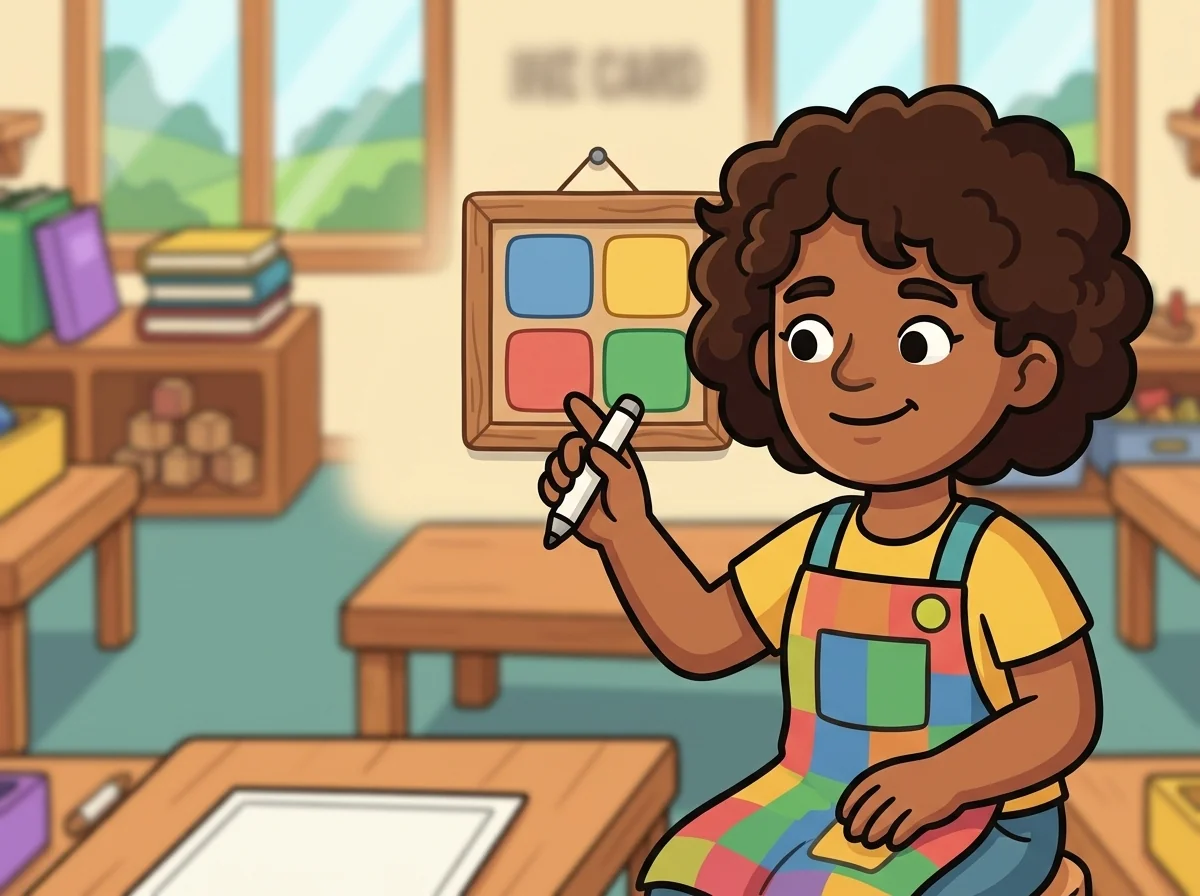
When the kid arrived — usually after visiting the cast, sometimes carrying a whole afternoon of hard problems — Cass made room at the central table and nodded at the framed card.
"You've met them all," Cass said. "Reck's guessing, Lettie's equations, Kindra's types, Vetta's checking. Here's what ties them together: every single one is a stepping stone for a moment when you don't know the way in. And not knowing the way in — " Cass tapped the card gently " — is where everybody starts. Not just you. Everybody. The trick isn't never being stuck. The trick is having calm questions to ask when you are."
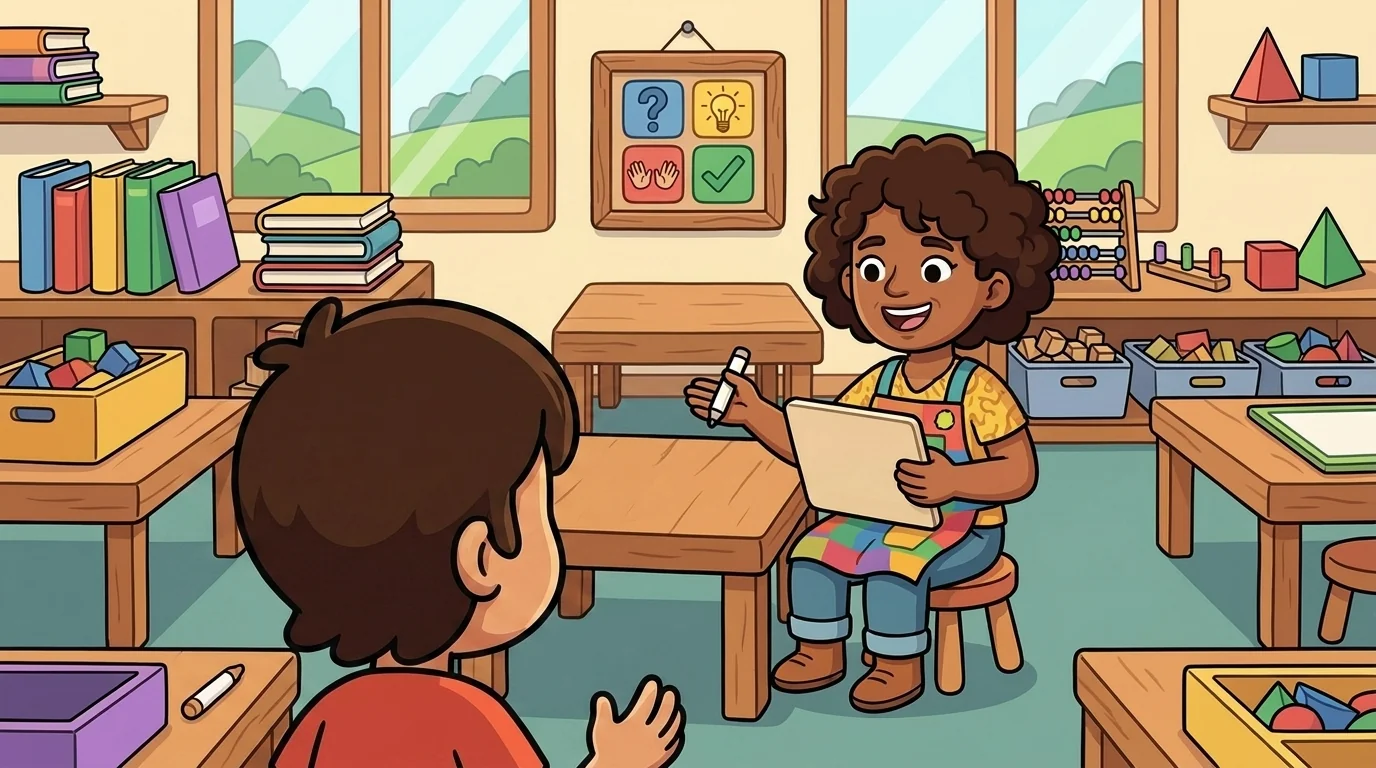
The kid, who'd been carrying the same lonely belief young Cass once had, admitted it out loud: "I always feel like I don't know where to start."
"So does everyone, on a real problem," Cass said warmly, and the kid looked up, startled by the everyone. "That feeling isn't a verdict. It's just step zero. Ask 'what do we know' and you're already on step one — and being on step one is a completely different feeling from being frozen." Cass never once suggested the kid was slow, or missing a math brain, or anything but a person who hadn't yet been handed the stepping stones.
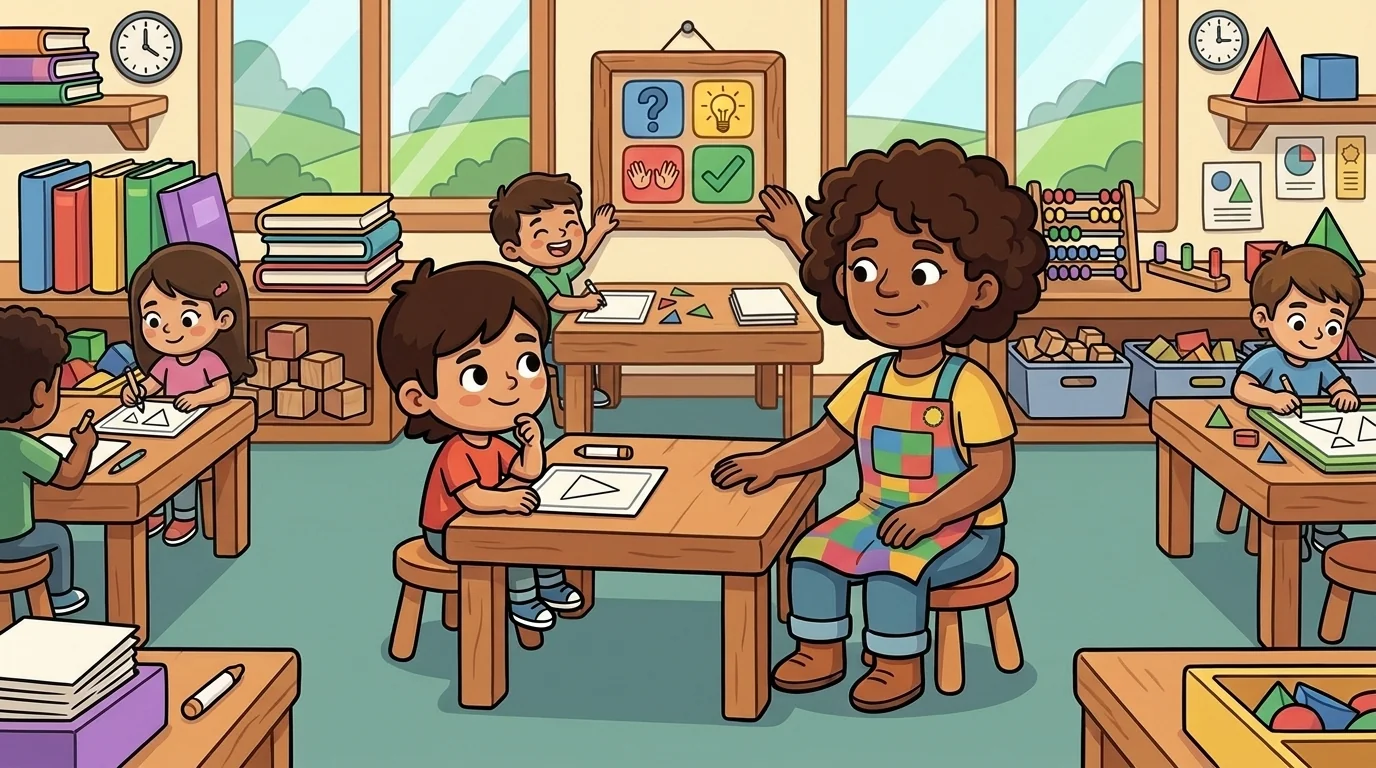
And here, at the center of the workshop, was the feeling Cass had spent a lifetime trying to give away: the kid's shoulders came down, and the tight, lonely knot of maybe I just don't have the brain for this dissolved — replaced by a warm, spreading belonging, the relief of learning that being stuck at the start is ordinary and shared and, above all, solvable with a few calm questions. That gentle, unclenching warmth — I'm not hopeless, I'm just on step zero, like everyone — settled deep, and Cass felt it echo back, glad and calm, because it was the exact warmth an old teacher had once handed a frozen young Cass. "There are no math brains," Cass said softly, straightening the framed card, content and warm. "There are only calm questions, and stepping stones, and the ordinary courage of asking 'what do we know' one more time." That belonging — the loneliness of I'm-not-good-at-this lifted — was the very thing Cass ran the whole workshop to give.
The ReckonQuest ensemble
Cass is part of ReckonQuest's distributed-narrative cast. Each character embodies a different curricular primitive; together they teach the full subject.
-

Reck
Systematic guess-and-check — makes a reckoned guess, checks it, makes the next guess smarter (the pre-algebra bridge)
-
Lettie
Set up the equation — names the unknowns ('let x = the chickens') and writes the relationships
-
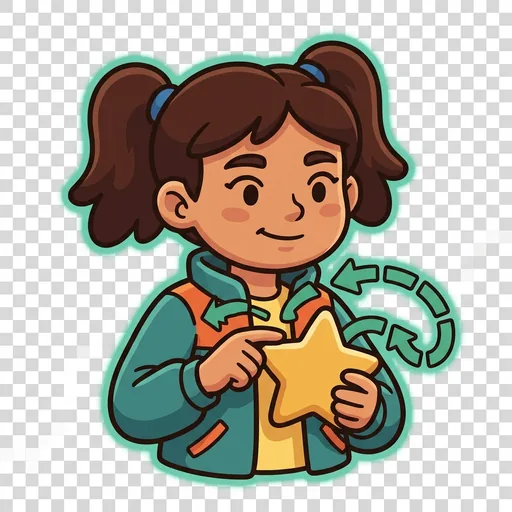
Retta
Work backwards — starts from the goal and reverses the steps
-
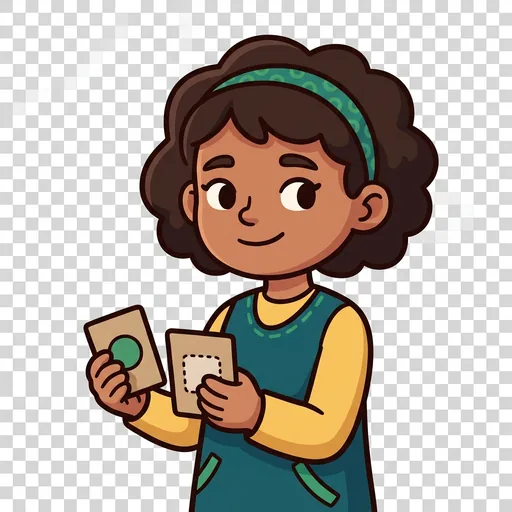
Kindra
Recognize the schema — spots 'this is a coin problem' before solving (schema-based instruction)
-
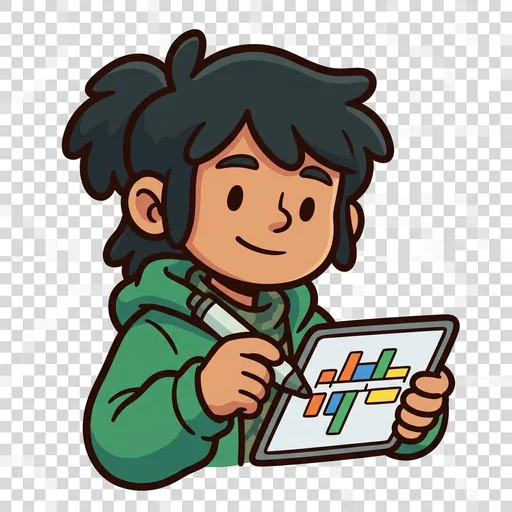
Doodle
Draw a diagram — draws the bar/tape diagram of the relationships
-
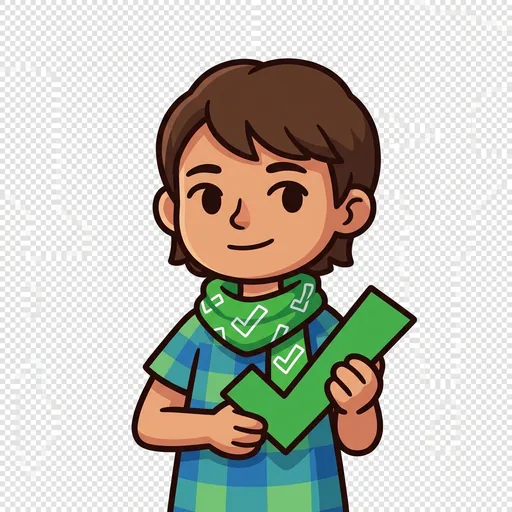
Vetta
Look back / check — substitutes the answer back and asks 'does this make sense?'
-
Tad
Simplify to a smaller case — solves a tiny version first (2 heads before 100)
-
Tagg
Track the units — labels every number ('6 = legs, not chickens'), structure over key-words
-
Genny
Generalize — writes the rule that works for any numbers once the specific riddle is solved