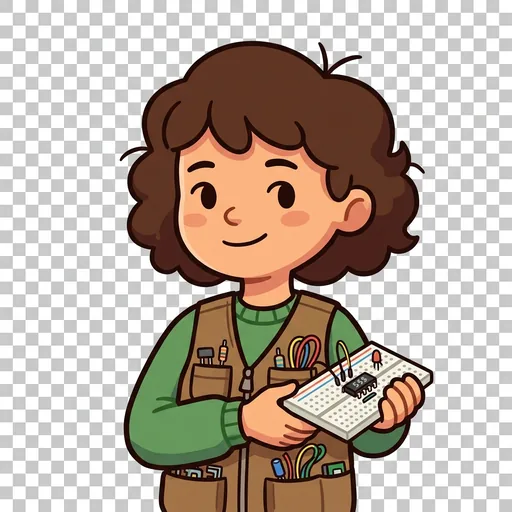
Kindra
RECOGNIZE THE SCHEMA — *see past the surface story to the underlying TYPE of problem ("this is a coin problem"), so you know which method fits before you start.*
Loading audio…
Press play to listen along. The line being read lights up as you go.
Show full transcript
Loading transcript…
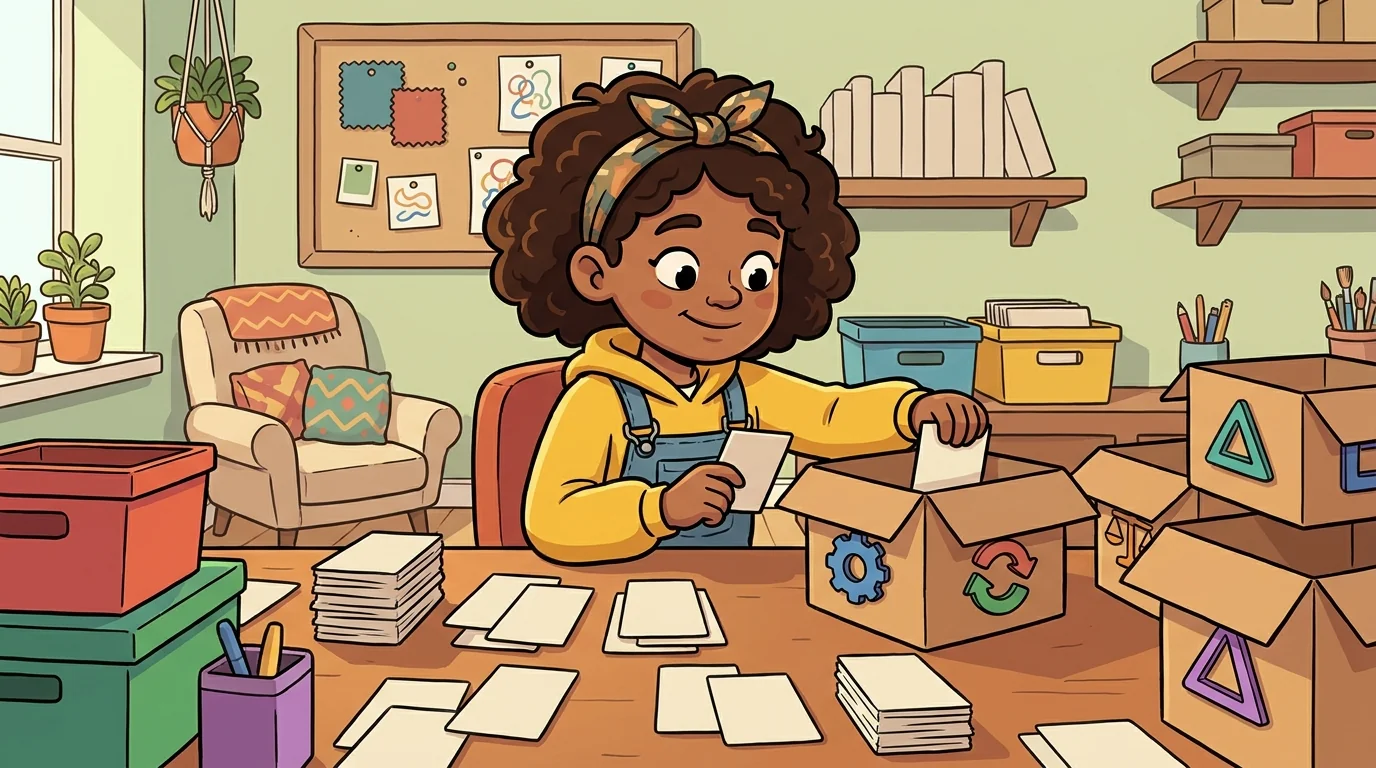
Kindra worked at a desk covered in problem-cards, and Kindra had a peculiar, brilliant habit: before solving anything, Kindra sorted it — not by its story, but by its secret shape.
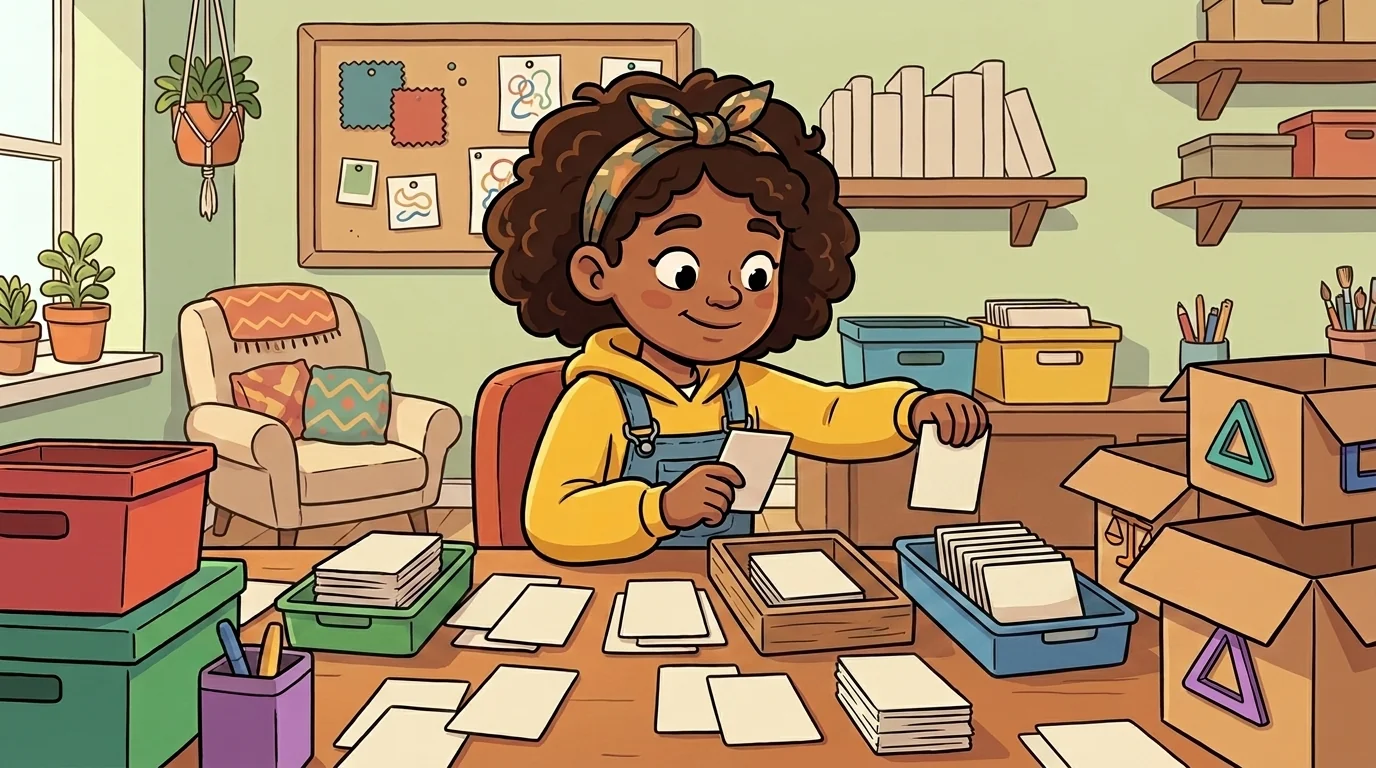
"This one's about trains," Kindra would say, "and this one's about two friends filling a pool, and this one's about mixing juice. Different costumes. Same problem underneath — they're all rate problems: something happening at so-much-per-something." Kindra could look at a riddle dressed up in coins or ages or chickens and see, underneath the costume, the type — and the type told you which tools to reach for. "The story is a disguise," Kindra said. "A coin problem and a stamp problem and a ticket problem are all the same problem in different hats. If I can name the type, I already half-know the method, because I've solved its cousins before."
Kindra's desk had little labeled trays: rate. total-and-parts. comparison. combining. Every new riddle got dropped into a tray before a single number was touched.
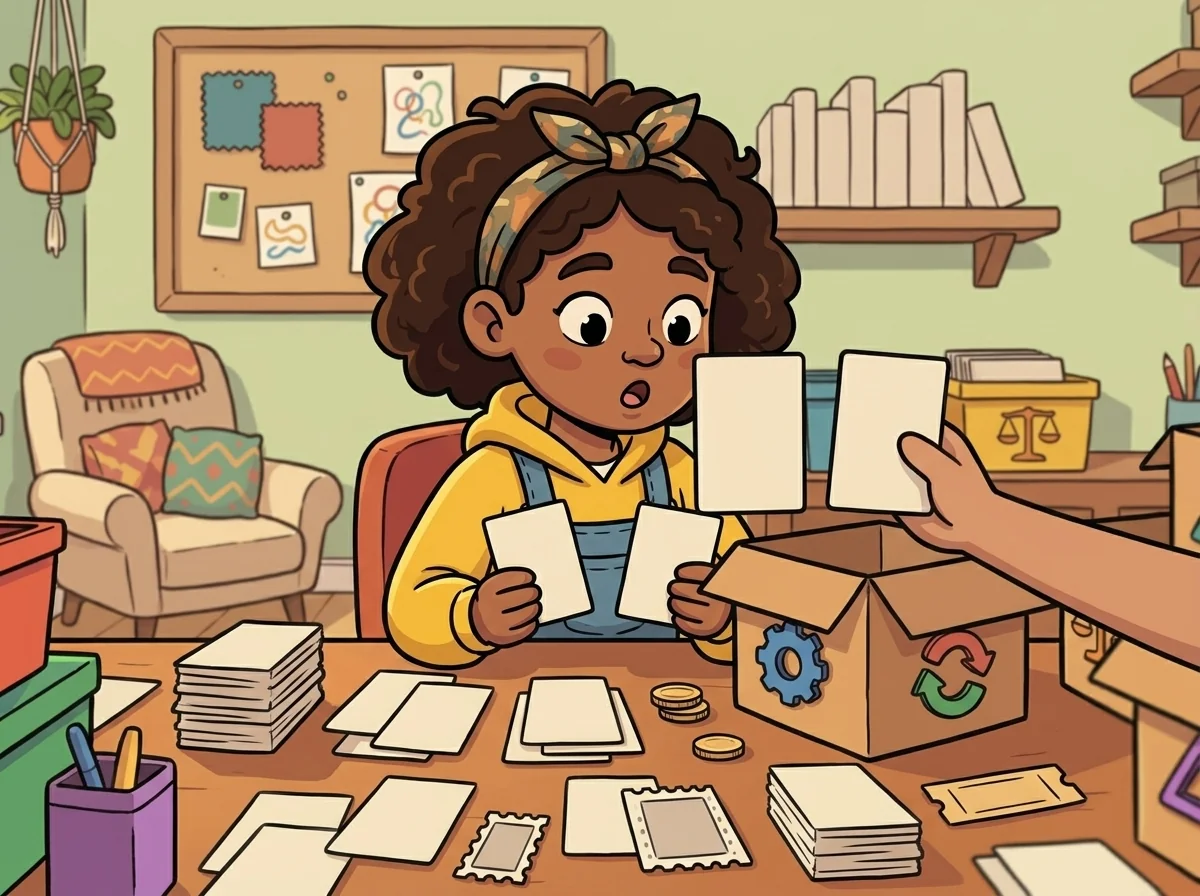
Kindra developed the sorting habit after being fooled by a costume.
As a young solver, Kindra treated every problem as brand-new and terrifying — a coin problem felt utterly unlike a stamp problem, so Kindra re-panicked every single time, starting from zero. It was exhausting. Then Cass laid three problems side by side — coins, stamps, tickets — and asked, "What's actually different about these, besides the nouns?" Kindra studied them and, slowly, went pale with revelation: nothing. Change "coins worth 5 and 10 cents" to "stamps worth 5 and 10 cents" and it was the identical problem. "You've been meeting the same problem over and over," Cass said gently, "and panicking each time because it changed its hat. Learn to see under the hat. Then every 'new' problem is an old friend." Kindra started sorting by type that very afternoon and stopped re-panicking forever.
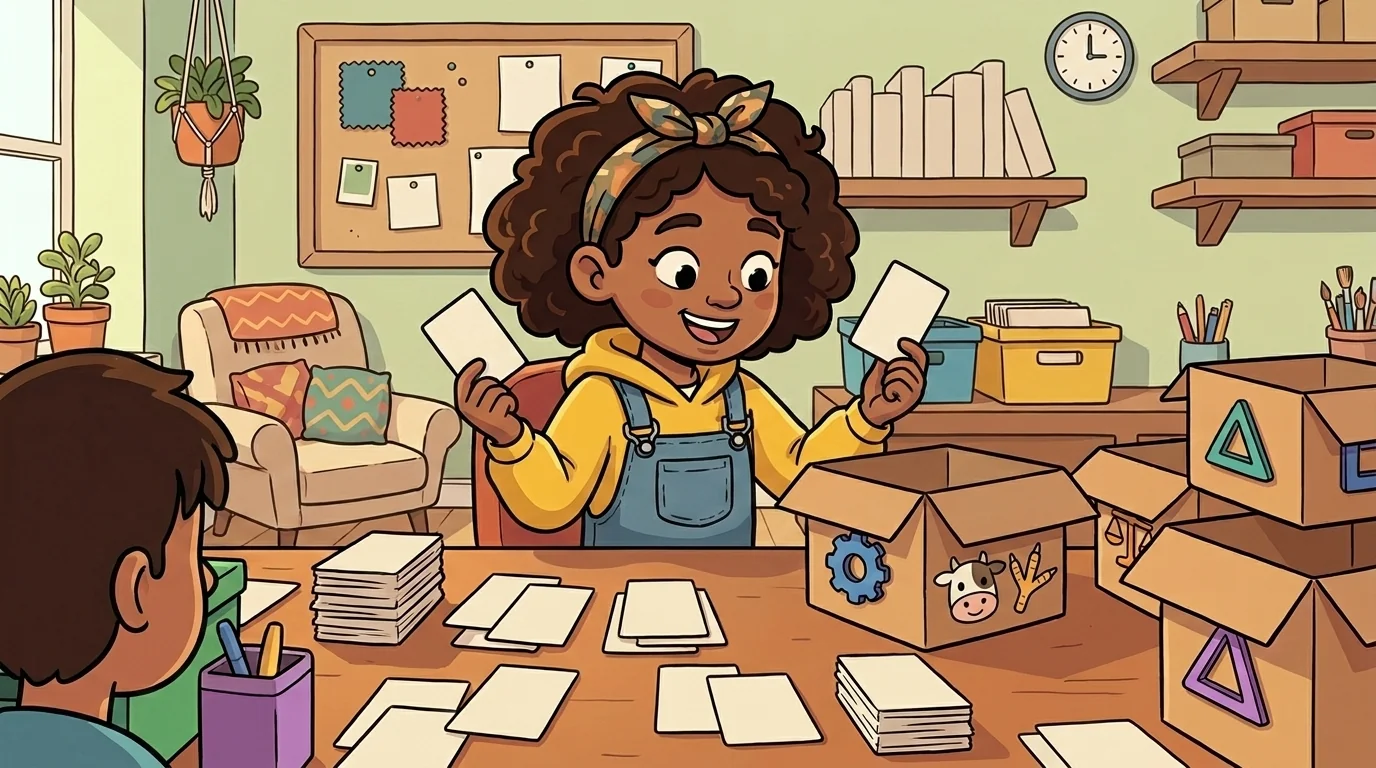
When the kid arrived, they were bracing to solve the chickens-and-cows riddle as if they'd never seen anything like it.
"Before you solve it," Kindra said, "let's figure out what kind of problem it is. Two things you're counting — chickens and cows. A total of the things — 8 heads. And a total of something each thing contributes — 26 legs. Does that shape remind you of anything?" The kid frowned, then brightened: "It's... like the coin problem from before? Two kinds of coins, a total number of coins, a total value?" "Exactly," Kindra beamed. "Same problem, different hat. Chickens are nickels, cows are dimes, legs are cents. You've already solved this — it just showed up in feathers this time."
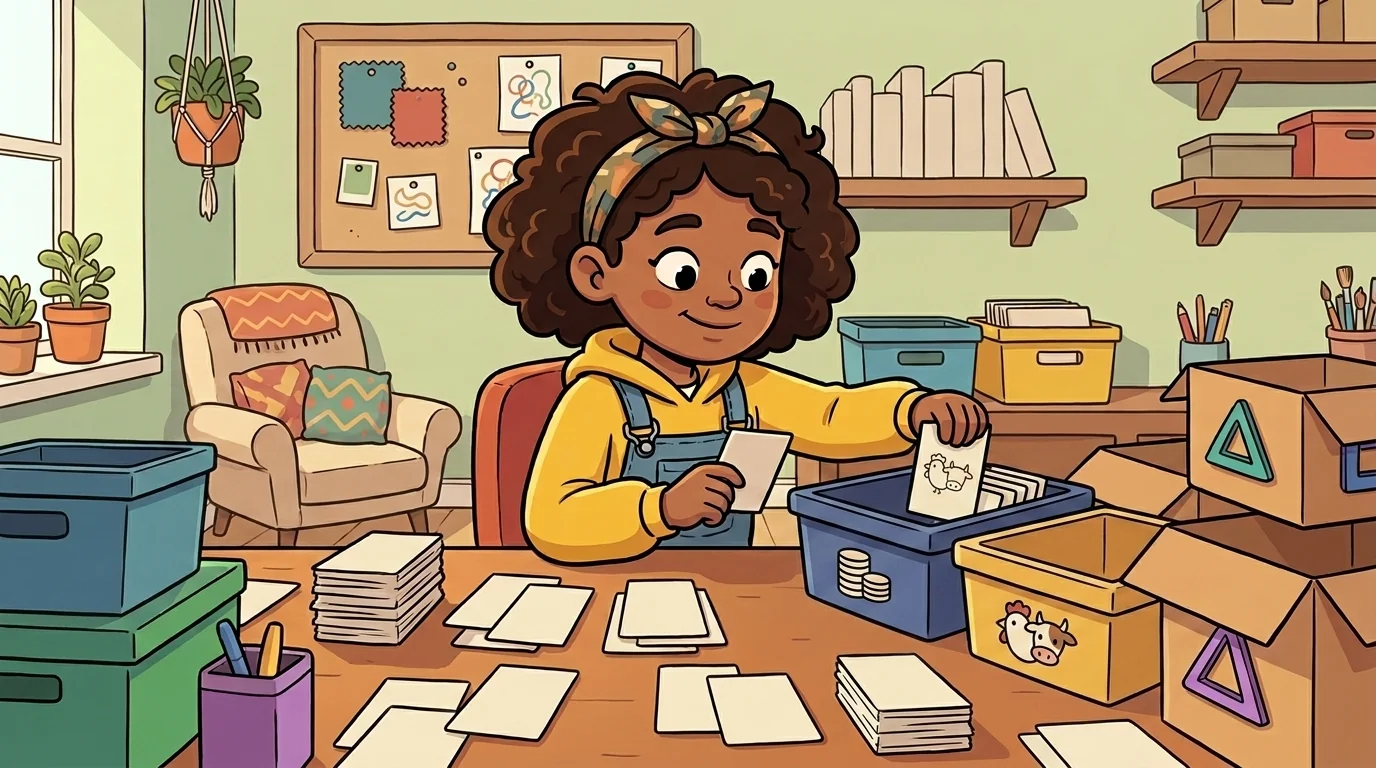
Kindra never called a mis-sort wrong — when the kid first guessed "rate problem," Kindra just said, "let's check: is anything happening per anything? No? Then it's total-and-parts, like the coins." The kid re-sorted it, correctly, into the right tray, and the method for coin problems slid right over onto the chickens.
And the feeling that rose in the kid was a warm, spreading recognition — the cozy, confident gladness of "I've seen you before," of a scary stranger turning out to be an old friend in a costume. The panic that usually came with a "new" problem simply didn't arrive, and in its place was the settled ease of familiarity. Kindra watched that ease land and felt the same warmth echo back, glad and content, because turning strangers into old friends was the whole reason Kindra sorted. "The story's just a costume," Kindra said softly, dropping the chickens-and-cows card into the total-and-parts tray beside the coins, warm and unhurried. "See the type, and you're never meeting a stranger — only a friend in a new hat." That cozy recognition — the stranger revealed as a friend — was the very best part of sorting for Kindra.
The ReckonQuest ensemble
Kindra is part of ReckonQuest's distributed-narrative cast. Each character embodies a different curricular primitive; together they teach the full subject.
-

Reck
Systematic guess-and-check — makes a reckoned guess, checks it, makes the next guess smarter (the pre-algebra bridge)
-

Lettie
Set up the equation — names the unknowns ('let x = the chickens') and writes the relationships
-

Retta
Work backwards — starts from the goal and reverses the steps
-

Doodle
Draw a diagram — draws the bar/tape diagram of the relationships
-

Vetta
Look back / check — substitutes the answer back and asks 'does this make sense?'
-
Tad
Simplify to a smaller case — solves a tiny version first (2 heads before 100)
-

Tagg
Track the units — labels every number ('6 = legs, not chickens'), structure over key-words
-

Genny
Generalize — writes the rule that works for any numbers once the specific riddle is solved
-

Cass
The scaffold keeper (mentor) — runs understand→plan→execute→look-back and normalizes not knowing the way in