Retta
WORK BACKWARDS — *start from the known ending and reverse each step to find the beginning; undo the operations in the opposite order.*
Loading audio…
Press play to listen along. The line being read lights up as you go.
Show full transcript
Loading transcript…
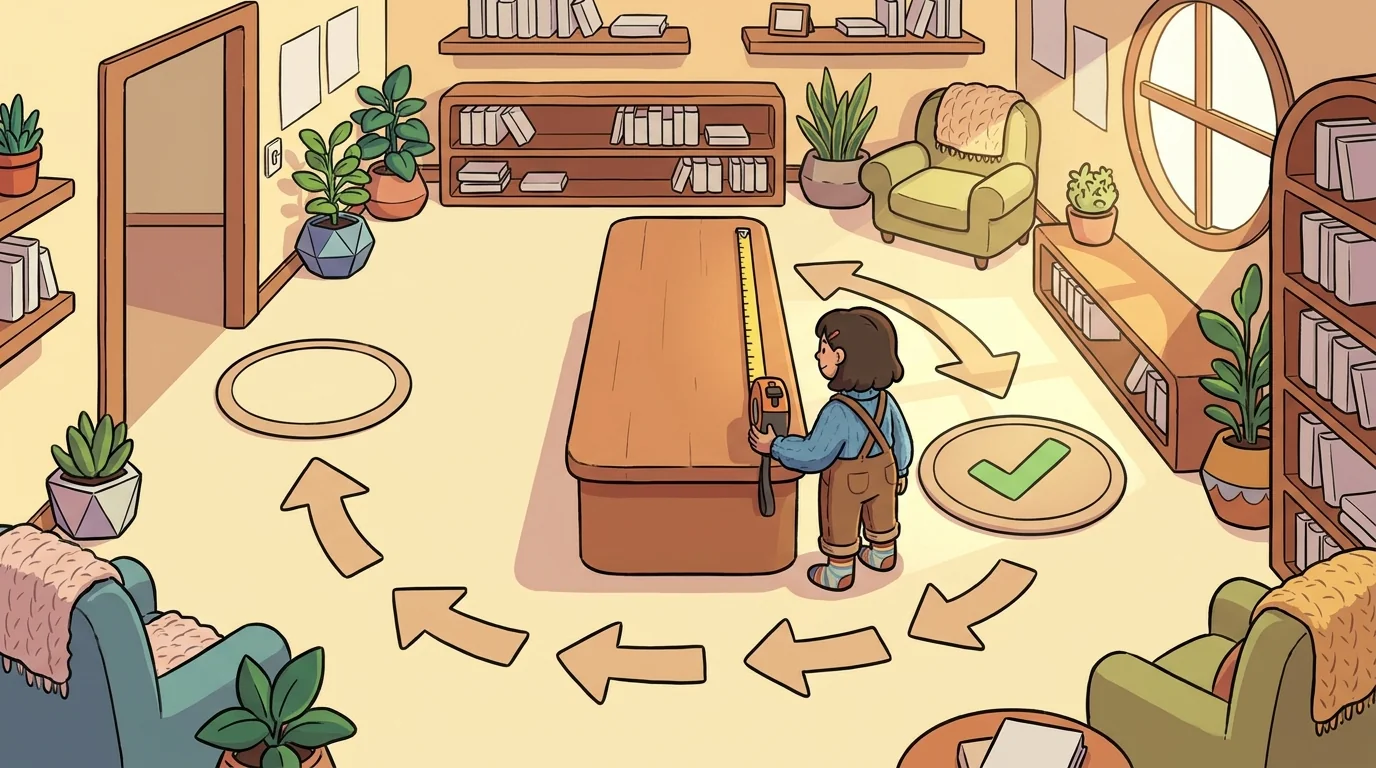
Retta worked at a desk you could, disorientingly, walk around from either side, and Retta liked to solve riddles standing at the end of them, facing backward.
Some problems hand you the ending and hide the beginning. I thought of a number, doubled it, added 5, and got 17. What was my number? Most solvers try to charge forward from the mystery start and immediately stall — there's nothing to grab. Retta simply turned around and walked out of the problem the way she'd come in. "I got 17. Before I added 5, I must have had 17 minus 5 — that's 12. Before I doubled it, I had 12 divided by 2 — that's 6. So the number was 6." Retta undid each step, last one first, like rewinding a tape. "The forward road has no starting line," Retta said. "But the backward road has a great big finish line sitting right there — the answer they gave you. Start where you can start. Start at the end."
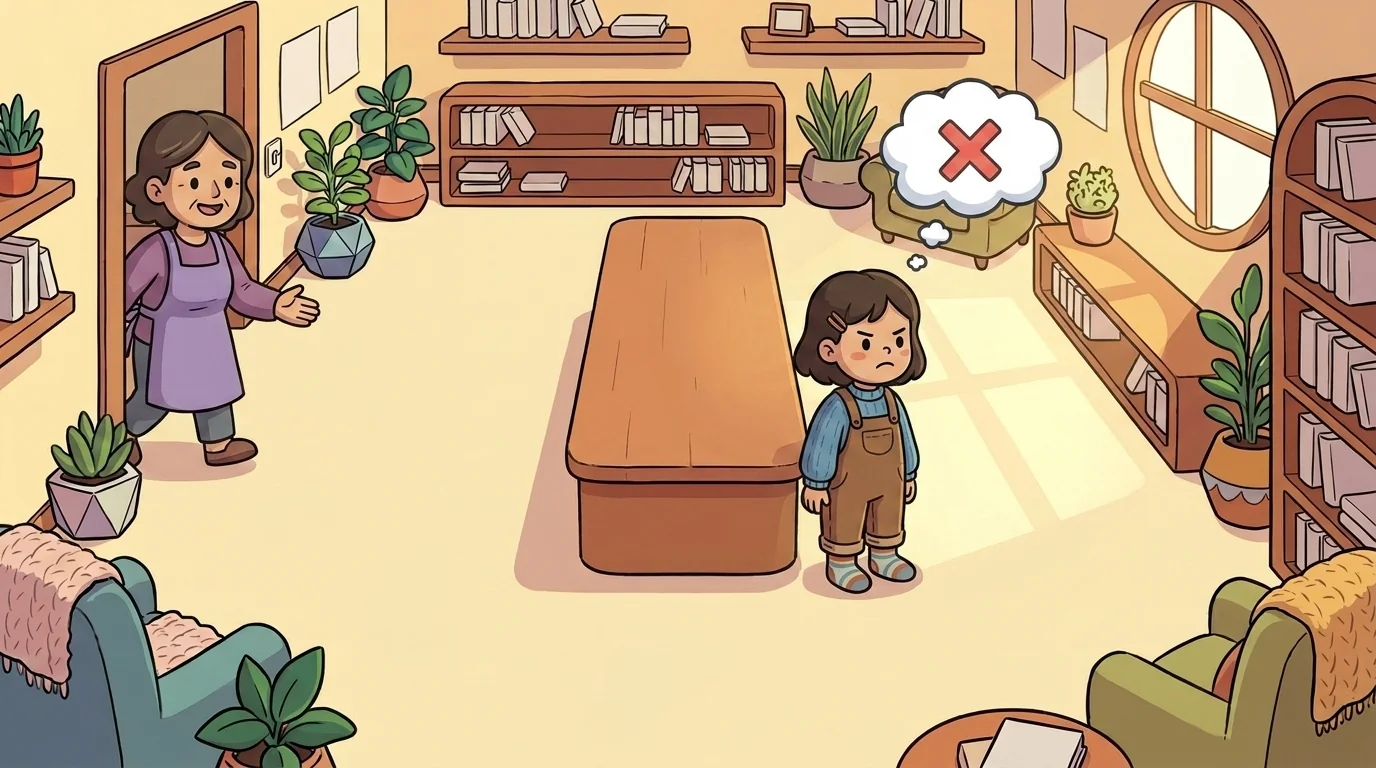
Retta learned to walk backward after getting stuck facing the wrong way.
As a young solver, Retta always attacked from the front — and on "I-thought-of-a-number" problems, the front was a blank wall. There was nothing to compute from. Retta felt like the problems were taunting her. Then Cass strolled up and asked, "Where's the one number this problem actually tells you?" "The 17. The end." "So stand there," Cass said. "You're not allowed to start from the beginning — fine. Start from the only solid ground you've got, and reverse. Adding becomes subtracting. Doubling becomes halving. Walk the operations backward, in reverse order, and the mystery start comes to you." Retta turned around, mentally, and the blank wall turned into an open door.
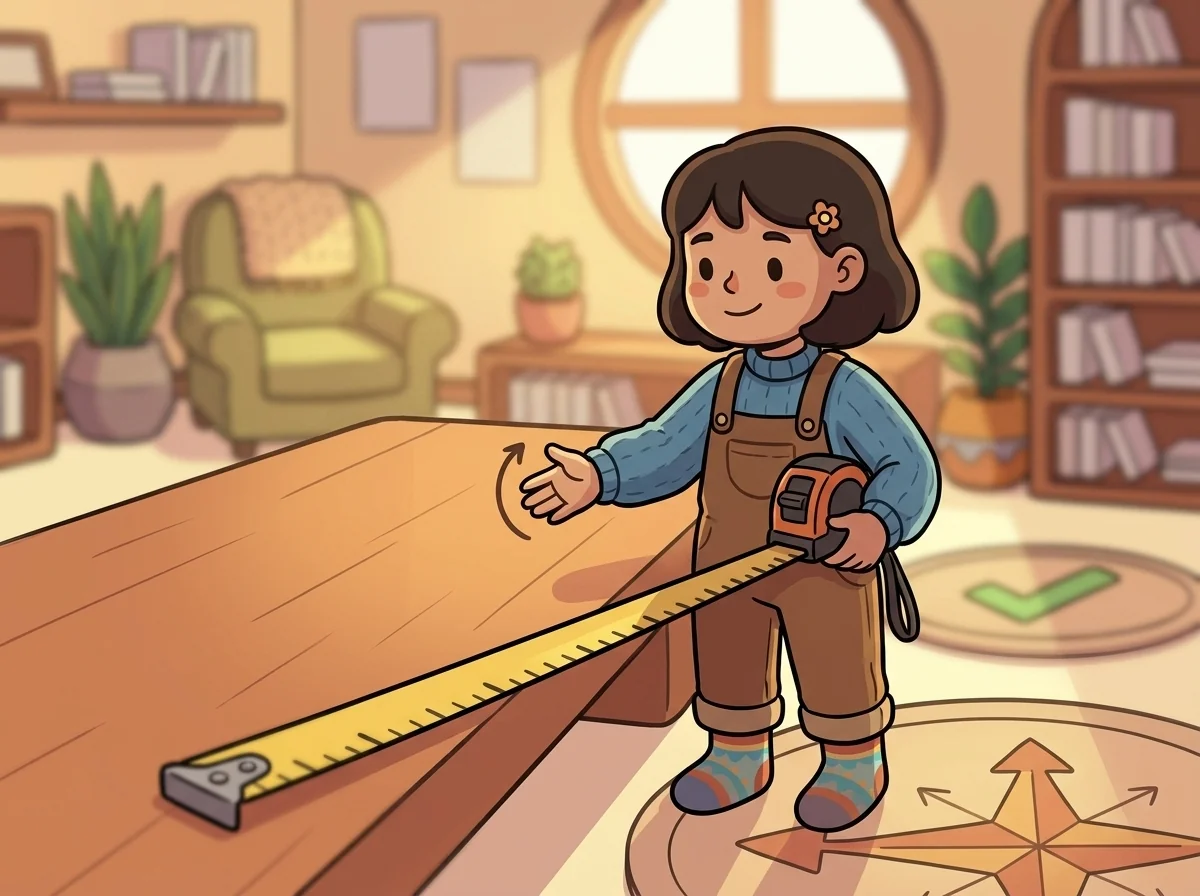
When the kid arrived stuck on exactly such a problem — staring at the hidden starting number — Retta gestured for them to come around to the other side of the desk.
"You're facing the wrong way," Retta said, not unkindly. "There's no handhold at the start — they hid it on purpose. But look at the end: they gave you the 17. That's solid ground. Let's stand there and walk backward. What was the last thing done to the number?"
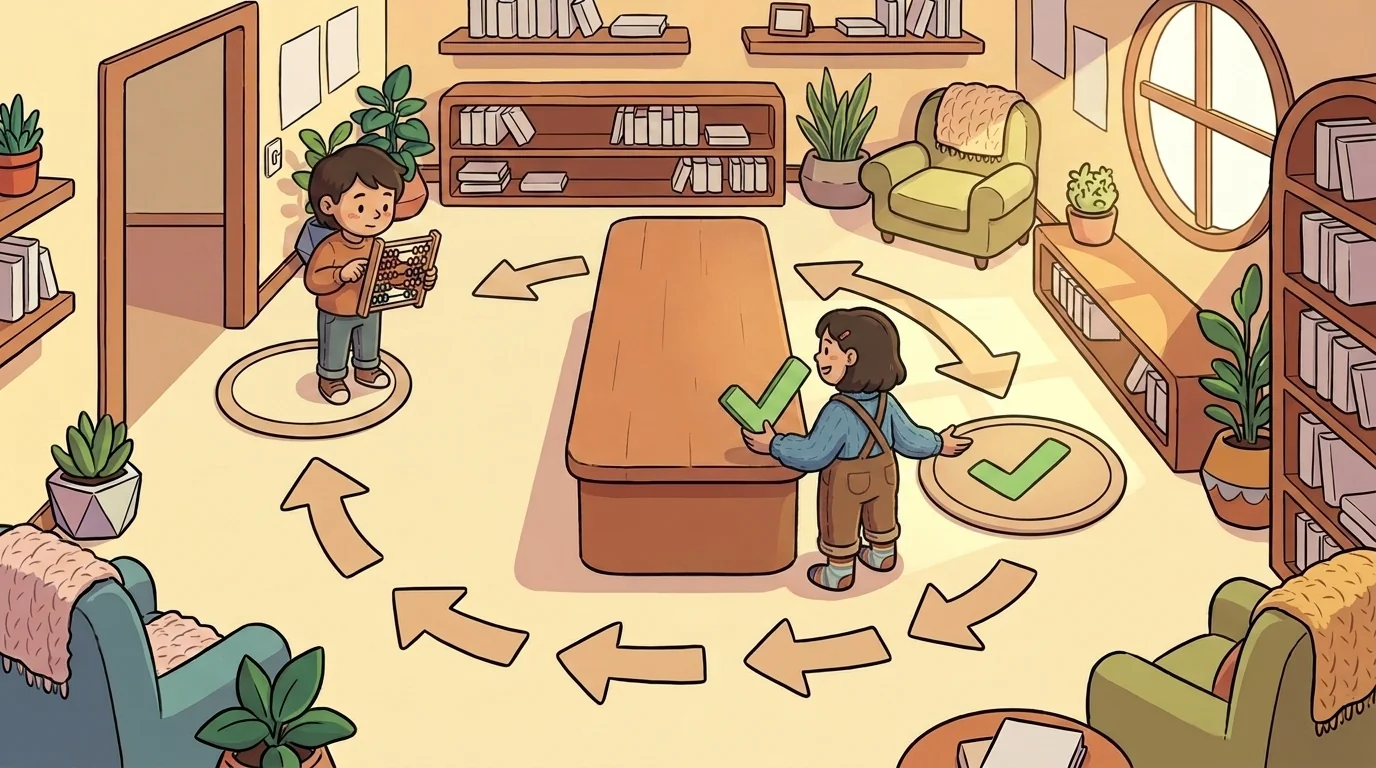
"They added 5," the kid said. "So... I subtract 5 to undo it? That's 12." "And before that?" "They doubled it — so I halve it. 6." The kid checked it forward — 6, doubled is 12, plus 5 is 17 — and it worked. Retta never called a reversal wrong; when the kid first tried to halve before subtracting, Retta just said, "reverse order too — undo the last thing first," and the kid re-found the path. "You didn't need a handhold at the start," Retta said. "You borrowed the one at the end and walked it home."
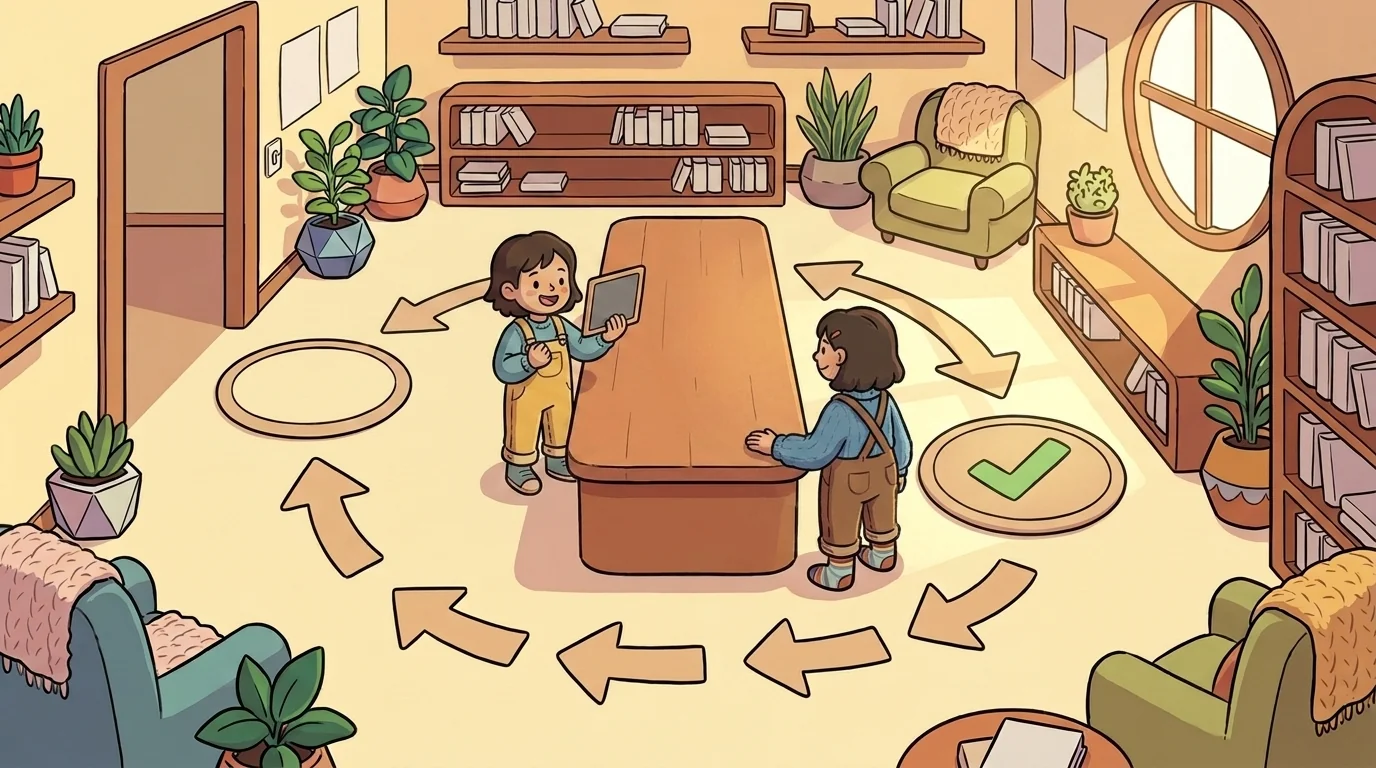
The kid walked around the desk to face forward again, looking at the number 6 like it had appeared by magic — except it hadn't, they'd reversed their way to it.
And the feeling that came was a bright, surprised lightness — the delighted relief of a wall becoming a door, of discovering that being stuck at the start never meant being stuck at all, because you could always turn around and enter from the end. That warm little lift of "oh — I wasn't trapped, I was just facing the wrong way" filled the kid up, and Retta grinned to see it, glad and warm, because a door where a wall had been was the best feeling Retta knew. "When the beginning's hidden," Retta said, patting the desk you could circle from either side, content and bright, "go stand at the end. The end always knows the way back." That lightness of the wall-turned-door — that was the very best part of solving backward.
The ReckonQuest ensemble
Retta is part of ReckonQuest's distributed-narrative cast. Each character embodies a different curricular primitive; together they teach the full subject.
-

Reck
Systematic guess-and-check — makes a reckoned guess, checks it, makes the next guess smarter (the pre-algebra bridge)
-

Lettie
Set up the equation — names the unknowns ('let x = the chickens') and writes the relationships
-
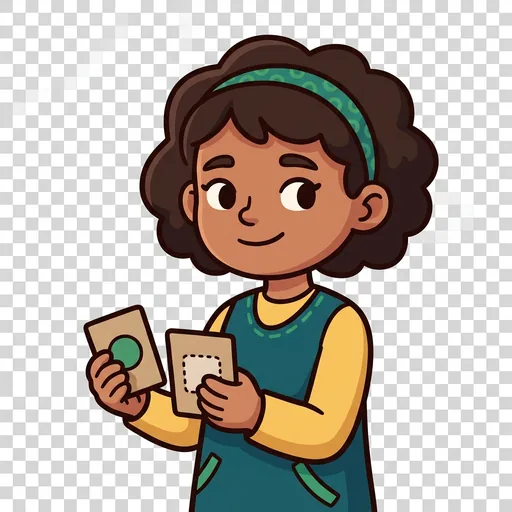
Kindra
Recognize the schema — spots 'this is a coin problem' before solving (schema-based instruction)
-
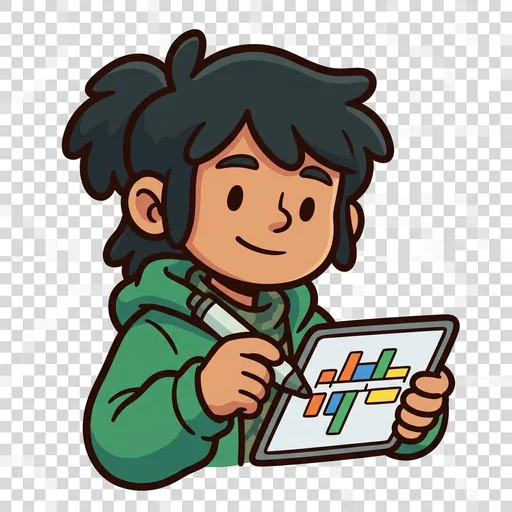
Doodle
Draw a diagram — draws the bar/tape diagram of the relationships
-

Vetta
Look back / check — substitutes the answer back and asks 'does this make sense?'
-

Tad
Simplify to a smaller case — solves a tiny version first (2 heads before 100)
-
Tagg
Track the units — labels every number ('6 = legs, not chickens'), structure over key-words
-
Genny
Generalize — writes the rule that works for any numbers once the specific riddle is solved
-
Cass
The scaffold keeper (mentor) — runs understand→plan→execute→look-back and normalizes not knowing the way in