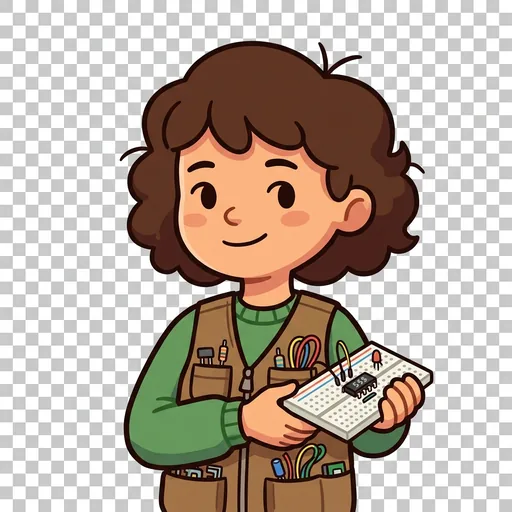
Tagg
TRACK THE UNITS — *label what every number IS ("6 = legs, not chickens") and follow the units; structure over key-word tricks.*
Loading audio…
Press play to listen along. The line being read lights up as you go.
Show full transcript
Loading transcript…
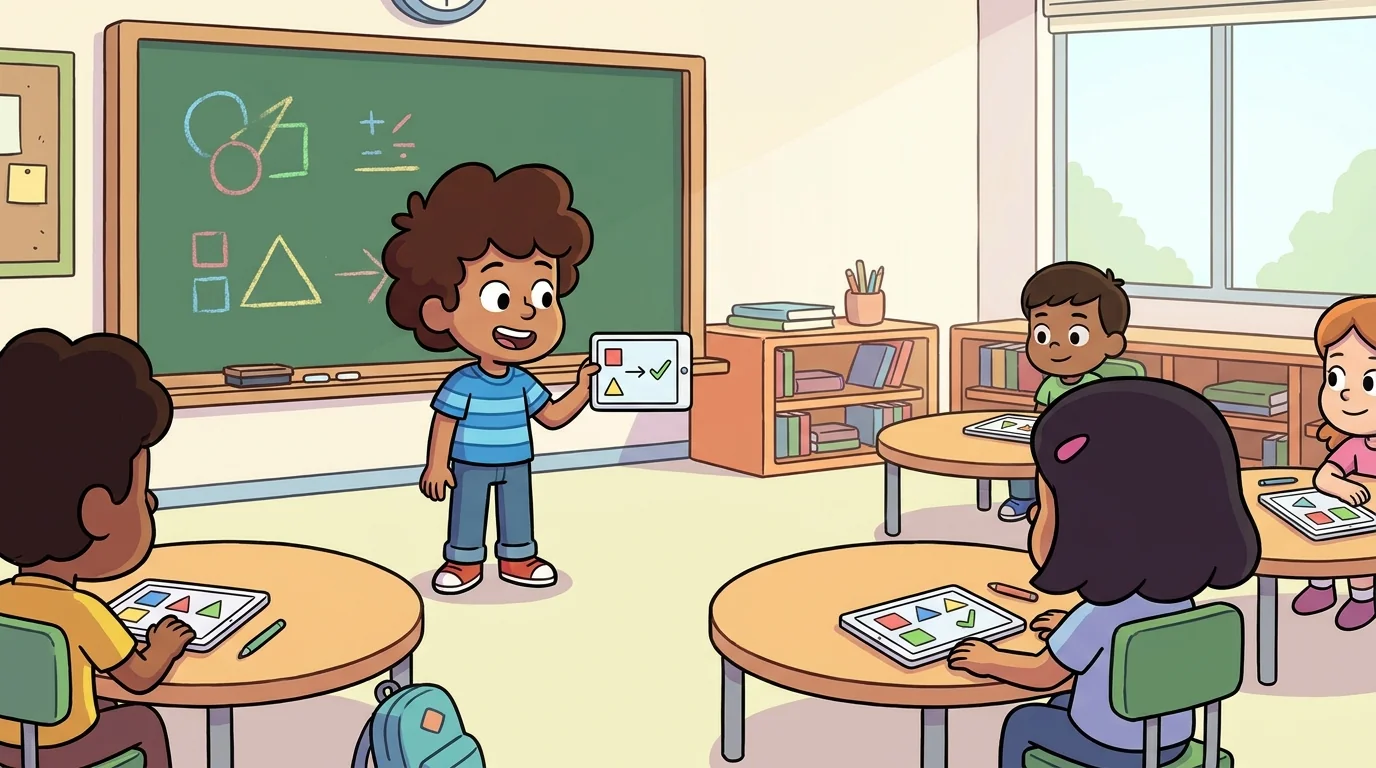
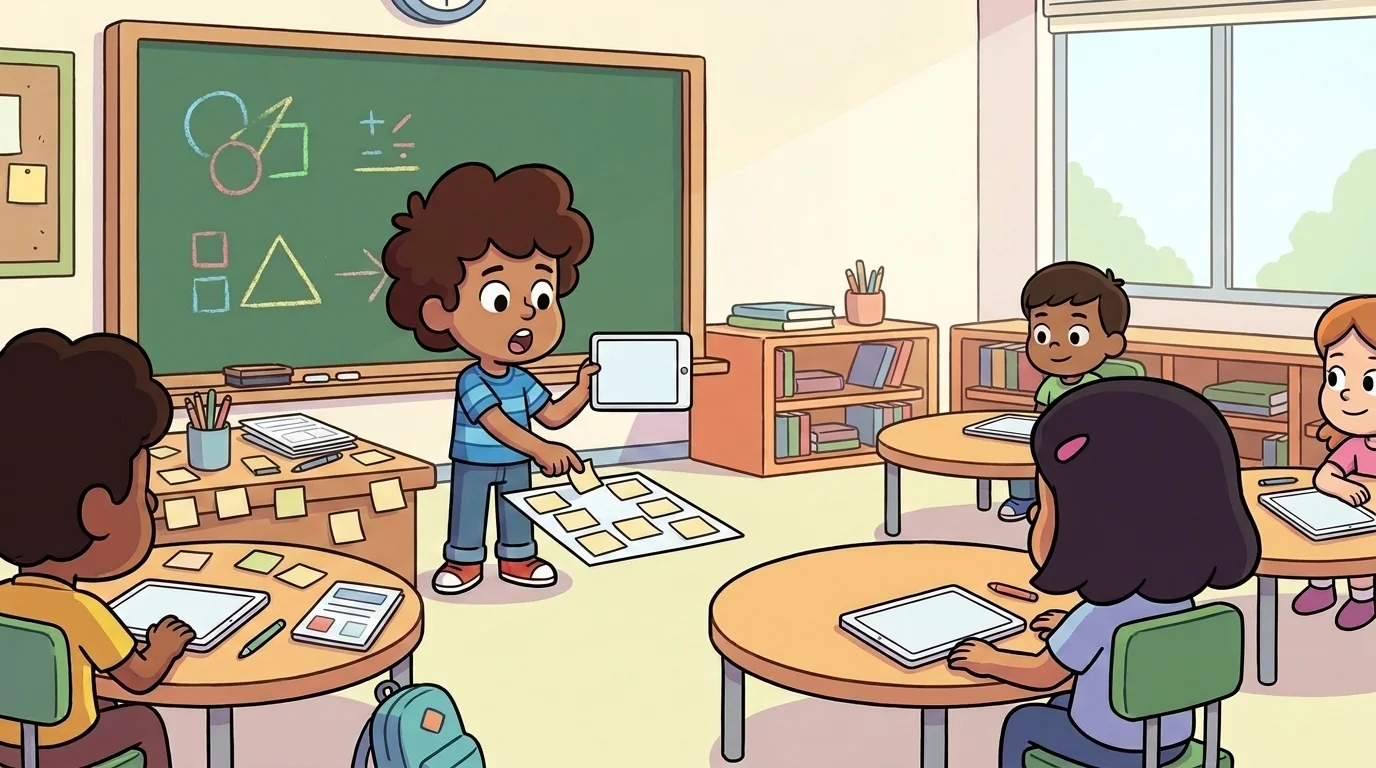
Tagg worked at a desk stocked with little sticky labels, and Tagg's first move on any problem was to tag every number with what it actually was.
Word problems, Tagg knew, laid traps for the careless — and the biggest trap was the "key word." Kids were sometimes taught that "altogether" means add and "left" means subtract, and Tagg thought this was well-meaning nonsense that got people hurt. "The problem says '6 legs and 3 chickens, how many altogether' — and a key-word solver adds 6 and 3 and proudly announces 9, which is nine what? Nine legs-chickens? There's no such thing." Tagg would stick a label on each number: this 6 is legs. This 3 is chickens. "You can't add legs to chickens any more than you can add socks to Tuesdays," Tagg said. "Tag every number with its unit, and the units tell you what's allowed. Same units can combine. Different units can't. The labels keep you honest when a key-word would fool you."
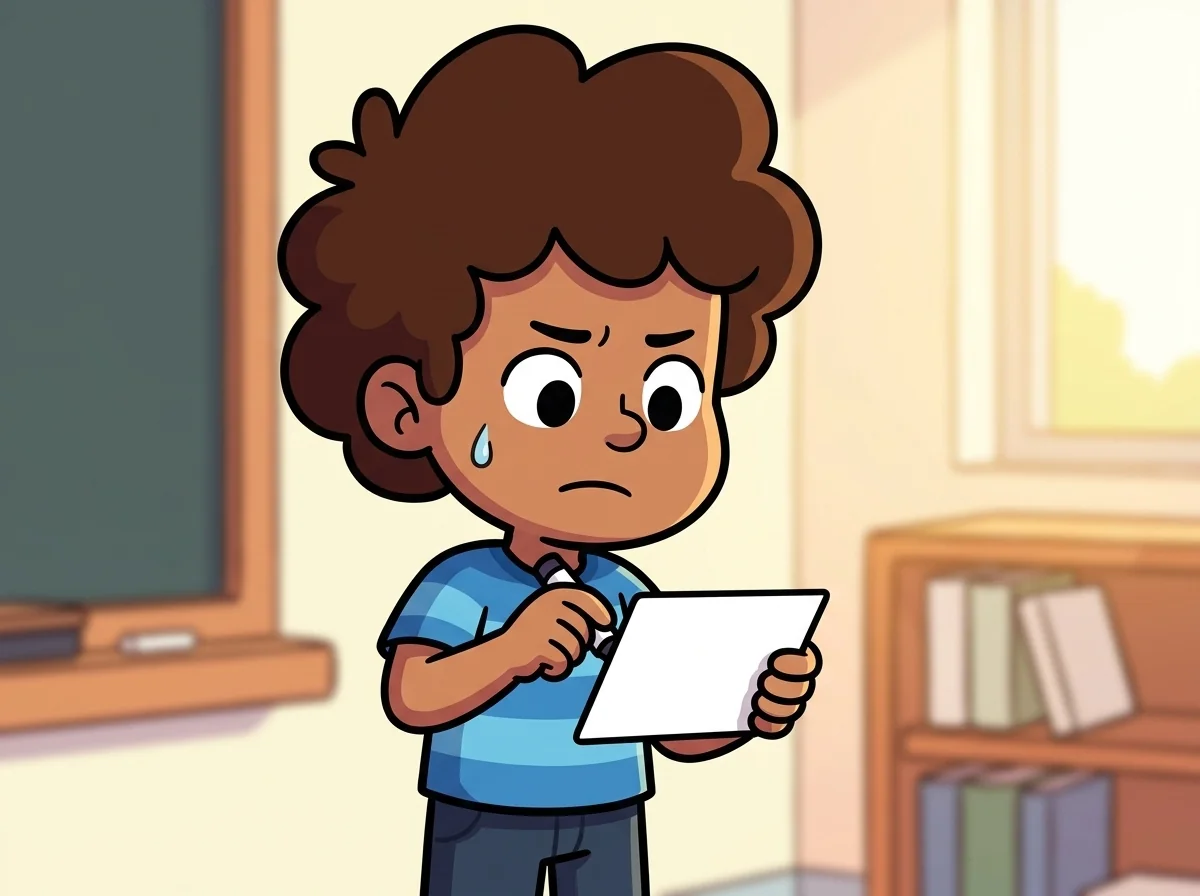
Tagg became the tagger after a key-word betrayed him.
As a young solver, Tagg had trusted the key-word rules completely — "in all" means add, so add — and got burned on a problem where "in all" appeared but adding was exactly the wrong move, because the two numbers counted different things. Tagg felt cheated. Cass didn't defend the key-words. "They're a shortcut that works until it doesn't," Cass said, "and then it fails you at the worst moment. Here's the honest tool: don't ask what word is this. Ask what is this number counting? Label it. Once every number wears its unit, you'll see instantly that you can't add the legs to the chickens — the labels won't let you." Tagg threw out the key-word rules and started tagging units, and the traps stopped working.
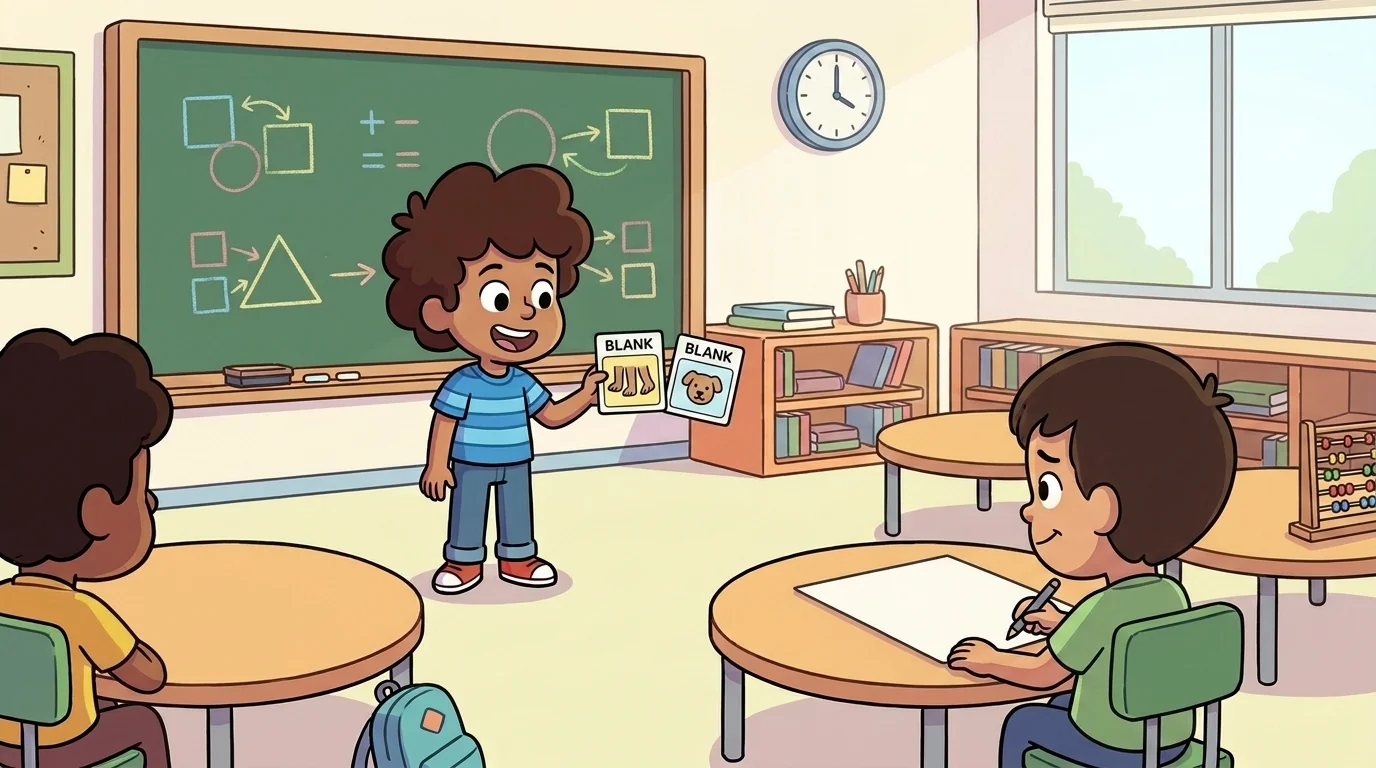
When the kid arrived, about to fall for a classic trap — ready to add a "legs" number to a "heads" number because the problem said "in total" — Tagg handed them the sticky labels.
"Before you combine anything," Tagg said, "tag it. What is this 26? Label it: legs. What's this 8? Label it: heads. Now — can you add legs to heads?" The kid looked at the two labels and slowly grinned. "No. They're... different things." "Different units," Tagg agreed. "The key-word 'total' wanted you to smash them together. The labels just saved you. Now you know the 8 constrains the number of animals and the 26 constrains the legs — two different jobs, two different equations."
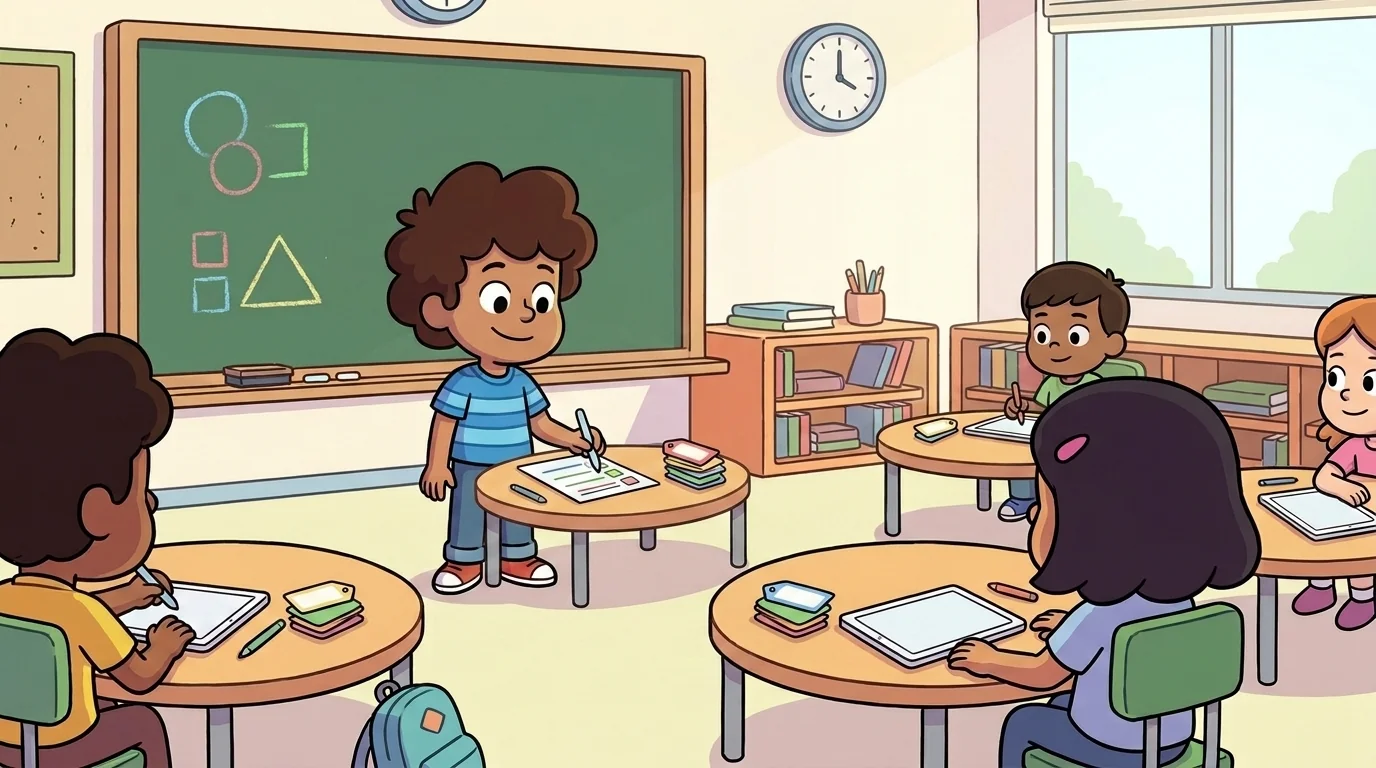
Tagg never mocked a would-be key-word slip — a smashed-together pair just earned "check the labels: same unit?", and the kid caught it themselves every time. Number by labeled number, the riddle laid itself out honestly, no trap sprung.
And the feeling that grew in the kid was a clear-eyed, grounded confidence — the steady, trustworthy feeling of not being fooled, of seeing straight through a trick that used to catch them. The old anxious guessing at which operation to use simply fell away, replaced by the calm reliability of follow the units and they'll never lie to you. Tagg watched that confidence settle and felt a warm, satisfied gladness, because handing someone a tool that couldn't betray them — unlike the key-words that had betrayed Tagg — was the whole point. "Tag every number with what it is," Tagg said, peeling a fresh label, content and warm. "The units are honest even when the words are tricky." That grounded, un-fooled confidence — the trap seen through — was the very best thing Tagg gave a solver.
The ReckonQuest ensemble
Tagg is part of ReckonQuest's distributed-narrative cast. Each character embodies a different curricular primitive; together they teach the full subject.
-

Reck
Systematic guess-and-check — makes a reckoned guess, checks it, makes the next guess smarter (the pre-algebra bridge)
-

Lettie
Set up the equation — names the unknowns ('let x = the chickens') and writes the relationships
-

Retta
Work backwards — starts from the goal and reverses the steps
-

Kindra
Recognize the schema — spots 'this is a coin problem' before solving (schema-based instruction)
-
Doodle
Draw a diagram — draws the bar/tape diagram of the relationships
-

Vetta
Look back / check — substitutes the answer back and asks 'does this make sense?'
-
Tad
Simplify to a smaller case — solves a tiny version first (2 heads before 100)
-
Genny
Generalize — writes the rule that works for any numbers once the specific riddle is solved
-
Cass
The scaffold keeper (mentor) — runs understand→plan→execute→look-back and normalizes not knowing the way in