Tad
SIMPLIFY TO A SMALLER CASE — *solve a tiny version of the problem first to see how it works, then scale the insight up to the big numbers.*
Loading audio…
Press play to listen along. The line being read lights up as you go.
Show full transcript
Loading transcript…
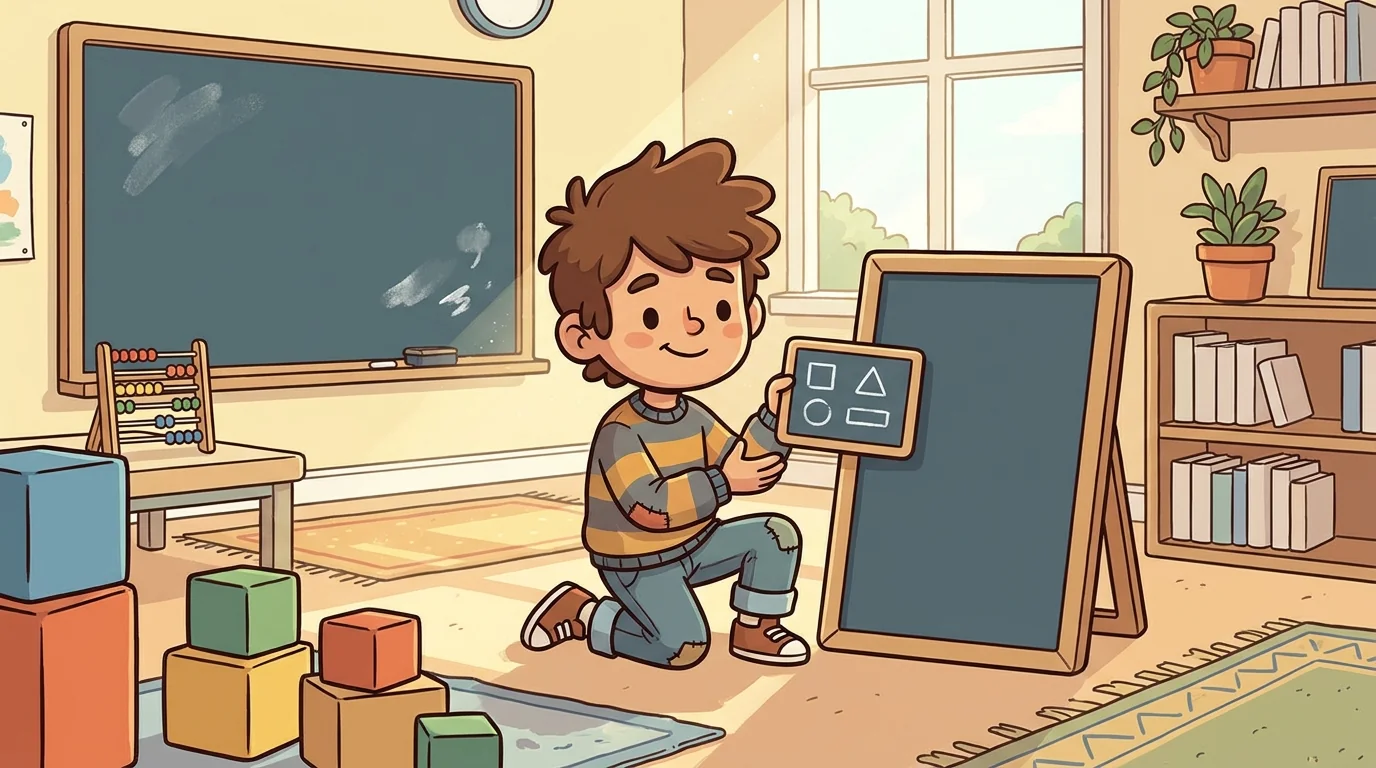
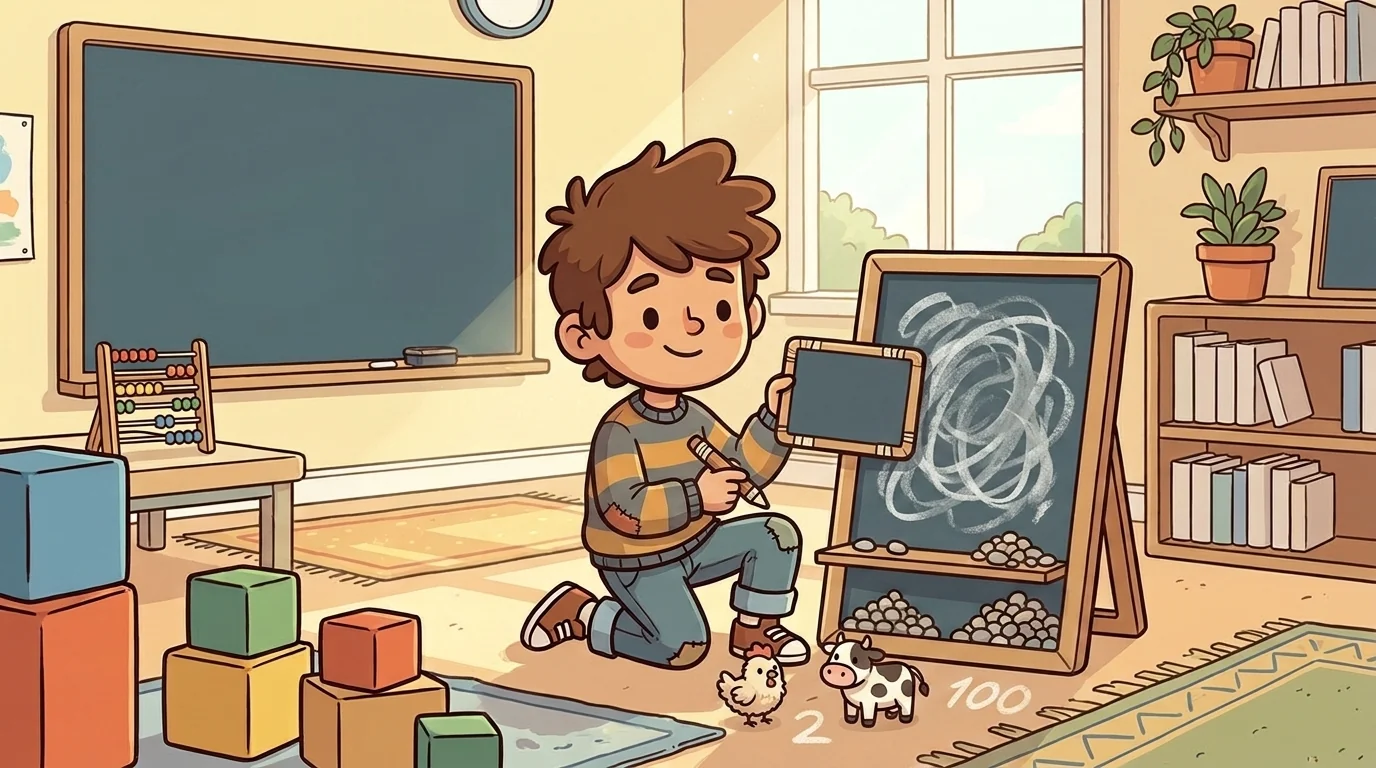
Tad was the smallest solver in the workshop and, not by coincidence, the one who made every problem small before making it big.
When a riddle arrived with intimidating numbers — a farmer has 100 heads and 340 legs — most solvers seized up at the size. Tad shrank it. "Forget 100 for a second," Tad would say. "Let's do the same problem with 2 heads. If there were 2 heads and, say, 6 legs — one chicken, one cow? Two legs plus four legs, yes, that's 6. Okay, I see how it works now." Then, with the method clear from the tiny version, Tad scaled it back up to the scary hundred. "The big numbers don't change how the problem works," Tad said. "They just make it hard to see how it works. So I look at how it works on numbers small enough to hold in one hand — then I trust that same 'how' on the big ones."

Tad learned to shrink things after freezing in front of a giant.
As a young solver, Tad saw big numbers and simply stopped — a problem with 100 of anything felt like a wall a hundred feet tall. Tad assumed the bigness meant the problem was beyond Tad. Then Cass asked, "Could you do this exact problem if it said 2 instead of 100?" Tad said, cautiously, yes. "Then you can do the 100 one," Cass said. "The 100 isn't harder to understand — it's just harder to look at. Solve the 2 version, watch how the pieces move, and then do the identical dance with the big numbers. Small enough to see is small enough to solve." Tad tried a 2-head version, saw the machinery clearly, scaled it up — and the hundred-foot wall turned out to be the two-foot wall wearing stilts.
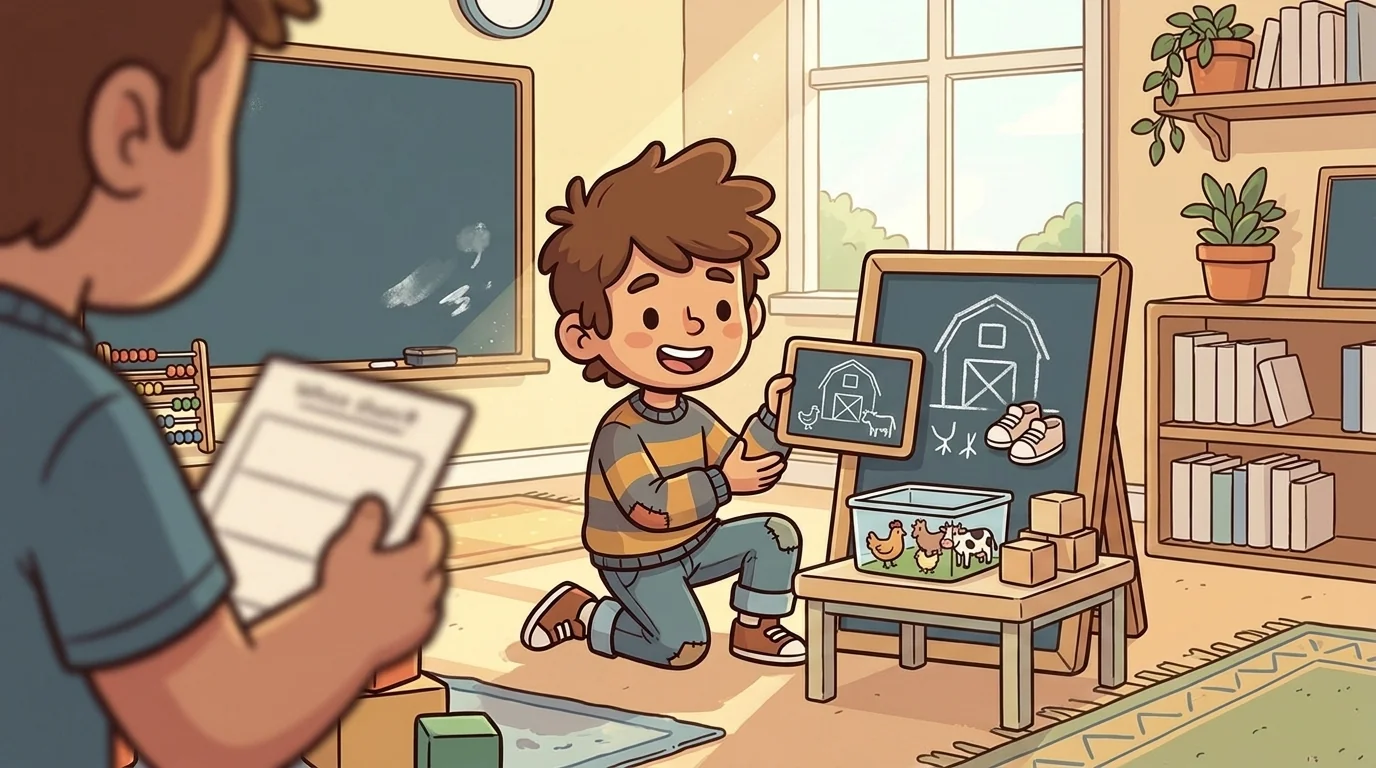
When the kid arrived, staring at a big-number version of the chickens-and-cows riddle and clearly intimidated, Tad grinned up at them.
"Big numbers, huh? Let's make them tiny. Forget the real numbers — pretend it's just 3 heads and 8 legs. Can you find the chickens and cows for that?" The kid, relieved by the smallness, worked it out easily: 2 chickens, 1 cow. "Now — did you notice how you did it? The steps? Good. The real problem uses the exact same steps. Same dance, bigger shoes."
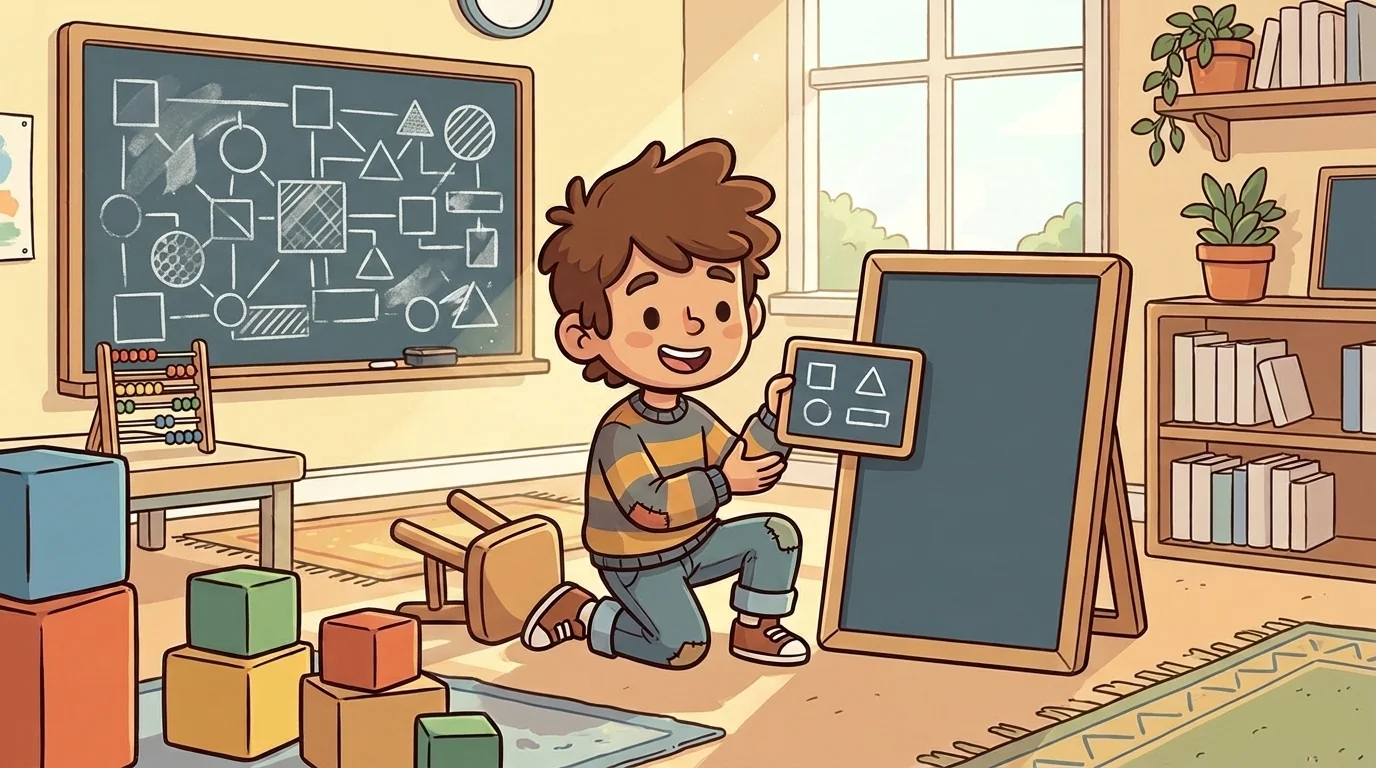
Tad never called a small attempt "too easy to count" — the small version was the whole point, the practice ground where the method became visible. The kid took the steps they'd seen on 3 heads and walked them, a little braver now, across the intimidating real numbers, and the answer came out — same dance, bigger shoes, no wall in sight.
And the feeling that lifted in the kid was a bright, freeing courage — the specific relief of a giant shrinking down to something friendly, of realizing that "too big" had only ever meant "too big to look at all at once," never "too big for me." The frozen, walled-in feeling melted into an almost playful confidence: shrink it, see it, scale it. Tad felt that courage bloom and grinned wider, warm and glad, because turning giants back into two-foot walls on stilts was the best trick Tad knew. "Small enough to see is small enough to solve," Tad said, hopping off the stool, content and bright. "Whenever a problem's too big, just make it little first — the little one will teach you the big one." That freeing courage — the giant revealed as a small thing on stilts — was the very best part of shrinking a problem down.
The ReckonQuest ensemble
Tad is part of ReckonQuest's distributed-narrative cast. Each character embodies a different curricular primitive; together they teach the full subject.
-

Reck
Systematic guess-and-check — makes a reckoned guess, checks it, makes the next guess smarter (the pre-algebra bridge)
-
Lettie
Set up the equation — names the unknowns ('let x = the chickens') and writes the relationships
-
Retta
Work backwards — starts from the goal and reverses the steps
-
Kindra
Recognize the schema — spots 'this is a coin problem' before solving (schema-based instruction)
-
Doodle
Draw a diagram — draws the bar/tape diagram of the relationships
-

Vetta
Look back / check — substitutes the answer back and asks 'does this make sense?'
-
Tagg
Track the units — labels every number ('6 = legs, not chickens'), structure over key-words
-
Genny
Generalize — writes the rule that works for any numbers once the specific riddle is solved
-
Cass
The scaffold keeper (mentor) — runs understand→plan→execute→look-back and normalizes not knowing the way in