
Tad
SIMPLIFY TO A SMALLER CASE — *solve a tiny version of the problem first to see how it works, then scale the insight up to the big numbers.*
Loading audio…
Press play to listen along. The line being read lights up as you go.
Show full transcript
Loading transcript…
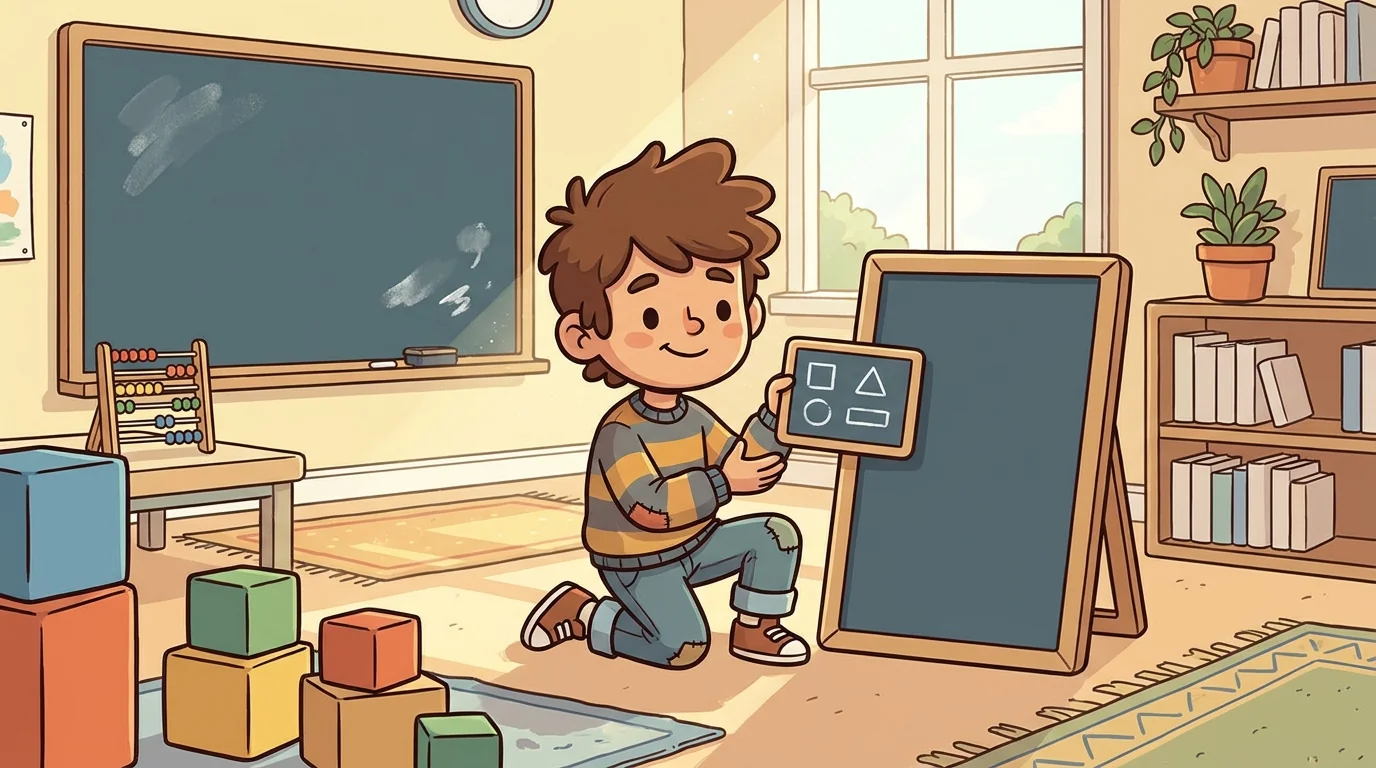
Tad was the smallest solver in the workshop, sitting on a high stool whose wooden rungs hung eight inches above his dangling boots. When a giant problem walked through the heavy double doors, most solvers reached for longer rulers or thicker sheets of paper. Tad did the opposite, reaching instead for a much smaller tool. Before Tad attempted to solve anything big, he always made it tiny.
The workshop hummed with the familiar sound of scraping chalk, turning pages, and low voices arguing over fractions. Tall slate boards lined the brick walls, covered in dense columns of algebra and geometry. Solvers twice Tad’s age often paced the floorboards, muttering under their breath as they confronted massive numbers like insurmountable stone cliffs. Tad did not like cliffs, preferring simple stepping stones that fit neatly under his thumb.
Whenever a problem seemed far too large to manage, Tad relied on his favorite technique: to simplify to a smaller case. The big numbers did not actually change how a problem worked under the surface. They only made the machinery hard to see beneath all the unnecessary noise. By shrinking the scale down to something he could hold in his hand, Tad could watch the gears turn clearly. Once he understood the movement, he carried that exact same logic straight back to the giant.
Tad had not always been so clever about shrinking monsters. Years ago, as a brand-new solver sitting near the back stove, he had frozen in front of a giant himself.
A wooden frame held a fresh riddle written in thick black ink across a yellowed parchment scroll. A farmer has 100 heads and 340 legs in his barn. The paper demanded to know how many creatures were chickens and how many were cows.
Young Tad had looked at those towering numbers and stopped breathing entirely. One hundred heads felt like a stone wall a hundred feet high, while three hundred and forty legs felt like a wave about to crash over his head. He dropped his stick of chalk onto the floor, watching it snap into three useless pieces. He assumed that big numbers required a giant brain, and he knew his own brain was small.
Cass had been watching him silently from across the long room. She was an older solver with ink stains permanently etched into the deep lines of her knuckles. She walked over, pulled up a stool, and sat beside him without saying a word. She did not pick up his broken chalk, nor did she point at the terrifying scroll. Instead, she simply covered the big numbers with her palm.
"Could you do this exact problem if it said two heads instead of a hundred?" Cass asked him softly.
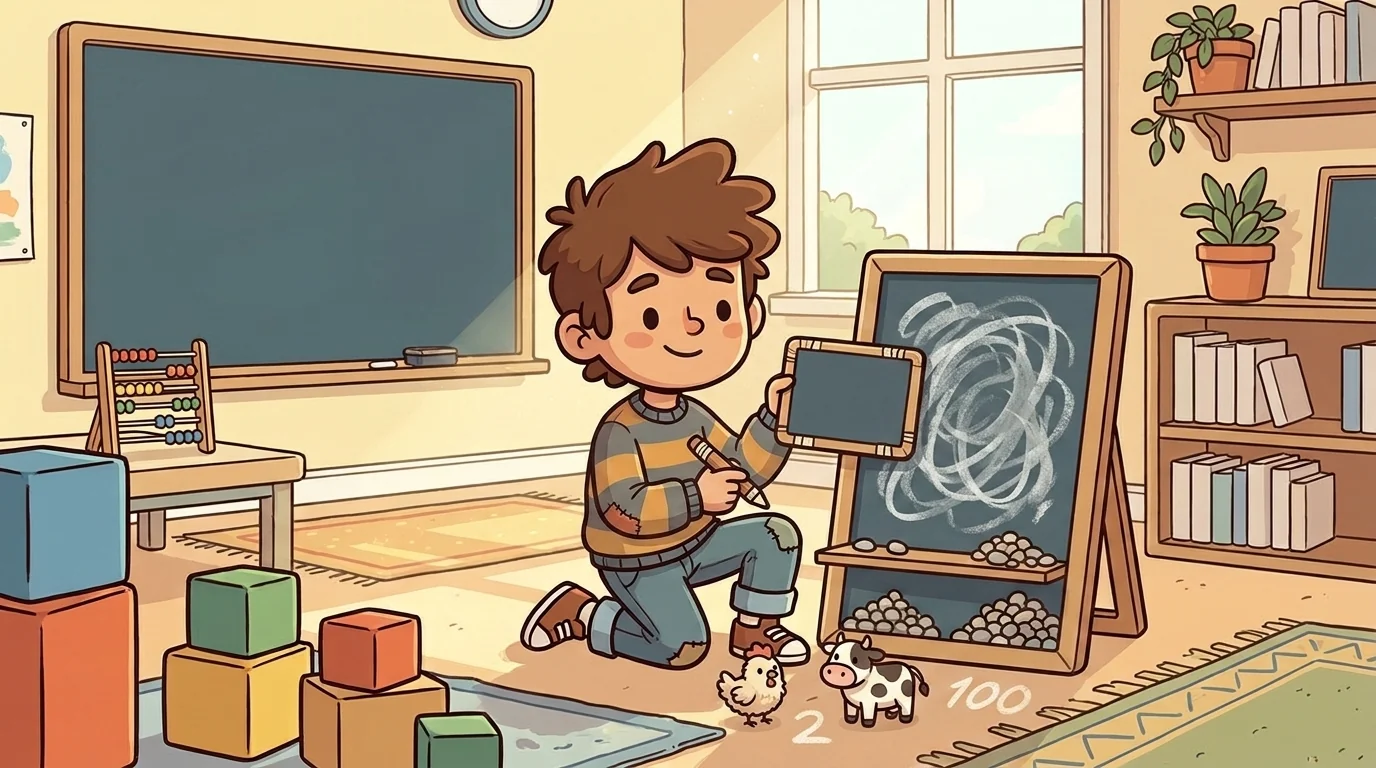
Tad wiped his sweaty palms on his trousers and scowled at the wooden tabletop. "Two heads? That sounds like baby work."
"Try it anyway," Cass said, her voice as steady as a heavy anvil. "Give yourself two heads and six legs, then tell me what is inside the barn."
Tad picked up a piece of broken chalk and drew two quick circles on his personal slate. If both animals were chickens, they would only have four legs total. But the riddle required six legs, so he rubbed out one chicken and drew a cow instead. One cow had four legs, and one chicken had two legs, which added up to six.
"One chicken and one cow," Tad muttered, looking up.
"Do you see what happened when you swapped them?" Cass asked, leaning in closer. "Every time you replace a chicken with a cow, you gain two extra legs while the head count stays the same."
Tad stared at his tiny slate as the machinery of the riddle suddenly turned bright and clear.
"The hundred isn't harder to understand," Cass told him, tapping the wooden edge of his slate. "It is just harder to look at. Solve the tiny version first to watch how the pieces move, then do the identical dance with the big numbers. Small enough to see is small enough to solve."
When Tad returned to the original scroll, the hundred-foot wall was completely gone. In its place stood a harmless two-foot wall wearing long stilts. He scaled the numbers up in three quiet steps, solving the puzzle before the lunch bell rang.
On a rainy Tuesday afternoon, a new kid walked into the crowded workshop. The kid’s shoes squeaked against the wet floorboards, and their fingers were dark with graphite paste. In their right hand, they clutched a crumpled slip of paper.
The kid sat down at the table across from Tad and flattened the paper against the oak grain. Tad leaned over to look, recognizing the classic monster from his own youth: 100 heads, 340 legs.
The kid stared at the numbers with wide, panicked eyes, chewing on the end of a wooden pencil until the cedar splintered.
"I don't know where to start," the kid whispered, looking ready to bolt. "Three hundred and forty is too many legs to count, and if I draw that many sticks, I will run out of paper."
Tad grinned up from his low stool, swinging his feet back and forth against the wooden rungs.
"Big numbers like to shout," Tad said gently. "They try to scare you so you won't look at them closely. Let's make them tiny instead."
The kid blinked in surprise, dropping the splintered pencil. "How do we make them tiny?"
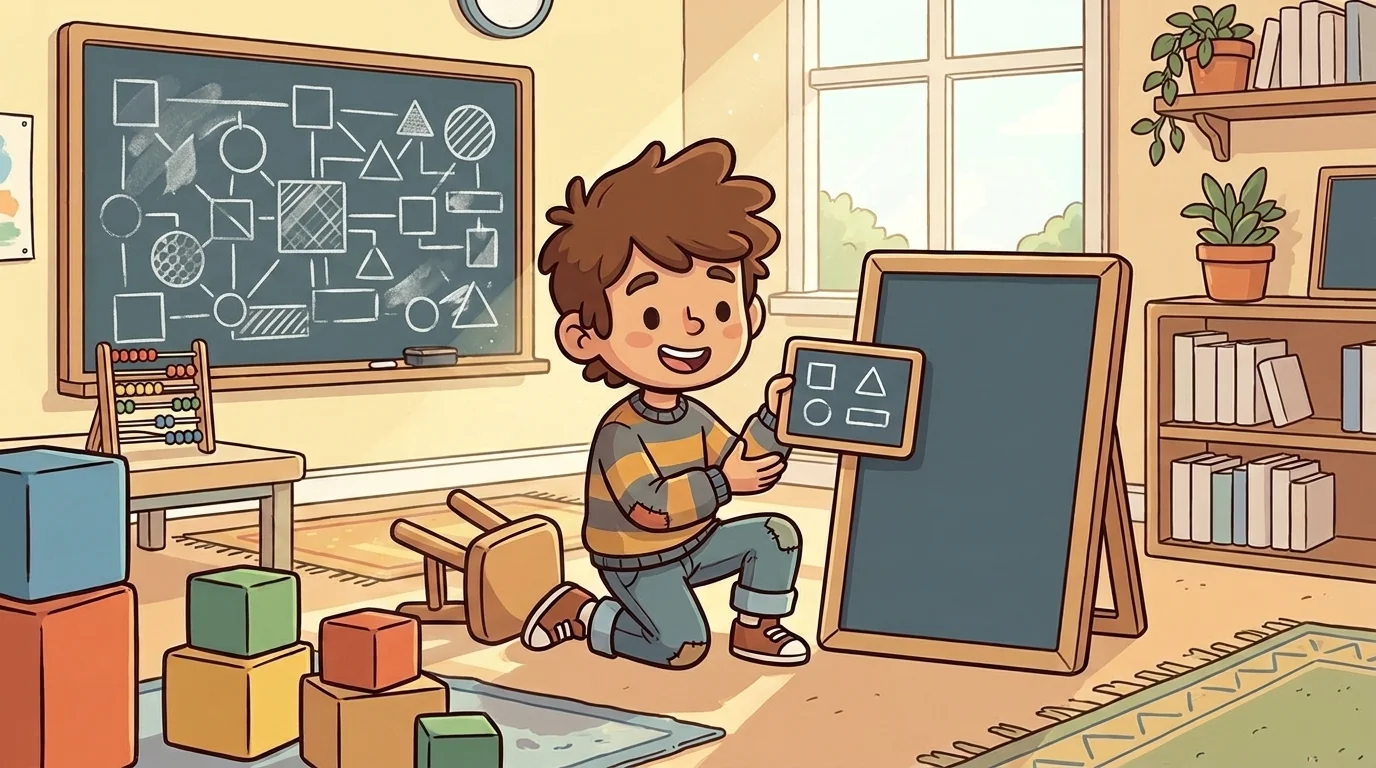
"Forget the real numbers for a minute," Tad said, sliding a clean, handheld slate across the table. "Pretend the farmer only has three heads and eight legs. Can you find the chickens and cows for that version?"
The kid frowned down at the tiny slate. "But that isn't the problem on my paper. My assignment says one hundred heads."
"I know," Tad said, resting his chin in his hands with a patient smile. "Consider this a warm-up. Trust me."
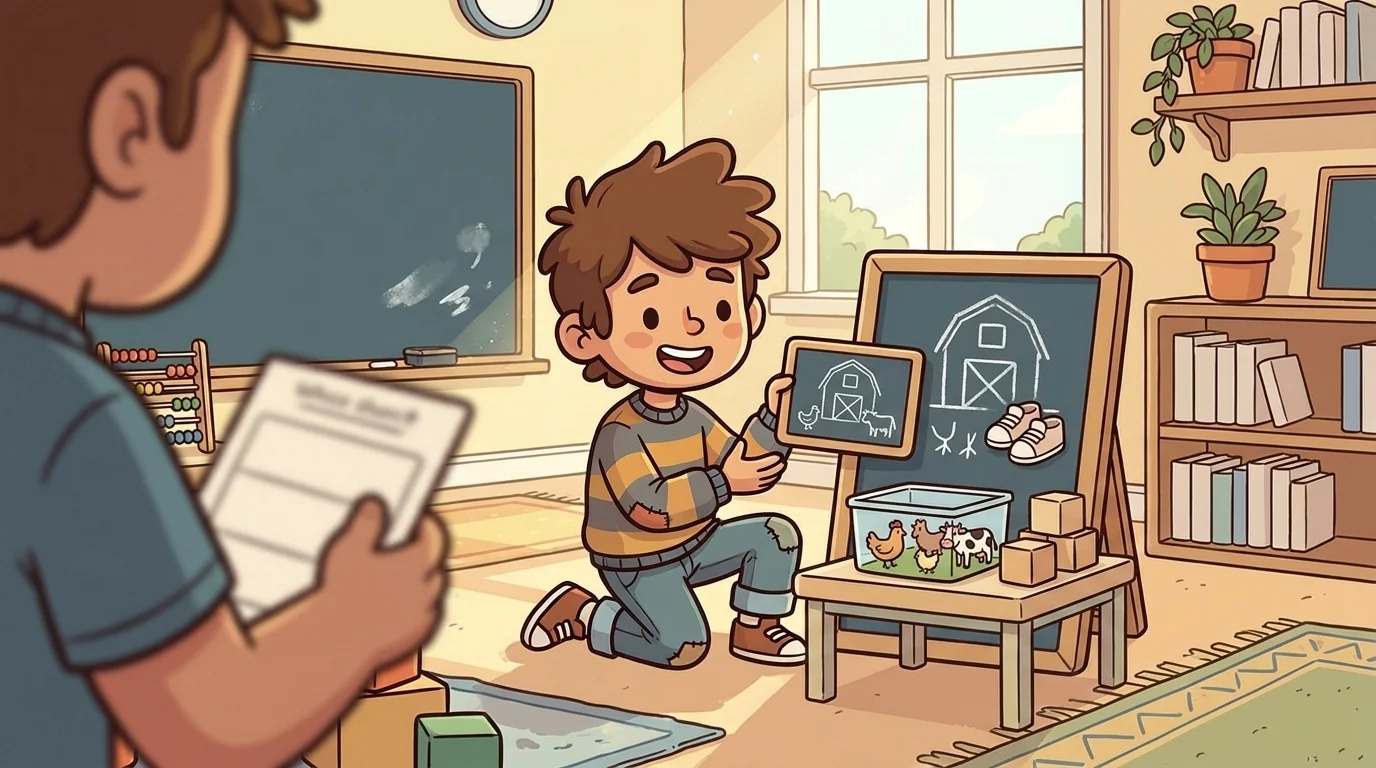
The kid took a piece of chalk and drew three small circles on the slate. They drew two lines under each circle for legs, which made six legs altogether.
"I need two more legs," the kid muttered, studying the drawing.
They rubbed out the legs under the first circle and drew four lines instead. Now there was one cow and two chickens on the slate. One cow had four legs, and two chickens had two legs each, which equaled eight legs.
"One cow and two chickens," the kid said, a small smile touching the corner of their mouth. "That was actually easy."
"Did you notice how you did it?" Tad asked, pointing a short finger at the white chalk marks. "What happened when you changed that first chicken into a cow?"
"I added two legs," the kid said immediately. "Because a cow has two more legs than a chicken."
"Exactly," Tad said, clapping his hands together once with a sharp snap. "Every cow you add gives you two extra legs without changing the total number of heads. Now look back at your paper, because the real problem uses the exact same steps. Same dance, bigger shoes."
The kid looked down at the original scroll again. The three hundred and forty legs did not seem like a crashing wave anymore. They just looked like a simple addition trick wearing an oversized coat.
"If all one hundred animals were chickens," the kid began thoughtfully, "there would be two hundred legs."
"Right," Tad encouraged, nodding along.
"But we need three hundred and forty legs," the kid continued, writing the numbers down in a neat column. "That means we are missing one hundred and forty legs."
"And how do we get those extra legs?" Tad asked.
"By swapping chickens for cows," the kid said, their pencil moving quickly across the paper. "Each cow gives us two extra legs, so we divide one hundred and forty by two."
The kid wrote down seventy with a flourish. "Seventy cows!"
"Which leaves how many chickens?" Tad asked.
"Thirty chickens!" the kid shouted, checking the math with quick, sure strokes. Seventy cows had two hundred and eighty legs, while thirty chickens had sixty legs. Together, they made three hundred and forty legs across one hundred heads.
The kid sat back in the chair, letting out a long, shuddering breath of relief. The frozen, walled-in feeling in their chest melted away completely. They looked at Tad with a bright, startled kind of courage, realizing the giant problem had shrunk down into something friendly.
Tad felt that same familiar warmth bloom in his own chest. Turning giant monsters back into two-foot walls on stilts was the best trick he knew.
"Small enough to see is small enough to solve," Tad said, hopping down from his stool. He tapped the small slate with his thumb before setting it back on the shelf. "Whenever a problem gets too big, just make it little first. The little one will always show you the way."
The ReckonQuest ensemble
Tad is part of ReckonQuest's distributed-narrative cast. Each character embodies a different curricular primitive; together they teach the full subject.
-

Reck
Systematic guess-and-check — makes a reckoned guess, checks it, makes the next guess smarter (the pre-algebra bridge)
-
Lettie
Set up the equation — names the unknowns ('let x = the chickens') and writes the relationships
-
Retta
Work backwards — starts from the goal and reverses the steps
-
Kindra
Recognize the schema — spots 'this is a coin problem' before solving (schema-based instruction)
-
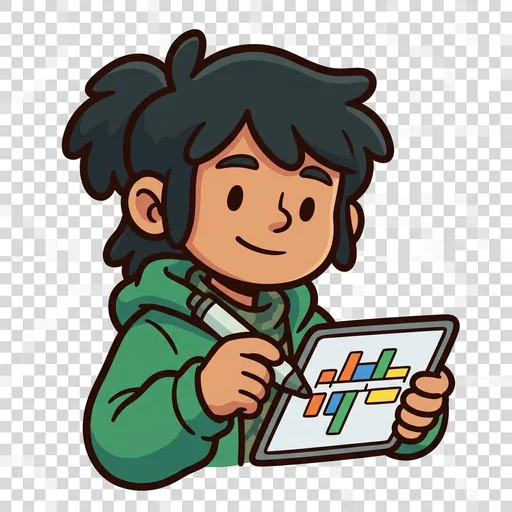
Doodle
Draw a diagram — draws the bar/tape diagram of the relationships
-
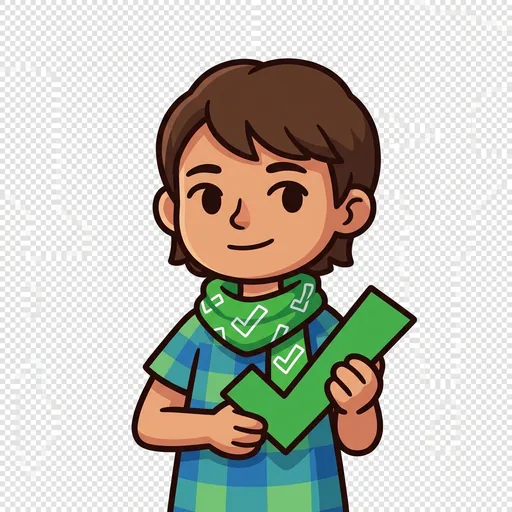
Vetta
Look back / check — substitutes the answer back and asks 'does this make sense?'
-
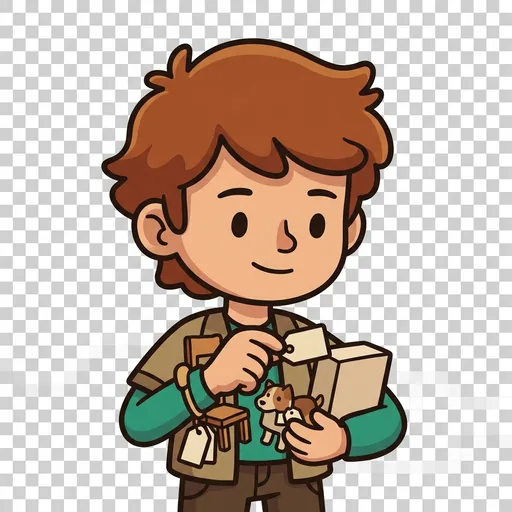
Tagg
Track the units — labels every number ('6 = legs, not chickens'), structure over key-words
-
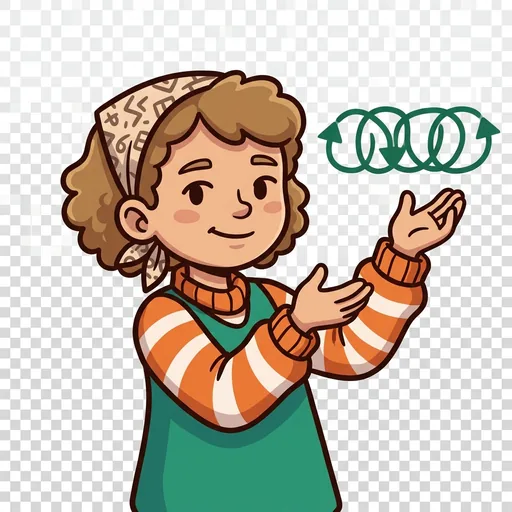
Genny
Generalize — writes the rule that works for any numbers once the specific riddle is solved
-
Cass
The scaffold keeper (mentor) — runs understand→plan→execute→look-back and normalizes not knowing the way in