
Radicle
MORPHOLOGY / WORD-BUILDING — a word grows from a root by bolting a prefix onto the front and a suffix onto the end (port becomes transport becomes transportation); the root carries the core meaning, and the pieces you add change what the word can do
Loading audio…
Press play to listen along. The line being read lights up as you go.
Show full transcript
Loading transcript…

Radicle never met a long word he feared, because he'd learned that long words aren't single things — they're assemblies.
"A giant word like 'transportation' looks terrifying if you meet it whole," he told the solvers. "But it's built from parts, like anything built. There's a root in the middle carrying the core meaning — port, 'to carry.' A prefix bolted on the front that bends it — trans, 'across.' And a suffix on the end that says what job it does — -ation, 'the act of.' Transportation: the act of carrying across. You didn't need to know the word. You needed to know its pieces."

He taught the division of labor between the parts.
"The root is the heart — it never lies about what the word is about. The prefix aims it: un- reverses, re- repeats, pre- comes-before, trans- crosses. The suffix changes its job — -er makes a doer, -tion makes a thing, -able makes a can-be. Same root, different fittings, different word. Port alone. Import, carry-in. Portable, able-to-be-carried. Porter, one-who-carries. One heart, many bodies."
The subtext the older solvers heard was the engineer's comfort: nothing built out of parts is truly unknowable, because you can always take it apart and read the pieces.

Radicle told them how he'd stopped drowning in vocabulary.
"I used to try to memorize long words as whole blocks, and I drowned — there are too many. Then I learned maybe forty roots and a couple dozen prefixes and suffixes, and suddenly I could build or break thousands of words I'd never studied. I didn't learn more words. I learned the pieces words are made of. Learn the bricks, and every building becomes readable."
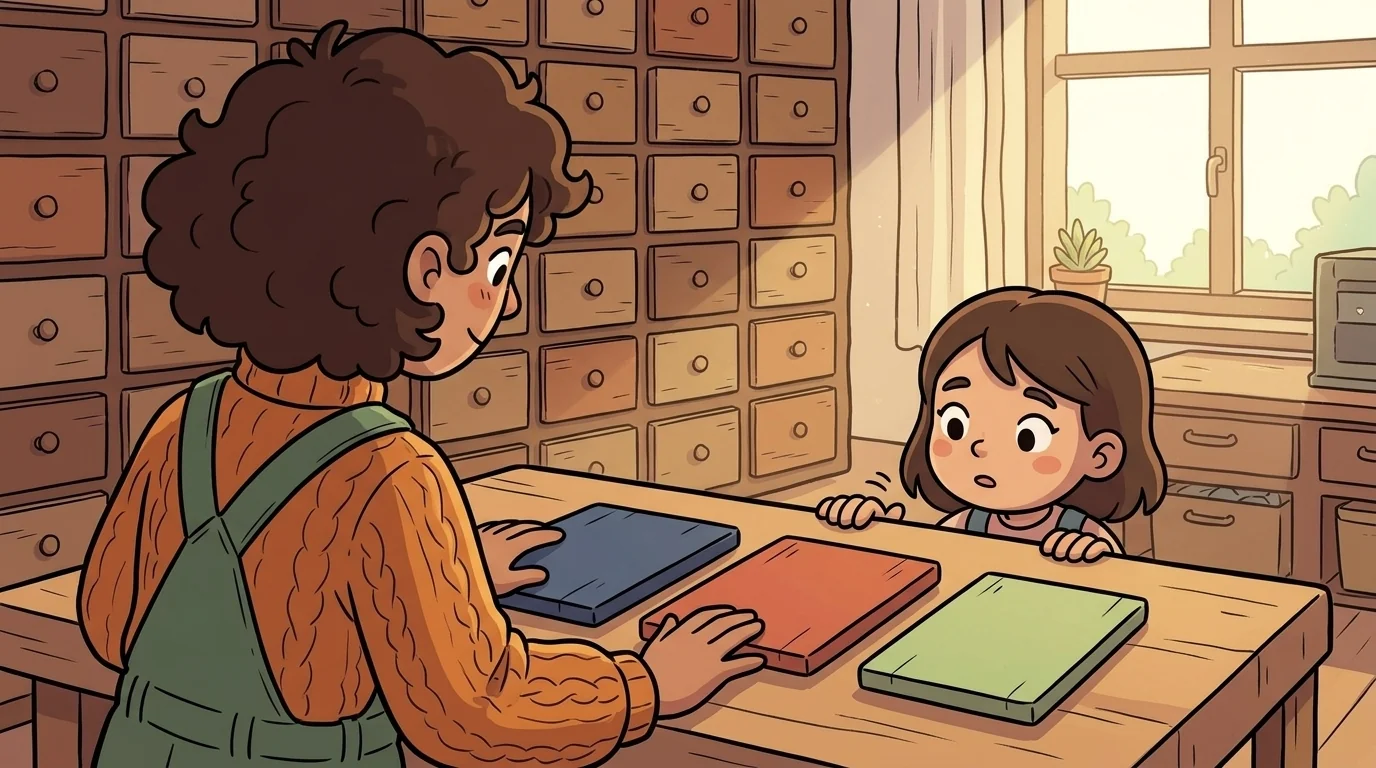
The Host gave him a word he swore he'd never seen: incredulous.
"Break it," Radicle said. "In- — a prefix meaning 'not.' cred — a root meaning 'believe,' the same one in 'credit' and 'credible.' -ous — a suffix meaning 'full of.' So: not-believe-full-of. Full of not-believing. Unwilling to believe." He set it down. "I've never used that word in my life. But I read its three pieces, and it told me exactly what it means. That's not memory. That's reading the build."
The solver tried one. "So 'unbreakable' is un-not, break, able-to-be — not able to be broken?"

At the end Radicle handed them the builder's rule.
"When a word looms too big to know," he said, "don't panic and don't guess. Take it apart. Find the root — that's what it's about. Read the prefix — that's how it's aimed. Read the suffix — that's its job. Almost every long word is just familiar pieces you already know, bolted together in a new order." He clicked three imaginary parts together and pulled them apart again. "Learn the pieces, and you're never really meeting a stranger. You're just meeting an old friend in new clothes."
The WordForge ensemble
Radicle is part of WordForge's distributed-narrative cast. Each character embodies a different curricular primitive; together they teach the full subject.
-
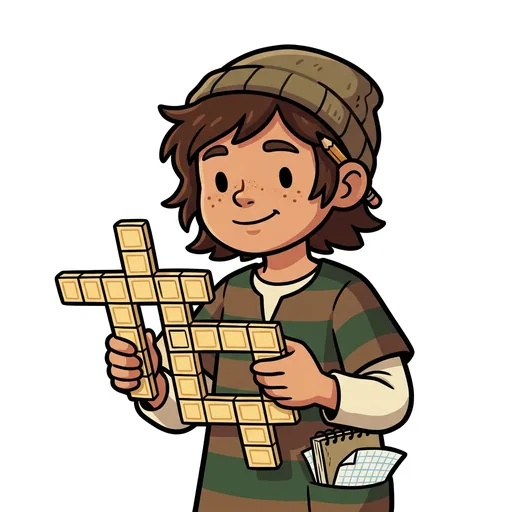
Acrostica
Crossword construction — builds grids where every letter satisfies two crossing words at once
-
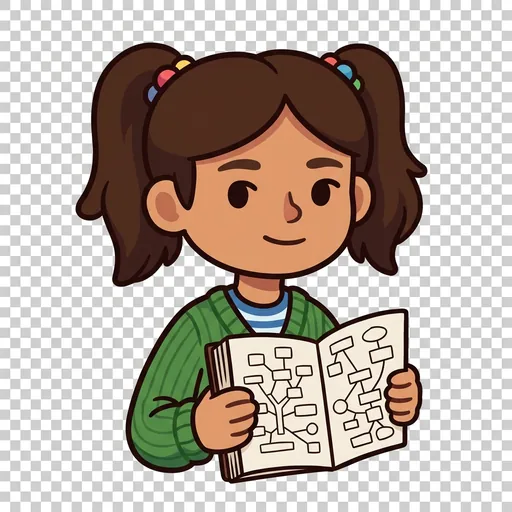
Origo
Etymology / word origins — traces a word back through its ancestor languages
-

Anna Gram
Anagram / letter manipulation — rearranges the exact same letters into new words
-

Rung
Word ladder — climbs word→word changing exactly one letter per step
-

Metaphora
Figurative language — sets two things side by side and says one IS the other
-

Tinge
Nuance / connotation — sorts near-synonyms by their exact shade of feeling
-

Rebus
Double-meaning / cryptic clues — refuses the obvious reading and finds the hidden second one
-

Boggs
Adjacency word-search — traces a path through touching letters to find hidden words
-

Vellum
The arcade keeper (mentor) — introduces each format and normalizes not knowing a word