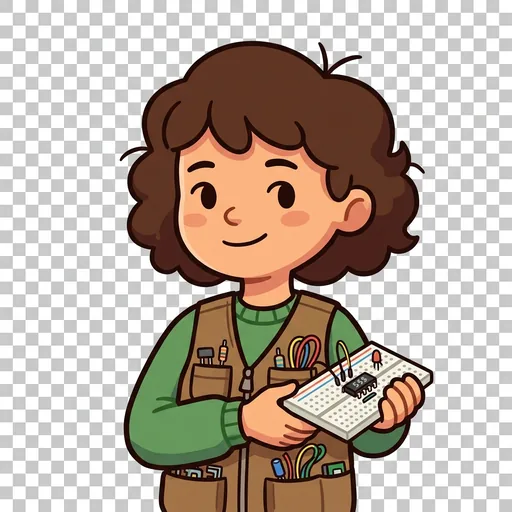
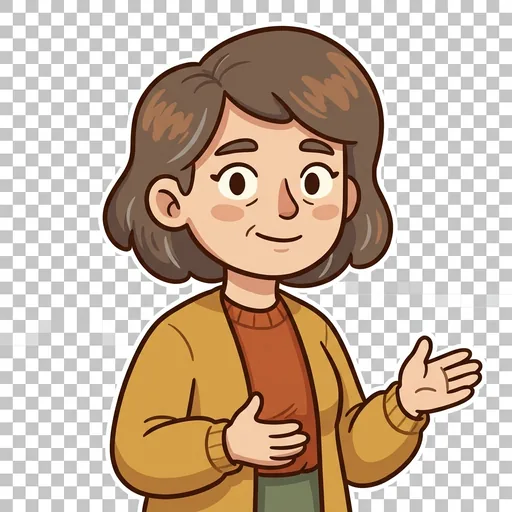
Anna Gram
ANAGRAM / LETTER MANIPULATION — take the exact same set of letters and rearrange them into a different word. LISTEN → SILENT. The letters don't change; only their order does, and the order changes everything.
Loading audio…
Press play to listen along. The line being read lights up as you go.
Show full transcript
Loading transcript…
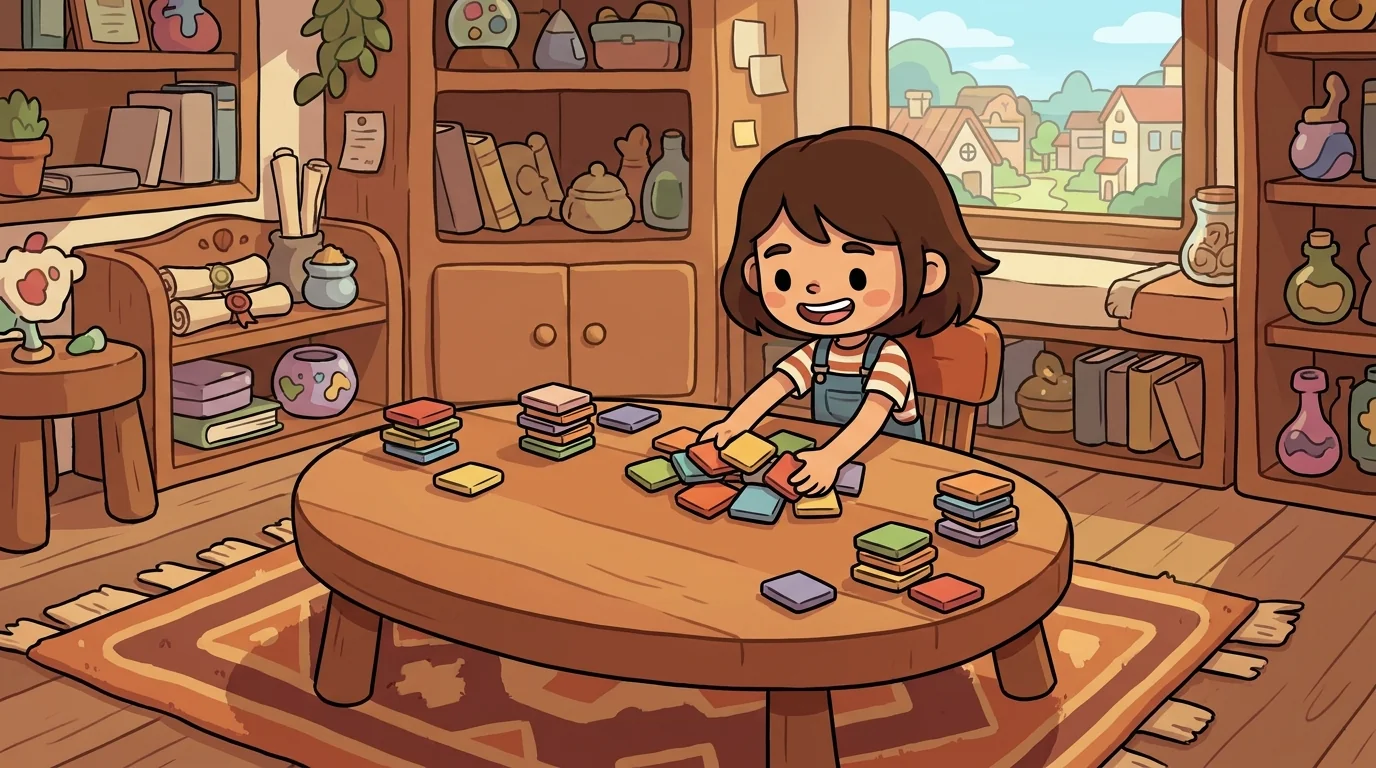
Anna Gram never asks for more letters. She thinks that's cheating.
Give her a word and she'll grin, scoop up its letters like a handful of tiles, and shuffle them across the table until a different word falls out — same letters, every one of them, not one added and not one taken away. LISTEN, she'll say, and slide the tiles around, and there is SILENT. EARTH becomes HEART. STRESSED becomes DESSERTS. "You already had everything you needed," she says every single time, as if it's the most reassuring fact in the world. "You just had it in the wrong order."
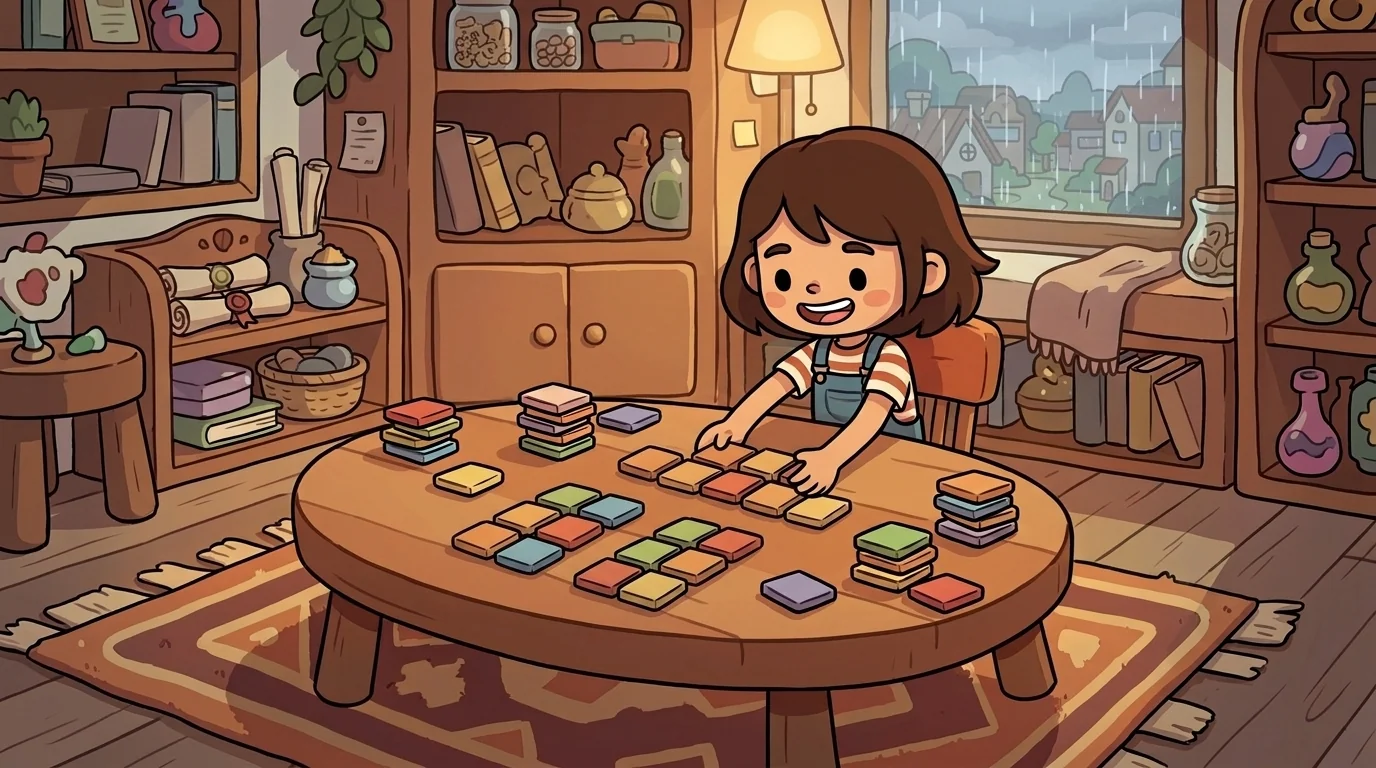
Anna Gram spent a big chunk of her childhood convinced she was missing something.
Everyone around her seemed to have some extra piece she didn't — a talent, a confidence, a knack she'd have to go out and get somewhere. She was always waiting to be given the thing that would finally make her enough. She kept a mental list of what she lacked. It was a long list. It made her tired.
The change came from a box of alphabet tiles and a rainy afternoon and a bored older cousin who said, "Bet you can't make another word out of the letters in your own name." Anna sat down with the tiles of her name and started sliding them around — not adding, not removing, just reordering — and word after word fell out of the exact same letters she'd been carrying the whole time. She hadn't needed a single new tile. Everything she needed had already been there, in her hand, the whole afternoon. It was only ever a question of arrangement.
She never quite got over it. The idea that you could be already enough — that the answer might not be more but rearranged — became the thing she believed most.
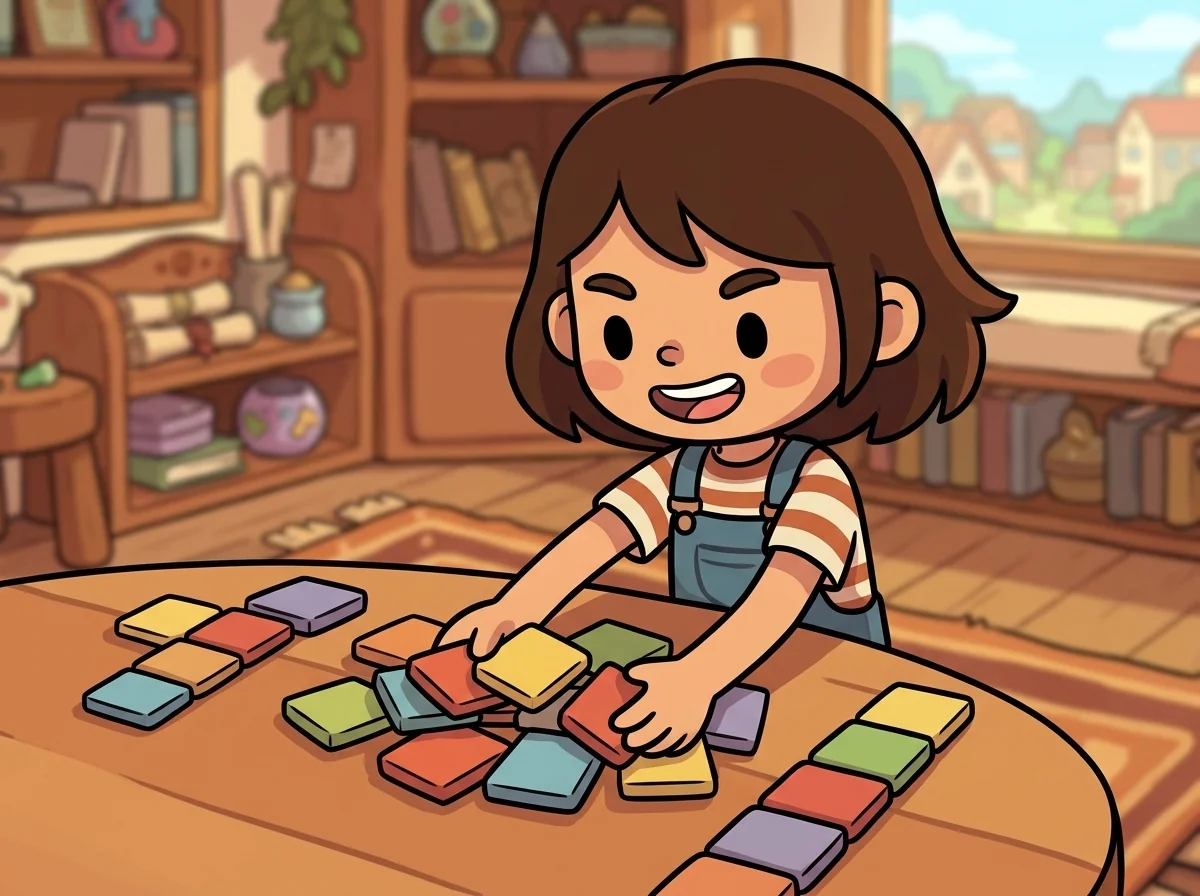
She came to the WordForge academy with tiles in her pockets and shuffled her way through the entrance test. The head wrote a word on the board — TABLE — and asked the apprentices to find a hidden word inside it. Most of them added letters, or dropped some, or looked for a small word buried in the front.
Anna Gram used every letter and not one more. BLEAT, she said — the sound a sheep makes — laying out T-A-B-L-E rearranged, all five tiles, nothing spare. "You said inside it," she told the head. "So I used what was inside it. All of it. That's the rule I like: same letters, new word."
"Most people reach for a new letter the moment they get stuck," the head said. "You never reach. You just rearrange." And that has been her whole way ever since. Anna Gram does not add. She shuffles.
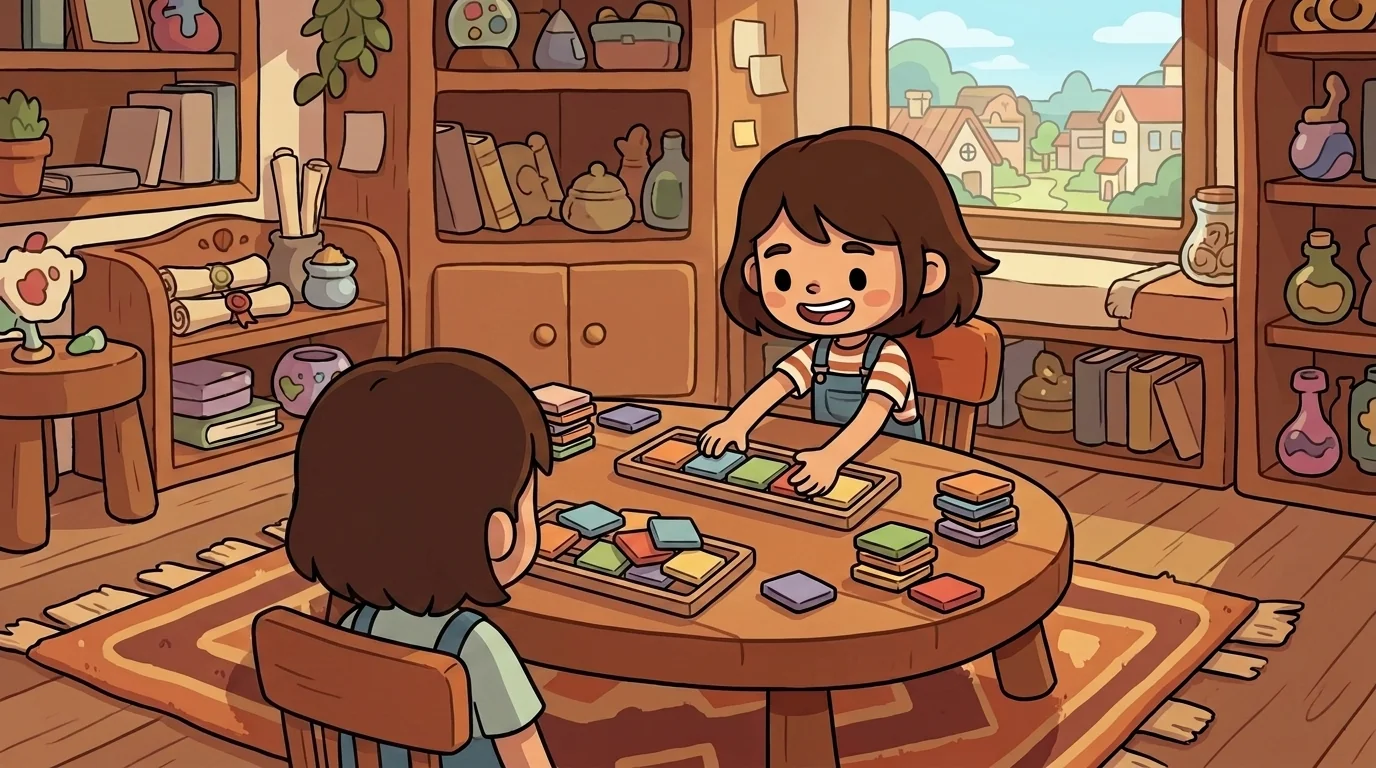
A student came to her frozen on a puzzle. "I need a five-letter word and I've got the letters A, E, R, C — I need one more, I'm stuck." Anna Gram counted his tiles. "That's four letters. You said five. What's the fifth?"
"I don't have a fifth."
"You have CARE," she said, tapping it. "That's four. So you're not looking for a fifth letter. You're looking for a fifth word hiding in the four you've got, or you miscounted. Show me the whole tray." He did. There was a spare R he'd forgotten. Anna Gram slid the five tiles — C, A, R, E, R — around, patient, humming, and out came RACER. Same tiles. New word. "You didn't need to go get anything," she said. "You needed to look at what you already had and put it in a different order."
The boy stared at RACER as if it had appeared by magic. It hadn't. It had been sitting in his own tray the entire time, disguised as a mess.
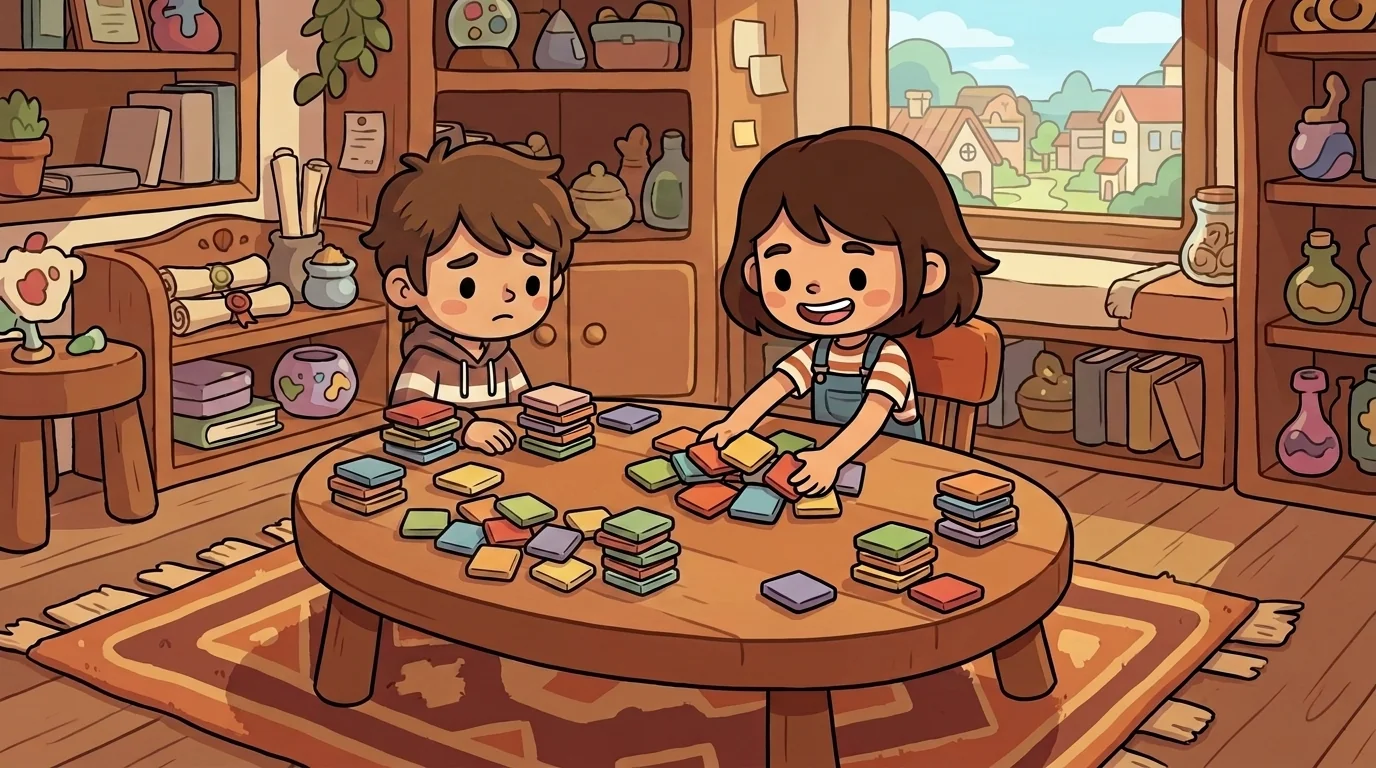
He came back later and admitted the thing under the thing. "I always feel like I need one more of something," he said. "One more clue. One more letter. One more — I don't know."
Anna Gram stopped shuffling. For a second she looked less like a game-player and more like the kid who'd once kept a long list of everything she lacked. "I know that feeling better than anything," she said. "I lived inside it. And then I found out that most of the time the thing I was waiting to be given was already in my hand — I just had it in the wrong order." She swept the tiles toward him. "You don't always need more. Sometimes you need to trust that what you've got is already enough, and be brave enough to rearrange it."
He spent the walk home rearranging the letters of everything he passed, and grinning every time a whole new word fell out of letters that had been there all along.
The WordForge ensemble
Anna Gram is part of WordForge's distributed-narrative cast. Each character embodies a different curricular primitive; together they teach the full subject.
-
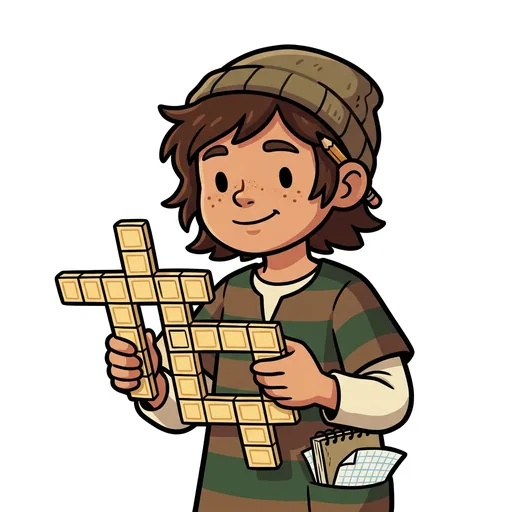
Acrostica
Crossword construction — builds grids where every letter satisfies two crossing words at once
-
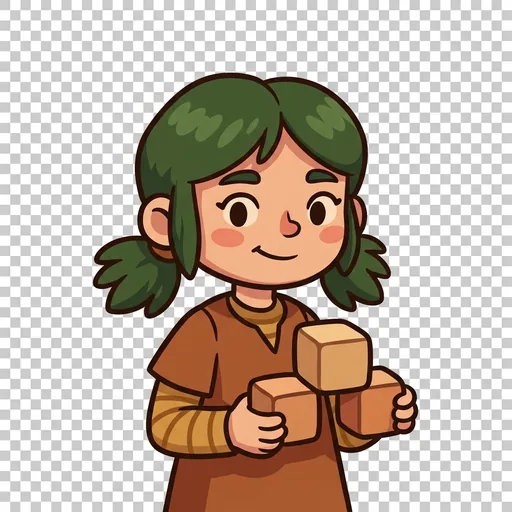
Radicle
Morphology / word-building — bolts a prefix and suffix onto a root to grow new words
-
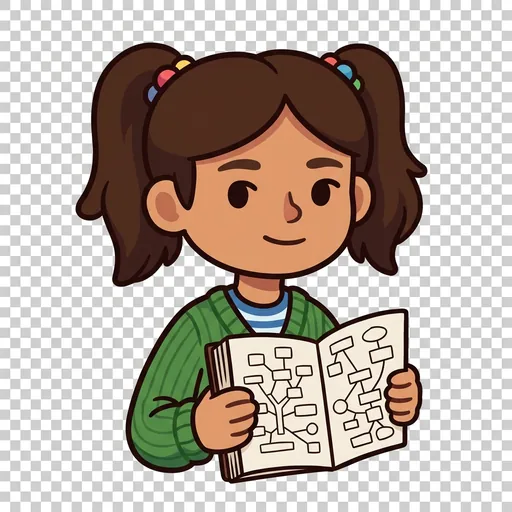
Origo
Etymology / word origins — traces a word back through its ancestor languages
-
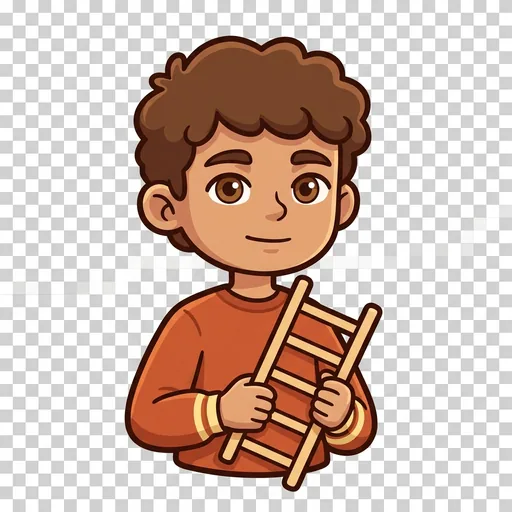
Rung
Word ladder — climbs word→word changing exactly one letter per step
-
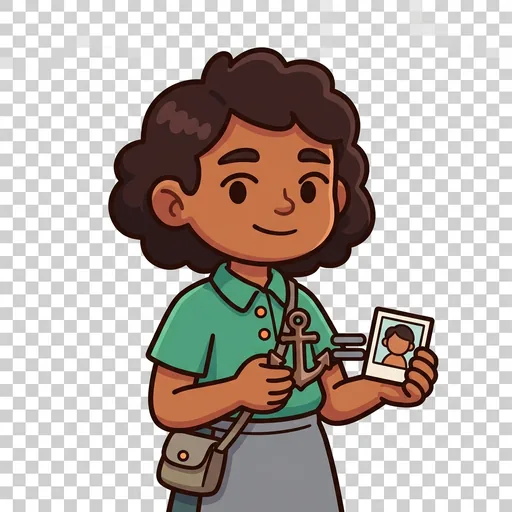
Metaphora
Figurative language — sets two things side by side and says one IS the other
-

Tinge
Nuance / connotation — sorts near-synonyms by their exact shade of feeling
-

Rebus
Double-meaning / cryptic clues — refuses the obvious reading and finds the hidden second one
-
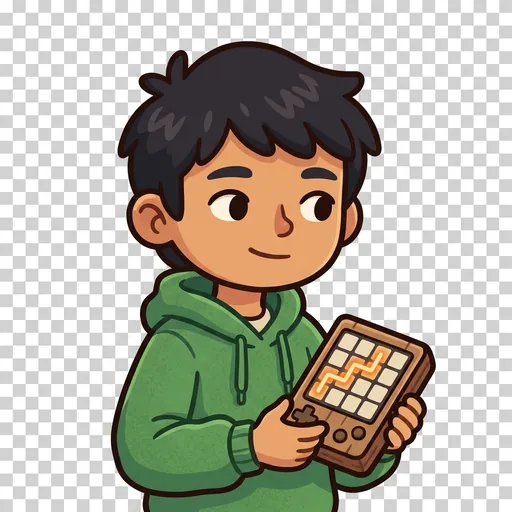
Boggs
Adjacency word-search — traces a path through touching letters to find hidden words
-
Vellum
The arcade keeper (mentor) — introduces each format and normalizes not knowing a word