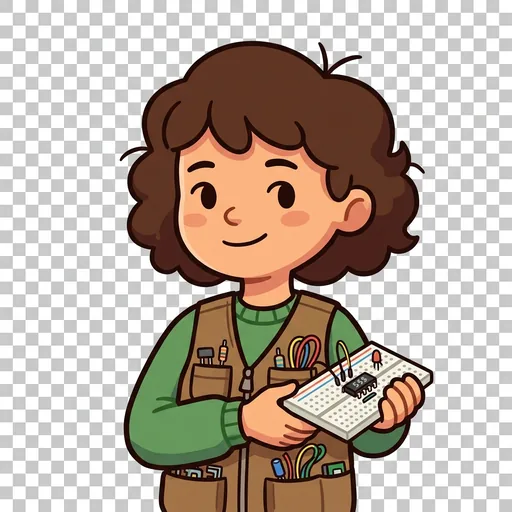
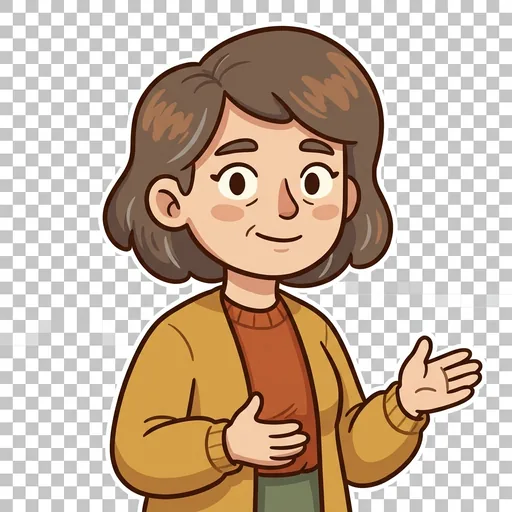
Tinge
NUANCE / CONNOTATION — words that mean nearly the same thing carry different *shades of feeling*. Thrifty, frugal, cheap, stingy all point at "doesn't spend much" — but one is a compliment and one is an insult. Choosing the right synonym isn't about the dictionary meaning; it's about the *tint* the word adds.
Loading audio…
Press play to listen along. The line being read lights up as you go.
Show full transcript
Loading transcript…
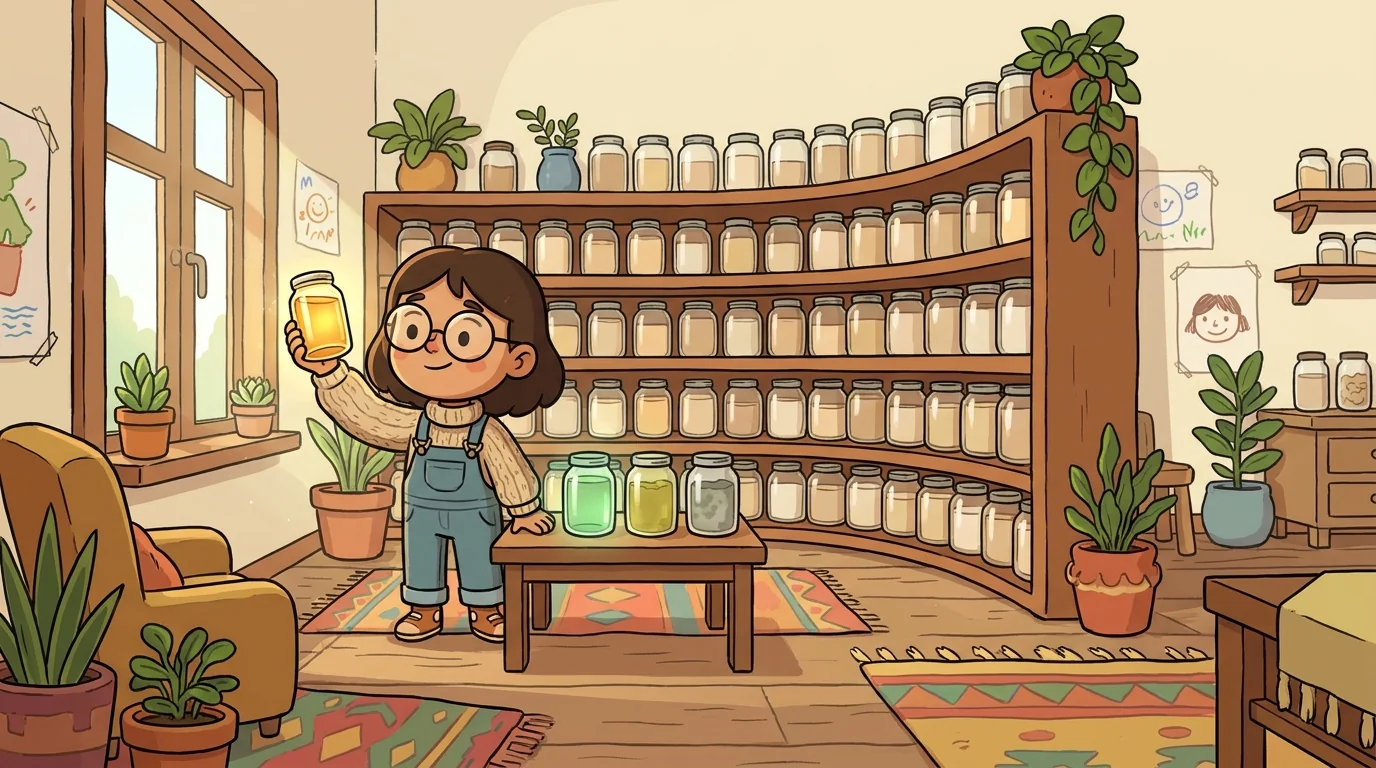
Tinge keeps a long shelf of jars, and every jar is a slightly different color, and every color is a word.
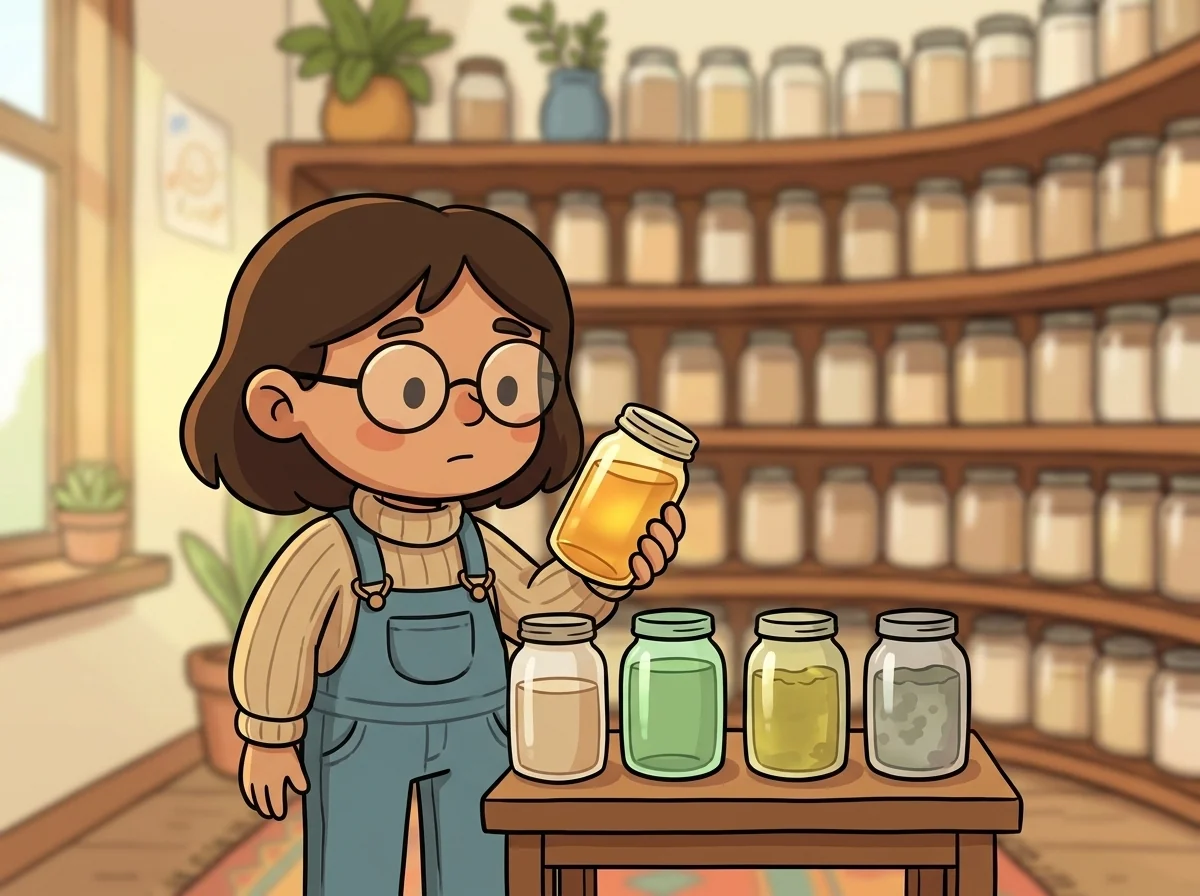
She'll take a plain feeling — say, not spending money — and reach for four jars that all look, at a glance, like the same beige. But she holds them to the light one at a time. "Thrifty," she says, tilting the first, and it warms to a proud gold. "Frugal." A calm, sensible green. "Cheap." The third goes a sour, muddy yellow. "Stingy." The fourth curdles almost gray. She lines them up. "Four words. One meaning. Four completely different things to call someone. Pick wrong," she says, "and you've praised a person you meant to insult, or insulted a person you meant to praise."
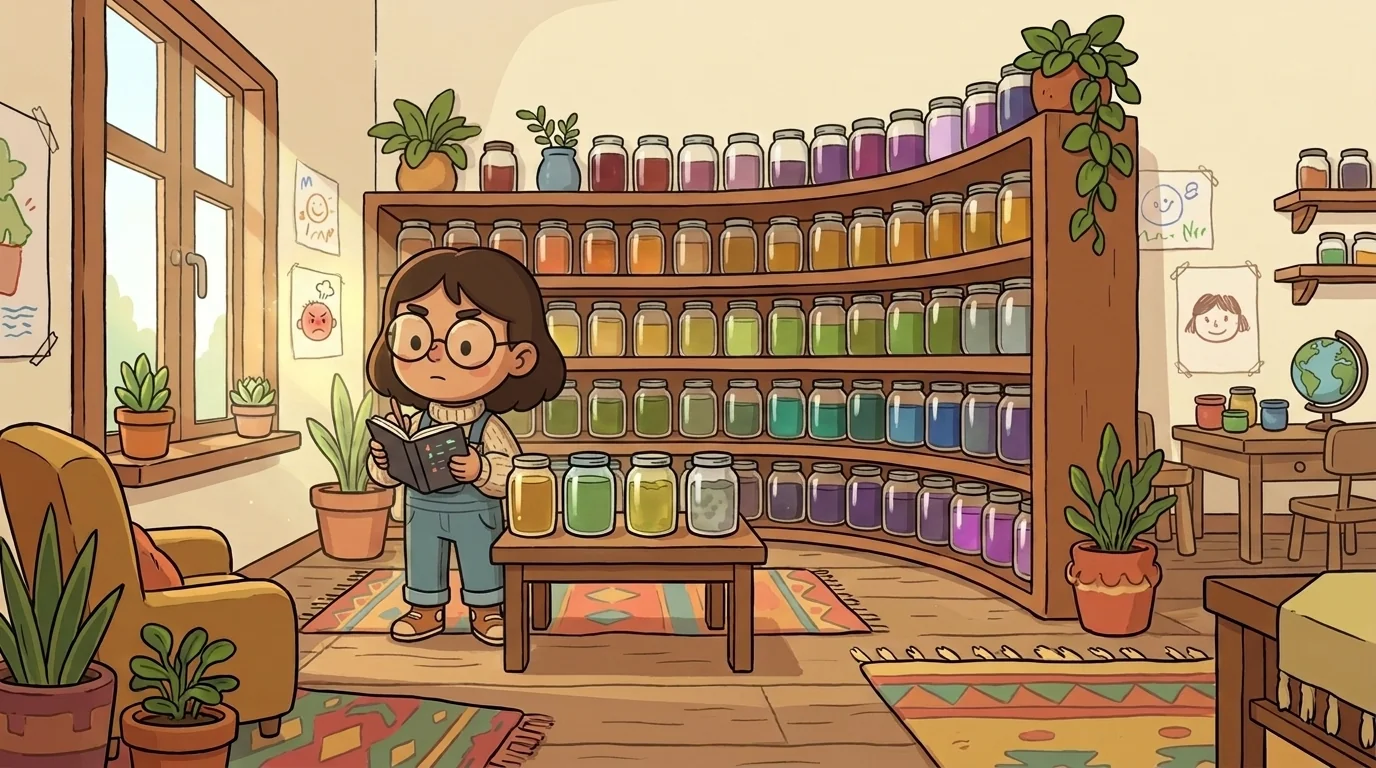
Tinge grew up in a house where everyone said what they meant precisely, and she learned early that "nearly the right word" could start a whole argument. Once, at eleven, she called her uncle's cooking "interesting." He didn't speak to her for the rest of dinner. She hadn't lied — the food was interesting — but she learned, red-faced, that interesting is a word with a smell to it, and everyone in the room could smell it but her. That night she started keeping a private notebook: the same idea, written five ways, with a tiny mark next to each for how it felt. A plus. A minus. A little wave for "depends who's listening."
"Meaning," she decided, "is only half of a word. The other half is the weather it brings into the room."
She came to the WordForge academy because Vellum, the host, kept catching her rewriting the academy's own signs. NO RUNNING she'd quietly amended to PLEASE WALK — same rule, she explained, but one of them made you feel like a criminal and the other made you feel like a guest. Vellum, delighted, walked her straight to the head.
On her first day the head gave her a single word — SMELL — and asked her to make it kind, then cruel, without changing what it meant. Tinge didn't hesitate. "Kind: scent. Aroma. Fragrance." She let each one bloom. "Cruel: odor. Stench. Reek." She set them down. "Same nose. Same air. But fragrance invites you closer and stench pushes you back, and the dictionary swears they're synonyms." The head, who had spent a career watching students treat the thesaurus like a vending machine — any word for any word — said quietly, "You don't swap words. You weigh them." And that is what she teaches.
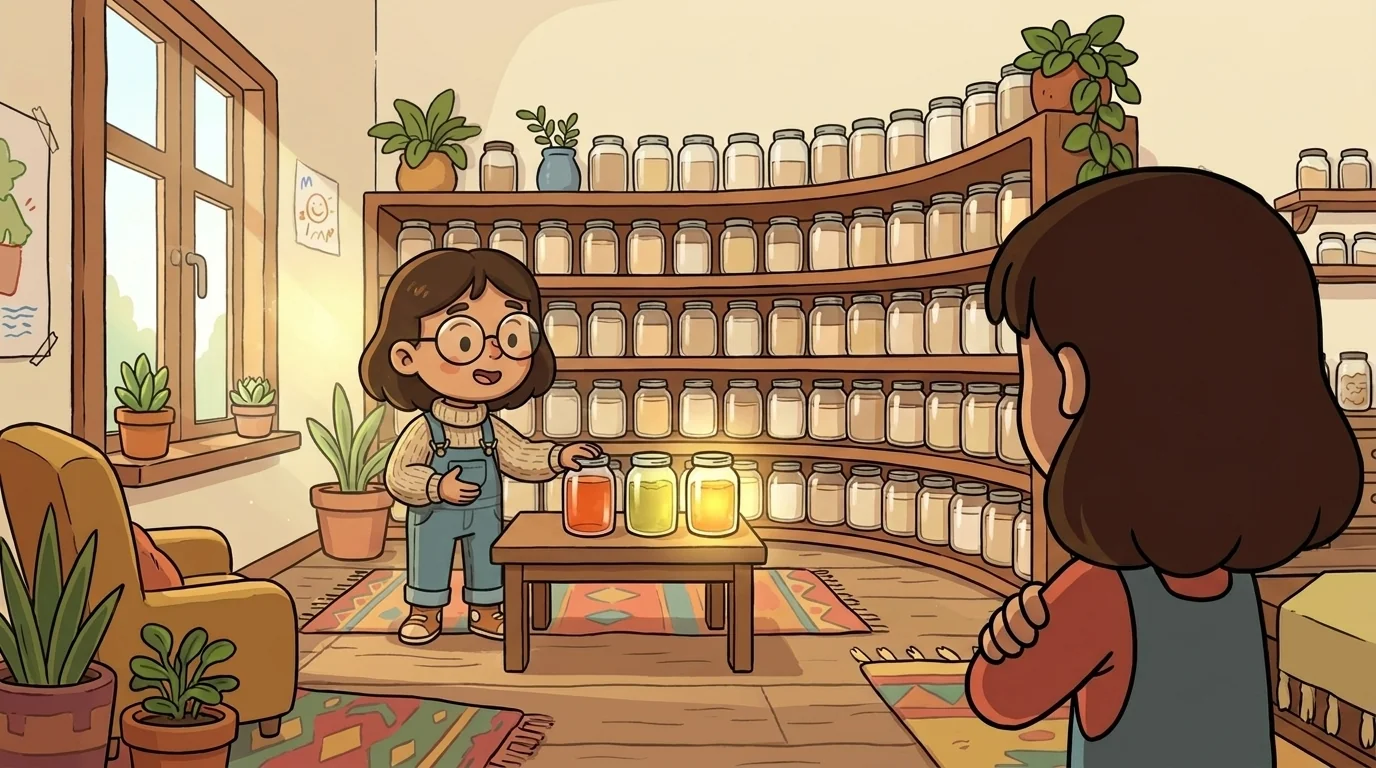
In her workshop she teaches with the jars. A girl came in furious about a report card comment: her teacher had called her "talkative." "That's not fair," the girl said. "I help people. I explain things."
Tinge didn't tell her the teacher was wrong. She got down three jars. "Talkative," she said — a restless, slightly-too-much orange. "Chatty — lighter, friendlier, but still a little bit stop-now." Then she lifted the third, and it glowed a warm, generous gold. "Articulate." She set it in the girl's hands. "Same girl. Same amount of talking. But this word says the talking is a gift." The girl stared at the gold jar. "The teacher didn't lie about you," Tinge said. "She just reached for a beige jar when a gold one was right there on the shelf. That happens. The fix isn't to talk less. It's to know which word you are — so that when the wrong one gets stuck on you, you can hand back the right one."
The girl practiced right there: I'm not talkative. I'm articulate, and I share it. She said it three times, and each time the word fit her a little better, like a coat finally in her size.
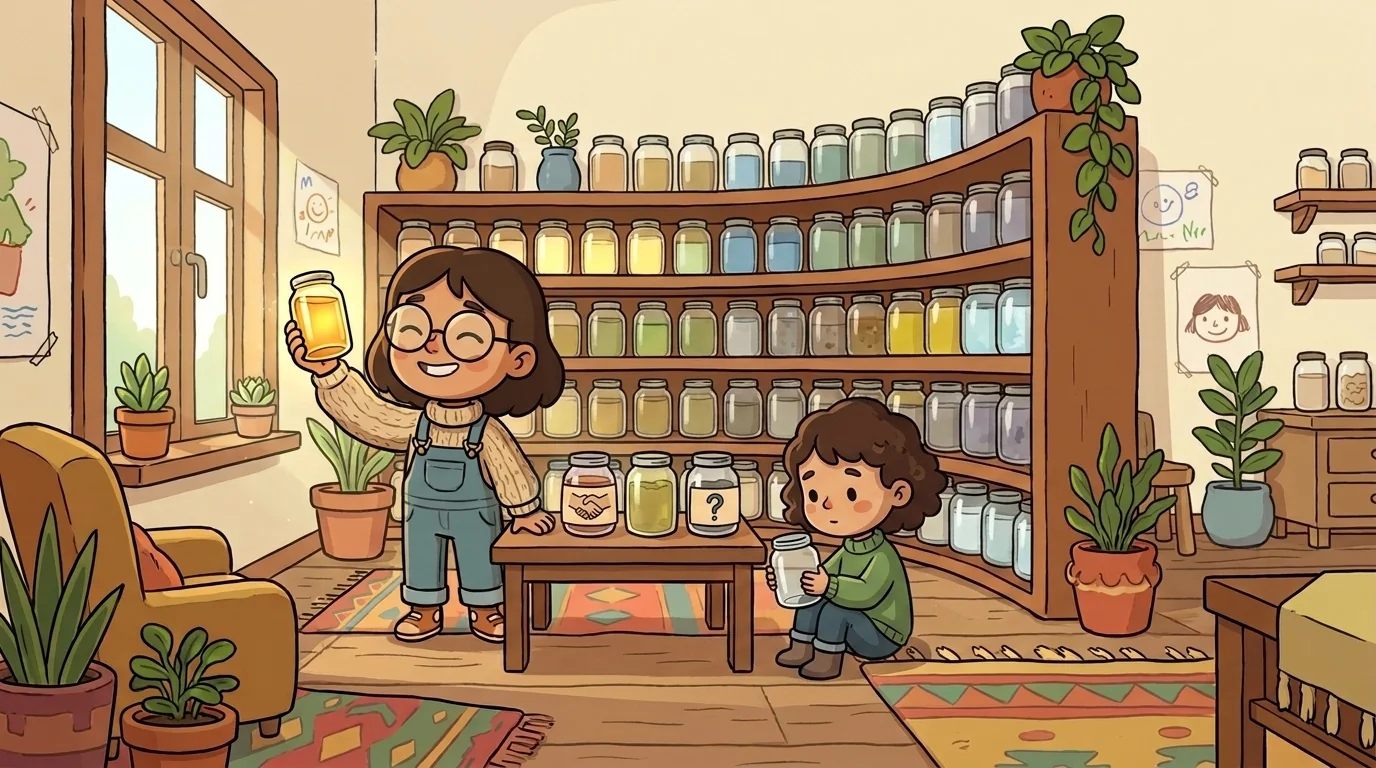
Later the girl asked the question. "But how do you know which shade a word is? It's not written on it."
Tinge smiled and gestured at the whole long shelf — hundreds of jars, sorted not by meaning but by feeling, built over a lifetime of noticing who flinched and who warmed. "You listen for the flinch," she said. "Every word has been used on people, over and over, for hundreds of years, and it soaks up how it was used. Stingy has been thrown as an insult so many times it can't stop sounding like one. Thrifty has been said with respect so often it glows. The shade isn't in the dictionary. It's in the history of who said it and how." She handed the girl an empty jar. "Start your own shelf. Every time a word lands warm or lands cold, mark it. In a year you'll hold two words that 'mean the same thing' and feel the whole difference in your hands."
The girl went home and, that night, described her best friend using only the warm words for things that could have been said coldly — not bossy but sure of herself, not weird but original — and her friend, reading the note, felt precisely and deliberately understood.
The WordForge ensemble
Tinge is part of WordForge's distributed-narrative cast. Each character embodies a different curricular primitive; together they teach the full subject.
-
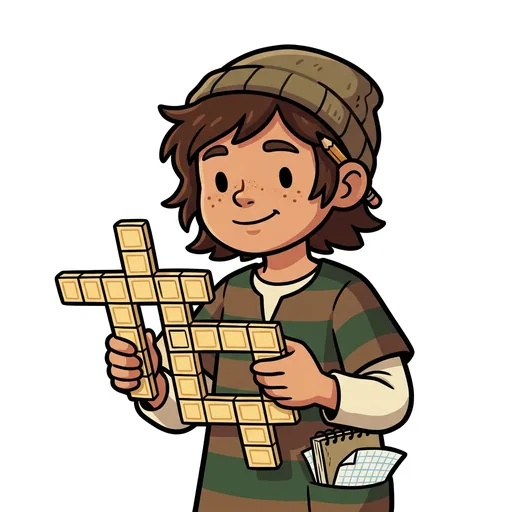
Acrostica
Crossword construction — builds grids where every letter satisfies two crossing words at once
-
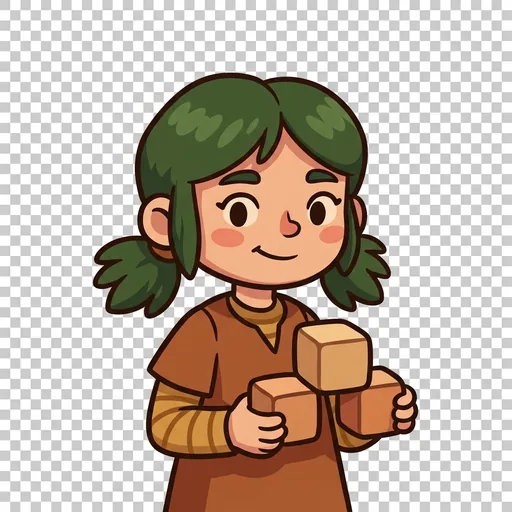
Radicle
Morphology / word-building — bolts a prefix and suffix onto a root to grow new words
-
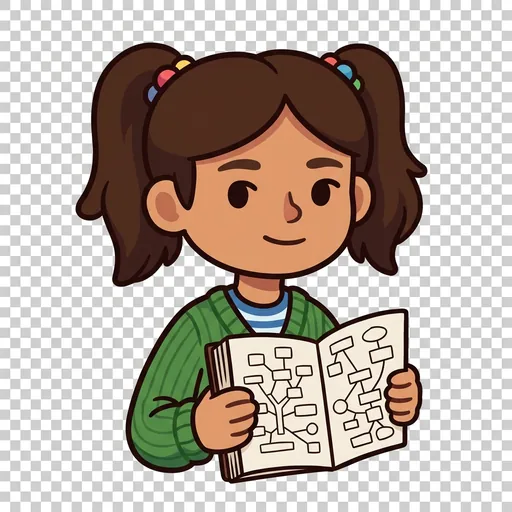
Origo
Etymology / word origins — traces a word back through its ancestor languages
-
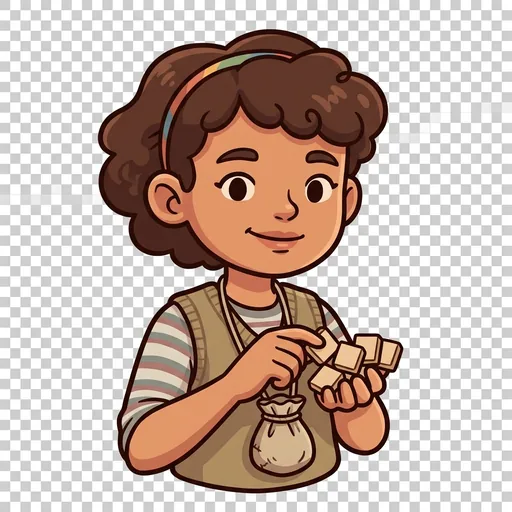
Anna Gram
Anagram / letter manipulation — rearranges the exact same letters into new words
-

Rung
Word ladder — climbs word→word changing exactly one letter per step
-
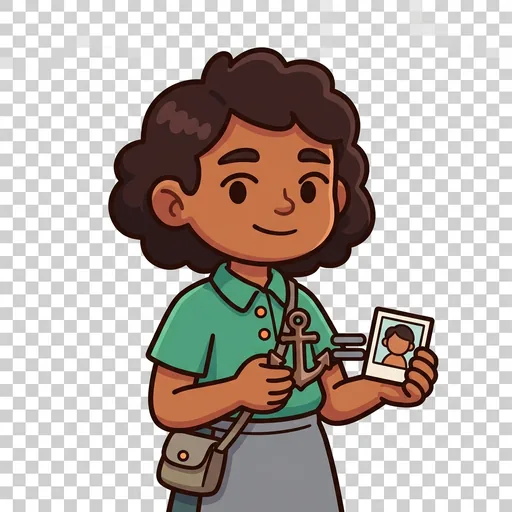
Metaphora
Figurative language — sets two things side by side and says one IS the other
-

Rebus
Double-meaning / cryptic clues — refuses the obvious reading and finds the hidden second one
-
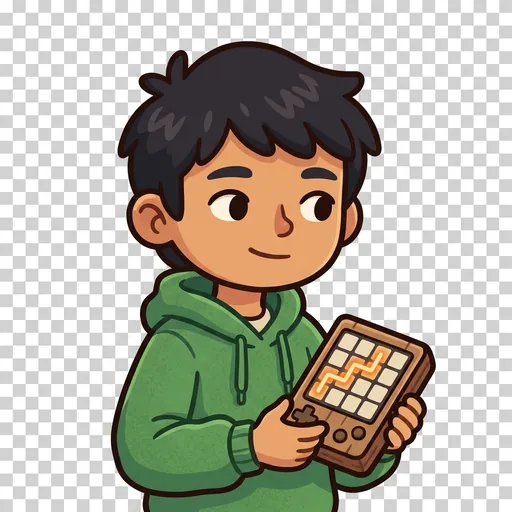
Boggs
Adjacency word-search — traces a path through touching letters to find hidden words
-
Vellum
The arcade keeper (mentor) — introduces each format and normalizes not knowing a word