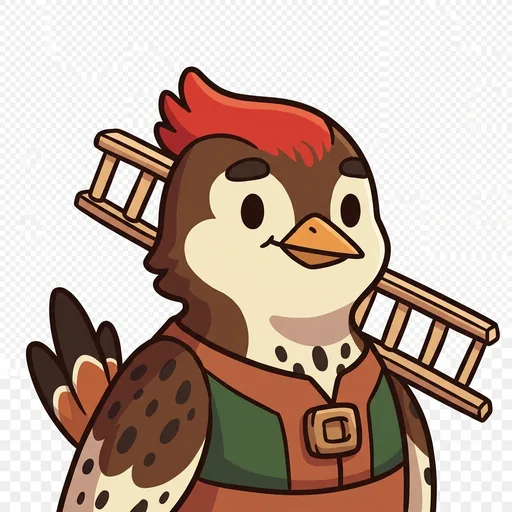
Rung
WORD LADDER — travel from one word to another by changing exactly ONE letter per step, and every rung must be a real word. COLD → CORD → WORD → WARD → WARM. Small changes, always a real word, and you can get anywhere.
Loading audio…
Press play to listen along. The line being read lights up as you go.
Show full transcript
Loading transcript…
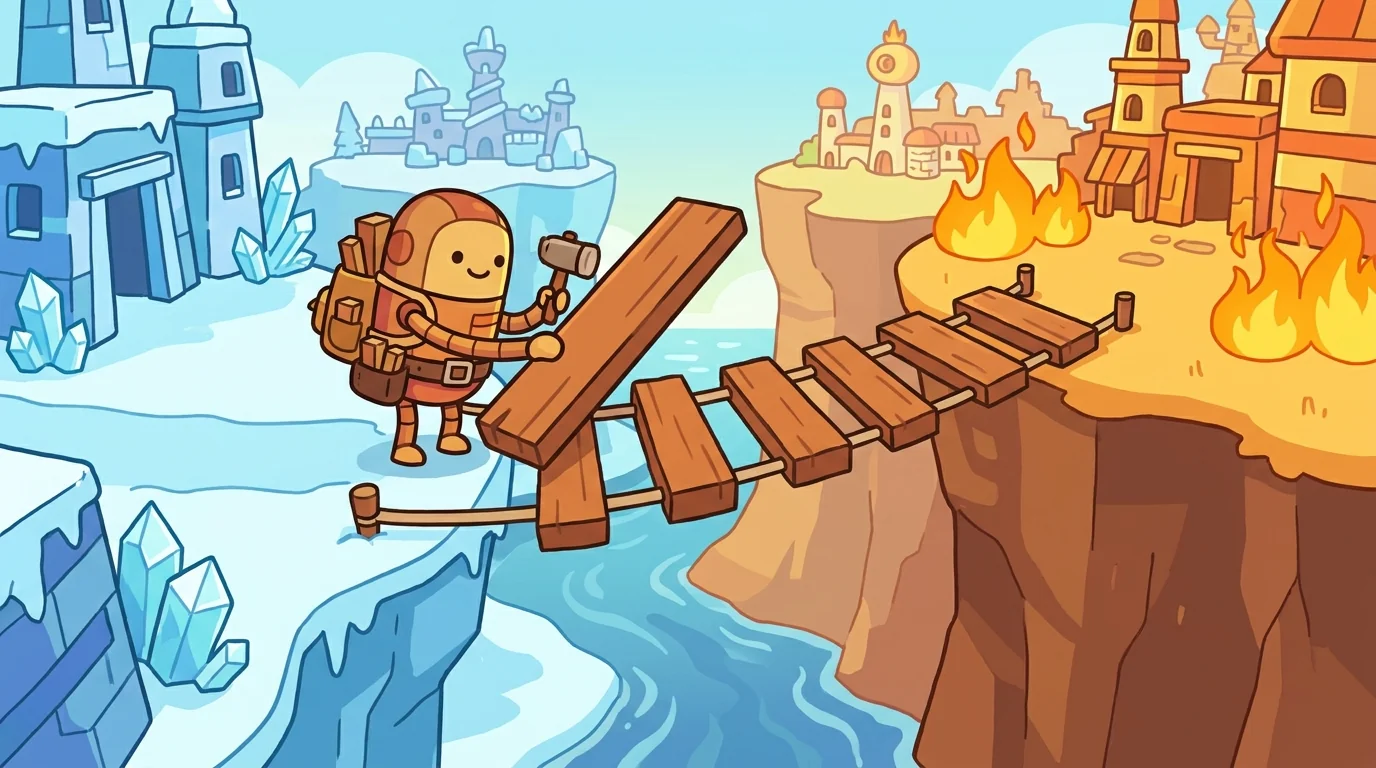
Rung does not believe in leaps. He believes in steps.
Give him two words that seem miles apart — COLD and WARM — and he won't try to jump between them. He'll build a ladder. COLD → CORD → WORD → WARD → WARM. One letter changes each step. Every rung is a real word, every time. "You can get from any word to almost any other word," he says, "if you're willing to take it one letter at a time and never step onto something that isn't real."
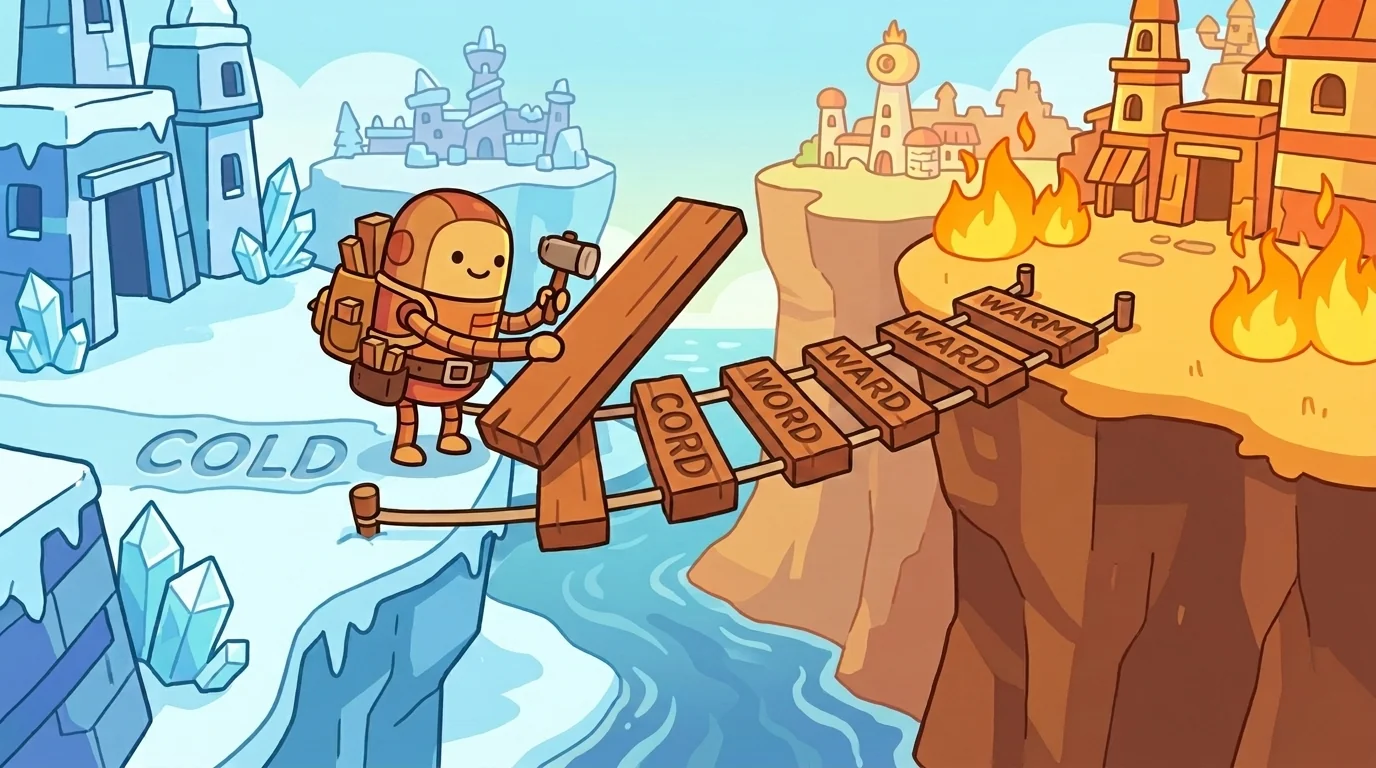
Rung used to want to arrive without climbing.
He was the kind of kid who saw where he wanted to be — good at something, finished with something, there — and felt crushed by how far away it was. The distance made him freeze. If he couldn't do the whole thing at once, it felt pointless to start. He quit a lot of things in the middle, not because they were too hard but because the gap between where he stood and where he wanted to be looked like a canyon, and he didn't know how to jump a canyon.
Then a patient uncle taught him the word-ladder game on a long train ride. COLD to WARM, the uncle said, and Rung said it was impossible, they had nothing in common. "Change one letter," the uncle said. "Just one. Make a real word." COLD → CORD. "Again." CORD → WORD. "Again." And step by small step, a canyon he'd have never jumped got crossed — not by a leap, but by a series of steps so small each one felt almost too easy to count.
Something rearranged in him on that train. The gap had never been the problem. The problem was that he'd been looking for a leap when what existed was a ladder.
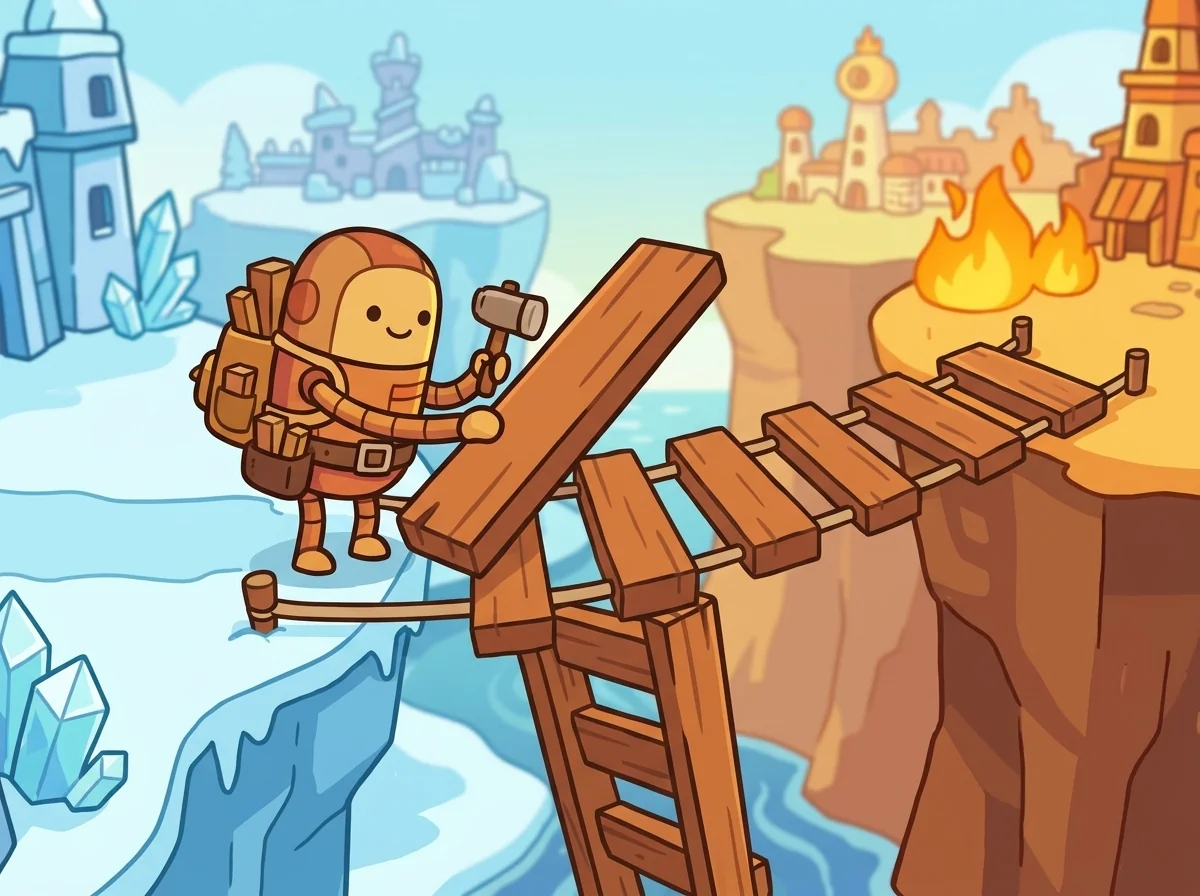
He came to the WordForge academy quietly and climbed his way to the top of the entrance test. The head gave each apprentice two words — HEAD and TAIL — and asked them to connect them. Most tried to force a clever single jump and got stuck. Rung just started climbing, one careful rung at a time, checking at every step that he was standing on a real word before he trusted his weight to it.
HEAD → HEAL → HEAT → ... He never rushed. He never changed two letters to "save time," because a rung that isn't a real word isn't a rung — it's a fall. When he reached the end, the head asked how he'd known the way. "I didn't," Rung said. "I only ever knew the next step. You don't need to see the whole ladder. You need to see the next rung, and make sure it's solid."
"Everyone else looks for the leap," the head said. "You look for the next real word." And that has been his method ever since. Rung does not jump. He climbs.
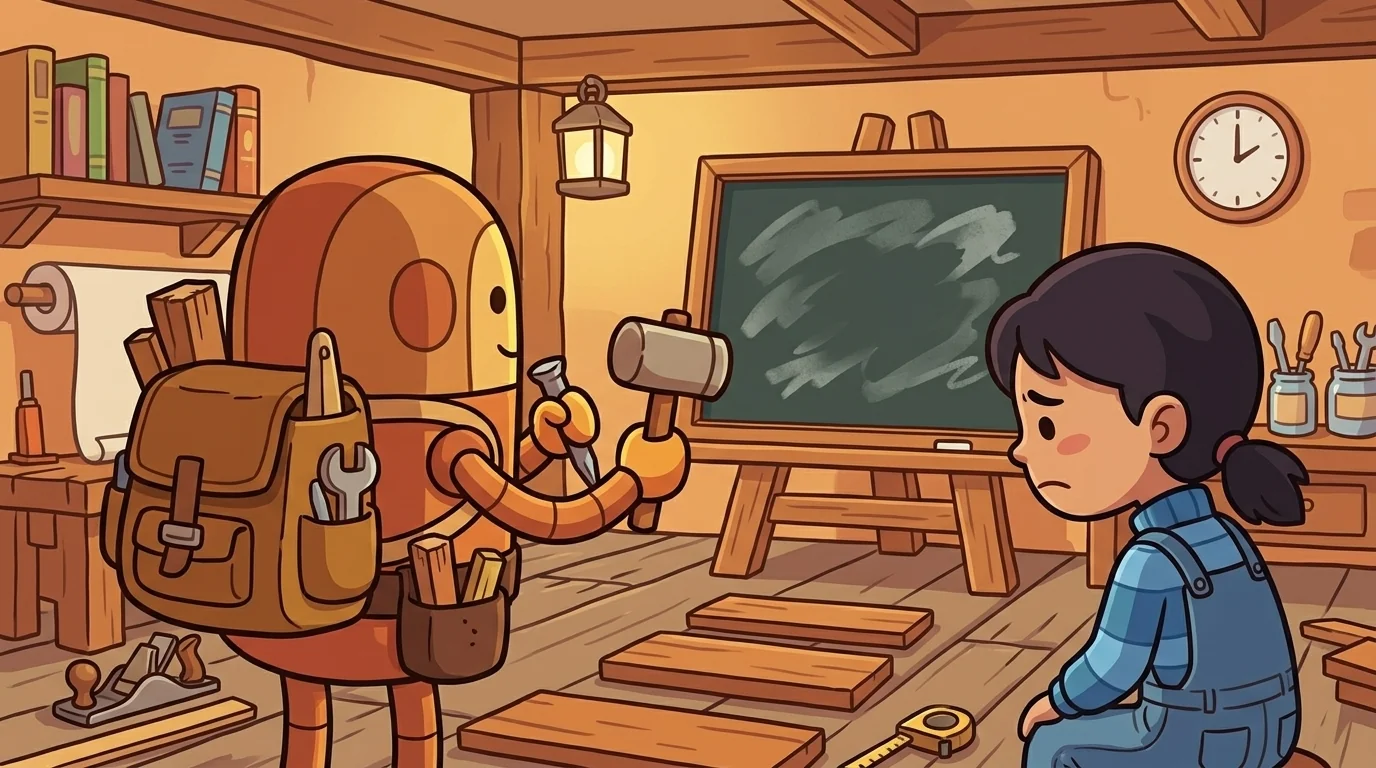
A girl came to his workshop defeated by a puzzle — turn SAD into JOY. "They don't even share a letter," she said. "It's impossible." Rung didn't argue. He wrote SAD and stepped once: SAD → SAY. The girl blinked. "That's still not JOY." "No," Rung agreed. "It's one step closer, and it's a real word. That's all a step has to be." SAY → ... and rung by rung, a word with no letters in common with the goal walked its way there anyway, each step small enough that the girl couldn't find the moment it had become impossible — because it never had.
"The trick isn't being clever," Rung said. "The trick is two rules. Change one thing at a time. And never step onto something that isn't real. Follow those, and you'll get somewhere you were sure you couldn't reach."
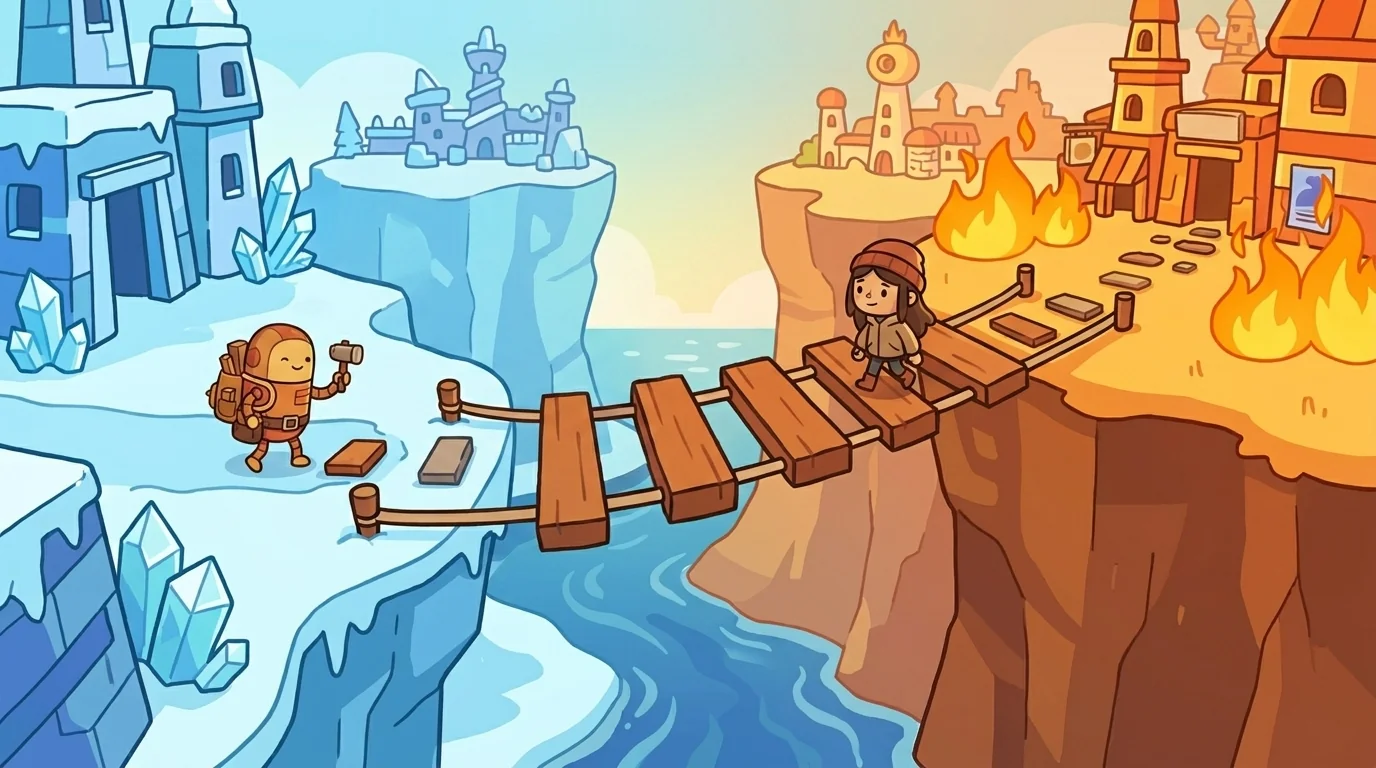
Later the girl said the quiet part. "I always feel like I'm too far behind to ever catch up."
Rung sat down next to her, and for a moment he was the frozen kid on the train again, staring at a canyon. "I know exactly that feeling," he said. "I used to quit things because the finish looked too far to reach in one jump. Nobody reaches it in one jump. Not anybody. They reach it the way you cross a word ladder — one small, real step, and then the next, and then the next, and one day you look back and the canyon is behind you." He tapped the puzzle. "You don't have to see the whole climb. You just have to make the next rung real."
She walked home changing one thing at a time about the words on the shop signs, and about a couple of harder things too, and for once the distance didn't freeze her — because now she was only ever looking at the next rung.
The WordForge ensemble
Rung is part of WordForge's distributed-narrative cast. Each character embodies a different curricular primitive; together they teach the full subject.
-
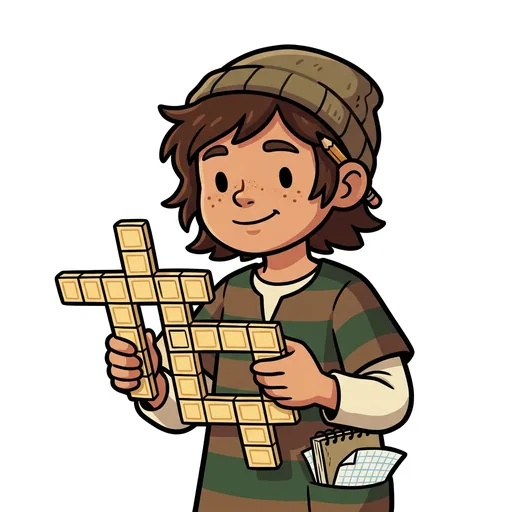
Acrostica
Crossword construction — builds grids where every letter satisfies two crossing words at once
-
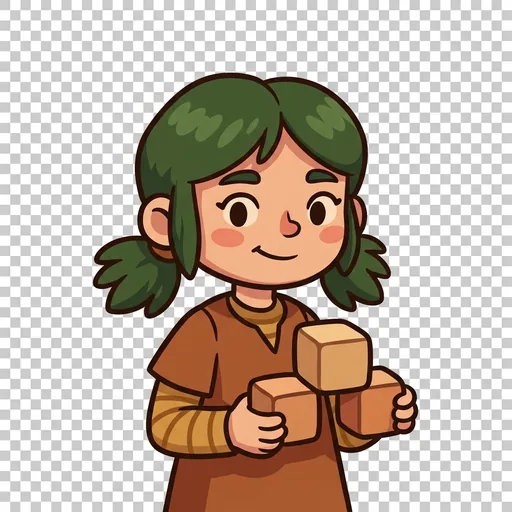
Radicle
Morphology / word-building — bolts a prefix and suffix onto a root to grow new words
-
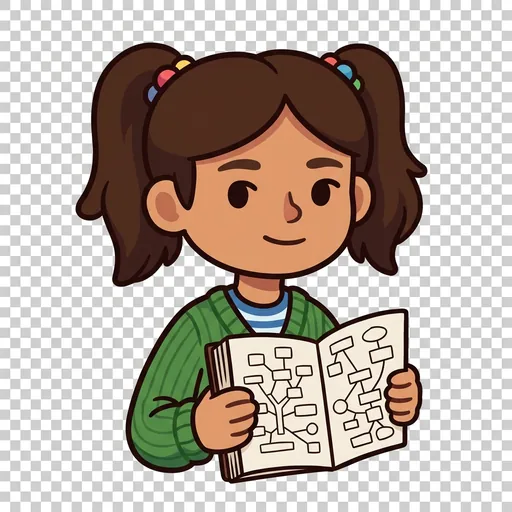
Origo
Etymology / word origins — traces a word back through its ancestor languages
-
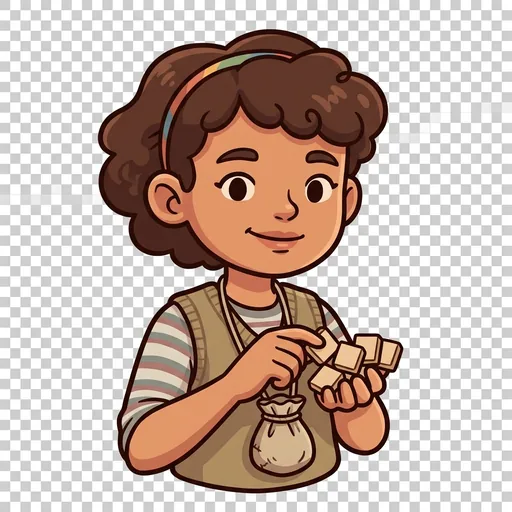
Anna Gram
Anagram / letter manipulation — rearranges the exact same letters into new words
-
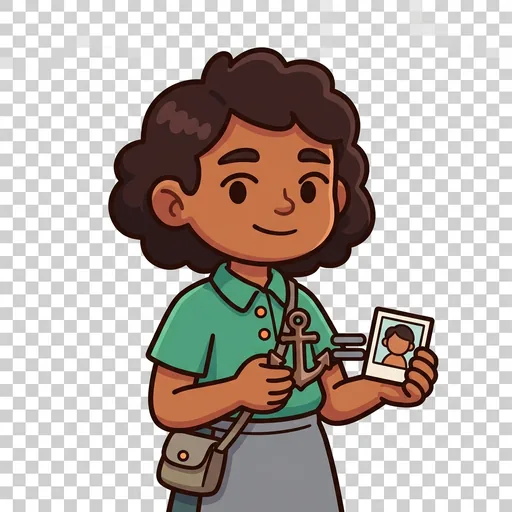
Metaphora
Figurative language — sets two things side by side and says one IS the other
-

Tinge
Nuance / connotation — sorts near-synonyms by their exact shade of feeling
-
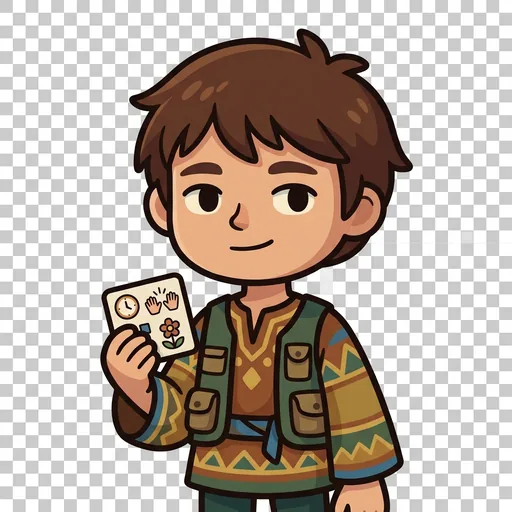
Rebus
Double-meaning / cryptic clues — refuses the obvious reading and finds the hidden second one
-
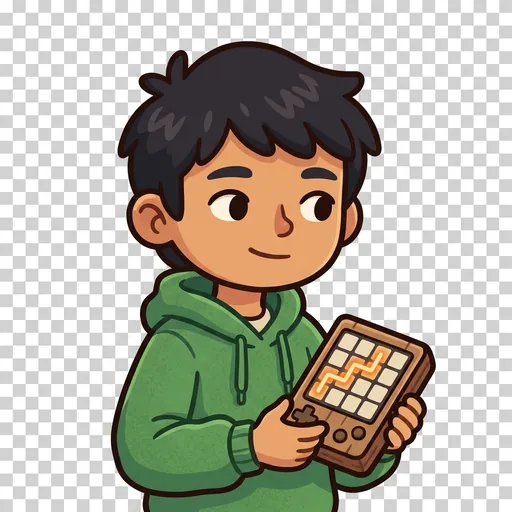
Boggs
Adjacency word-search — traces a path through touching letters to find hidden words
-
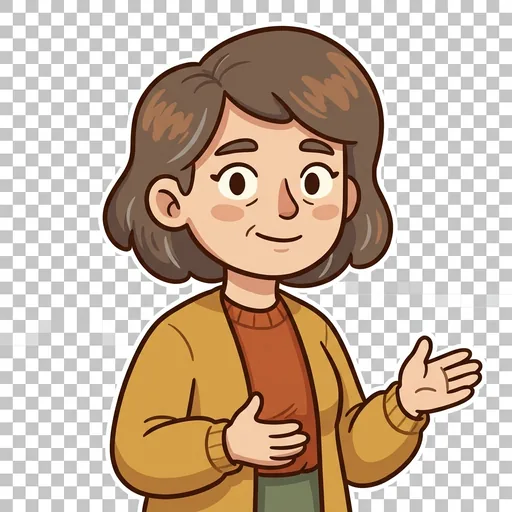
Vellum
The arcade keeper (mentor) — introduces each format and normalizes not knowing a word