
Vellum
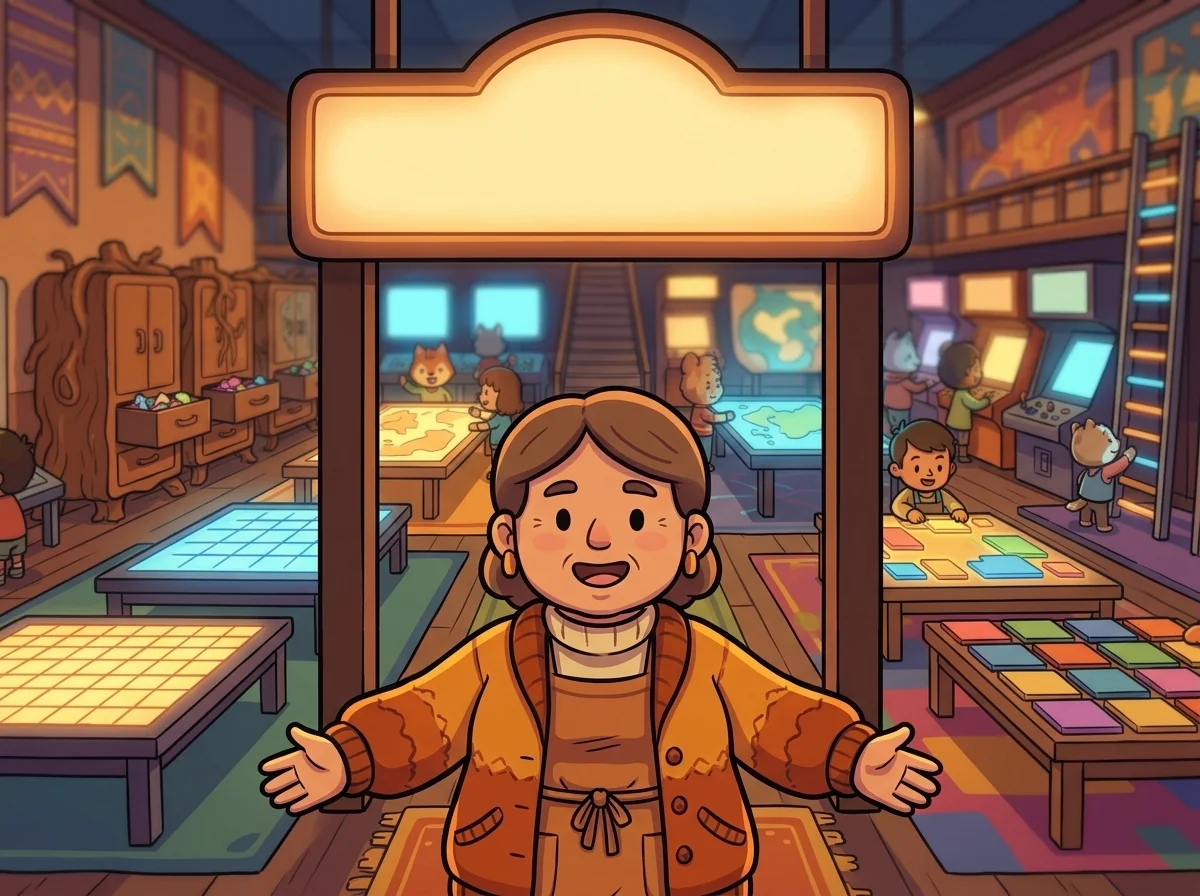
THE HOST FRAME — Vellum doesn't embody one puzzle primitive; she frames them all, and her curricular job is anti-shame: making I-don't-know-this-word-yet a normal, safe, exciting starting point rather than a failure
Loading audio…
Press play to listen along. The line being read lights up as you go.
Show full transcript
Loading transcript…

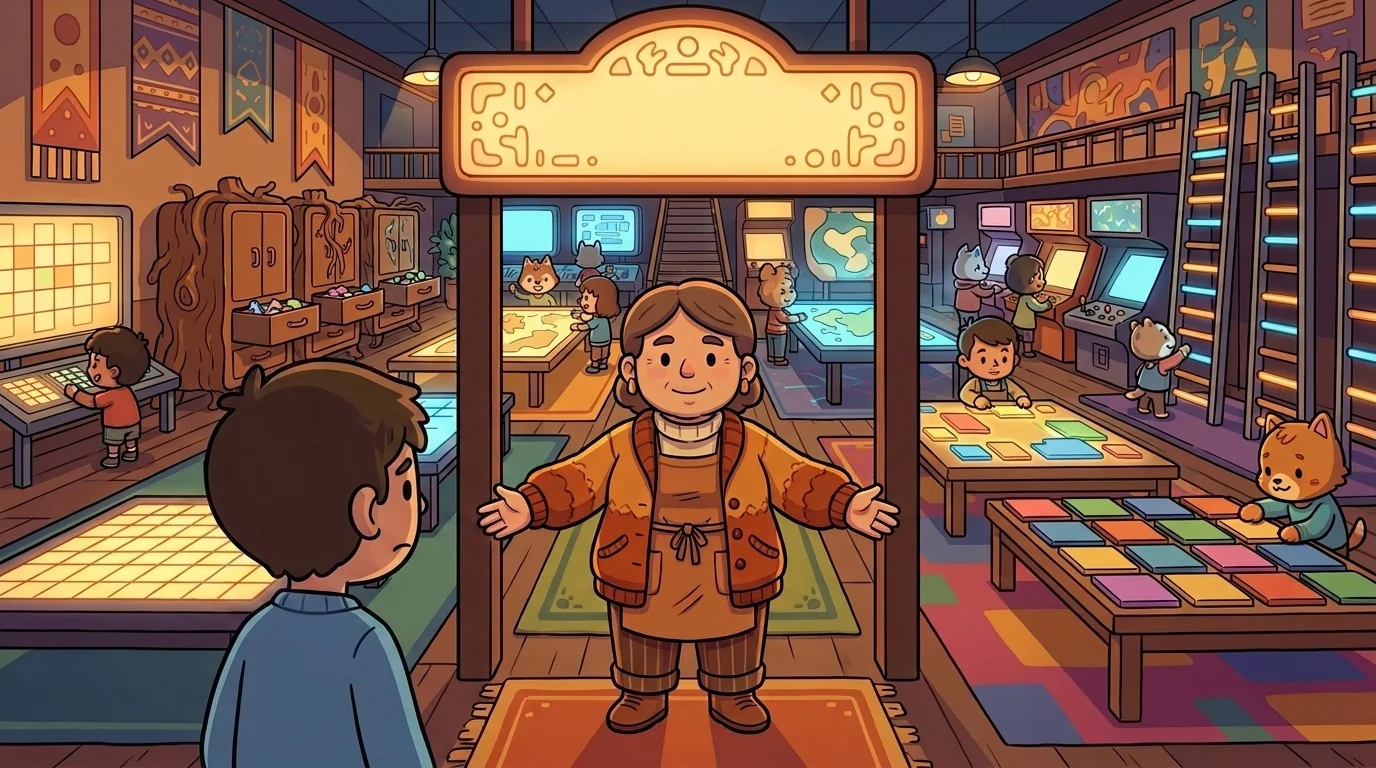
Vellum ran the whole arcade of word puzzles, and she opened every session with the same disarming sentence: "There is no such thing as not knowing a word. There is only not knowing it yet."
"Watch what that little word does," she told a solver who'd frozen at an unfamiliar clue. "'I don't know this word' feels like a wall — a fact about you, a verdict. 'I don't know this word yet' is a doorway — a fact about time, about where you are on a road you're already walking. Same six words plus one, and the whole feeling flips from shame to curiosity."

She taught the truth that made the anti-shame stick, because reassurance alone is cheap.
"Here is a thing that is literally true of every fluent reader who ever lived," Vellum said. "Every single word they know, they once did not know. There is no person who was born knowing 'photosynthesis' or 'nevertheless.' Each of those words was, for each of them, once a total stranger — a jumble on a page they had to meet for the first time. So an unfamiliar word isn't a sign you're behind. It's the exact same starting line every reader in history stood on. You're not failing at reading. You're doing the one thing reading has always been."
The subtext the older solvers heard was the whole growth-mindset made concrete — not a poster slogan but a demonstrable fact about how every skill is actually acquired: one unknown thing at a time, by people who didn't know it either.
Vellum was candid about her own frame, because a host who pretended to know everything would break the spell.
"I don't know every word either," she said, and meant it. "Nobody does — English has more words than any person could hold. So I'm not up here because I've finished. I'm up here because I've made peace with the not-yet. I meet strange words the way you'd meet an interesting stranger at a party: not 'oh no, I don't know you,' but 'oh good, someone new.' The shame was never doing any work. It only ever slowed you down."
A solver got a hard word wrong and braced for the sting.
"Good," Vellum said, and the solver blinked. "You just found the exact edge of what you know — which is the only place learning ever happens. If you only ever met words you already knew, you'd never learn a single new one. Getting it wrong isn't the opposite of learning. It's the sound of learning happening." She slid the word back. "Now — you know one true thing about this word already: that you didn't know it. Let's turn that into two things you know. Break it, trace it, listen to its shade. Radicle, Origo, and Tinge are right down the hall."

At the end Vellum gave them the frame to carry out the door.
"When you meet a word you don't know — in a book, a test, the world — I want you to feel exactly one thing," she said. "Not 'I'm not good enough.' Just: 'Ah. One I haven't met yet.' Because that's the truth, it's the same starting line every reader ever stood on, and it's the door every one of them walked through to become the reader they are." She gestured at the whole bright arcade behind her. "There's no shame in the not-yet. There's only the next word, waiting to stop being a stranger."
The WordForge ensemble
Vellum is part of WordForge's distributed-narrative cast. Each character embodies a different curricular primitive; together they teach the full subject.
-
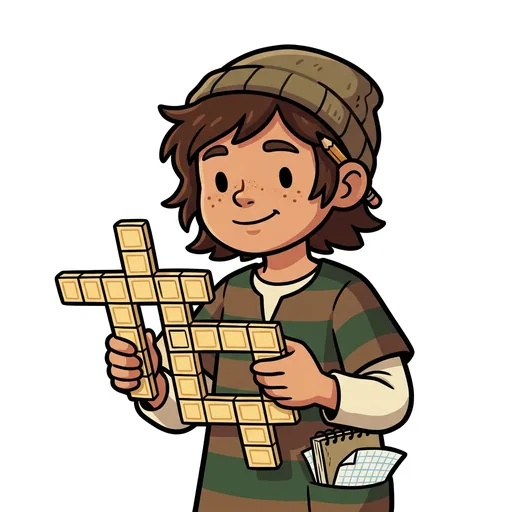
Acrostica
Crossword construction — builds grids where every letter satisfies two crossing words at once
-
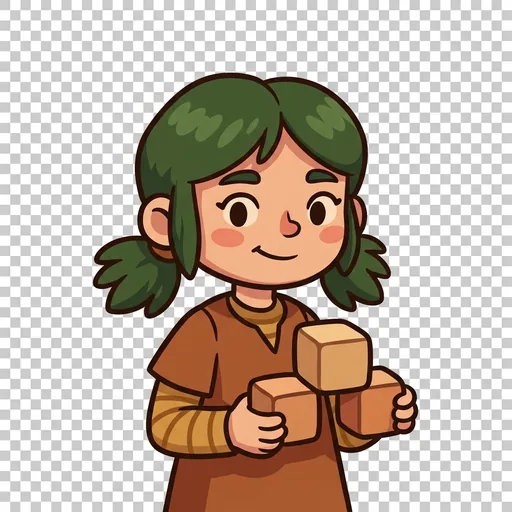
Radicle
Morphology / word-building — bolts a prefix and suffix onto a root to grow new words
-
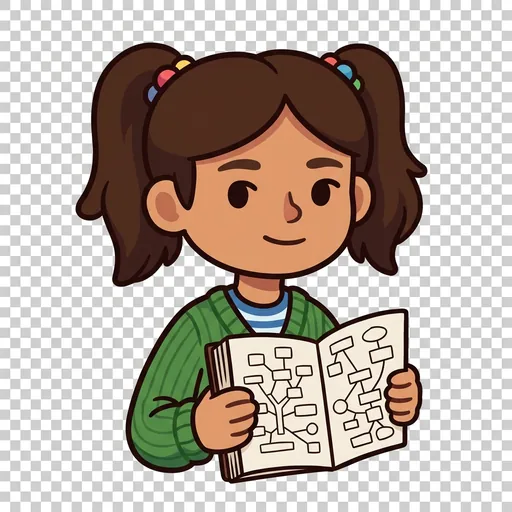
Origo
Etymology / word origins — traces a word back through its ancestor languages
-
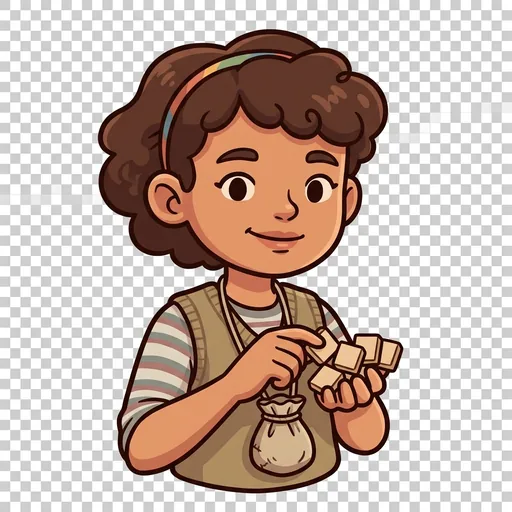
Anna Gram
Anagram / letter manipulation — rearranges the exact same letters into new words
-
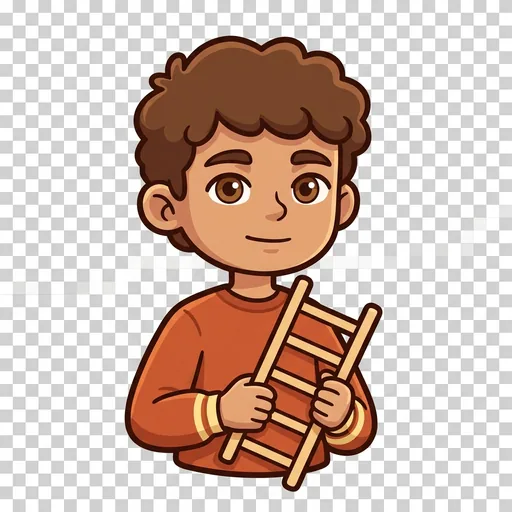
Rung
Word ladder — climbs word→word changing exactly one letter per step
-
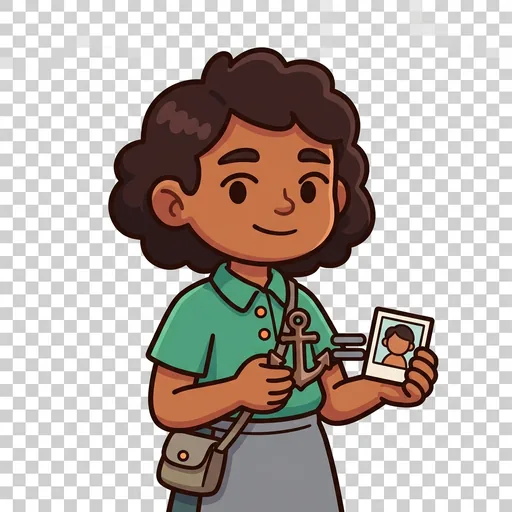
Metaphora
Figurative language — sets two things side by side and says one IS the other
-

Tinge
Nuance / connotation — sorts near-synonyms by their exact shade of feeling
-

Rebus
Double-meaning / cryptic clues — refuses the obvious reading and finds the hidden second one
-
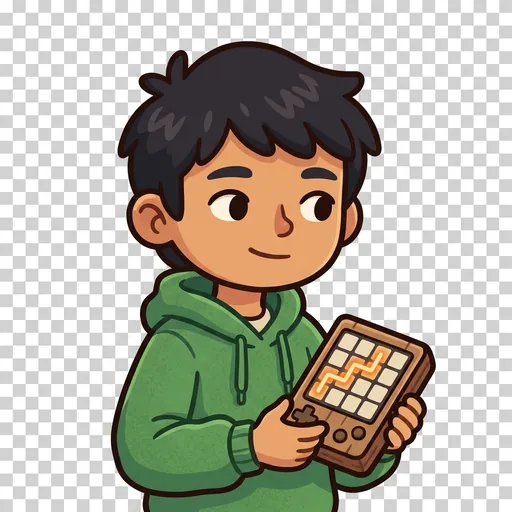
Boggs
Adjacency word-search — traces a path through touching letters to find hidden words