
Before you start
Most popular
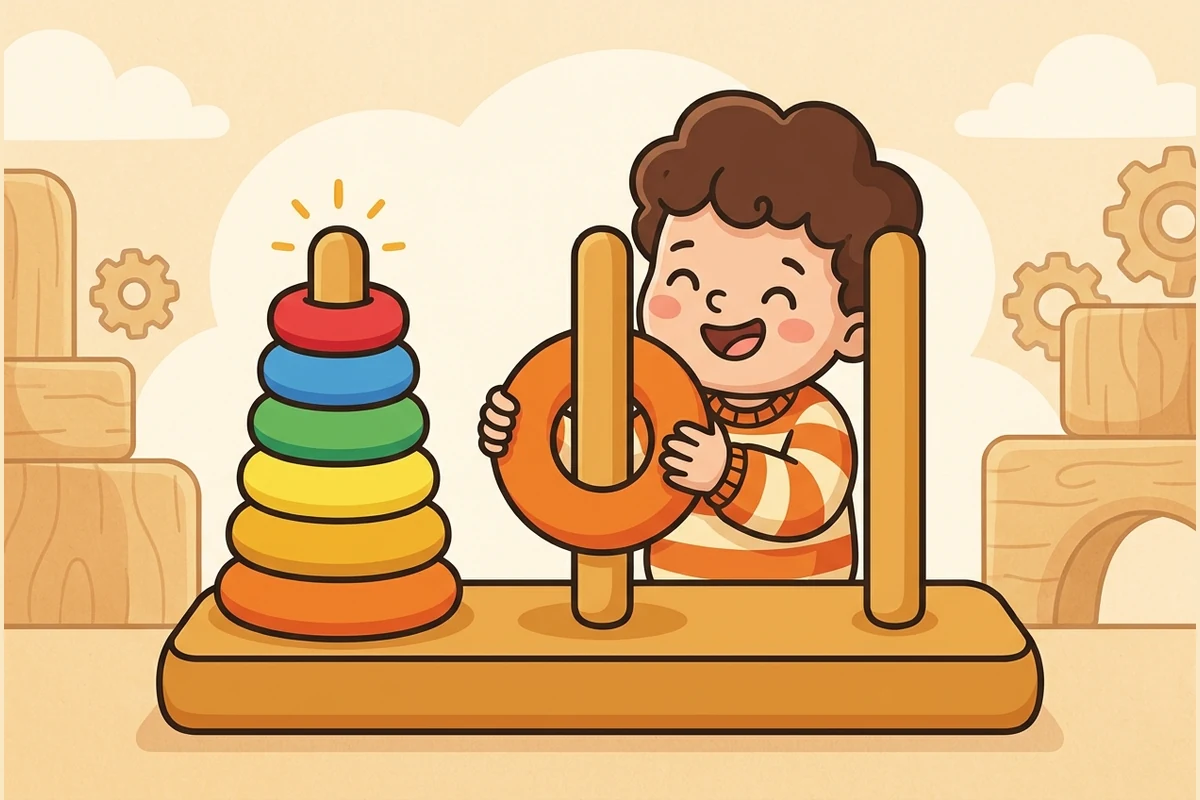 Tower of Hanoi Move the whole tower one disk at a time, never a big disk on a small one — find the pattern.
 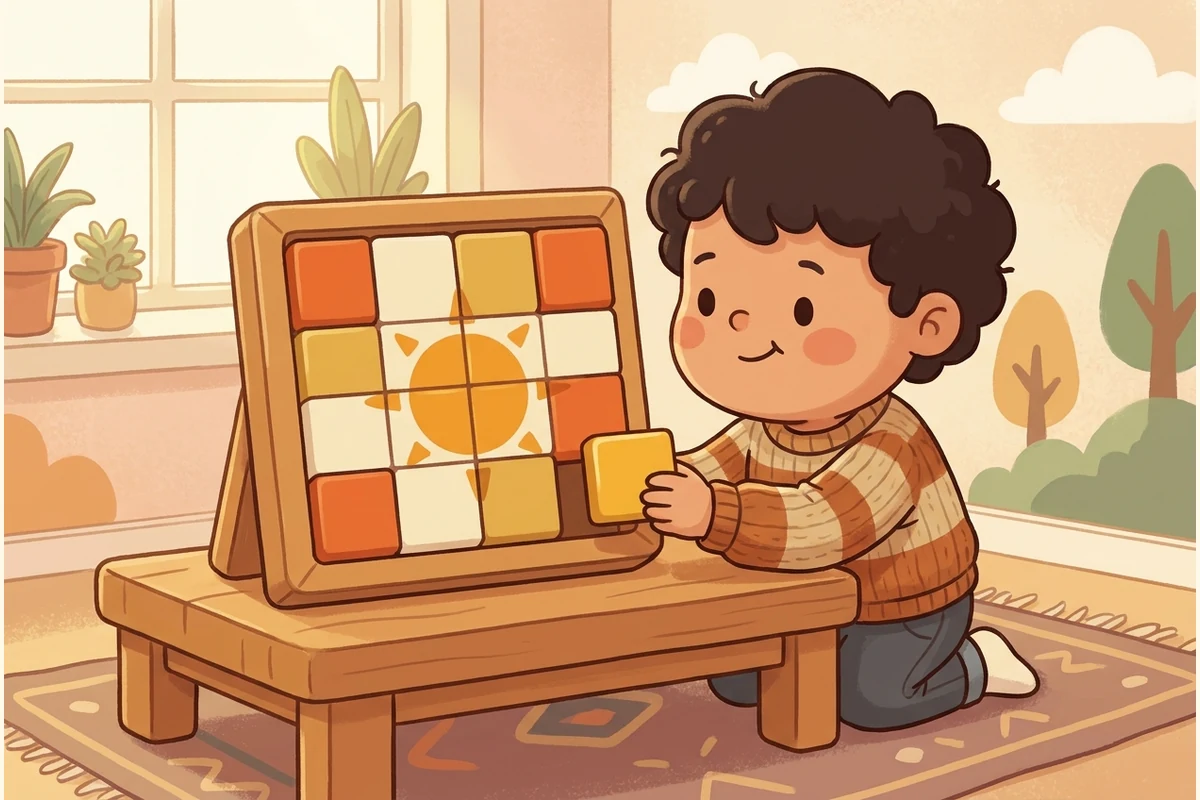 Sliding Tile Slide the numbered tiles into order using the one empty square — plan the moves ahead.
 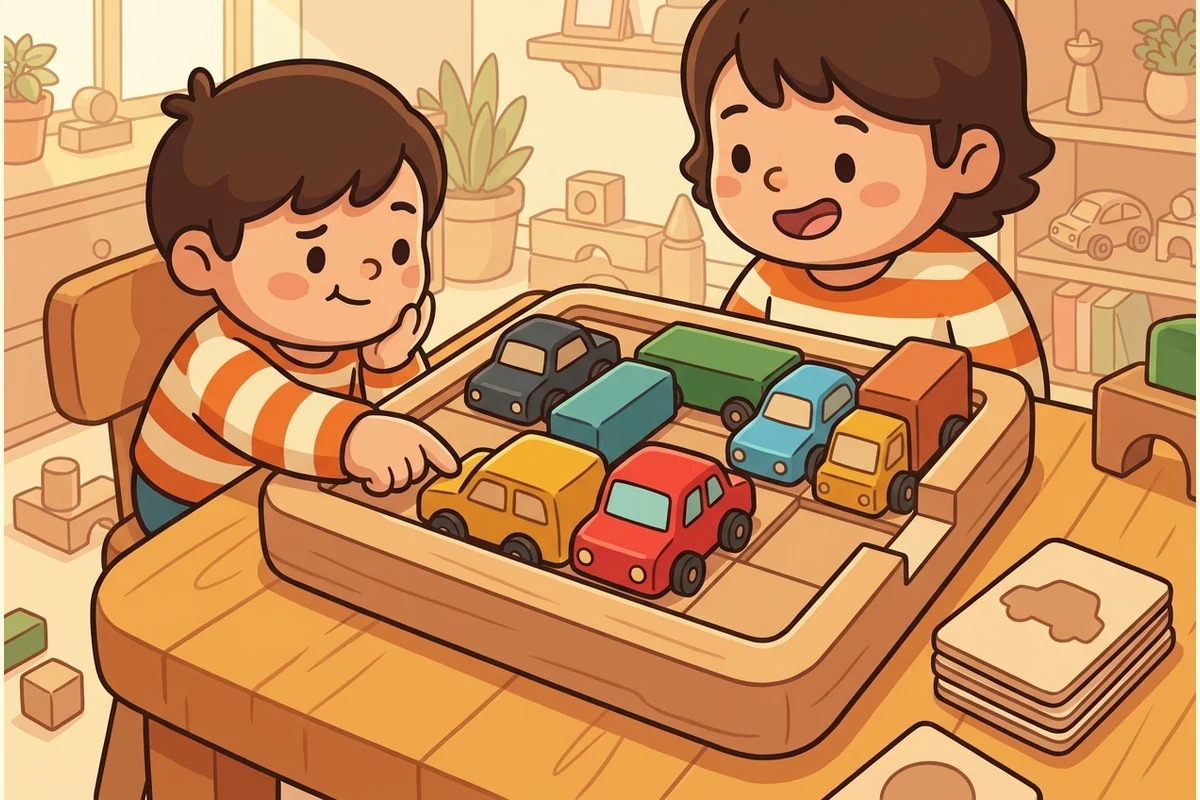 Rush Hour Slide the blocking cars out of the way so the red car can reach the exit. Think, do not shove.
 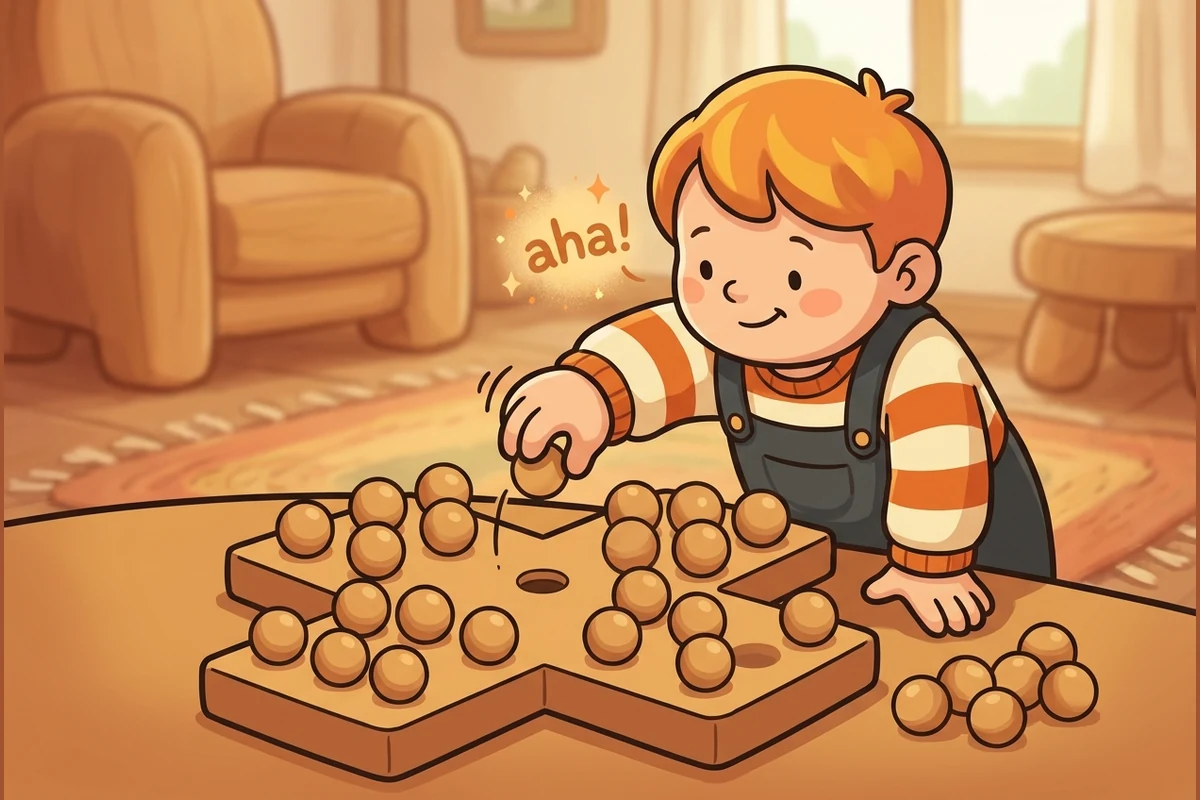 Peg Solitaire Jump one peg over another to remove it — leave a single peg standing at the end.
 All activities
Solve a puzzle
Tower of Hanoi Move the whole tower one disk at a time, never a big disk on a small one — the pattern is the puzzle. Sliding Tile Slide the numbered tiles into order using the one empty square. Plan the moves ahead — no shortcuts. Rush Hour Slide the blocking cars out of the way so the red car can reach the exit. Think first, do not shove. Warehouse (Sokoban) Push every box onto a target — but you can only PUSH, never pull, so a box shoved into a corner is stuck. Plan ahead and spot the deadlocks. Peg Solitaire Jump one peg over another to remove it — leave a single peg standing at the end. River Crossing Get everyone across the river without anything getting eaten — order and timing are the clue. Water Jugs Measure the exact amount using only the jug sizes you have — pour, fill, and empty your way there. Chinese Rings Free the rings from the loop in the right order — a classic that hides the binary pattern. Lights Out Turn every light off — each tap flips a light and its neighbours. The classic parity puzzle (working mod 2).
Practice & learn
Learn to Solve Short steps on how to break a puzzle down — look for the pattern, work backward, and plan the moves. Puzzle Masters The guided mission map — 16 stops that build puzzle-solving strategy step by step, with badges as you go. Predict the Move Call the next move — or how many are left — BEFORE the reveal, then find out why. A guess is the point. Optimality Lab Predict the FEWEST moves to solve a tower, then meet the true minimum. From the start it is always 2ⁿ−1 — but a half-solved puzzle is closer. Mixed Practice A short round across the kits you have played — brought back to make it stick. Puzzle Rush Race your OWN best on what you already know. Timer optional, no penalty for a miss. Trick Questions Brain-teasers with a twist — spot why the obvious move is a trap. Teach the Cast Teach a puzzle strategy to a cast member still learning it — teaching makes it stick.
Play together
Puzzle Duel 2–4 solvers take turns on one device — same puzzles for everyone, highest first-try score wins. Puzzle Quest — the map A progression trail through every puzzle. Clear each stop of real solving, then move on. Progress Your levels, streak, and how each puzzle type is coming along — saved on this device.
Concept Kits — 16 kits of puzzles & computational thinking
Kit 1: Tower of Hanoi Basics recursion — solve the smaller tower first (Tower of Hanoi) · grades 4-5 · 25 questions Kit 2: Optimality & Move-Counting optimality — the fewest moves (2^n - 1) and why it is the minimum · grades 4-5 · 25 questions Kit 3: Sliding-Tile Basics & Solvability sliding-tile (15-puzzle) — blank-adjacent moves and when a scramble is solvable · grades 5-6 · 25 questions Kit 4: State-Space & Reachable Positions state-space search — states, moves, and which positions are reachable · grades 5-6 · 25 questions Kit 5: Look-Ahead & Planning (Rush Hour) look-ahead planning — clear a path by thinking several moves ahead (sliding-block / Rush Hour) · grades 5-6 · 25 questions Kit 6: River-Crossing & Constraints constraint satisfaction — never break the rule (wolf-goat-cabbage; missionaries-cannibals) · grades 5-6 · 25 questions Kit 7: Water-Pouring & GCD GCD / number reasoning — measure exact amounts by pouring between two jugs · grades 6-7 · 25 questions Kit 8: Chinese Rings & Binary Counting binary / Gray-code counting — free the rings by changing exactly one at a time · grades 6-7 · 25 questions Kit 9: Peg Solitaire & Reduction reduction / monovariant — jump-and-remove toward a single survivor (peg solitaire) · grades 6-7 · 25 questions Kit 10: Recursion Deep-Dive recursion — self-similarity, base case, and the recursive trace · grades 6-7 · 25 questions Kit 11: Parity Invariants Across Puzzles parity invariants — the mod-2 argument, generalized across puzzles · grades 6-7 · 25 questions Kit 12: Search Strategies (BFS/DFS intuition) search strategies — breadth-first vs depth-first intuition · grades 7-8 · 25 questions Kit 13: Constraint Satisfaction Deep-Dive constraint satisfaction — modeling, pruning illegal states, and constraint propagation · grades 7-8 · 25 questions Kit 14: Optimality Proofs & Lower Bounds optimality proofs — lower bounds and why you cannot do better · grades 7-8 · 25 questions Kit 15: Number Reasoning in Puzzles number reasoning — gcd, modular arithmetic, and binary behind puzzle moves · grades 7-8 · 25 questions Kit 16: Capstone — Cross-Puzzle Synthesis synthesis — mixed review connecting recursion, search, parity, constraints, optimality, gcd, and reduction · grades 7-8 · 25 questions
More ways to play
😄 Brain break
Meet the cast — the characters who teach this
-
 Nestor Recursion / decomposition — solves the big tower by first solving the smaller tower off to the side (Hanoi self-reference)
 -
 Minim Optimality — refuses any solution longer than the fewest possible moves
 -
 Wend State-space search — maps which positions are reachable before committing to a move
 -
 Evan Parity / solvability — counts the tile-swaps mod 2 and knows at a glance if a scramble can ever be solved
 -
 Faro Look-ahead / planning — looks several moves ahead to clear a path before touching a piece
 -
 Skiff Constraint satisfaction — ferries across the river without ever leaving the wolf with the goat
 -
 Gill GCD / number reasoning — measures an exact amount by pouring back and forth between two jugs
 -
 Gray Binary / Gray-code — frees the rings by changing exactly one at a time in a fixed order
 -
 Vault Reduction / monovariant — jumps one peg over another and removes it, shrinking the board toward a single survivor
 -
 Sprocket The workshop keeper (mentor) — frames 'make your solving strategy visible' and normalizes being stuck