Bishop Kaku
The BISHOP (Kaku) — slides any number of empty squares along a diagonal, ranging across the board but forever on one colour of square
Loading audio…
Press play to listen along. The line being read lights up as you go.
Show full transcript
Loading transcript…
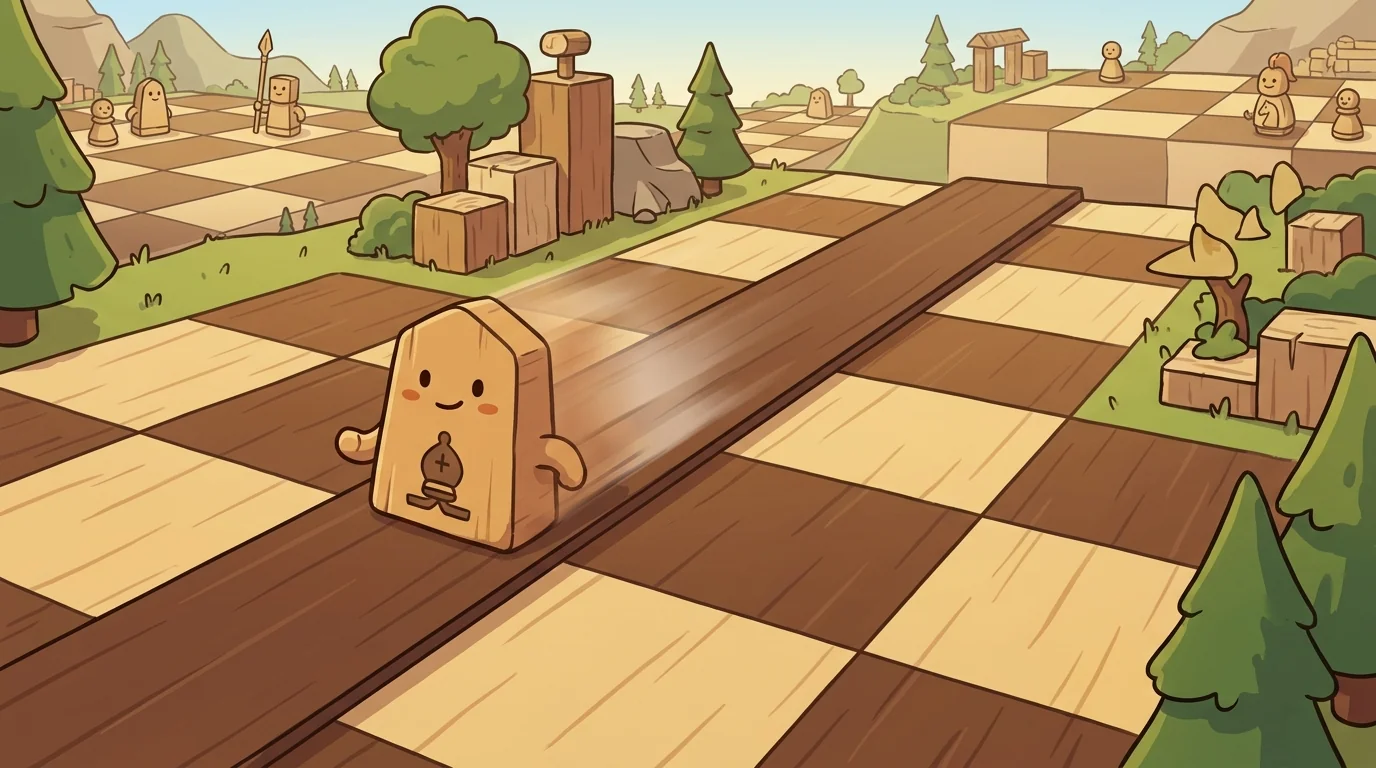
High among the long-range pieces of the valley of Nine Rivers glided a piece named Kaku, and Kaku moved like nothing else — in swift, sweeping, diagonal lines that could carry him from one corner of the board to the far opposite corner in a single breath.
Kaku was a bishop. He slid along the slants: up-and-across, down-and-across, as far as the diagonal ran clear, in one long ruler-straight glide. When Kaku found an open diagonal, whole regions of the board fell under his eye at once. Pieces four, five, six squares away, that thought themselves perfectly safe, would suddenly find a bishop's cool gaze slicing straight toward them across the slant.
But Kaku carried a peculiar burden, and every bishop carries it: he could only ever travel on one colour of square. Because he moved on the diagonals, and diagonals never change colour, Kaku who began his life on a dark square would live his entire life on dark squares. The light squares — fully half the whole valley — were a country he could see, and long for, and never once set foot in.
"It must be strange," a foot-soldier said to him, "to look at half the world and know you'll never stand there."
"It is," said Kaku. "You learn to make the half you can reach count for double."
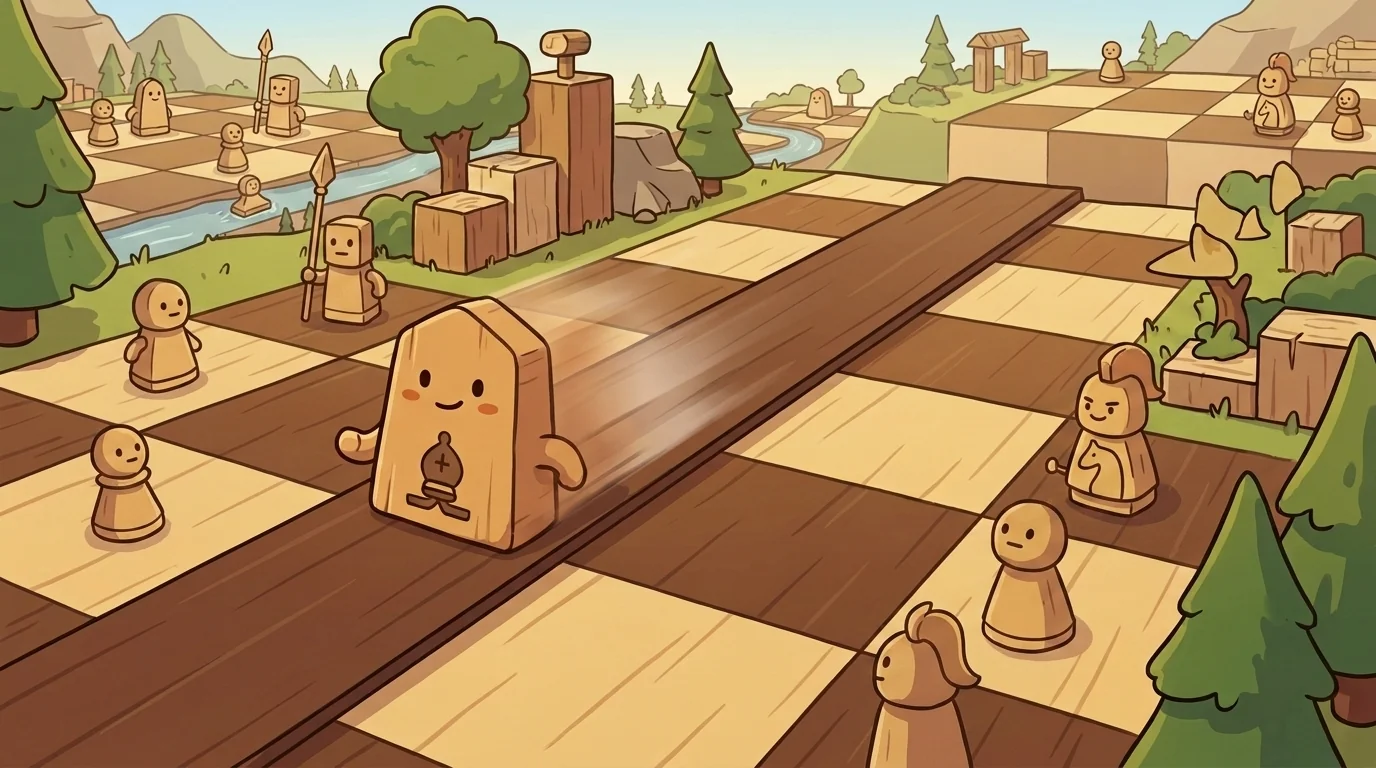
Kaku had spent his hot-headed youth at war with his own nature — furious at the light squares he couldn't touch.
There had been a game where the one piece he needed to catch sat, maddeningly, on a light square, one single square off his diagonal, close enough to see and utterly out of reach. Kaku had slid and slid, hunting an angle that did not exist, growing more frantic each turn, until in his frustration he flung himself into a bad square and was captured for nothing. He had lost the whole game not because his enemy was clever but because he could not accept the shape of himself.
Turned around in the wrong colours afterward (as the valley's fallen pieces always are), Kaku brooded. And an old long-range piece drifted up beside him and said: "You keep raging at the squares you can't reach. Have you ever counted the ones you can?"
Kaku hadn't. When he did, he was astonished. From the right square, his diagonals reached into every quarter of the board at once — he ruled two whole slanting highways that crossed the entire valley. He had been so busy mourning the light squares that he'd never noticed he was one of the longest-reaching pieces alive on the dark ones. "I don't need every square," he said slowly, the anger draining out of him. "I need the right square — the one where my slants own the most of the board. Stop hunting what I can't have. Set up where what I have is strongest."
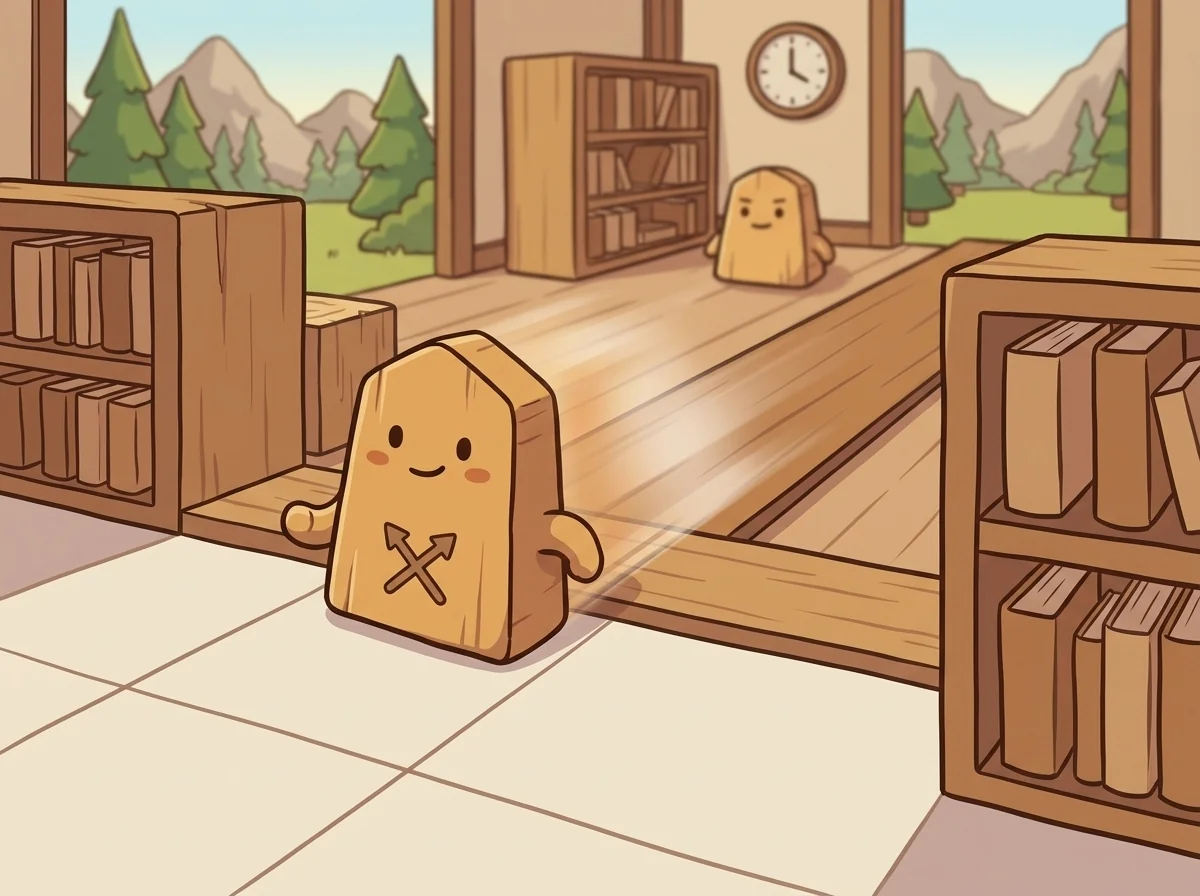
At the House of Study, Kaku slid gracefully across the threshold on a long diagonal, and the Head of the House watched him come.
"A bishop," she said. "Half the board is closed to you forever. Some would say that makes you half a piece."
"Some would say that having never sat still long enough to notice how far my open half reaches," said Kaku. "Every student you have wastes their strongest pieces by parking them where they can barely do anything. I can teach the hardest lesson a powerful piece ever learns — that raw power is nothing without the right place. A bishop on a bad square is a joke. A bishop on the right diagonal is a terror across the whole board. The difference isn't the bishop. It's the square." He came to rest on a long open slant. "I can teach them to stop moving their strong pieces around, and start placing them where they rule."
"Teach it," said the Head. "Most of them think power is a thing you have. You know it's a thing you aim."
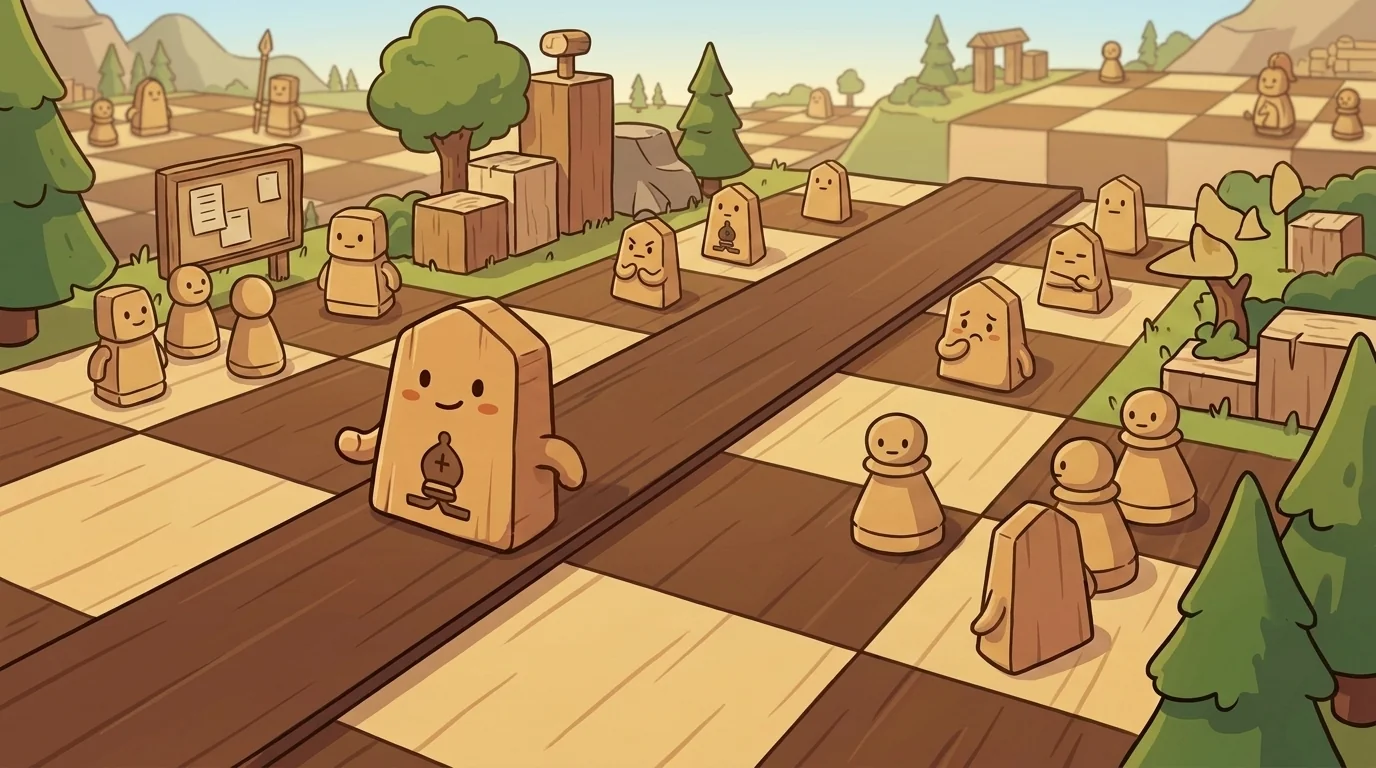
Kaku's student was an impatient piece named Sora who owned strong long-range pieces and used them terribly — shoving them onto whatever square was nearest, blocking their own lines with their own soldiers, so that her mighty sliders sat penned in behind walls, seeing nothing, doing nothing.
"You've got a bishop that could cut this whole board in half," Kaku told her, "and you've buried it behind three of your own pawns. It can't see past its own doorstep. Watch." He slid onto a long, gloriously open diagonal — one that reached from her own back rank all the way into the enemy's — and suddenly three of Sora's opponent's pieces were pinned under the threat of his gaze. "I didn't get stronger. I got placed. Clear your bishop's diagonal. Give it a slant that runs the length of the valley. Then don't move it at all — just let it rule from there while your other pieces do the walking."
Sora looked at her penned-in sliders, and then, one careful move at a time, she opened a lane for the bishop and let it stretch out along a long clear diagonal. She didn't move it again for six turns. She didn't have to. It sat there, cool and far-seeing, quietly deciding what was allowed to happen on half the board.
"It's doing more standing still than it ever did running around," Sora said, amazed.
"That," said Kaku, "is what it means to be placed instead of merely powerful."
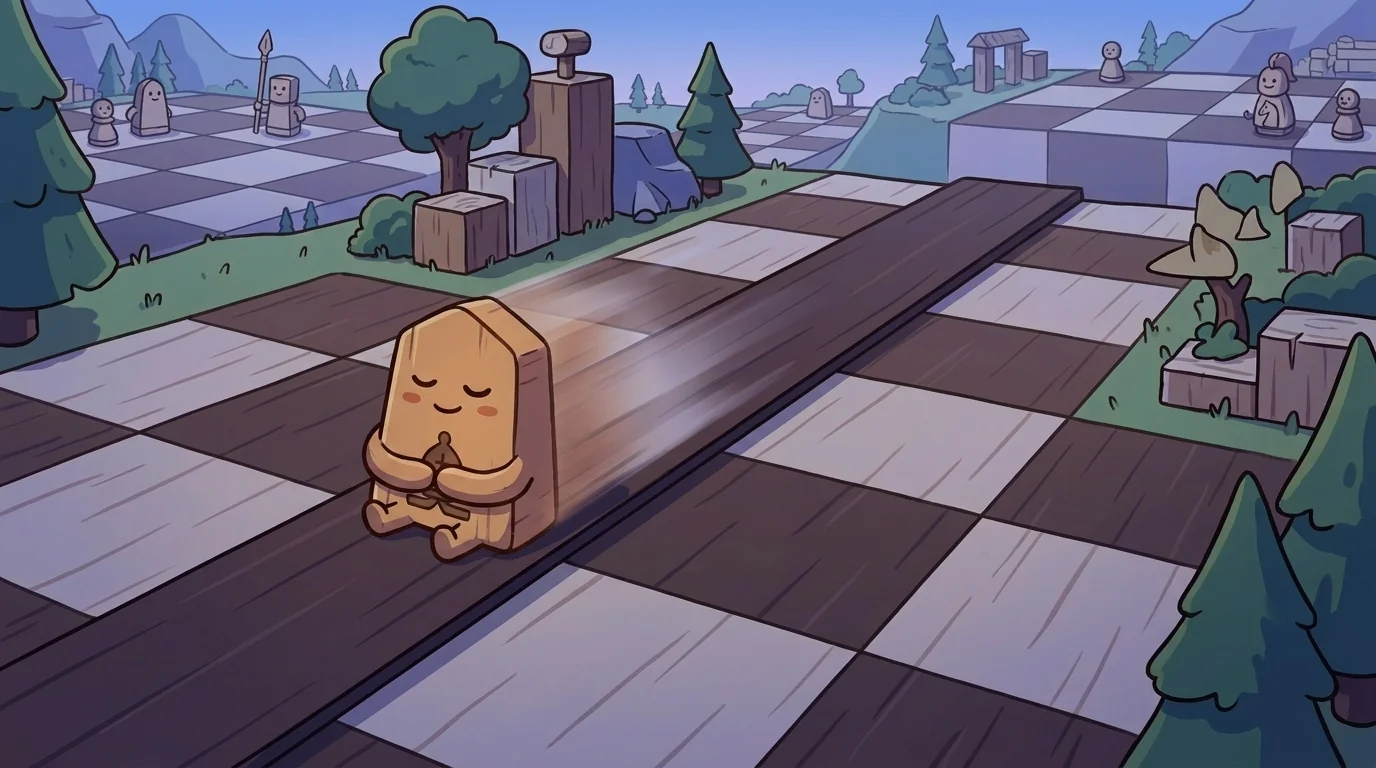
That night Kaku slid slowly from corner to corner along his favourite dark diagonal, in the empty hall, watching how far his gaze reached when nothing stood in the way.
He thought about the furious young bishop who had thrown himself away chasing a light square he could never touch, and about the old piece who had asked him, so simply, whether he'd ever counted the squares he could reach. He did not rage at the light squares anymore. They were another piece's country. His country was the slants, two long crossing highways of dark, and from the right square he could see nearly everything that mattered.
There was a serene, far-seeing pleasure in it — the pleasure of a piece who had stopped grieving the half he'd never have and fallen in love with the half he ruled. He could not go everywhere. Almost nothing truly can. But when he found his diagonal — his long, clear, open slant — and settled onto it, and felt the whole slanting length of the board come quietly under his eye, Kaku knew a contentment as wide as the valley itself.
The DropTale ensemble
Bishop Kaku is part of DropTale's distributed-narrative cast. Each character embodies a different curricular primitive; together they teach the full subject.
-

Boomerang Fu
The pawn (Fu): steps one square forward; captured, it comes back as a drop
-

Lance Kyo
The lance: charges straight forward any distance, never retreats
-

Leaping Kei
The knight (Keima): the only jumper — two fixed forward hops over any piece
-

Silverstep Gin
The silver general: steps forward plus all four diagonals (the attacker's five)
-

Goldguard Kin
The gold general: the six-direction shield step (cannot promote)
-

Rook Hisha
The rook: the long file and rank sweep — the strongest slider
-

Crownfall Gyoku
The king: one step any direction; protecting it is the game — checkmate is its fall
-

Promote Nari
The promotion zone: a piece flips to its stronger promoted side in the last three ranks
-

Dropcatch Dai
The DROP rule: a captured piece enters your hand and redeploys on an empty square
-
Reserve Rin
Piece-in-hand + drop limits: the komadai reserve, nifu and uchifuzume
-
Sensei Tsume
The tsume-shogi puzzle master (mentor): forced-mate problems with one solution