Crownfall Gyoku
The KING (Gyoku) — steps one square in any of the eight directions, and CHECKMATE — the whole game is the defence of this one piece; when it can no longer escape capture, the game ends
Loading audio…
Press play to listen along. The line being read lights up as you go.
Show full transcript
Loading transcript…
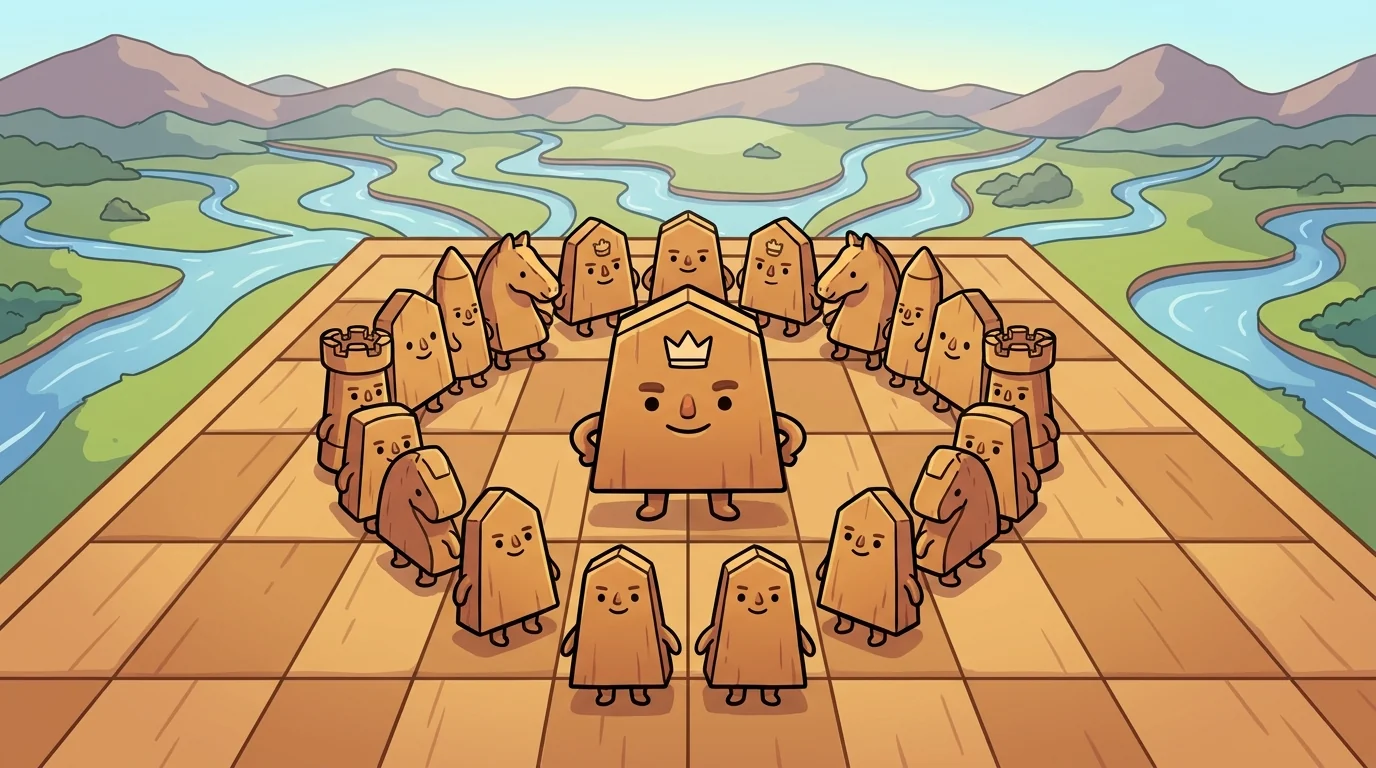
At the very heart of every army in the valley of Nine Rivers sat a single small piece, and everything — every soldier, every general, every sweeping rook — existed to keep that one small piece safe. His name was Gyoku, and Gyoku was the king.
You might expect a king to be the mightiest piece on the board. Gyoku was almost the weakest. He could step exactly one square, in any of the eight directions — a modest little shuffle, no faster than a foot-soldier, slower than nearly everyone. He captured little. He conquered nothing. He mostly sat, well-guarded, in a snug corner of his own making, while his army did the fighting.
And yet the entire game was about him. Not about who captured the most pieces, not about who reached the far mountains — about him, this small shuffling king, and one question only: could the enemy ever corner him so completely that he had no safe square left to step to? Because that was the whole game. Not death, not destruction — just that single terrible moment the pieces called checkmate: the moment the king, hunted, looks around and finds every direction leads into danger, and there is nowhere safe left to go.
"It's a funny sort of importance," Gyoku admitted once. "Everyone risks everything for me, and all I have to do is not get cornered. I sometimes feel I'm the least and the most important piece at the same time."
"You are," said his oldest general. "That's exactly what a king is."
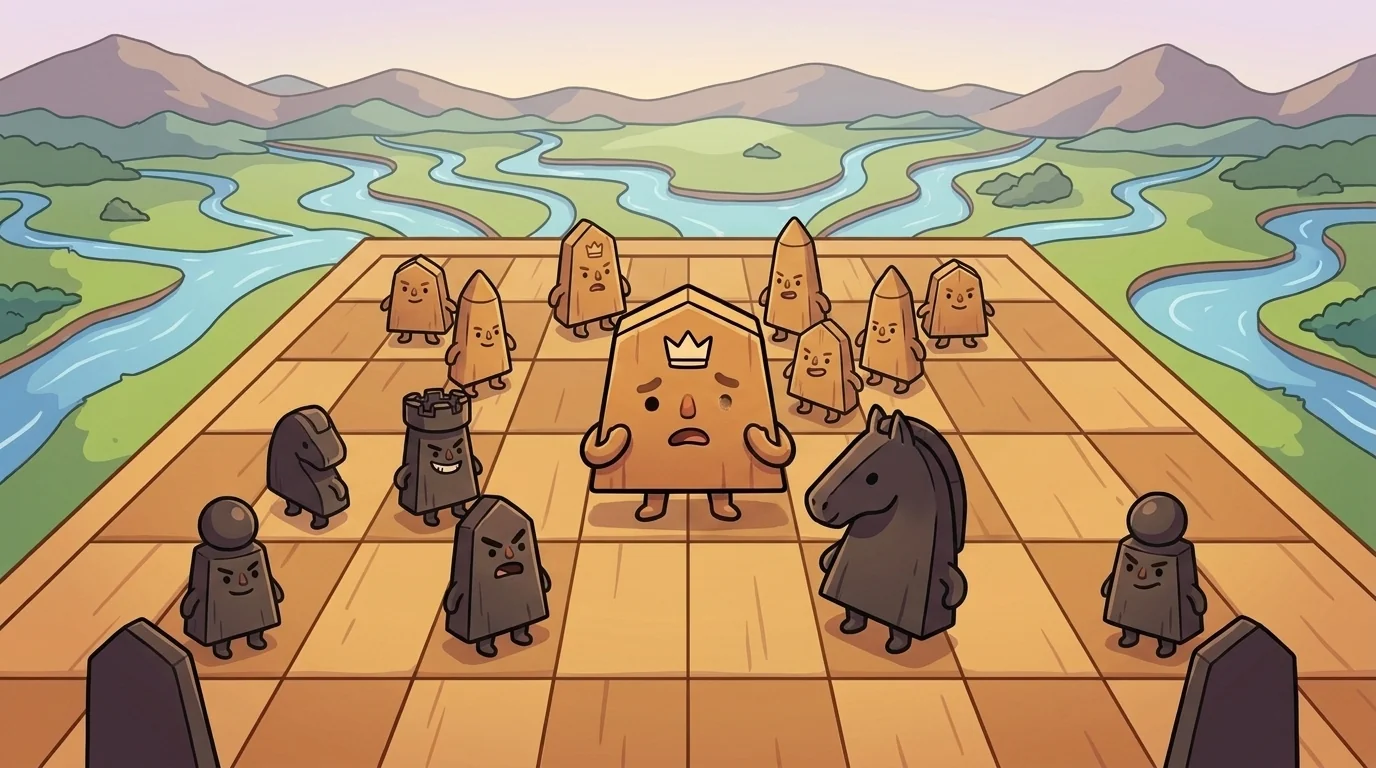
Gyoku had come to understand checkmate — really understand it — on the day he'd nearly walked into one himself, out of pure restlessness.
He'd grown bored, that game, of sitting safe in his corner while everyone else had adventures. So he'd wandered — one little step, then another, out toward the middle of the board, into the open, just to feel the wind of the game on his face. It felt wonderful for exactly two turns. Then he looked up and realized, with a lurch, that in wandering out he'd left his snug safe corner behind, and now enemy pieces were quietly closing every road home. One more careless step and there would be no safe square anywhere. He was one shuffle from the end of the whole game.
His generals rushed to shield him and hauled the situation back from the brink, but Gyoku never forgot the cold feeling of looking around a board that had shrunk to a trap. "Checkmate isn't about being weak," he said afterward, shaken. "I've always been weak; that's fine, that's my job. Checkmate is about running out of doors. I got cornered because I stopped keeping an escape open. However safe I feel, I must always, always keep a square to step to. The moment I have no door, the game is over — no matter how strong my army still is."
That was the deep secret of his smallness: a king does not need to be strong. A king needs to never be without a next safe step.
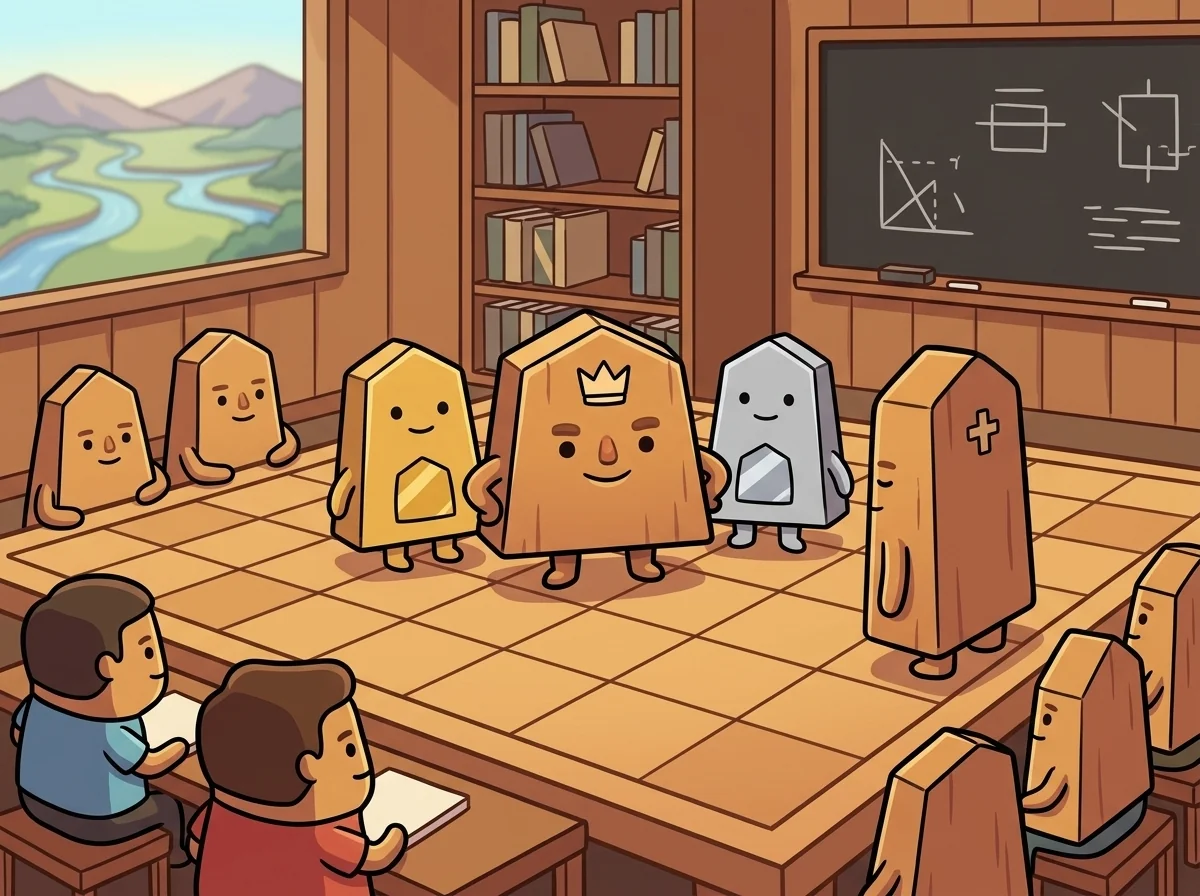
At the House of Study, Gyoku shuffled in one square at a time, escorted (as kings always are) by two watchful generals, and the Head of the House inclined her head with real respect.
"The king," she said. "Weakest of movers. Most important of pieces. What can you teach that a mightier piece cannot?"
"The thing the whole game is for," said Gyoku simply. "Your students spend all their time thinking about attacking, capturing, charging — and they forget that none of it matters if they let their own king get cornered. I can teach them the one lesson that decides every single game: keep your king safe, and never — ever — let him run out of doors. A player can capture the whole enemy army and still lose, if in the last moment their own king has nowhere to step. I'm living proof that the smallest piece decides everything."
"Then teach them to guard the small thing that matters most," said the Head, "instead of chasing the big things that don't."
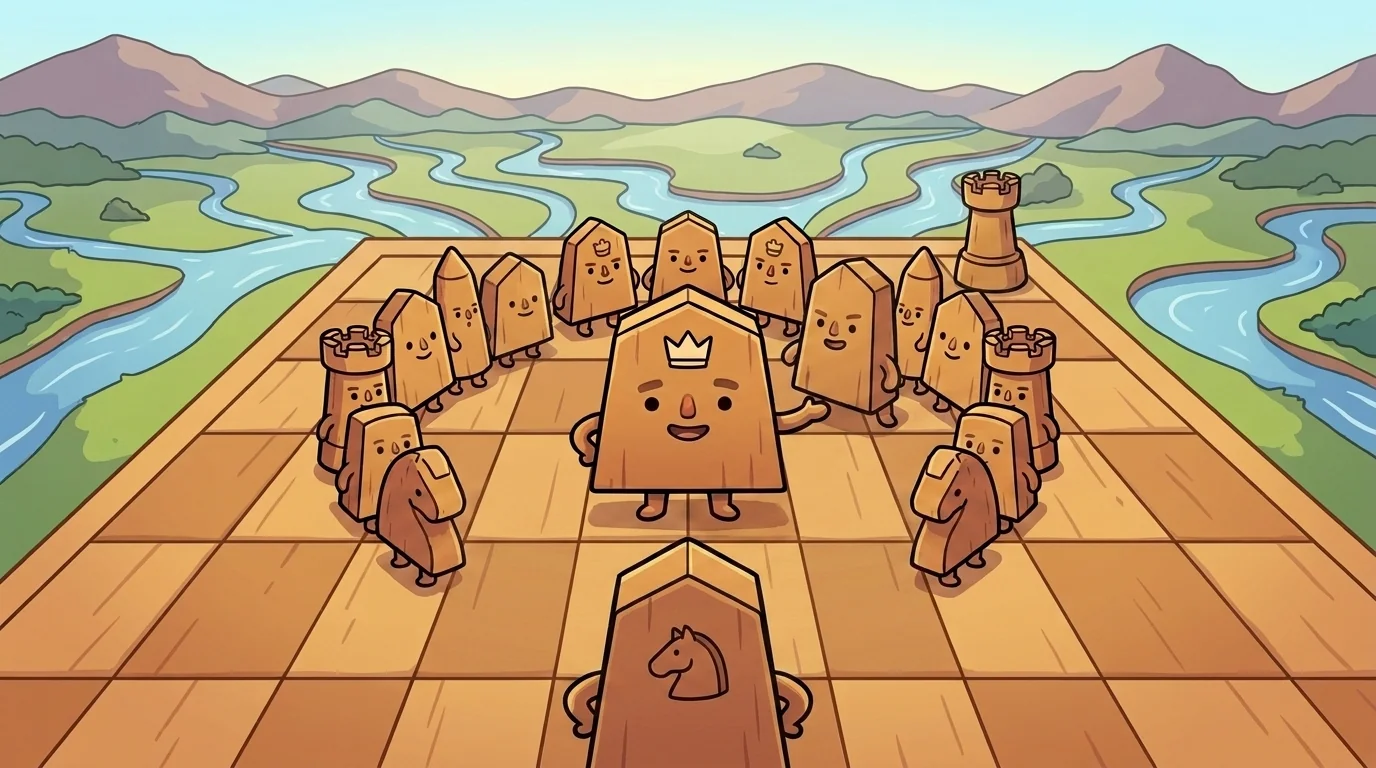
Gyoku's student was a bold, careless piece named Tavi who attacked brilliantly and defended not at all — who would fling his whole army forward in a glorious charge and leave his own king sitting alone and exposed behind them, guarded by nobody, one step from disaster and blissfully unaware.
"Your attack is beautiful," Gyoku told him. "Where's your king?"
Tavi glanced back. "Home. Fine. Alone, but—"
"—but with no army left to guard him, and only two safe squares, and an enemy rook about to close them both," said Gyoku. He shuffled his own small king one careful step, into the shelter of a general, into a snug corner with two clear doors. "Watch. I keep a wall of pieces around me. I keep a corner at my back. And I always keep at least one safe square to step to. That's not cowardice — it's the whole point of the game. Attack all you like, Tavi. But leave someone to guard the small king, and never let his last door close."
Tavi looked at his glorious, king-forgetting charge, and then at the small well-guarded king in front of him, and understood — a little sickly — how close he'd been to winning every battle and losing the war. He pulled a general back. He tucked his king into a corner with a door open. And he found, to his surprise, that an attack you can make without fearing for your king is far more fun than one you make with disaster creeping up behind you.
"Guarding the small piece makes the big pieces braver," Tavi said slowly.
"Everything good on the board," said Gyoku, "starts with the small king being safe."
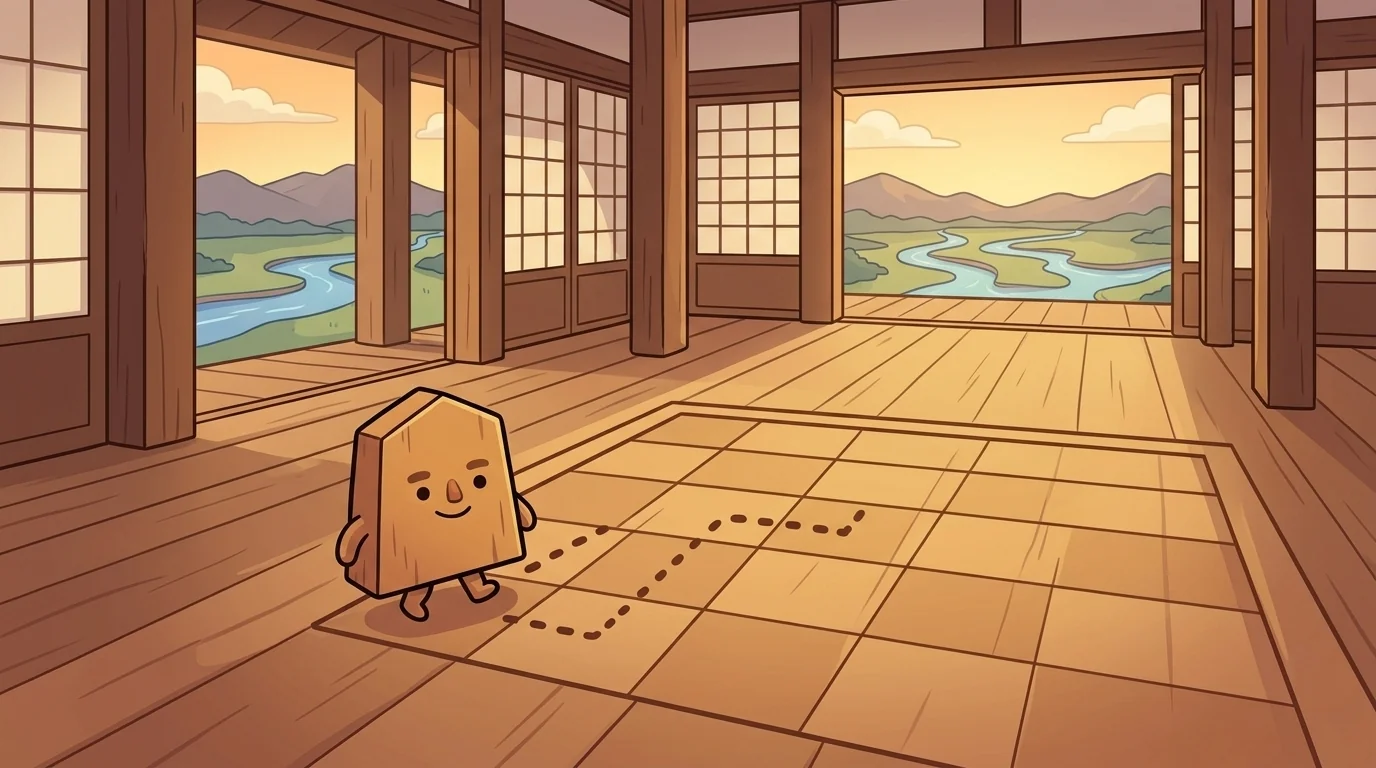
That evening Gyoku shuffled quietly around his own snug corner of the empty hall — one square this way, one square that, checking, the way he always did, that there was a door open in every direction.
He thought about the restless afternoon he'd wandered out into the open just to feel the wind, and the cold lurch of looking up at a board that had shrunk to a trap around him. He did not resent his smallness anymore, or the way the whole game bent around keeping him safe. He had come to see it as a kind of quiet honour: to be the one thing worth protecting, and to do his own small part by simply, faithfully, never letting the last door close.
There was a deep steadiness in it — the steadiness of a small king who has learned that his strength was never in his step but in his care: in keeping a wall at his back and a door at his side and an army that loved him at his front. He would never sweep the board like a rook or slice it like a bishop. He only had to do one thing, forever, and do it well: stay safe, keep a door, and let everyone he trusted be brave on his behalf. And on the quiet evenings, tucked in his guarded corner with the whole valley at peace around him, that felt like more than enough.
The DropTale ensemble
Crownfall Gyoku is part of DropTale's distributed-narrative cast. Each character embodies a different curricular primitive; together they teach the full subject.
-
Boomerang Fu
The pawn (Fu): steps one square forward; captured, it comes back as a drop
-
Lance Kyo
The lance: charges straight forward any distance, never retreats
-
Leaping Kei
The knight (Keima): the only jumper — two fixed forward hops over any piece
-
Silverstep Gin
The silver general: steps forward plus all four diagonals (the attacker's five)
-
Goldguard Kin
The gold general: the six-direction shield step (cannot promote)
-
Bishop Kaku
The bishop: the long diagonal slide, locked to one colour
-
Rook Hisha
The rook: the long file and rank sweep — the strongest slider
-
Promote Nari
The promotion zone: a piece flips to its stronger promoted side in the last three ranks
-
Dropcatch Dai
The DROP rule: a captured piece enters your hand and redeploys on an empty square
-
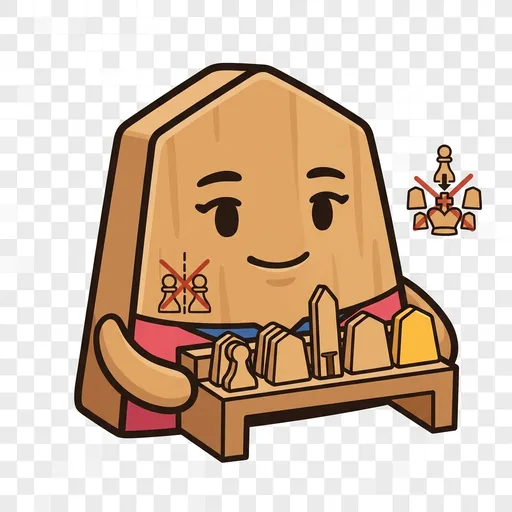
Reserve Rin
Piece-in-hand + drop limits: the komadai reserve, nifu and uchifuzume
-
Sensei Tsume
The tsume-shogi puzzle master (mentor): forced-mate problems with one solution