Dropcatch Dai
The DROP — a captured piece joins your hand, and on a later turn, instead of moving a piece, you may DROP it back onto (almost) any empty square as your own
Loading audio…
Press play to listen along. The line being read lights up as you go.
Show full transcript
Loading transcript…
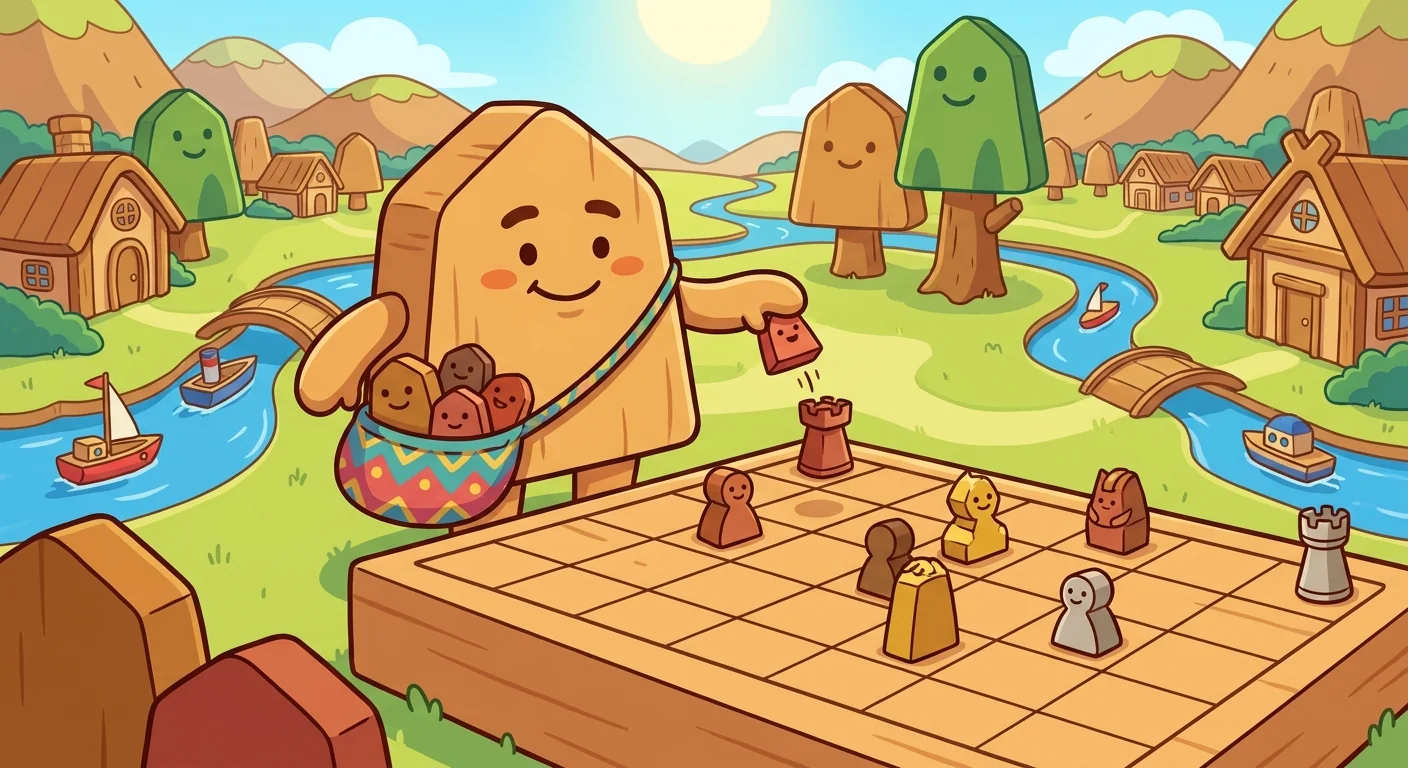
Of all the strange and wonderful rules in the valley of Nine Rivers, there was one that made its game unlike any chess in any other land — and the keeper of that rule was a bright-eyed, ever-collecting piece named Dai.
Dai's gift was this: nothing was ever wasted. In most lands, when you capture an enemy piece, it goes into a box and is gone. Not in the valley of Nine Rivers. When Dai captured an enemy piece, it came into her hand — and it changed sides — and it waited there, hers now, patient, ready. And then, on some later turn, instead of moving one of her pieces across the board, Dai could drop that captured piece back onto the board, onto almost any empty square she liked, fully in play, fighting for her.
It was astonishing to watch. An enemy would capture one of Dai's soldiers, feeling clever — and three turns later that very soldier would come raining back down out of Dai's hand into the middle of the enemy's own position, wearing Dai's colours now, exactly where it hurt most. "I don't lose pieces," Dai liked to say, patting the little reserve of captured pieces she carried. "I collect them. Everything that falls to me comes back — and it comes back where I choose."
Dai had learned the true weight of her gift the hard way — by wasting it, early, out of pure impatience.
When she was young she used to drop pieces the instant she caught them. Capture a soldier? Drop it right back down the next turn, somewhere near, just to have it out. It felt productive. It was not. She was spending her precious hand-pieces on small, obvious squares that did nothing much, emptying her reserve as fast as she filled it — so that in the great crucial moments, when a well-placed drop could have won the whole game, her hand was empty. She'd spent everything on nothing.
An old collector-piece watched her fritter away a full hand and said: "A piece in your hand is a threat everywhere at once, child. The enemy doesn't know where it'll fall, so they have to guard against it everywhere. The moment you drop it, it becomes a piece in one place — powerful, but no longer a mystery. You keep spending your mysteries on small squares. Hold them. A piece in the hand, saved for the right square at the right moment, is worth three pieces dropped early on the wrong ones."
Dai stopped emptying her hand. She started saving — carrying her caught pieces like coins for a moment that mattered, letting the mere threat of them hang over the whole board. And she discovered that a full, patient hand made the enemy flinch at shadows, guarding a dozen squares against a drop that hadn't come yet. Her power, she learned, was not only in the dropping. It was in the holding.
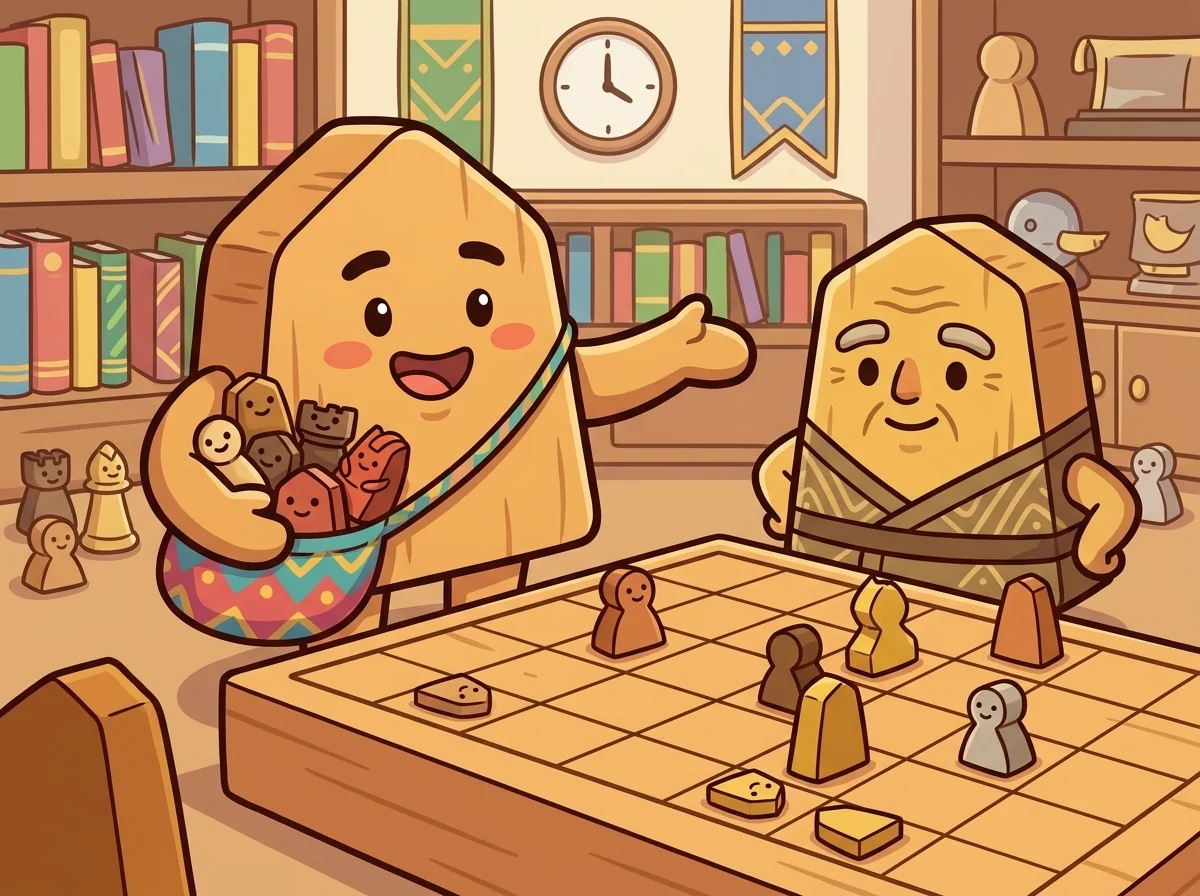
At the House of Study, Dai arrived jingling faintly, a little reserve of caught pieces cupped in her hand, and the Head of the House leaned forward with real curiosity.
"The drop," she said. "The rule that makes our game our own. No other land has you. What do you teach?"
"The most hopeful lesson on the board," said Dai, "and one of the trickiest. First: nothing here is ever truly lost. Every piece that falls can come back. My students despair when they lose a piece — I can teach them that a capture is a loan, not a death. And second, the tricky part: a saved piece is worth more than a spent one. They'll want to drop everything the instant they catch it. I'll teach them to hold — to let a full hand hang over the board like a coming storm, and to spend a drop only on the square and the moment that turn a game." She opened her hand to show the waiting pieces. "The whole valley plays braver once they learn nothing's really lost. And it plays wiser once they learn when to wait."
"Teach both halves," said the Head. "The hope, and the patience. Most who learn one never learn the other."
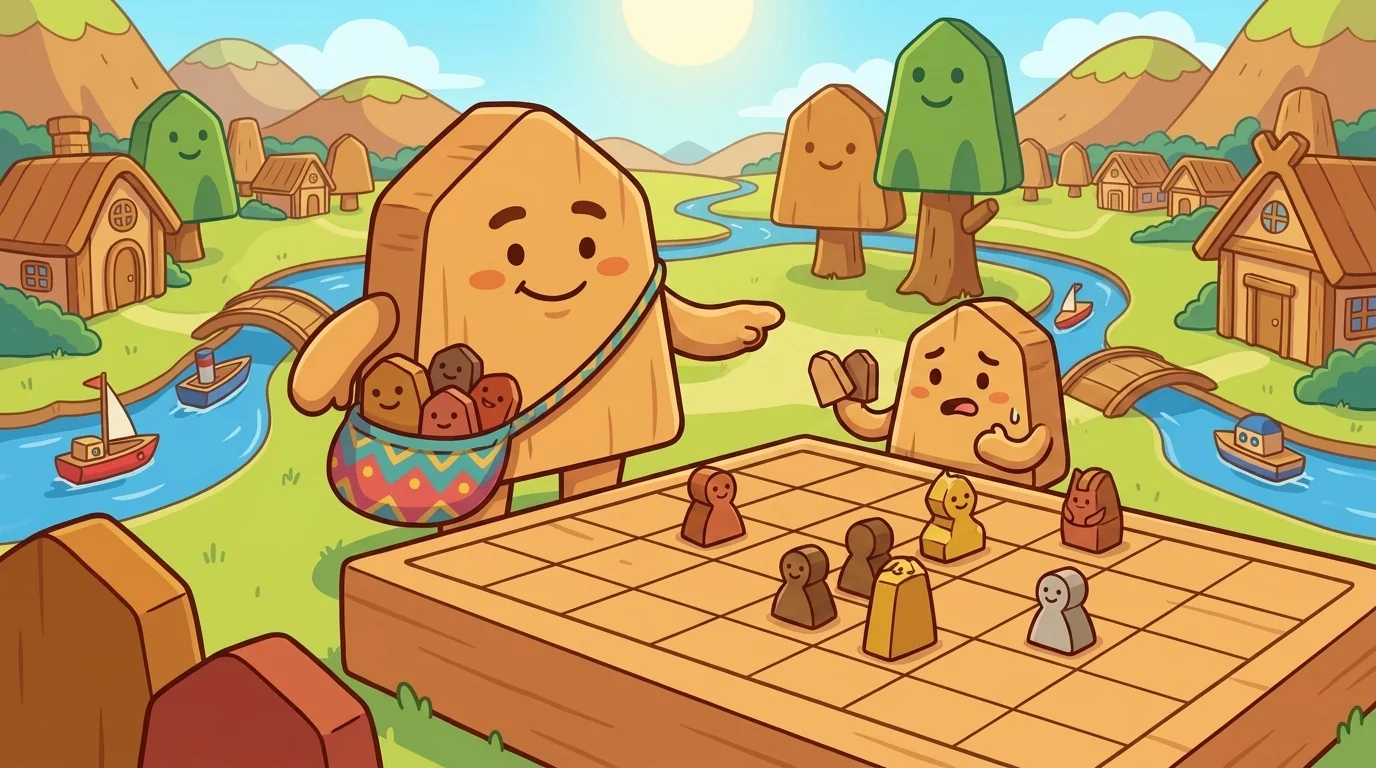
Dai's student was a jittery piece named Kioh who did both wrong things Dai had once done. He despaired every time he lost a piece — gone, ruined, I'm behind — forgetting it went to his hand. And on the rare turns he remembered, he'd drop it instantly, on the nearest dull square, just to feel he'd done something.
"You lost a soldier," Dai said, mid-game, as Kioh groaned. "Where did it go?"
"...Into my hand," Kioh admitted, surprised to remember. "It's — it's still mine."
"It's still yours, and it's waiting, and the enemy has to fear it falling anywhere," said Dai. "So don't groan — and don't fling it back down on the first dull square either. Hold it." She showed him: she let two caught pieces wait in her hand for four long turns, the threat of them freezing the enemy's whole defense — and then, in one shattering moment, she dropped both, exactly where they broke the enemy's position wide open. "See? Held, held, held — then spent, together, at the right square. A drop saved for its moment is the strongest move in the valley."
Kioh stopped despairing over lost pieces — they weren't lost, they were saved up. And he stopped flinging his hand away on dull squares. He started holding, letting his growing reserve hang over the board, waiting for the moment worth spending it on. His whole game changed from a series of small frantic reactions into one long patient gathering storm.
"Losing a piece isn't losing it," Kioh marveled, "and having a piece isn't the same as using it well."
"Now you understand the drop," said Dai, jingling her hand.
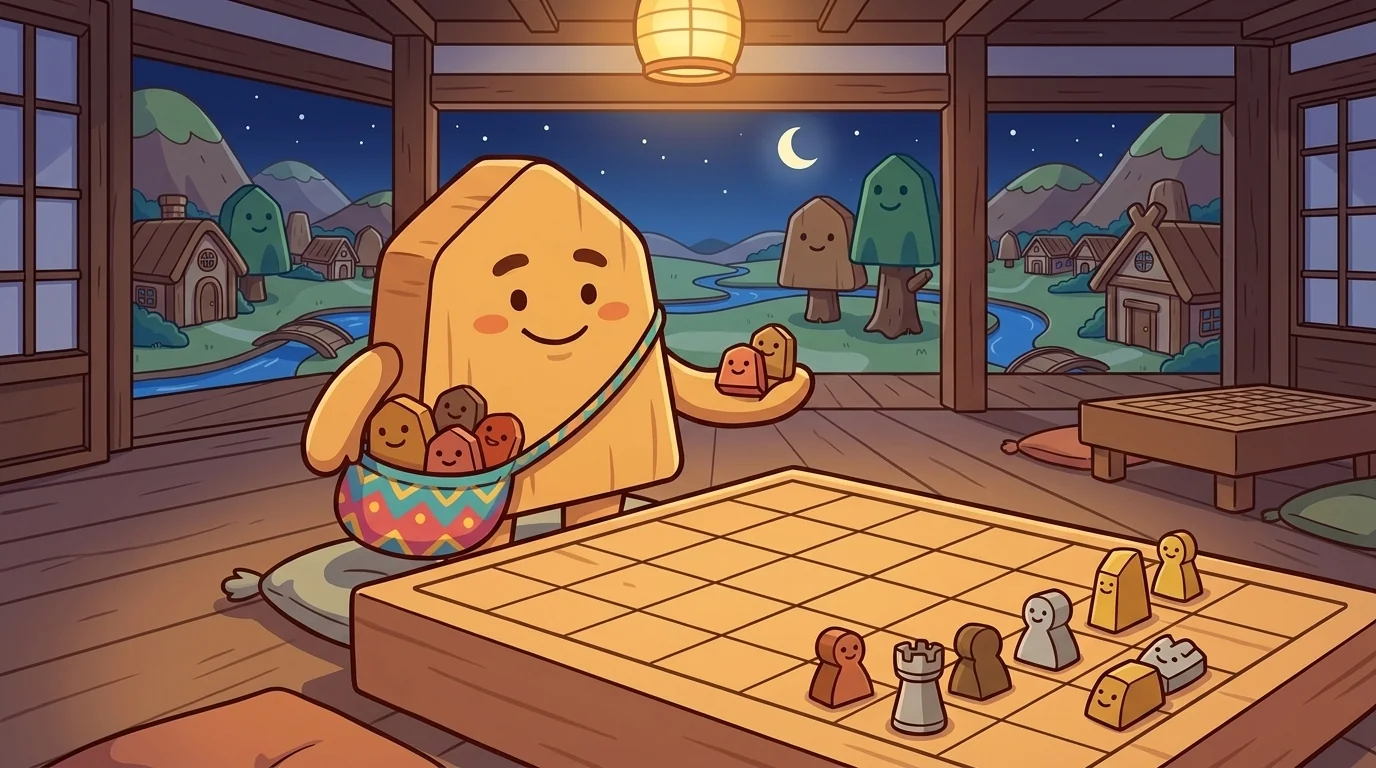
That night Dai sat alone in the empty hall, turning her small collection of caught pieces over and over in her hand, feeling their patient weight.
She thought about the impatient young collector she'd been, emptying her hand on dull squares and finding it empty when it mattered, and the old piece who'd taught her that a held piece is a threat everywhere while a dropped one is only a piece somewhere. She did not fear losing pieces anymore — how could she, when everything that fell to her came home? And she no longer spent her hand in a hurry. She had learned the deep, patient pleasure of holding — of carrying her caught treasures quietly, letting their unspent promise hang over the whole valley, and waiting, and waiting, for the one bright square where they were worth everything.
There was a particular warmth in a full and patient hand — the warmth of a piece who knew that nothing good was ever really lost, and that the best things were worth saving for their moment. Dai closed her fingers gently around her little reserve, felt the coming-storm of everything she'd caught and not yet spent, and smiled at the board as if it held no losses at all — only pieces waiting, kindly, to come home.
The DropTale ensemble
Dropcatch Dai is part of DropTale's distributed-narrative cast. Each character embodies a different curricular primitive; together they teach the full subject.
-

Boomerang Fu
The pawn (Fu): steps one square forward; captured, it comes back as a drop
-

Lance Kyo
The lance: charges straight forward any distance, never retreats
-

Leaping Kei
The knight (Keima): the only jumper — two fixed forward hops over any piece
-

Silverstep Gin
The silver general: steps forward plus all four diagonals (the attacker's five)
-

Goldguard Kin
The gold general: the six-direction shield step (cannot promote)
-

Bishop Kaku
The bishop: the long diagonal slide, locked to one colour
-

Rook Hisha
The rook: the long file and rank sweep — the strongest slider
-

Crownfall Gyoku
The king: one step any direction; protecting it is the game — checkmate is its fall
-

Promote Nari
The promotion zone: a piece flips to its stronger promoted side in the last three ranks
-
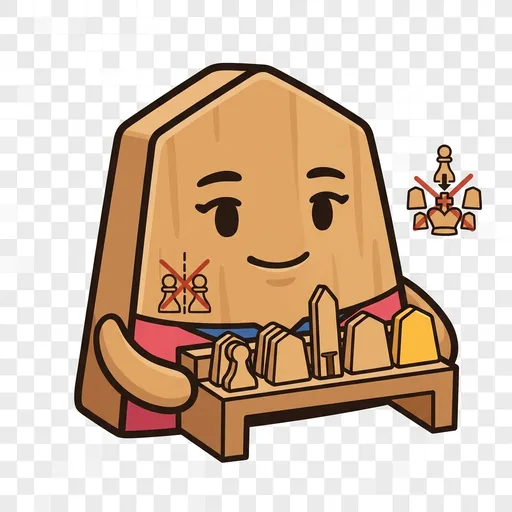
Reserve Rin
Piece-in-hand + drop limits: the komadai reserve, nifu and uchifuzume
-
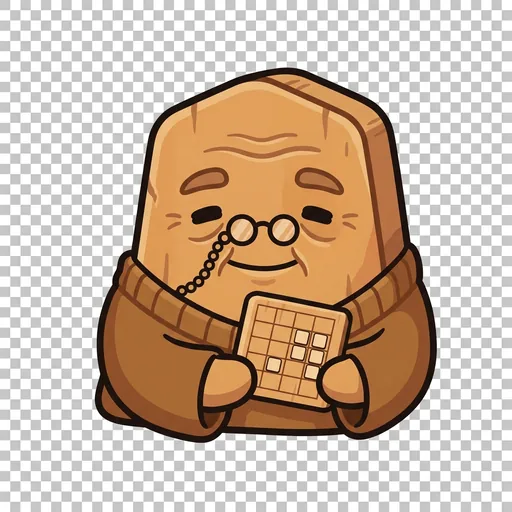
Sensei Tsume
The tsume-shogi puzzle master (mentor): forced-mate problems with one solution