Goldguard Kin
The GOLD GENERAL (Kin) — steps one square in six directions (forward, both forward-diagonals, left, right, and straight back) but never the back-diagonals, and never promotes — the defender's shape
Loading audio…
Press play to listen along. The line being read lights up as you go.
Show full transcript
Loading transcript…

If Silverstep Gin was the general everyone wanted to be, then Goldguard Kin was the general everyone secretly wanted behind them — and almost nobody dreamed about, which suited Kin perfectly.
Kin was a gold general, and where Gin was slippery, Kin was solid. He stepped six ways: forward, the two forward-slants, left, right, and — the direction Gin lacked — straight back. What he could not do was slip away on the back-diagonals the way Gin did. Kin didn't slip. Kin planted himself in front of whatever mattered and simply would not be moved out of the way easily.
And there was one more thing about Kin, the thing the flashier pieces whispered about: he never changed. Every other attacking piece in the valley, if it fought its way deep into enemy ground, could promote — flip over into a grander, stronger form. Not Kin. A gold general was already exactly what a gold general would ever be. No secret upgrade. No hidden greatness waiting to unfold. Just Kin, the same steady six-direction shield, first day to last.
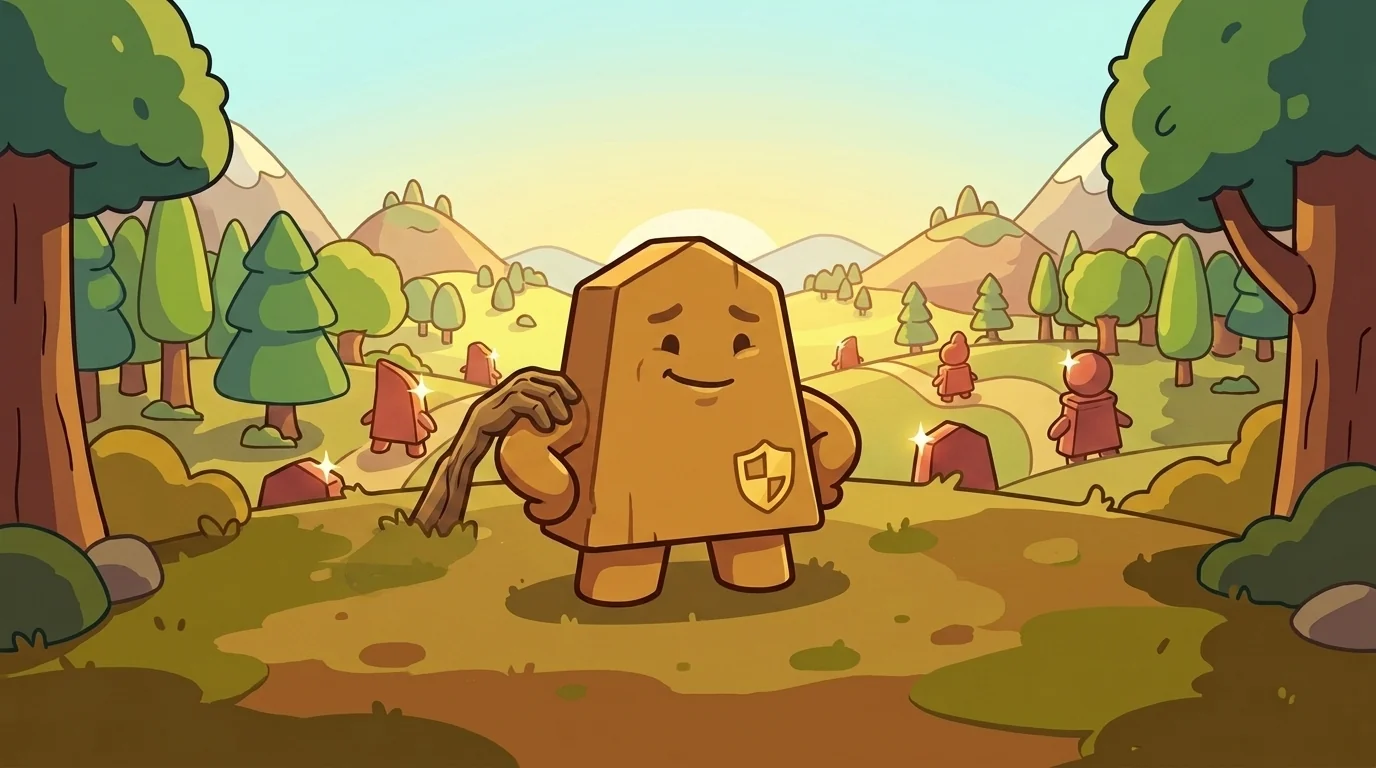
Kin had made peace with never promoting on a day that could have broken his heart.
He had fought his way, with great effort, all the way into the far ranks — the promotion zone, where nearly every other piece would have flipped over into something magnificent. His friends had promoted around him: a silver became a mighty gold-mover, a foot-soldier flipped into something twice its old self. And Kin had crossed the same line, into the same magic ground, and... nothing had happened. He was still a gold general. He was already whatever he was going to be.
For an afternoon it stung. He watched the promoted pieces shine and felt very plain.
Then an old defender who had guarded kings for a hundred games sat down beside him. "You're sulking," she observed, "because you can't become something else. But child — you're the only one of them who was already enough. A silver isn't sure of itself; that's why it can change. A soldier isn't finished; that's why it flips. You?" She tapped his solid gold shoulder. "You are the shape the king trusts precisely because you never turn into anything surprising. Steadiness isn't a lesser gift. It's the rarest one on the board."
Kin sat with that. It was true, he realized — and it was a comfort, not a consolation prize. The king did not want a guard who might suddenly become something different. The king wanted the one piece he could count on to be exactly, boringly, wonderfully the same tomorrow as today. That was Kin. He stopped wishing to shine, and started being glad he was solid.
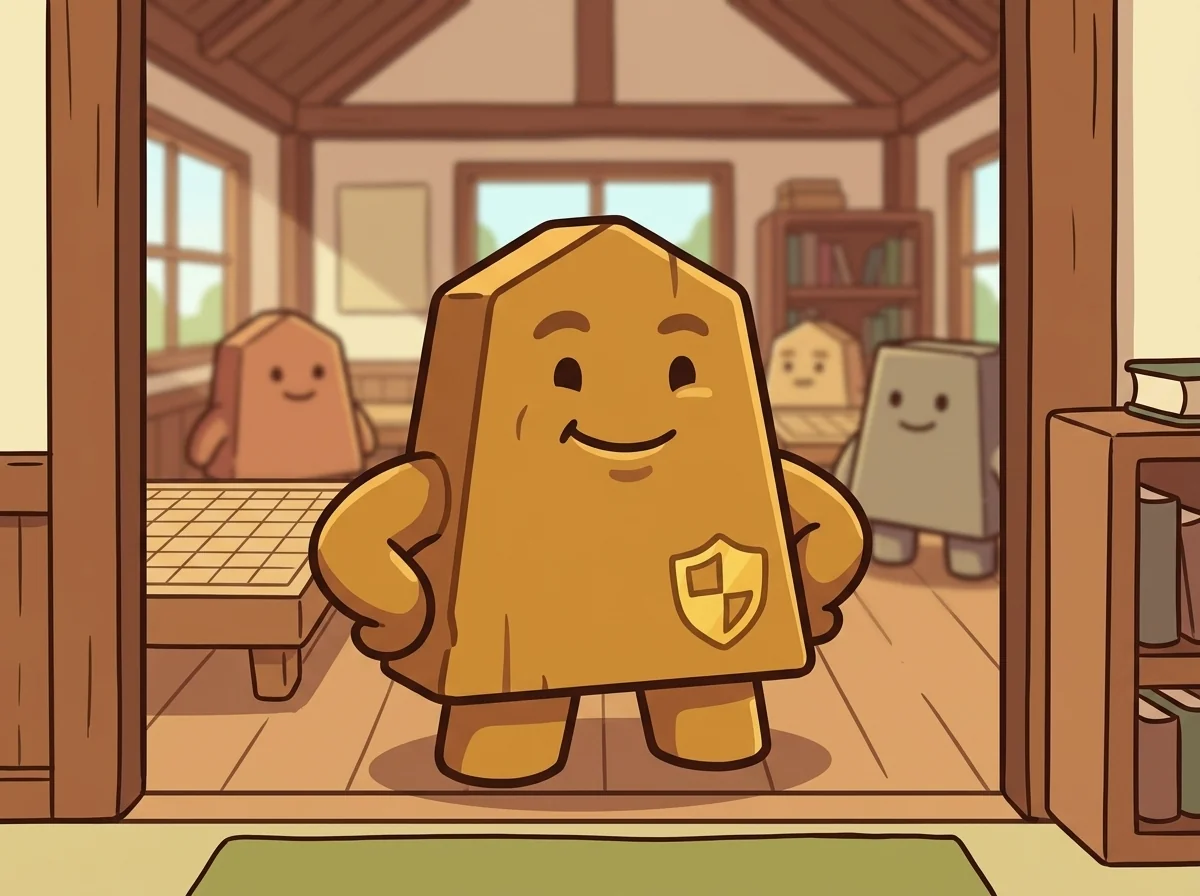
At the House of Study, Kin stood squarely in the doorway, and the Head of the House looked at him with something close to relief.
"A gold general," she said. "You don't promote. You don't dazzle. Half my students will find you dull."
"Half your students," said Kin mildly, "lose every game because they're all chasing something dazzling and nobody's minding the king. I'm the piece who minds the king. I can teach them the thing none of the flashy teachers will: that the steadiest job on the board is the one that actually wins — that a game is not lost when your attack fails, it's lost when your defense does." He settled his weight. "I'll teach the ones who are willing to be reliable instead of remarkable. They'll thank me later, usually right after the flashy ones have lost."
"Good," said the Head. "I have far too many pieces dreaming of promotion and far too few willing to stand still and matter. Teach them the second thing."
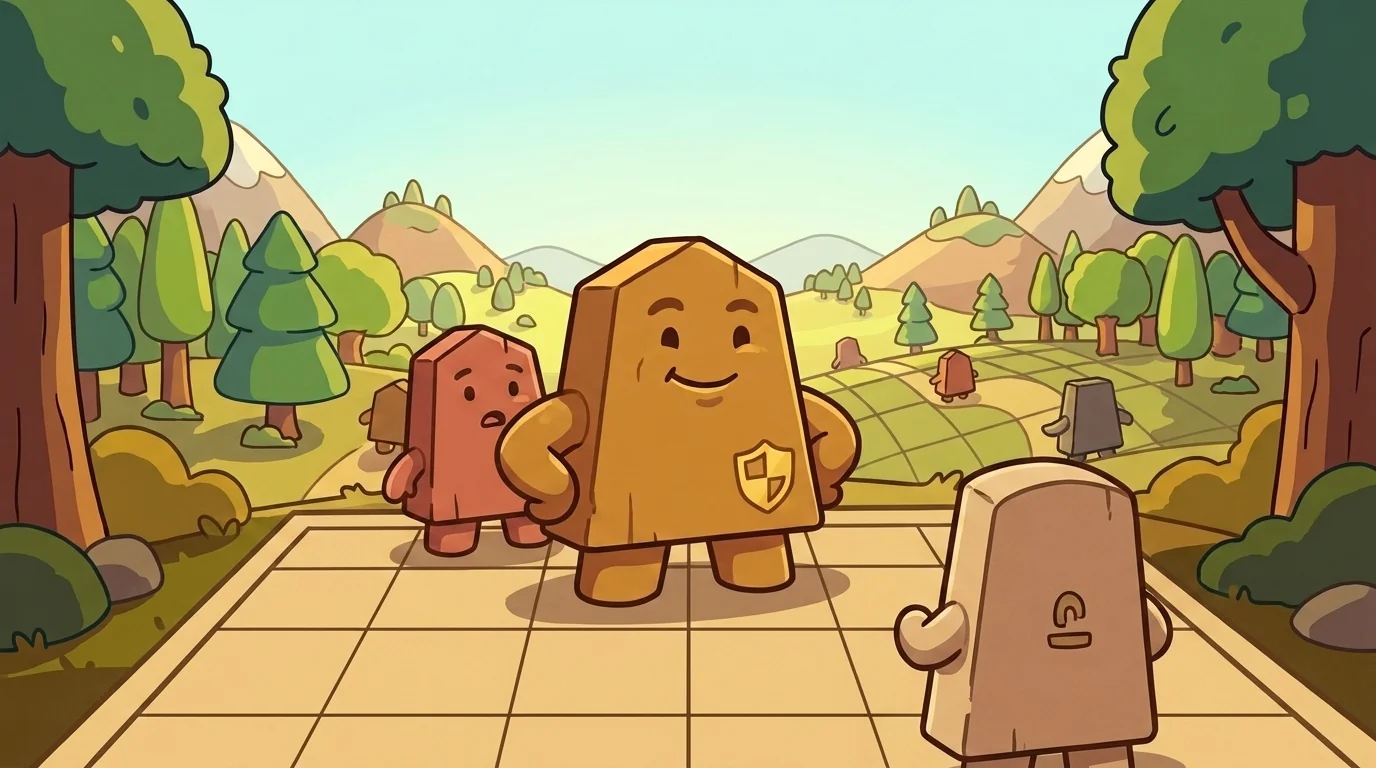
Kin's student was a restless piece named Haru who wanted to be everywhere at once — always attacking, always chasing, always pushing forward, and forever leaving his own king naked and unguarded behind him.
"Where's your king?" Kin asked him, mid-charge.
Haru glanced back. "Um. Over there. Alone. But I'm winning over here—"
"You're losing over there," said Kin, "you just don't know it yet, because nobody's home." He planted himself, one solid step, directly in front of Haru's abandoned king — filling exactly the gap an enemy was about to pour through. "Watch. I'm not going to do anything exciting this turn. Or next turn. I'm going to stand here, six directions of stubborn, being impossible to shove aside — and because I'm here, your king is safe, and because your king is safe, your attack over there is allowed to work. The dull piece standing guard is what makes the exciting piece's glory possible."
Haru looked at his lonely king, and at the steady gold shape now shielding it, and something clicked. He stopped trying to have his whole army be heroes. He left Kin to guard — reliably, unglamorously, perfectly — and found that with his king safe behind a wall that never wavered, his attacks up front suddenly held together.
"Being the steady one is kind of... invisible," Haru said.
"It is," Kin agreed, not moving. "Right up until the moment everyone realizes the game would've been lost without it. Then it's the only thing anyone remembers."
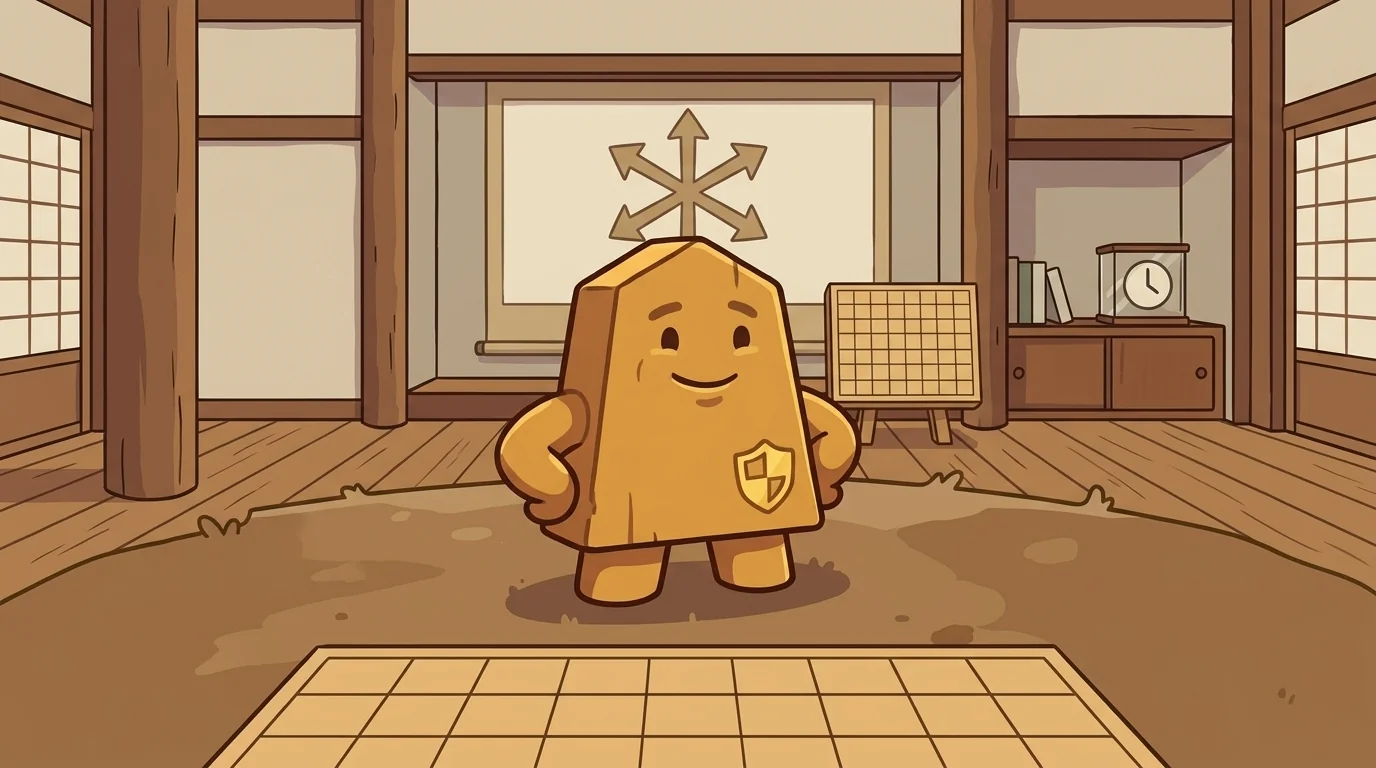
Long after Haru had gone, Kin stood alone in the empty hall — planted, as ever, squarely in front of nothing in particular, out of pure habit.
He thought about the afternoon in the promotion zone when nothing had happened to him and he'd felt so plain, and about the old defender who'd taught him that being already-enough was the rarest gift on the board. He did not wish to shine anymore. He had watched a hundred dazzling pieces flare and fail, and he had quietly guarded a hundred kings through to the end, and he knew which mattered.
There was a deep, unhurried contentment in being the steady one — the one who never surprised anybody, who never became something else, who was simply there, six honest directions of there, when it counted. Nobody wrote songs about the guard who held the door. But Kin had felt the particular warmth of being trusted absolutely, of a king sleeping soundly because he was awake, and he would not have traded that quiet, reliable warmth for all the promotions in the valley.
The DropTale ensemble
Goldguard Kin is part of DropTale's distributed-narrative cast. Each character embodies a different curricular primitive; together they teach the full subject.
-

Boomerang Fu
The pawn (Fu): steps one square forward; captured, it comes back as a drop
-

Lance Kyo
The lance: charges straight forward any distance, never retreats
-

Leaping Kei
The knight (Keima): the only jumper — two fixed forward hops over any piece
-

Silverstep Gin
The silver general: steps forward plus all four diagonals (the attacker's five)
-

Bishop Kaku
The bishop: the long diagonal slide, locked to one colour
-

Rook Hisha
The rook: the long file and rank sweep — the strongest slider
-

Crownfall Gyoku
The king: one step any direction; protecting it is the game — checkmate is its fall
-

Promote Nari
The promotion zone: a piece flips to its stronger promoted side in the last three ranks
-

Dropcatch Dai
The DROP rule: a captured piece enters your hand and redeploys on an empty square
-
Reserve Rin
Piece-in-hand + drop limits: the komadai reserve, nifu and uchifuzume
-
Sensei Tsume
The tsume-shogi puzzle master (mentor): forced-mate problems with one solution