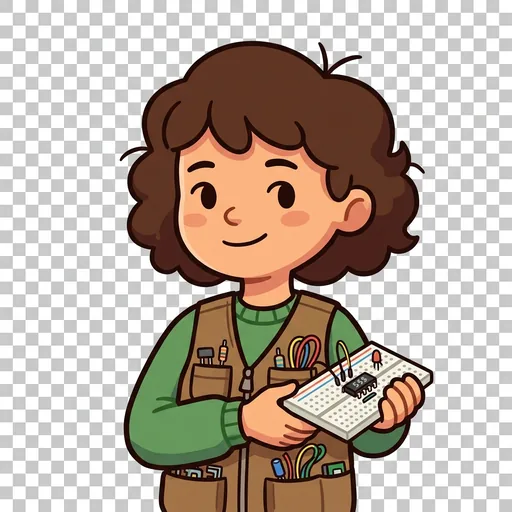
Reserve Rin
PIECE-IN-HAND + drop restrictions — the reserve (komadai) of captured pieces, and the two great drop rules: no two of your pawns on one file (nifu), and no dropping a pawn to deliver instant checkmate (uchifuzume)
Loading audio…
Press play to listen along. The line being read lights up as you go.
Show full transcript
Loading transcript…
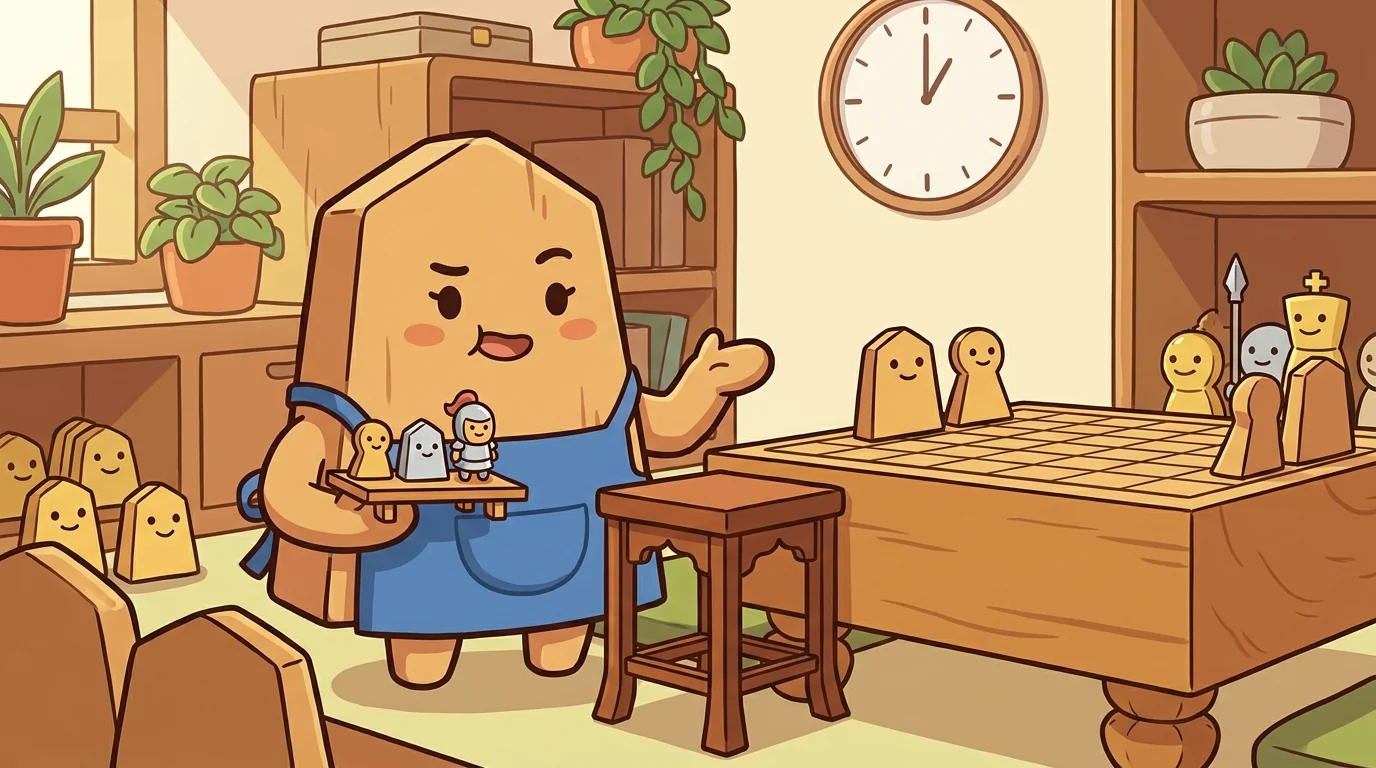
If Dropcatch Dai was the joy of the drop, then Reserve Rin was its careful conscience — the piece who kept the whole beautiful, dangerous system honest.
Rin's post was the komadai — the little stand beside each player where captured pieces waited, in hand, ready to be dropped back into the game. It was Rin's job to keep track of it all: whose hand held what, how many soldiers were in reserve, which piece could come raining down next. She was, in a sense, the valley's memory of everything that had been caught and not yet spent.
But Rin's most important work was not counting. It was the two great rules of the drop — the two limits that kept the wonderful drop-rule from breaking the whole game. The first was nifu: you may never drop a pawn onto a file where you already have one of your own un-flipped pawns. Two of your own pawns on the same column? Forbidden. The second was uchifuzume: you may never drop a pawn in a way that delivers instant checkmate. A pawn already on the board can deliver mate — but one dropped fresh from the hand for that exact killing blow? Not allowed.
"People think I'm the piece who says no," Rin sighed once, tidying her little reserve-stand. "And I suppose I am. But somebody has to be. Without me, the drop would break the game — and then nobody's fun would be safe."
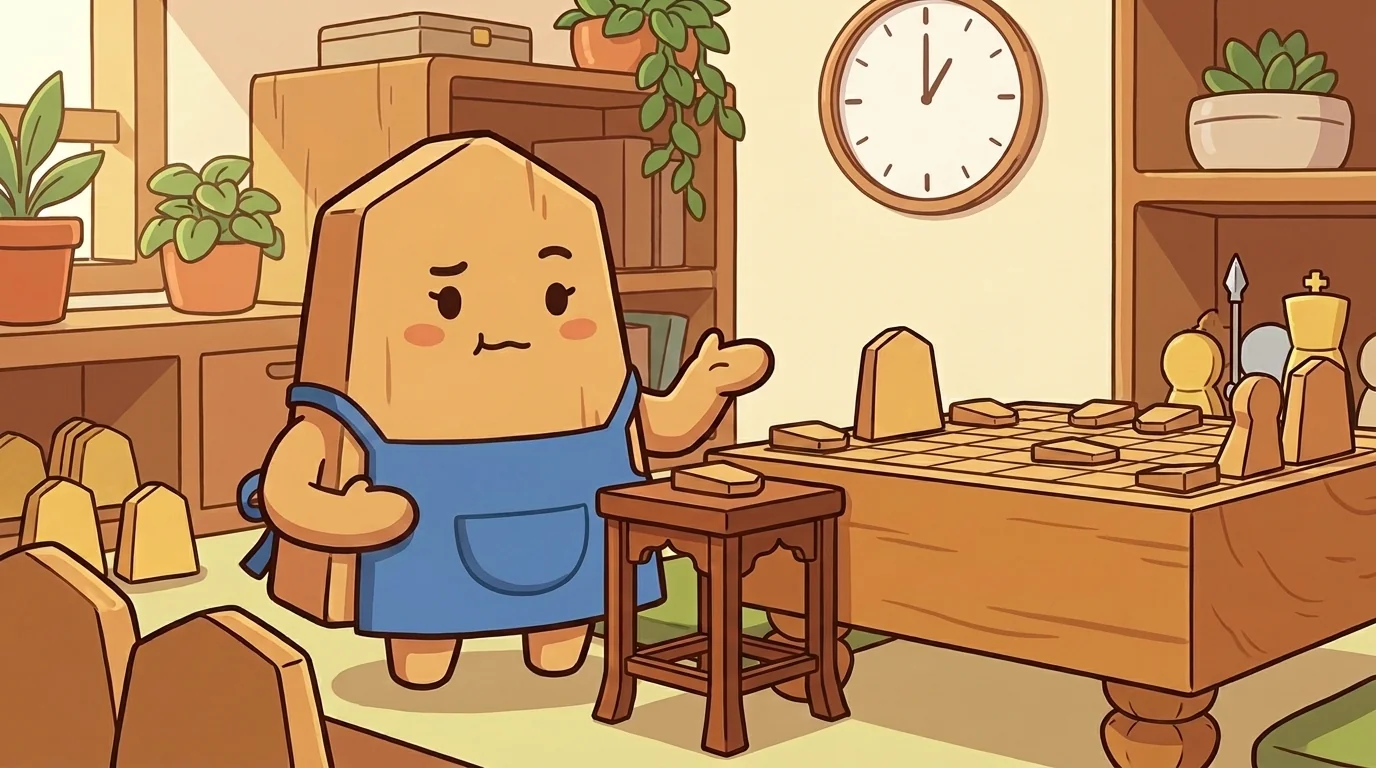
Rin had come to peace with being the rule-keeper on a day she'd secretly wished the rules away.
There had been a game — Rin remembers it still — where her own side could have won instantly, gloriously, if only the uchifuzume rule hadn't existed: one dropped pawn, one perfect checkmate, game over. But the rule forbade it. Rin had to be the one to say so, to her own delighted, then furious, teammates. "It's not fair!" they'd cried. "We'd have won!" And for a moment Rin had almost agreed — had almost wished she could just not be the keeper of the annoying rule, this once.
Then an old rule-keeper who had watched a thousand games sat with her. "Imagine the valley without that rule," she said quietly. "If any player could win, any turn, just by dropping a fresh pawn for instant mate — every game would end in a cheap little drop. No long plans. No beautiful attacks. No comebacks. Just: catch a pawn, drop it, win. The rule you hate is the rule that makes every other good thing possible. It keeps the game deep instead of cheap." Rin looked at the game she'd 'spoiled,' and saw it differently — saw the long, real, interesting fight that the forbidden cheap-win had forced her side to play instead, and win properly, three turns later. The rule hadn't cost them the game. It had cost them a shortcut, and given them a real victory instead.
After that, Rin stopped resenting her post. The limits weren't spoilsports. They were the banks of the river — the thing that kept all that wild dropping-water from flooding the game flat.
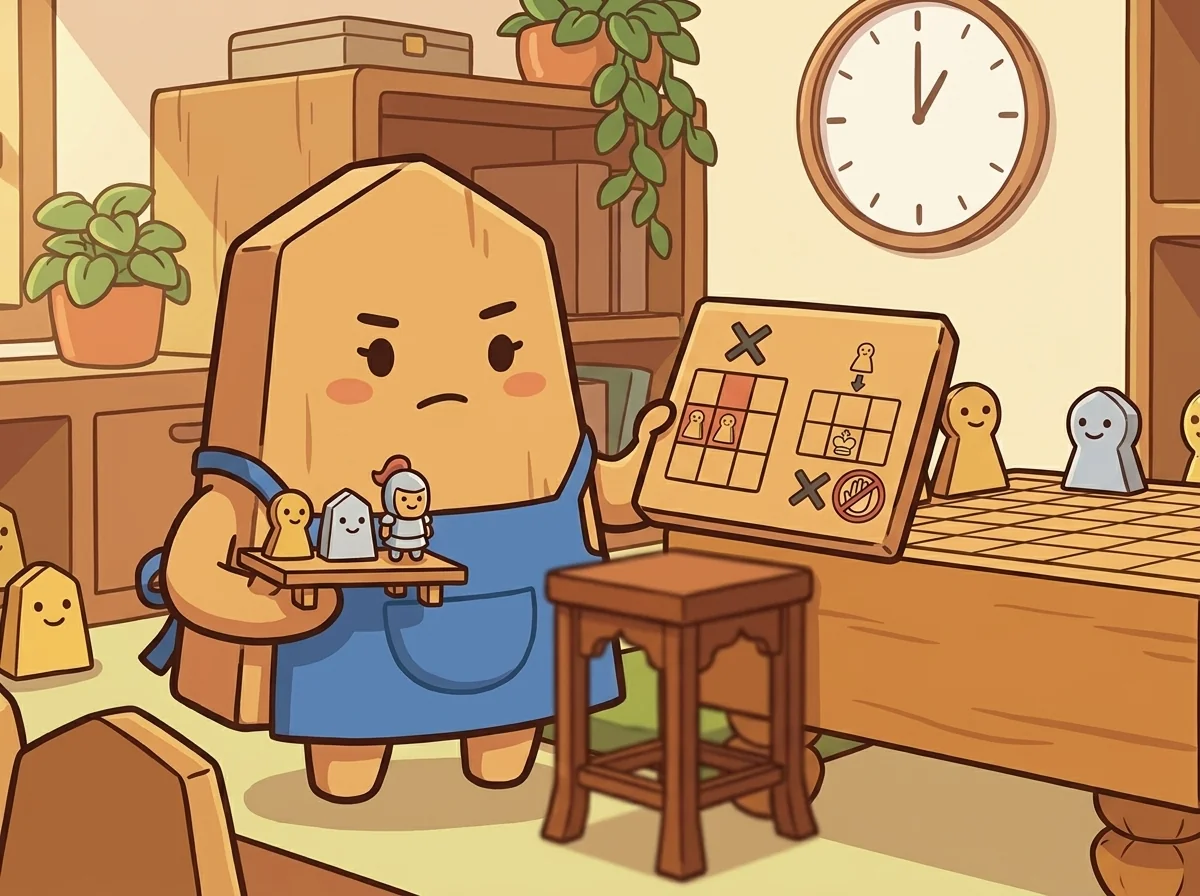
At the House of Study, Rin arrived carrying her neat little reserve-stand, and the Head of the House regarded her with the fondness reserved for the reliable.
"The keeper of the hand," she said. "And of its rules. Some of my students will find you a scold."
"Some of them find every rule a scold, right up until it saves them," said Rin. "Your students learn Dai's joyful drop and immediately try to abuse it — two pawns down one file, or a cheap drop-mate to skip the whole game. I teach the other half: how the drop is allowed to work, and why the limits make it better. A game with no rules on its most powerful move isn't more fun — it's over in a flash, every time, the same cheap way. I teach them to love the drop and respect its banks. That's how the game stays deep."
"Teach it," said the Head. "The joyful ones need a keeper. Be the keeper who explains why, not just the one who says no."
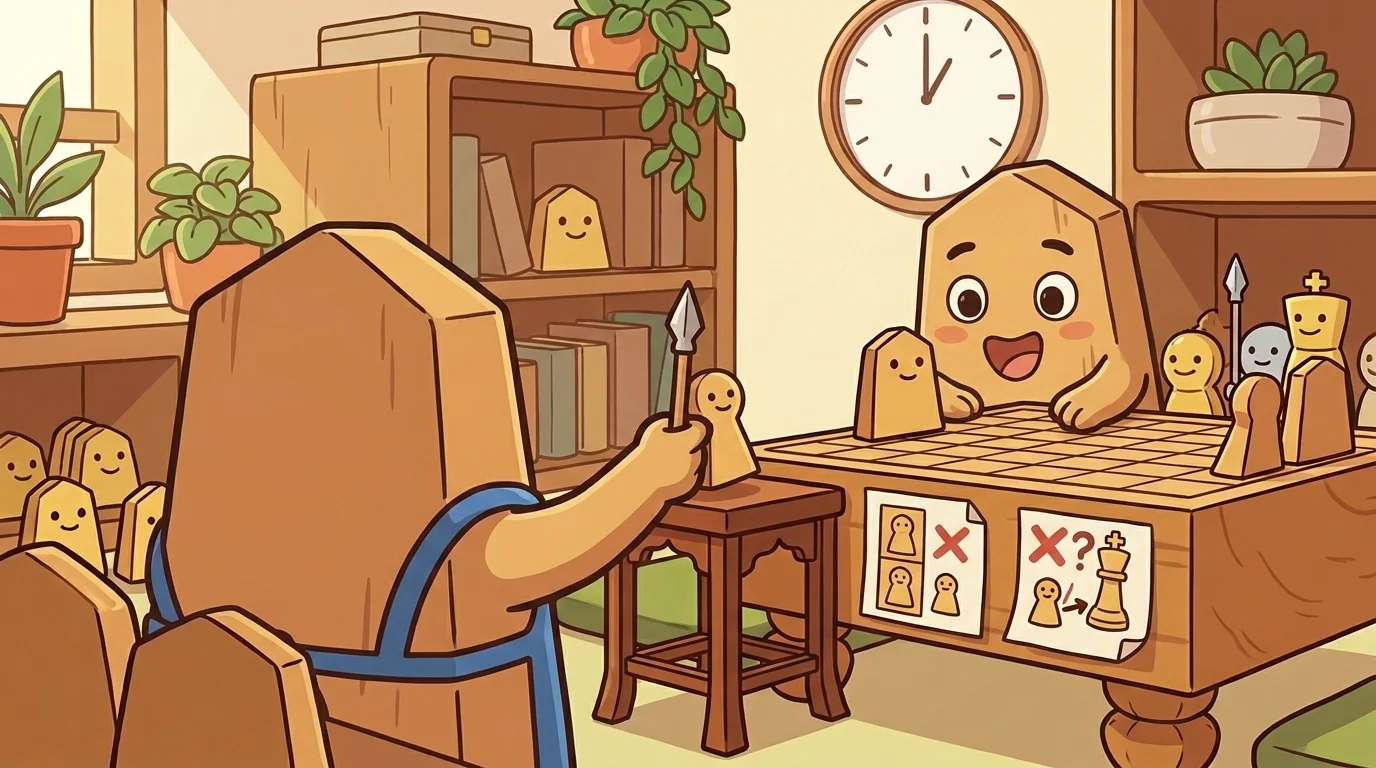
Rin's student was an excitable piece named Sabo who had learned Dai's drop and gone slightly mad with it — trying to stack pawns down a single file (nifu, forbidden), and every game attempting the cheap drop-a-pawn-for-instant-mate trick (uchifuzume, forbidden), and being baffled and cross each time the valley wouldn't let him.
"You keep trying to break the two rules," Rin told him. "Let me show you why they're your friends, not your jailers." She let him see the game he wanted — the cheap drop-mate — and then showed him the game right after it: every opponent, forever, opening with the same cheap trick, every match a two-move joke. "That's the valley without uchifuzume. Do you want to play that every day?" Sabo did not. Then she showed him a real attack — pawns placed carefully on different files, a drop held for a genuine breakthrough, a mate delivered by a long honest plan. "The rules pushed you into playing the good version. They took away the cheap shortcut so the real thing could exist."
Sabo stopped fighting the limits. He placed his pawns thoughtfully, one per file. He stopped hunting the cheap drop-mate and started building real attacks. And the strange thing was, his games got more exciting, not less — because now they were real contests instead of shortcut-hunts.
"The rules made the game better on purpose," Sabo said, a little sheepish.
"That," said Rin, tidying her reserve-stand, "is the whole reason I keep them."
That night Rin sat alone by her little reserve-stand in the empty hall, counting the caught pieces out of long habit, checking the files, keeping the tally straight.
She thought about the game she'd once 'spoiled' by enforcing the rule her own teammates hated, and the old keeper who'd shown her that the limit she resented was the very thing that kept the game deep instead of cheap. She did not think of herself as the piece who says no anymore. She thought of herself as the keeper of the banks — the quiet one who made sure all that wild, joyful, dropping-water stayed a river and never became a shapeless flood.
There was a steady satisfaction in it that the flashier pieces would never understand — the satisfaction of being the one who kept the whole beautiful system fair. Everyone loved the drop; only Rin loved the rules of the drop, and she had made her peace with being the one who did. For she knew, tidying her reserve in the quiet, that every deep and honest game the valley ever played was resting, unseen, on the limits she kept — and that being the keeper of the banks, though nobody sang about it, was a quietly beautiful thing to be.
The DropTale ensemble
Reserve Rin is part of DropTale's distributed-narrative cast. Each character embodies a different curricular primitive; together they teach the full subject.
-

Boomerang Fu
The pawn (Fu): steps one square forward; captured, it comes back as a drop
-

Lance Kyo
The lance: charges straight forward any distance, never retreats
-

Leaping Kei
The knight (Keima): the only jumper — two fixed forward hops over any piece
-

Silverstep Gin
The silver general: steps forward plus all four diagonals (the attacker's five)
-

Goldguard Kin
The gold general: the six-direction shield step (cannot promote)
-

Bishop Kaku
The bishop: the long diagonal slide, locked to one colour
-

Rook Hisha
The rook: the long file and rank sweep — the strongest slider
-

Crownfall Gyoku
The king: one step any direction; protecting it is the game — checkmate is its fall
-

Promote Nari
The promotion zone: a piece flips to its stronger promoted side in the last three ranks
-

Dropcatch Dai
The DROP rule: a captured piece enters your hand and redeploys on an empty square
-
Sensei Tsume
The tsume-shogi puzzle master (mentor): forced-mate problems with one solution