Silverstep Gin
The SILVER GENERAL (Gin) — steps one square forward or to any of the four diagonals (five directions), the attacker who can slip forward AND retreat on the slant
Loading audio…
Press play to listen along. The line being read lights up as you go.
Show full transcript
Loading transcript…
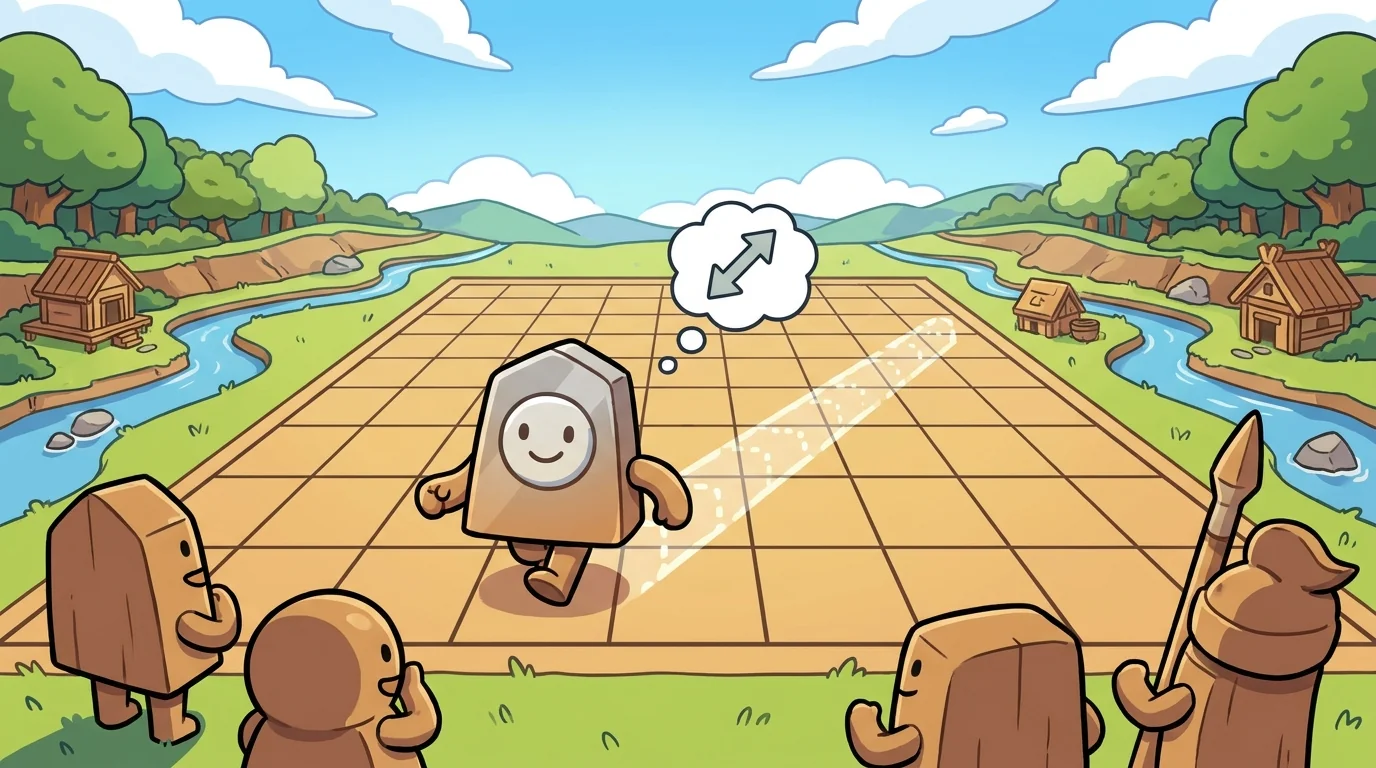
The valley of Nine Rivers had two great generals, and everyone in the valley had opinions about which was better. One of them was a bold silver piece named Gin, and Gin was the one the young pieces all wanted to be.
Gin could step five ways. Straight forward, like the foot-soldiers, but also along any of the four slanting diagonals — up-left, up-right, and — this was the part the young pieces loved — down-left and down-right. She could advance into a fight, and she could slip away from one, all with the same easy shrug of a step. She was quick, she was slippery, and she was the finest attacker in the valley, because an attacker who can also escape is an attacker who can afford to be bold.
"You take such risks," a careful piece said to her once, admiringly. "How are you never trapped?"
"Because I always leave myself a slant," said Gin. "I go in on the straight, but I keep two diagonals open behind me. You can be as bold as you like, as long as you've got a slippery way home."
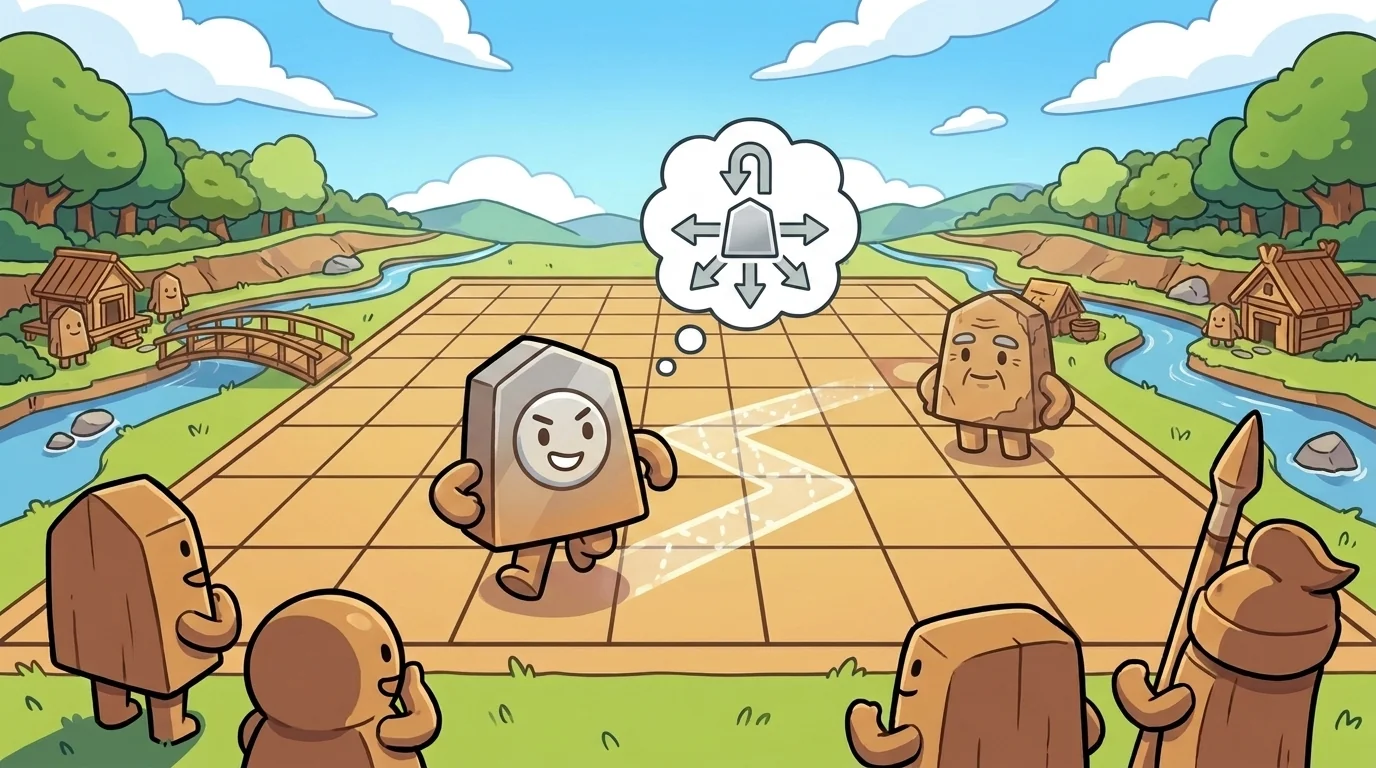
Gin had not always understood the worth of her backward diagonals. When she was young she used them the wrong way — she used them to run.
There had been a hard game, a frightening one, where the enemy pressed and pressed, and every time danger came near, Gin slipped away down a diagonal — back, and back, and back, retreating in graceful little zigzags until she found herself huddled in her own corner, having escaped everything and accomplished nothing. She was safe. She was also useless. She had turned her beautiful escape-slants into a way of never having to fight at all.
An old general watched her cower there and said the thing that changed her: "A retreat is only a retreat if you're going away from something, Gin. If you step back to a better square — a square where you're stronger than you were — that's not running. That's re-aiming."
Gin thought about that for a long time. She had been using her diagonals to flee. She started using them to reposition — to step back not into a corner but onto a square where she suddenly threatened three things she couldn't reach before. Same step. Same slant. Completely different meaning. She learned that for a silver general, backward and forward were not opposites at all: sometimes the boldest thing on the board was a well-chosen step to the rear.

Gin came to the House of Study with a swagger, stepping in on a jaunty diagonal, and the Head of the House raised an eyebrow.
"The silver general," she said. "Bold. Slippery. And known — forgive me — for turning into a fine coward when the pressure comes. Half the young pieces who copy you learn to run and call it strategy."
"That's exactly why you need me to teach it and not just let them copy it," said Gin, unoffended. "A slant is a tool, and like any tool it can be used badly. I can teach your students to attack bravely because they've kept an escape — and I can teach them the harder thing: that stepping back isn't the same as running away, if you step back to somewhere that makes you stronger." She did a neat little demonstration — forward into a threat, then a slant to the rear that turned out to threaten even more. "See? I didn't retreat. I re-aimed."
The Head watched the difference — the coward's flight and the general's re-aiming, which look almost identical and are opposites — and nodded. "Teach them which is which," she said, "and you'll be worth your silver."
Gin's student was a timid piece named Oki who was so afraid of losing pieces that she never attacked at all. She kept everything home, safe, guarded, and slowly lost every game by simply never doing anything.
"You're playing not-to-lose," Gin told her. "That's a way to lose slowly. Watch." Gin pushed forward — boldly, straight into the enemy's territory, close enough to threaten. Oki gasped. "Now watch what makes it safe to be that bold." And Gin, on her next turn, stepped back down a diagonal — but onto a square where she now threatened two enemy pieces at once. "I attacked. Then I 'retreated.' But my retreat left me stronger than my attack did. That's the silver's secret: you can go in hard, because you've always got a slant that takes you somewhere better, not just somewhere safer."
Oki tried it. She pushed a piece forward — really forward, into the open, her heart in her mouth — and then, next turn, slipped it back down a diagonal to a stronger square. Nothing was lost. Everything was gained. She had been bold, and she had come out ahead.
"I thought being safe meant staying still," Oki said slowly.
"Staying still is the least safe thing there is," said Gin. "Being able to move well in every direction — that's what keeps you safe. Even backward. Especially backward, if you pick the right square."
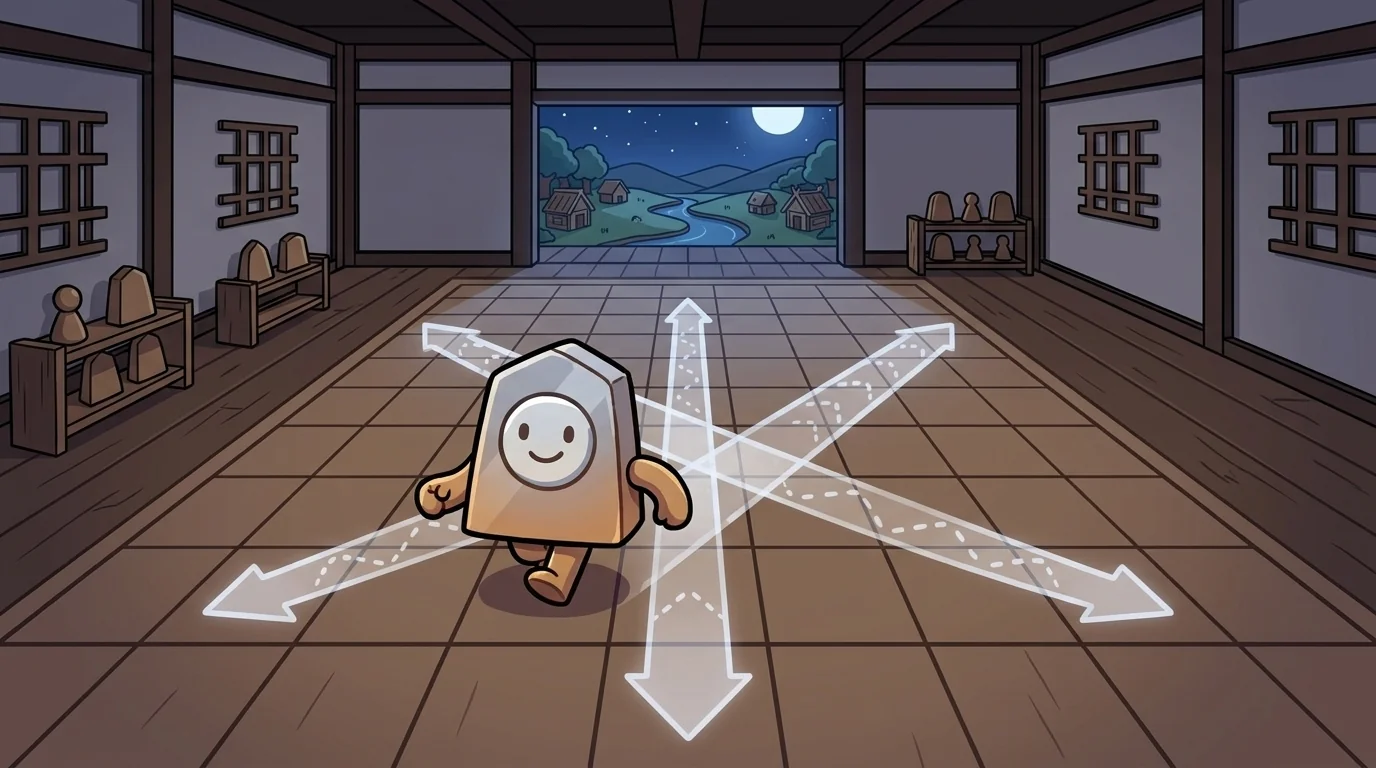
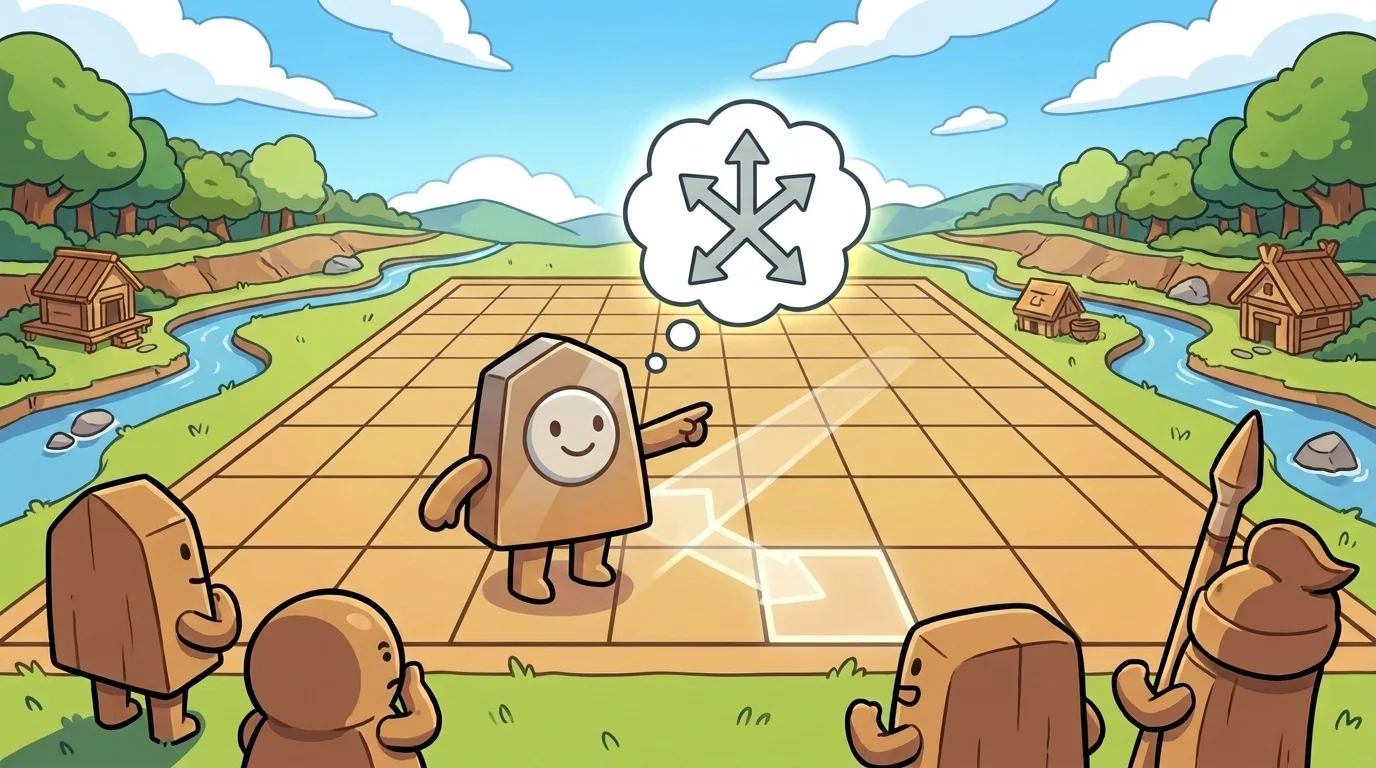
That night Gin practised her five steps in the empty hall — forward, and the four slants, over and over, the little compass-rose of a silver general.
She thought about the frightened young piece she'd been, zigzagging into a corner and calling it survival, and about the old general who'd taught her that a step to the rear could be the bravest move on the board if it aimed you at something better. She did not think of her backward diagonals as an escape anymore. She thought of them as a second kind of forward — the slanting, sideways, sneaky kind that got you to places the straight-ahead pieces could never reach.
There was a lightness in her step that the careful home-guarding pieces would never know. She could be bold because she was slippery; she could take the risk because she'd kept the slant. And on her best days, when she stepped back and found herself somehow stronger for it, she felt the particular quiet joy of a piece who had stopped confusing safe with still — and had learned, instead, to move.
The DropTale ensemble
Silverstep Gin is part of DropTale's distributed-narrative cast. Each character embodies a different curricular primitive; together they teach the full subject.
-

Boomerang Fu
The pawn (Fu): steps one square forward; captured, it comes back as a drop
-

Lance Kyo
The lance: charges straight forward any distance, never retreats
-

Leaping Kei
The knight (Keima): the only jumper — two fixed forward hops over any piece
-

Goldguard Kin
The gold general: the six-direction shield step (cannot promote)
-

Bishop Kaku
The bishop: the long diagonal slide, locked to one colour
-

Rook Hisha
The rook: the long file and rank sweep — the strongest slider
-

Crownfall Gyoku
The king: one step any direction; protecting it is the game — checkmate is its fall
-

Promote Nari
The promotion zone: a piece flips to its stronger promoted side in the last three ranks
-

Dropcatch Dai
The DROP rule: a captured piece enters your hand and redeploys on an empty square
-
Reserve Rin
Piece-in-hand + drop limits: the komadai reserve, nifu and uchifuzume
-
Sensei Tsume
The tsume-shogi puzzle master (mentor): forced-mate problems with one solution