Sensei Tsume
TSUME-SHOGI — the forced-mate puzzle: a position with exactly one winning sequence, where every enemy reply is answered until the king cannot escape; the discipline of thinking to the end before you move
Loading audio…
Press play to listen along. The line being read lights up as you go.
Show full transcript
Loading transcript…
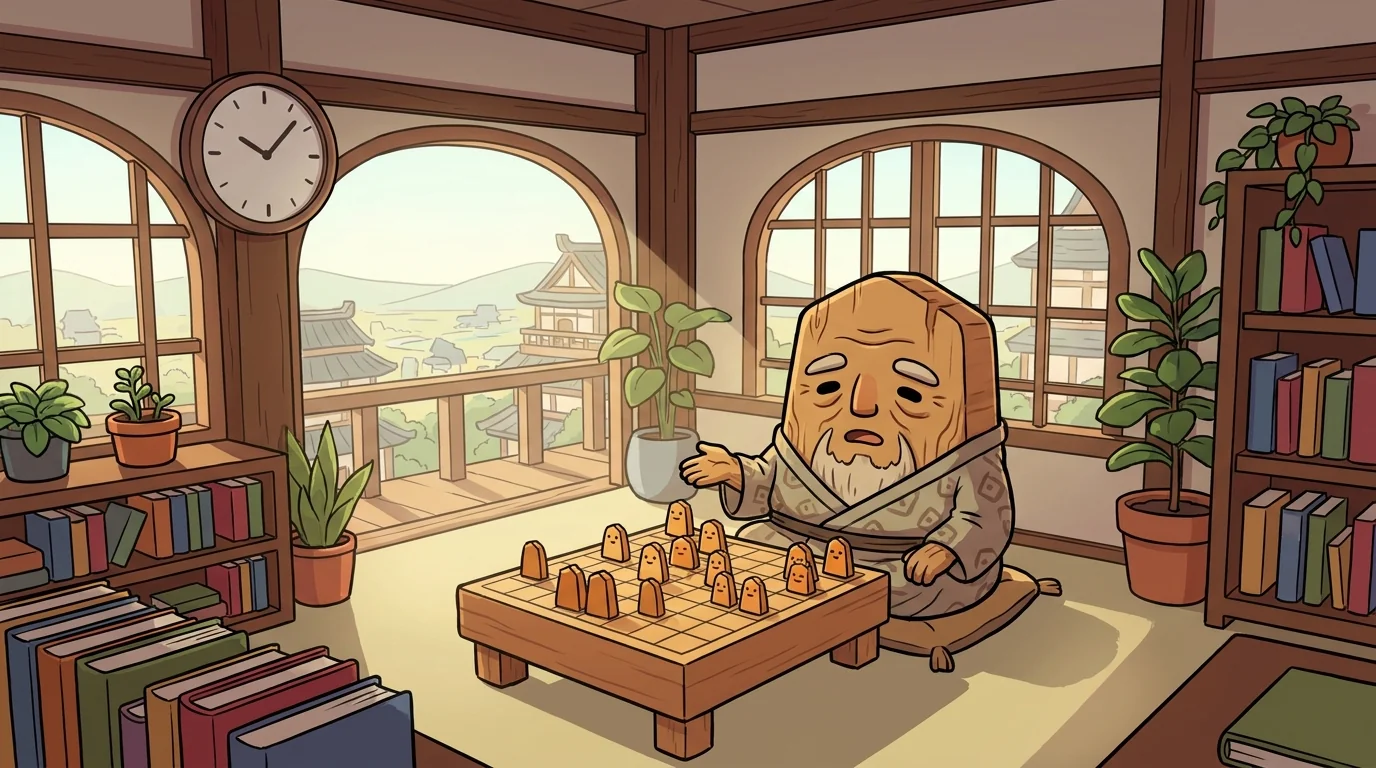
In a small quiet room at the top of the House of Study, above all the busy training halls, lived the oldest and most patient piece in the valley of Nine Rivers. His name was Tsume, and the students called him Sensei, and he was famous for two things: the puzzles he set, and the answers he refused to give.
Sensei Tsume was a master of tsume-shogi — the forced-mate puzzle. He would arrange a handful of pieces into a position and set a single, beautiful problem: find the sequence that catches the king and never lets him go. Not just a check — a true, inescapable net, where every single escape the king tried had already been answered, all the way to the end. A good tsume puzzle had exactly one solution, buried under a dozen tempting wrong turns, and finding it meant thinking not one move ahead but all the way to the finish, before you moved at all.
And when a student, stuck, would beg him — "Sensei, just tell me the first move!" — Tsume almost never would. He would tilt his old head and ask a question instead. "What is the king afraid of?" Or: "If you check here, where does he run — and have you looked at what waits for him there?" He asked, and asked, and waited, sometimes for a very long and squirming silence, until the student found it themselves.
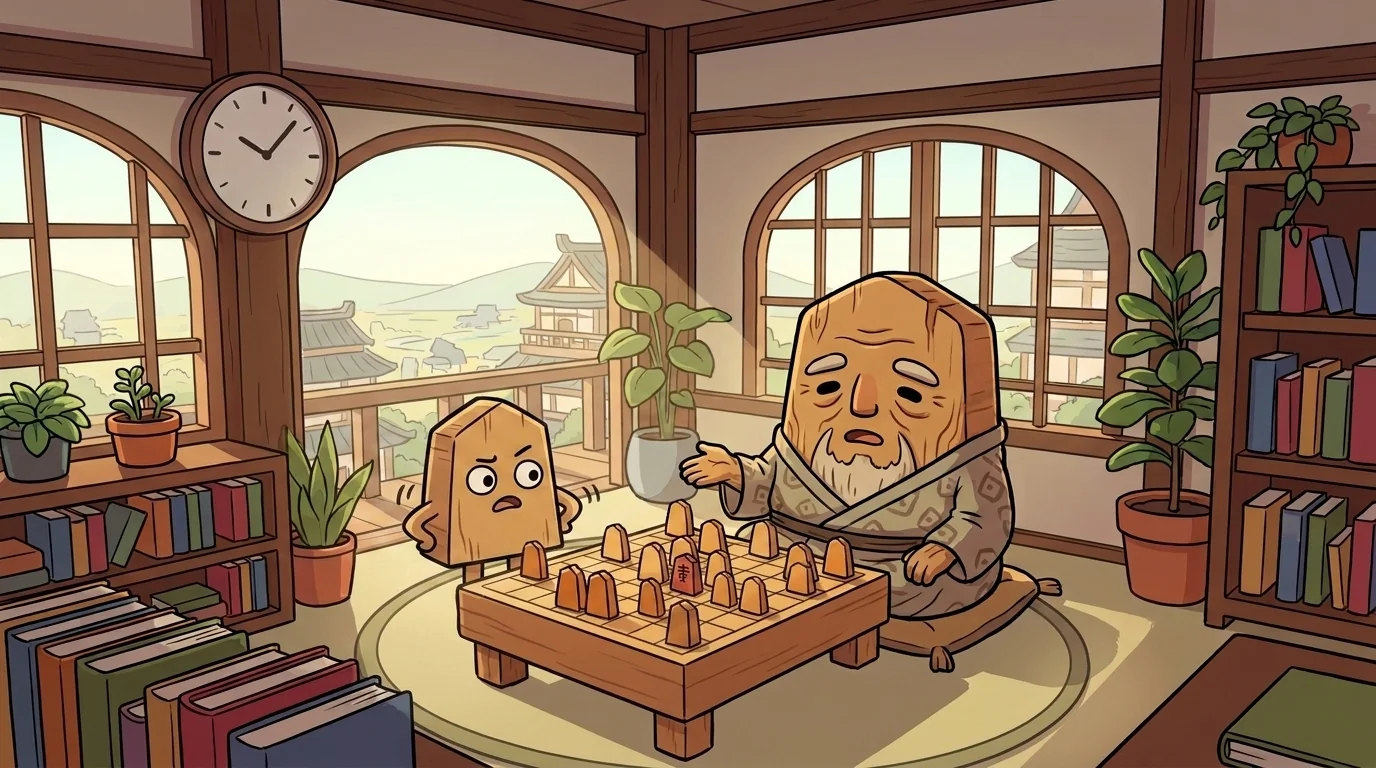
Tsume had not always been so patient. As a young teacher, long ago, he had been a great teller of answers.
He had loved to explain. A student would get stuck, and Tsume would swoop in and lay out the whole solution, elegantly, completely — first this, then the king runs here, then that, and mate. The students would nod, dazzled by his cleverness, and copy the answer down. And then, the very next puzzle, they would be just as stuck as before. They had watched him solve a hundred puzzles and learned to solve none, because he had done all the thinking, every time, and left them nothing to do but admire it.
It broke his heart a little, watching bright pieces stay helpless because he kept rescuing them. And an even older teacher — his own sensei, near the end — said the thing that changed his whole life: "You give them the fish, Tsume, because it feels kind and it feels clever. But a puzzle they watched you solve teaches them nothing. A puzzle they sweated over and cracked themselves teaches them everything. Stop answering. Start asking. The question you hand back is worth ten answers you give away."
It was hard. It felt, at first, almost unkind — to watch a student struggle and not swoop in. But Tsume learned to sit on his hands, and ask a small guiding question, and wait — and he watched, amazed, as pieces who cracked it themselves walked away able to crack the next one too. He never went back to being a teller. He became, instead, the valley's greatest asker.
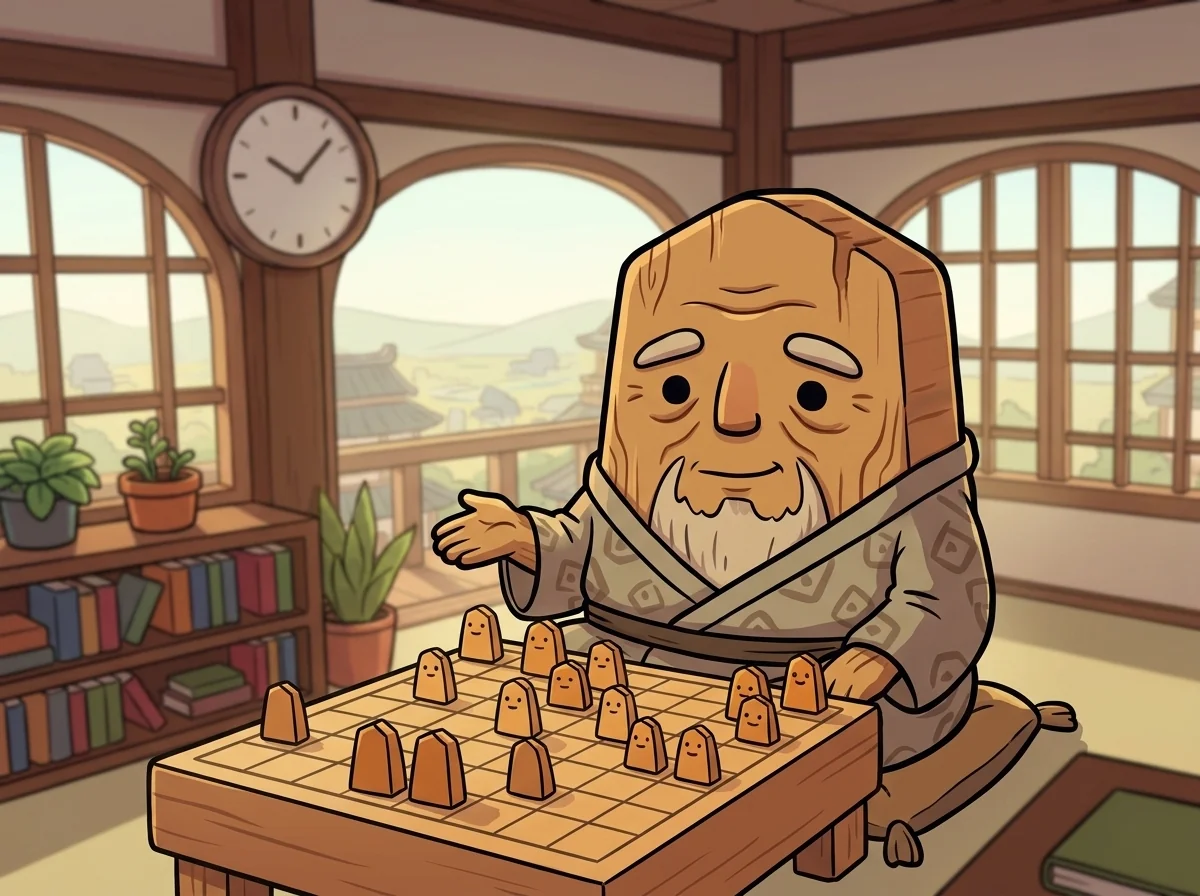
Tsume did not go to the House of Study, of course; the House had grown up around him. But when the new Head of the House first climbed to his quiet room, she asked him the question every new Head asked: "Sensei, why do you refuse to give the answers? The students would learn faster if you simply told them."
"They would finish faster," Tsume corrected gently. "They would not learn faster. Tell me — when you solved your first hard puzzle alone, after an hour of struggling — do you remember it?"
"Every move," she admitted.
"And the ones your teachers solved for you?"
She was quiet. "...Not one."
"So," said Tsume, and asked nothing more, because he had made his point by asking rather than telling, which was of course exactly the point.
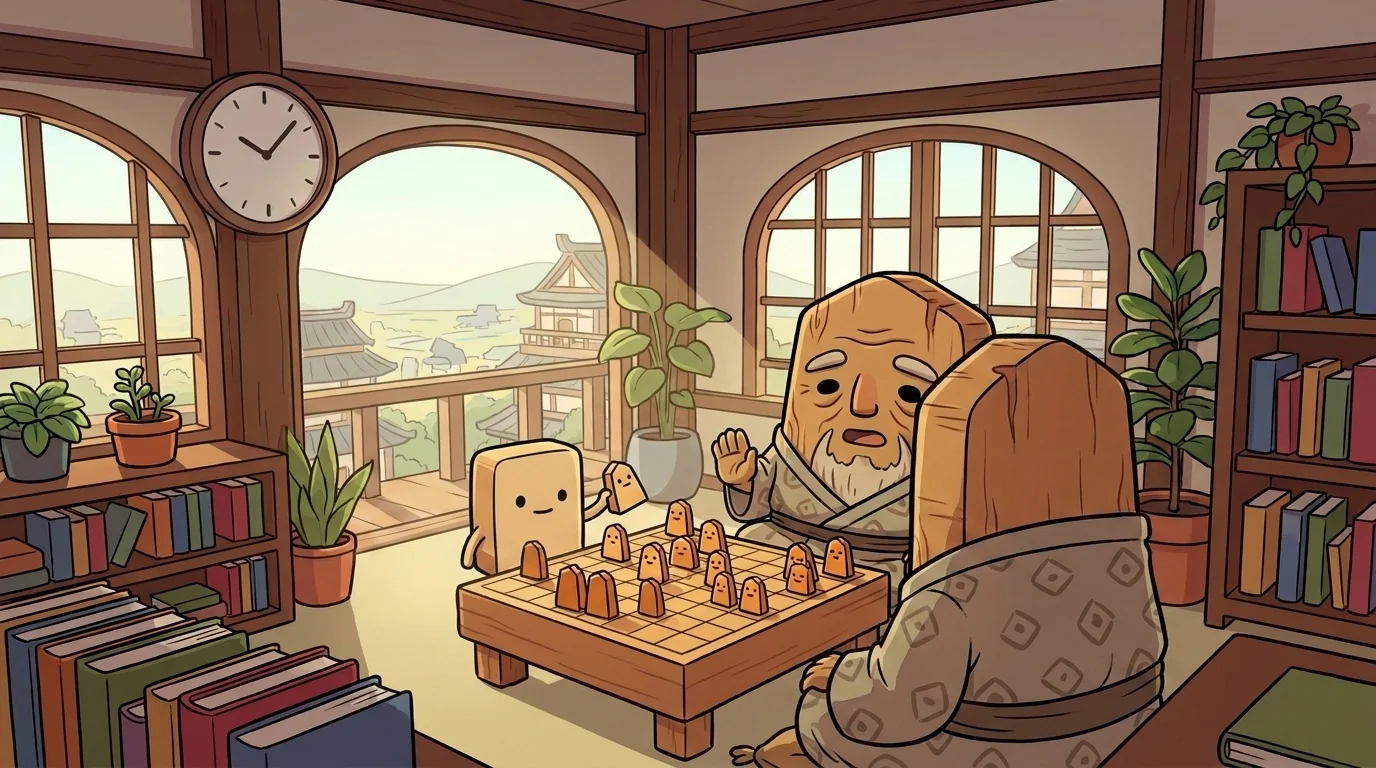
Tsume's student — his hardest — was a quick clever piece named Aki who hated the waiting most of all. Aki could see one move ahead instantly, brilliantly, and wanted to play it at once, and grew furious when Tsume wouldn't just confirm she was right.
Tsume set her a puzzle: a king in a corner, a few pieces, one solution. Aki found a check in half a second. "This! It's this, isn't it? Just tell me it's this!"
Tsume did not tell her. "It is a check," he said. "Where does the king go after it?"
Aki looked. "He... runs there."
"And after that?"
She looked further, less certain. "...He escapes. He gets away." Her clever quick check, she saw now, led nowhere — it was a wrong turn dressed up as an answer. She scowled. "Then just tell me the right first move!"
"What is the king's only safe square right now?" Tsume asked instead. "Find that, and ask yourself — what if you took it away from him first?"
Aki went quiet. Really quiet, for the first time. She stopped hunting for the flashy check and started, slowly, thinking all the way to the end — picturing each escape, closing each door in her mind before touching a piece. It took her a long, squirming while. And then her whole face changed. "Oh," she breathed. "Oh. You don't check first. You take his escape square first, and then — and then he has nowhere—" She found it. The whole sequence, all the way to the end, inescapable. She had cracked it herself.
"Now," said Tsume, with the faintest smile, "you will remember it. Which you would not have, had I told you."
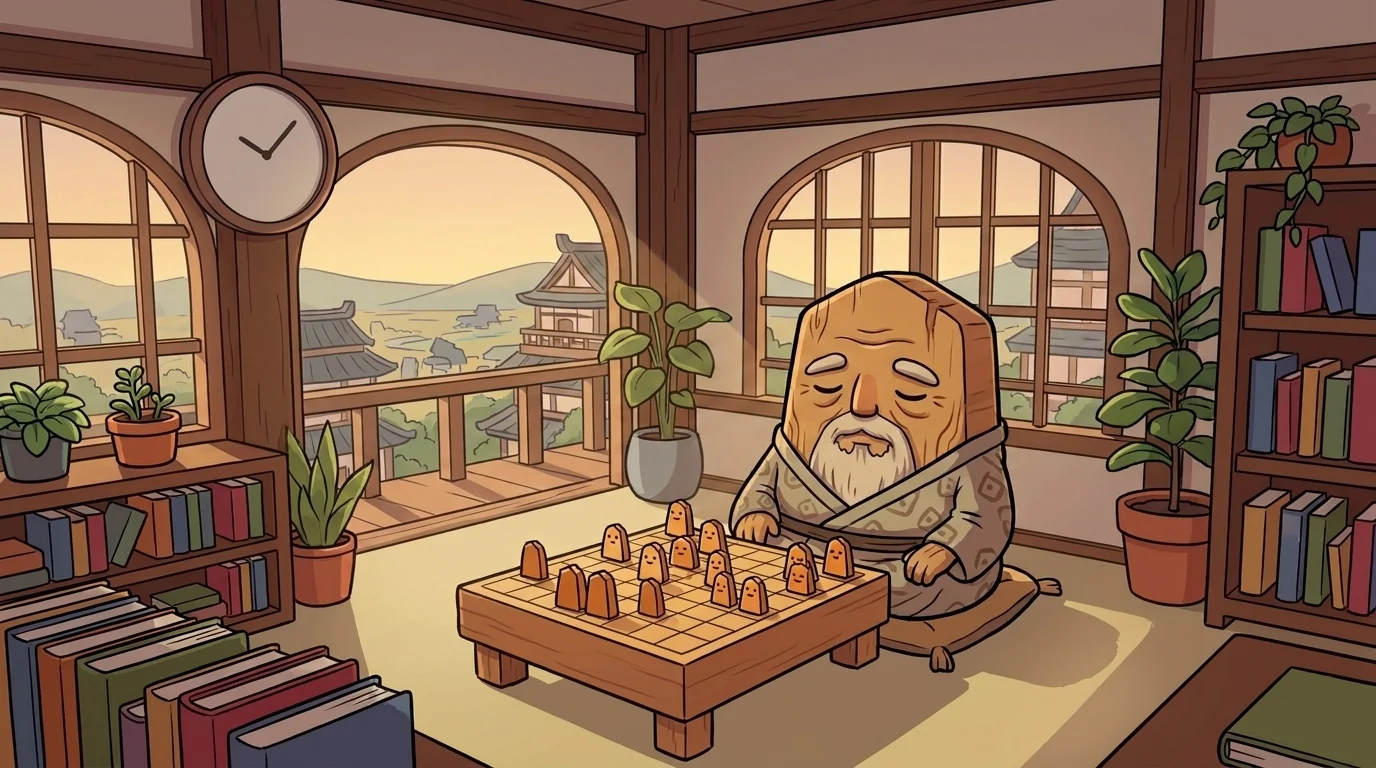
That evening, alone in his quiet room at the top of the House, Sensei Tsume set out a fresh puzzle for the morning and did not, of course, solve it — he only arranged the question and let it sit, waiting for a student's struggle to bring it to life.
He thought about the young teacher he'd once been, dazzling and useless, handing out answers that left bright pieces helpless. And he thought about the long patient decades since — the squirming silences he'd learned to endure, the questions he'd handed back instead of answers, the hundreds of pieces who had walked out of his quiet room able, for the first time, to think all the way to the end on their own.
There was a deep, unhurried joy in it that no clever answer had ever given him — the joy of watching a struggling piece go suddenly still and bright with a solution that was theirs, found in their own head, kept forever because they'd earned it. He would go to his rest one day having told almost no one the answer to anything. And he had come to understand that this — this refusal, this patience, this endless gentle asking — was the kindest and most lasting gift a teacher had to give: not the fish, but the quiet, unshakable trust that the student could catch it themselves.
The DropTale ensemble
Sensei Tsume is part of DropTale's distributed-narrative cast. Each character embodies a different curricular primitive; together they teach the full subject.
-

Boomerang Fu
The pawn (Fu): steps one square forward; captured, it comes back as a drop
-

Lance Kyo
The lance: charges straight forward any distance, never retreats
-

Leaping Kei
The knight (Keima): the only jumper — two fixed forward hops over any piece
-

Silverstep Gin
The silver general: steps forward plus all four diagonals (the attacker's five)
-

Goldguard Kin
The gold general: the six-direction shield step (cannot promote)
-

Bishop Kaku
The bishop: the long diagonal slide, locked to one colour
-

Rook Hisha
The rook: the long file and rank sweep — the strongest slider
-

Crownfall Gyoku
The king: one step any direction; protecting it is the game — checkmate is its fall
-

Promote Nari
The promotion zone: a piece flips to its stronger promoted side in the last three ranks
-

Dropcatch Dai
The DROP rule: a captured piece enters your hand and redeploys on an empty square
-
Reserve Rin
Piece-in-hand + drop limits: the komadai reserve, nifu and uchifuzume