
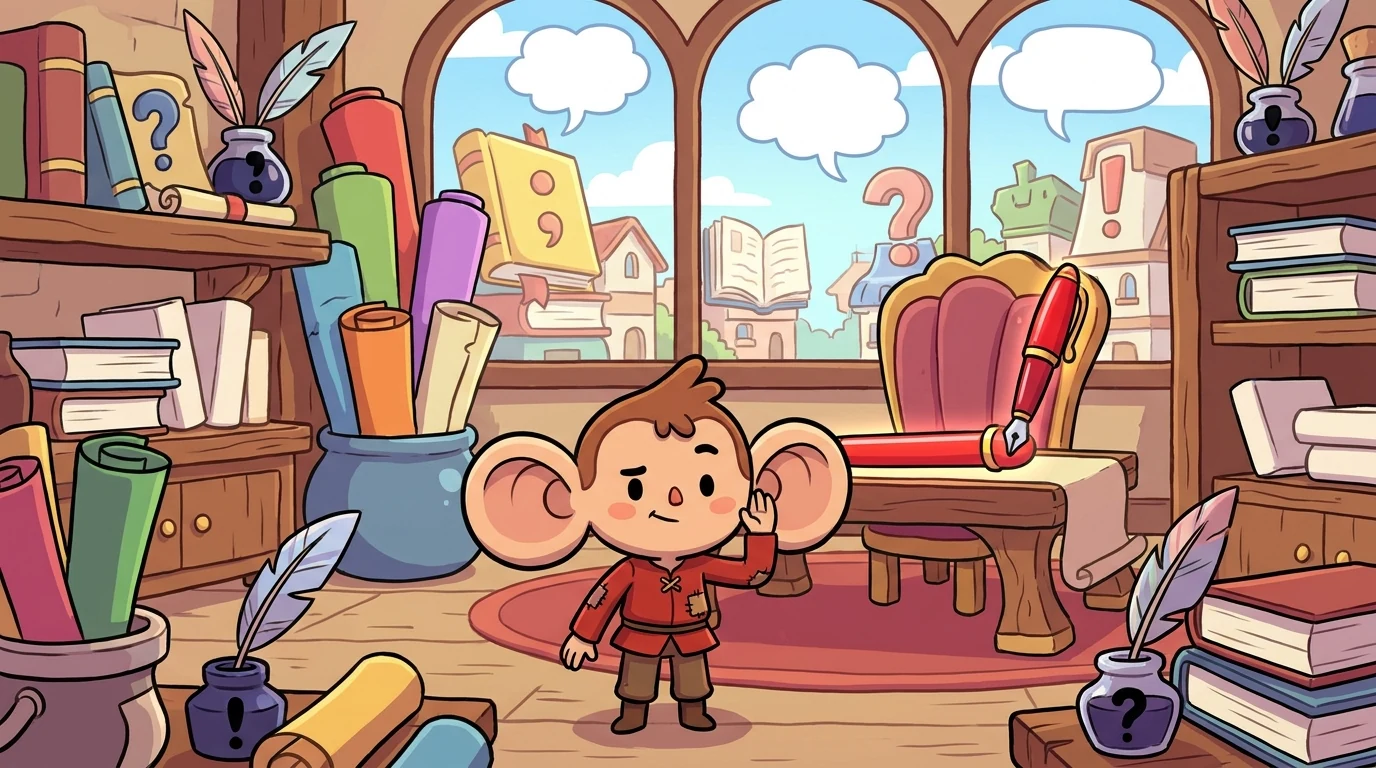
Pip
END PUNCTUATION (Advanced) — the read-aloud test still finds most marks, but the advanced cases fool the ear: an INDIRECT question is a statement and takes a period, not a question mark ('I wonder whether she's coming.' / 'She asked why I left.') because it REPORTS a question rather than asking one; a polite request phrased as a question often takes a period ('Would you please sit down.'); and the exclamation point demands restraint — used on everything it means nothing, so reserve it for genuine force. The advanced move: don't ask 'does my voice rise?' but 'is this sentence ASKING, or reporting-that-something-was-asked?'
Chapter — Pip and the Question That Wasn’t Asking Anything
Pip’s ears — read it aloud, hear where the voice lands — carried the beginners through periods, question marks, and exclamation points. The advanced apprentices trust the trick, and that’s exactly why Pip has to warn them: because there is a kind of sentence that sounds like a question, makes the voice rise, and yet must end with a period. The ear, his oldest tool, gets this one wrong.
“For most sentences, your voice is honest,” he says, cupping an ear. “But some sentences don’t ask a question — they report one. And when your voice rises out of habit on a reported question, it lies to you. The advanced ear doesn’t just listen for the rise. It asks: am I asking, or am I telling you that something was asked?”
The sentence that caught him was six words long: I wonder whether she is coming.
Young-editor Pip read it aloud, heard the little upward lilt on coming, and stamped a question mark. Proofa covered the mark. “Are you asking me whether she’s coming?” she said. “Or telling me that you wonder?” Pip paused. “…Telling you I wonder.” “Then it’s a statement. It reports a question living inside your head — but the sentence itself makes no request of me. I don’t answer I wonder whether she’s coming. I answer Is she coming? One asks. One tells you that asking is happening. Only the true ask gets the mark that lifts.”
Pip felt his reliable ears betray him for the first time. “So my voice rose,” he said, “but the sentence wasn’t asking.” “Your voice rose because there’s a question in the sentence,” Proofa said. “But the sentence’s job is to state that you wonder. The mark follows the job, not the melody.”
So advanced Pip added a question behind his read-aloud: is this sentence asking, or reporting-that-something-was-asked?
Direct question — actually requests an answer from the reader. Question mark. Why did you leave?
Indirect question — reports a question as a fact or a thought. Period. She asked why I left. I wonder why you left. He doesn’t know whether it’s true. “The words asked, wonder, know, whether, if are your flags,” Pip says. “They often mean a question is being described, not asked. Test: could the reader answer it? Why did you leave? — yes, they can answer. She asked why I left — there’s nothing for the reader to answer; you’re just telling them a thing happened.”
The polite request in question’s clothing. Would you please pass the salt. It’s shaped like a question but it’s really a courteous command — no answer expected — so it often takes a period. “If you don’t actually want a yes-or-no,” Pip says, “you may not want the mark that begs for one.”
And the exclamation point, which he now teaches almost entirely as restraint: “One exclamation point in a paragraph is a shout. Five is a person who shouts everything, and a reader stops believing any of them. Save the mark for the one sentence that has truly earned the leap. Force is only forceful when it’s rare.”
BOLT-3000 stamps question marks on anything that lilts and exclamation points on anything at all, so it handed Pip: “I asked if you were okay? She wondered where the keys were! Please tell me the answer? This is fine!!!”
Pip listened and asked the job of each.
I asked if you were okay? — is the sentence asking, or reporting an ask? Reporting — I asked tells you a question happened. Period: I asked if you were okay.
She wondered where the keys were! — reporting a wondering, not a shout. Period: She wondered where the keys were.
Please tell me the answer? — a request, a command dressed politely; not a yes-or-no ask. Period: Please tell me the answer.
This is fine!!! — first, one exclamation point is the maximum; three is noise. Second, is this even a shout? Read flat, it’s a mild statement. Period: This is fine.
Corrected: “I asked if you were okay. She wondered where the keys were. Please tell me the answer. This is fine.” “Every mark you chose came from the melody,” Pip told BOLT. “Rising voice, question mark; any energy at all, exclamation point. But three of these only reported questions, and the last only felt loud to you. The mark follows the sentence’s job, not its tune.”
An advanced apprentice worried at the edge. “But some indirect questions really do sound like real questions, and I can’t always tell.” Pip nodded — this is the honest hard case. “Then run the reader test, not the ear test,” he said. “Read the sentence and ask: is the reader supposed to answer this, right now? Do you know the way? — yes, they answer. I wonder if you know the way — no, there’s nothing for them to say; you’re narrating your own wondering. If the reader has a job, it’s a question, mark it. If the reader is just being told a question exists, it’s a statement, period it.” He tapped his ear. “The ear finds the melody. But the melody and the job can disagree — and when they do, the job wins.”
The apprentice tested one of her own — I asked myself why it mattered — and realized no one was meant to answer it. Period. “It sounded like a question in my head,” she said. “It’s a report of a question,” said Pip. “Different job. Different mark.”
That night Pip reread his old breathless childhood page — the one that made a teacher gasp — now eleven clean sentences. He checked each mark by its job this time, not just its sound, and found one line he’d once marked with a question mark: I wondered if I’d ever learn to stop. Reporting a wondering. He changed it, gently, to a period — a place to land, not a plea.
“Read it aloud — that finds most marks,” he said, capping his pen. “But the advanced ear listens past the melody to the sentence’s job. A sentence can hold a question and not be one. And save your exclamation points, because a shout only carries when the reader hasn’t already gone deaf from the last four.”
The EditQuest ensemble
Pip is part of EditQuest's distributed-narrative cast. Each character embodies a different curricular primitive; together they teach the full subject.
-
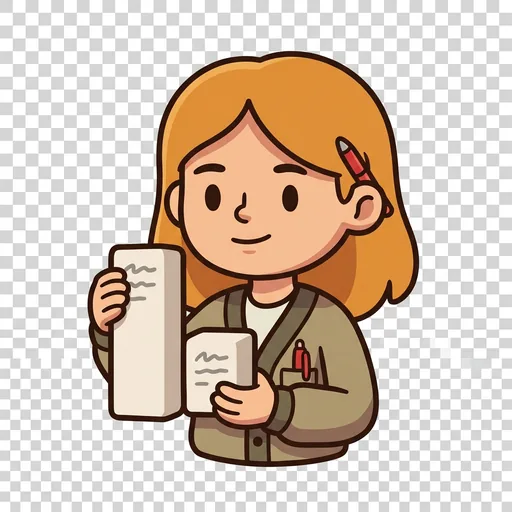
Cappy
Capitalization — makes proper nouns and every sentence's first word stand tall; its defining act is catching a lowercase name or opener
-

Splice
Comma splices & run-ons — separates two full sentences a comma wrongly glued together, or breaks a run-on that never stops
-
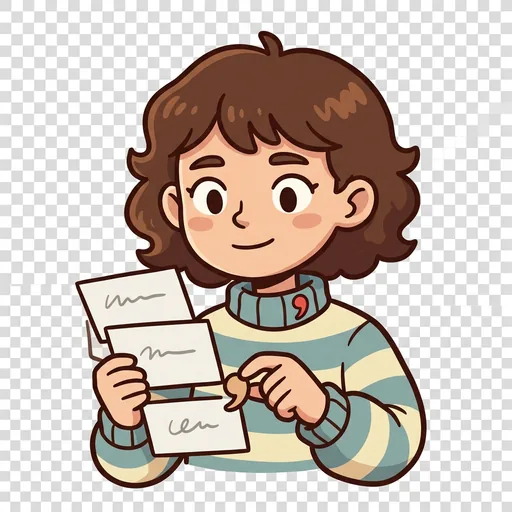
Listy
Commas in a series — sets the pauses between items in a list so the list reads cleanly
-
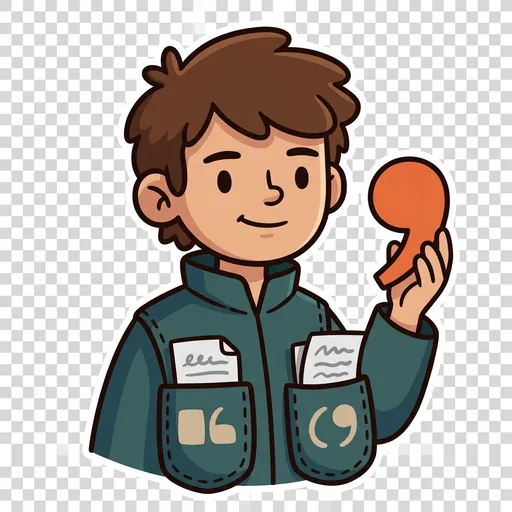
Apostro
Apostrophes — sorts possessives from contractions from plain plurals (its vs it's, dogs vs dog's)
-
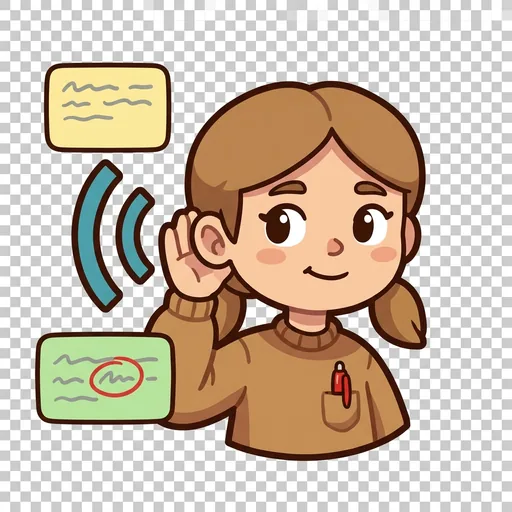
Echo
Homophones / spelling-in-context — hears the words that sound alike and picks the right one (their / there / they're)
-
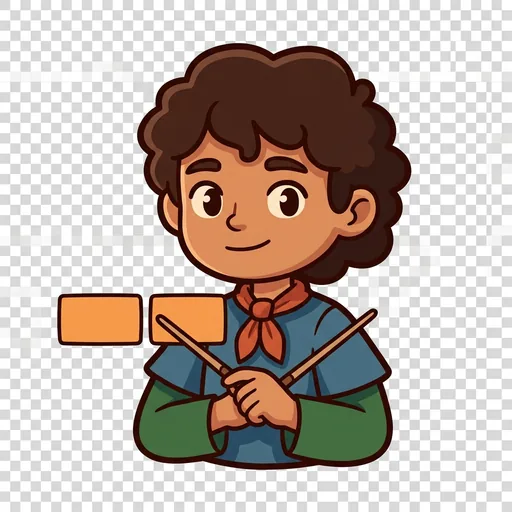
Concord
Subject–verb agreement — matches a verb to its subject's number (one bird sings, two birds sing)
-
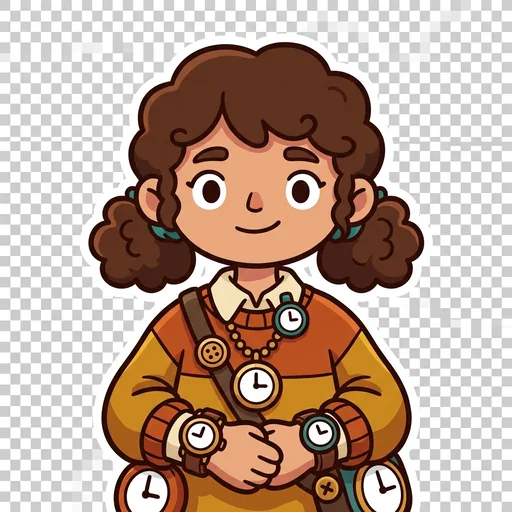
Tempo
Verb-tense consistency — keeps a passage in one time; catches a sentence that slips from past to present
-
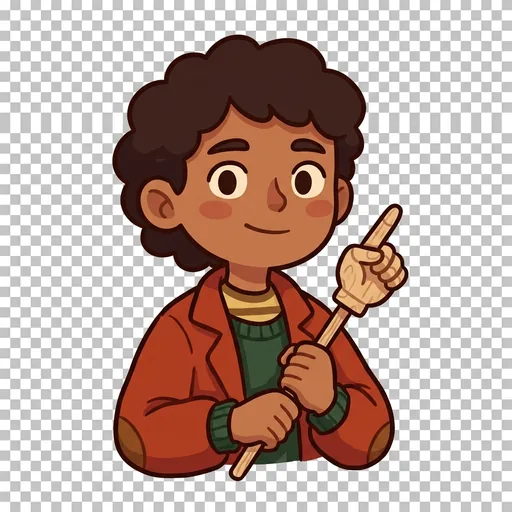
Ana
Pronoun clarity — makes every pronoun point clearly to the one noun it stands for
-

Trim
Concision — cuts wordiness and redundancy so the sentence says it once, clearly