
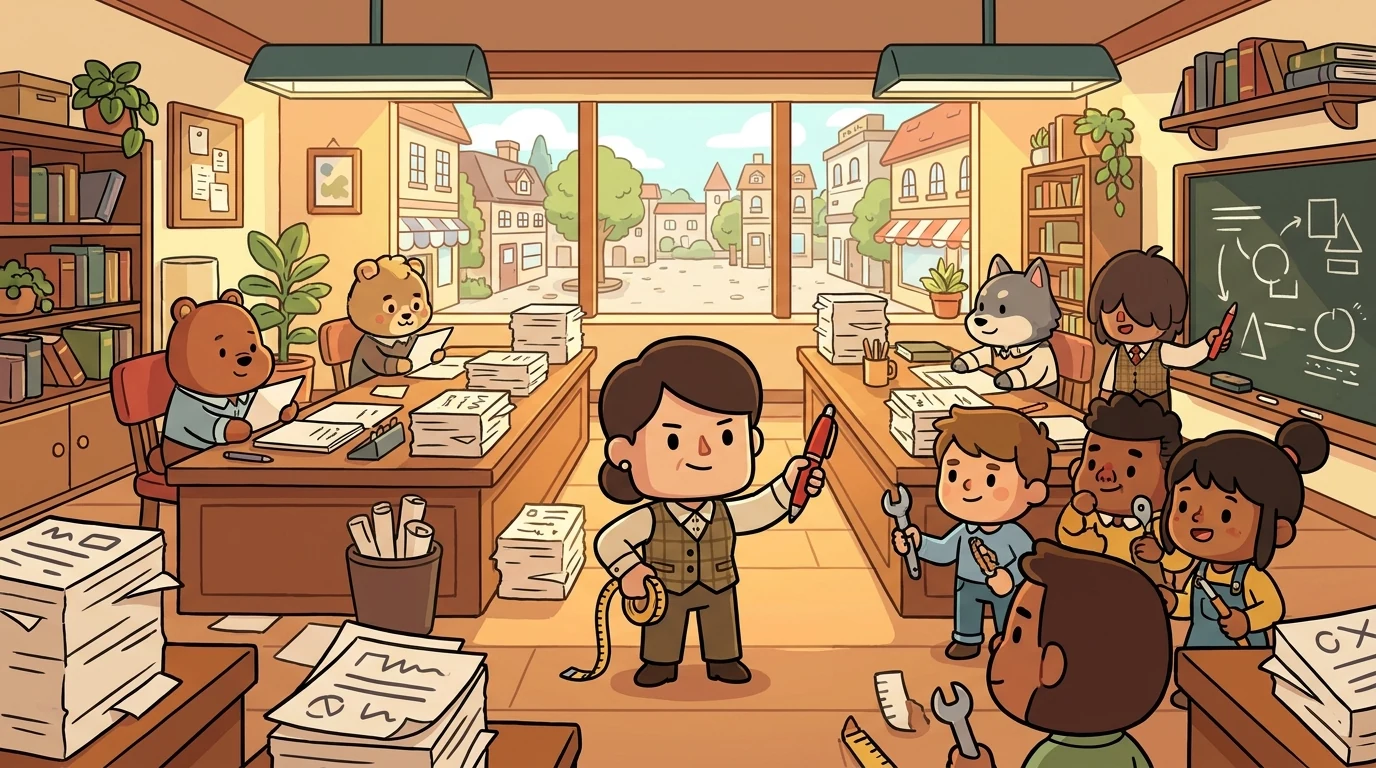
Cappy
CAPITALIZATION — a capital letter marks two things and only two: the FIRST word of a sentence, and a PROPER noun (a specific name of a person, place, day, month, or title). Everything else stays lowercase. To catch an error you ask of each capital, is this a start or a name? and of each lowercase word, is it secretly a start or a name?
Chapter — Cappy and the Words That Would Not Stand Up
Cappy is a small, square editor who walks the copy desk with a tape measure, and the first thing anyone notices about her is her posture. She stands very straight. She likes words to stand straight too — but only the ones that have earned it.
“A capital letter isn’t decoration,” she tells the new apprentices on their first morning. “A capital letter is a word standing up. And a word only stands up for two reasons — because it’s the start of a sentence, or because it’s a name. Everything else sits down and does its quiet work in lowercase.”
She did not always understand this. When Cappy was small she thought capitals were for important words, and she had a lot of opinions about which words were important.
She would capitalize Dog, because dogs were important. She capitalized Pizza and Summer and Best Friend. Her early pages looked like a crowd standing on tiptoe, everybody shouting look at me, and nobody could tell who actually mattered. A reader’s eye jumped from Capital to Capital and got tired and gave up.
Her mentor Proofa read one of those pages and didn’t scold her. Proofa just circled two words — Tuesday (which Cappy had left lowercase) and Dog (which she’d stood up) — and asked, very gently, “Which of these is a name? Is your dog named Dog, or is he named Biscuit?”
“…Biscuit.”
“Then Biscuit stands up. dog sits down. It’s not about which word you love most, little one. It’s about which word is a somebody or a start.”
That was the day Cappy learned her whole trade in one sentence, and she has never let it go. She stopped asking is this word important? and started asking two much smaller, much easier questions.
Is it the first word of a sentence? Then it stands up. Every sentence gets exactly one word standing at its door, holding it open.
Is it a proper noun — a specific name of a specific person, place, day, month, holiday, or title? Then it stands up too. Biscuit stands. Tuesday stands. October stands. Paris stands. But dog, afternoon, city — those are whole categories, not names, and categories sit down.
Two questions. That’s the whole tape measure.
Her workshop is where the confident robot BOLT-3000 sends its worst pages, and BOLT loves capitals the way Cappy once did — it stands words up all over the place because standing up looks smart. One day it handed her a sentence it was very proud of: “my Cousin visited Paris in the Summer and rode a Train.”
Cappy walked the sentence slowly, tape measure out, asking her two questions at each word.
my — first word of the sentence. It should be standing up, and BOLT had left it sitting down. She lifted it: My.
Cousin — is that a name? No. It’s a category; the cousin’s name would be a name, but “cousin” is just what she is. She sat it down: cousin.
Paris — a specific place, a name. It had earned its capital. She left it standing.
Summer — a season, a category, not a name. Down it sat.
Train — a thing, not a name. Down.
The corrected sentence read: “My cousin visited Paris in the summer and rode a train.” One word standing at the door, one name standing in the middle, everyone else quietly at work. “See?” Cappy said. “Now your eye knows exactly where to look. The capitals mean something again.”
A nervous apprentice once asked her the question every editor is afraid to ask out loud. “But how do I remember which is which? There are so many words.”
Cappy put down her tape measure. “You don’t remember words,” she said. “You remember the question. Point at any word — this one, right here — and just ask it: are you a start, or are you a name? If it can’t say yes to either, it sits down. You’re not memorizing a list. You’re asking one small question, over and over, and the words answer for themselves.”
The apprentice tried it on her own paragraph. the — start? no. name? no. sits down. london — name! stands up. Her hand moved down the line, asking, and the paragraph sorted itself into a few tall words and many quiet ones, and for the first time it looked like something a reader could walk through without getting tired.
“That’s it,” said Cappy. “That’s the whole job. Not louder. Clearer.”
That evening Proofa found Cappy re-reading her own childhood page — the one full of shouting capitals — and, one at a time, sitting the un-earned ones back down. Dog became dog. Pizza became pizza. She left exactly two words standing: the first word of the page, and Biscuit.
“Do you miss all the tall words?” Proofa asked.
“No,” said Cappy, and she meant it. “When everything stood up, nothing did. Now Biscuit gets to be Biscuit — because he’s the only name on the page, and a name should get to stand alone.”
She capped her pen, which is a small square click, like a word coming to attention. “A capital is a word standing up,” she said, mostly to herself. “You just have to know who’s a start, and who’s a name — and let everyone else sit down and do the quiet work.”
The EditQuest ensemble
Cappy is part of EditQuest's distributed-narrative cast. Each character embodies a different curricular primitive; together they teach the full subject.
-
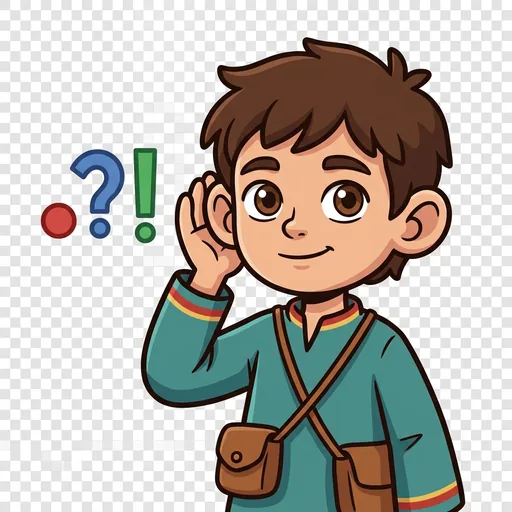
Pip
End punctuation — gives each sentence its right ending (. ? !); catches a sentence that stops with the wrong mark or none
-

Splice
Comma splices & run-ons — separates two full sentences a comma wrongly glued together, or breaks a run-on that never stops
-
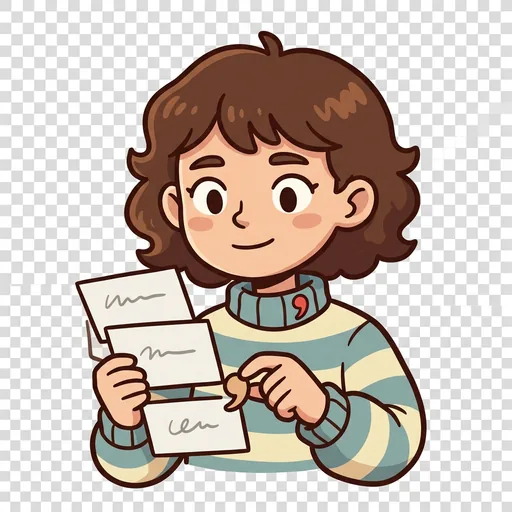
Listy
Commas in a series — sets the pauses between items in a list so the list reads cleanly
-
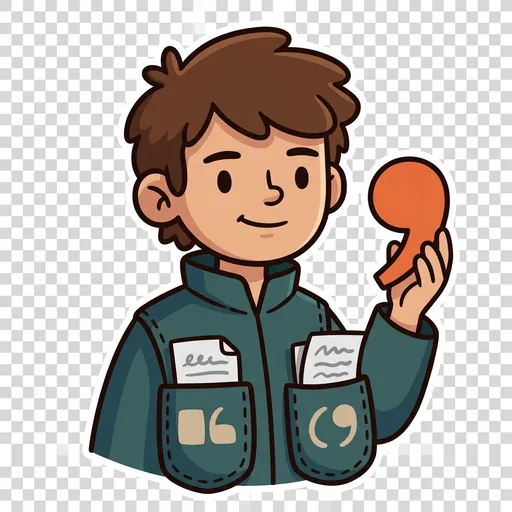
Apostro
Apostrophes — sorts possessives from contractions from plain plurals (its vs it's, dogs vs dog's)
-
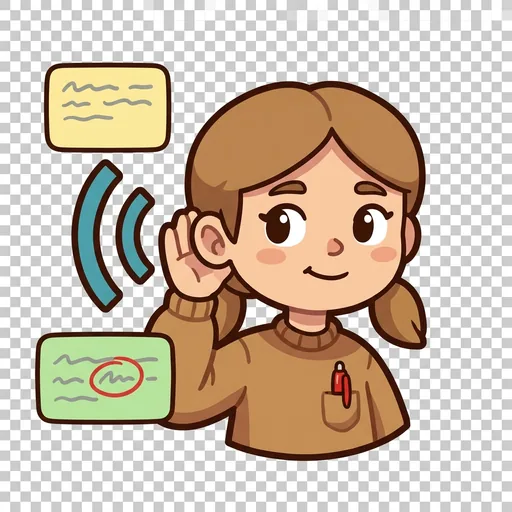
Echo
Homophones / spelling-in-context — hears the words that sound alike and picks the right one (their / there / they're)
-
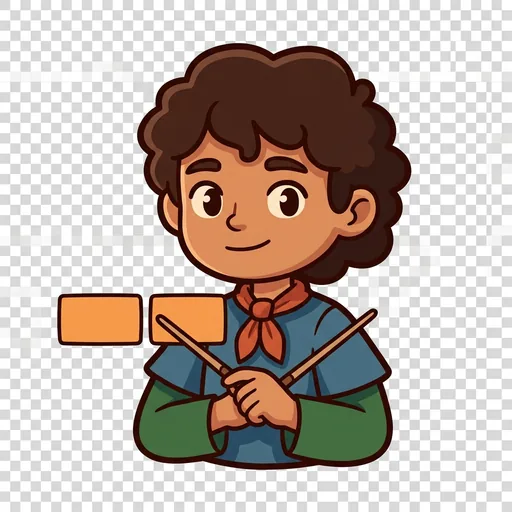
Concord
Subject–verb agreement — matches a verb to its subject's number (one bird sings, two birds sing)
-
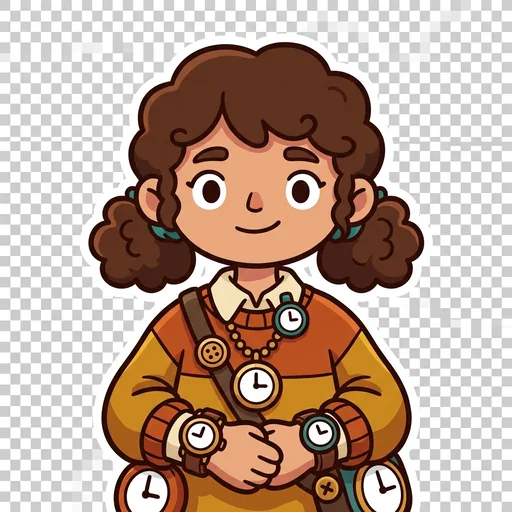
Tempo
Verb-tense consistency — keeps a passage in one time; catches a sentence that slips from past to present
-
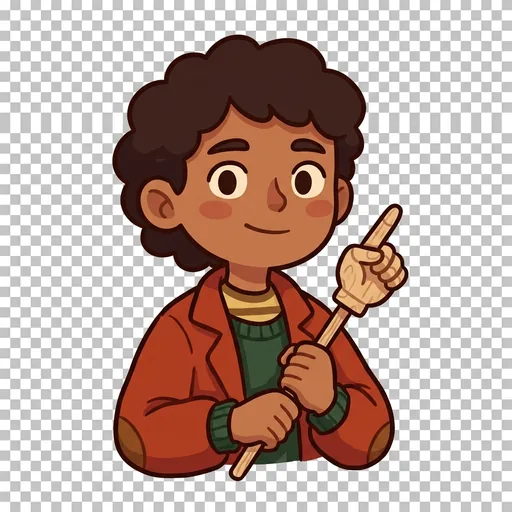
Ana
Pronoun clarity — makes every pronoun point clearly to the one noun it stands for
-

Trim
Concision — cuts wordiness and redundancy so the sentence says it once, clearly