
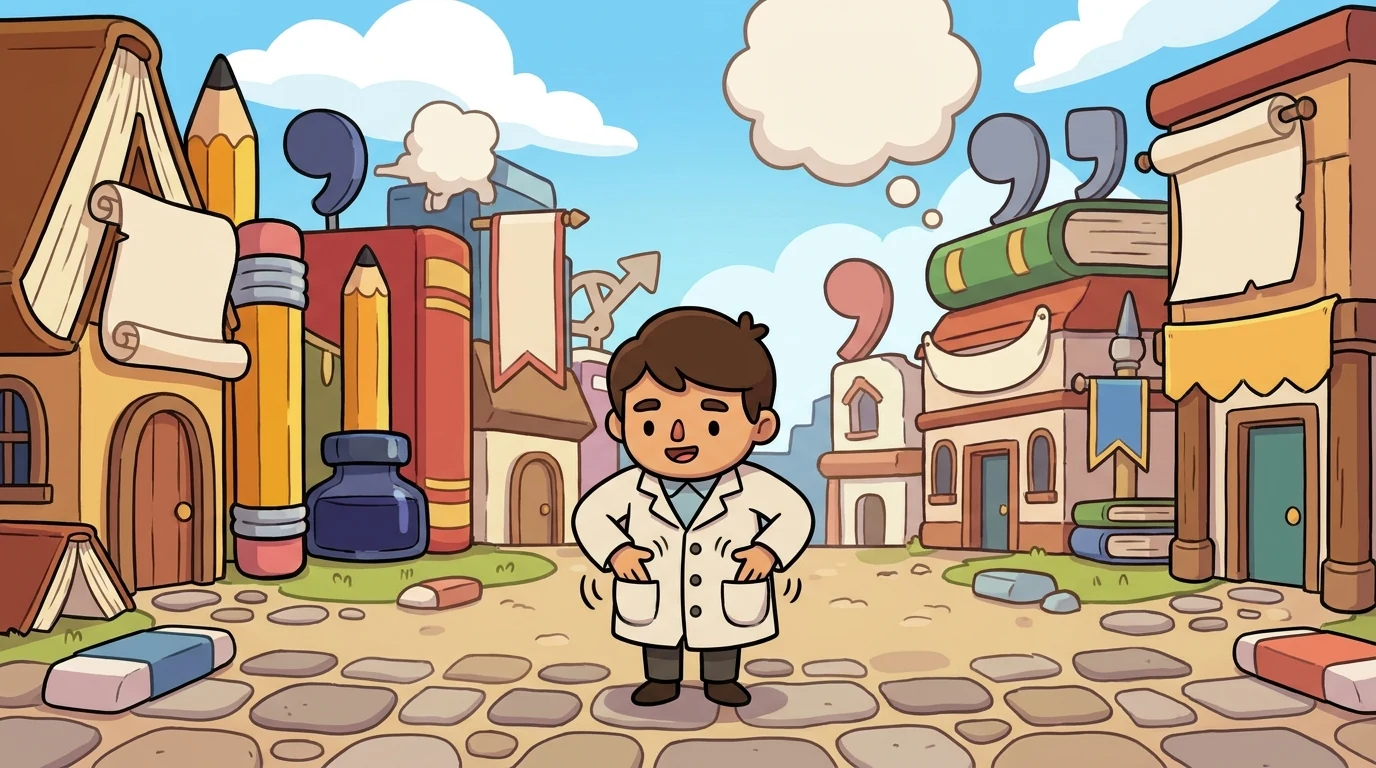
Apostro
APOSTROPHES — an apostrophe does exactly two jobs: it marks a CONTRACTION (a missing letter: it's = it is, don't = do not) or it marks POSSESSION (ownership: the dog's bowl, Sara's book). It does NOT make a plural. So 'its' (owns) has no apostrophe while 'it's' (it is) does, and 'dogs' (more than one) has no apostrophe while 'dog's' (belonging to the dog) does.
Chapter — Apostro and the Mark That Meant Too Many Things
Apostro wears a coat with exactly two pockets, and this is on purpose. “An apostrophe has two jobs,” he says, patting the pockets. “Just two. One pocket for something’s missing. One pocket for someone owns this. If a word doesn’t reach into one of these two pockets, it doesn’t get an apostrophe at all — no matter how much it wants one.”
The apprentices always ask about the third job — making a plural — and Apostro shakes his head firmly. “There is no third pocket. A plural is just more than one thing, and more-than-one never needs an apostrophe. Two dogs are dogs. Not dog’s. The mark stays home.”
Apostro is strict about this because he spent his childhood confused by a single, tiny, treacherous pair of words: its and it’s.
He would write the cat licked it’s paw, and it looked right, and it was wrong, and no one could explain why in a way that stuck. It felt like the rules were playing a trick on him — everywhere ELSE, an apostrophe-s meant belongs to (Sara’s, the dog’s), so why not here?
Proofa sat with him and, instead of a rule, gave him a question. “When you see it’s with an apostrophe,” Proofa said, “read it as it is. Every single time. The cat licked it is paw.” Apostro read it. It was nonsense. “So the apostrophe is wrong there,” Proofa said. “The apostrophe in it’s only ever means it is. If you can’t swap in it is, take the apostrophe out.” Apostro tried it: the cat licked its paw — its, no apostrophe, meaning belonging to it. Suddenly the treacherous pair had a lock and a key.
From that day Apostro turned the whole trade into two small questions he asks of every apostrophe he meets.
Is a letter missing here? If the word is squishing two words into one and dropping a letter — do not → don’t, cannot → can’t, they are → they’re, it is → it’s — then yes, the apostrophe stands in the gap where the letter used to be. First pocket.
Does this word OWN the next thing? If it’s showing that something belongs to someone — the dog’s bowl, Sara’s book, the team’s win — then yes, apostrophe-s marks the owner. Second pocket.
And if it’s neither — if the word is just more than one — then no apostrophe, ever. The dogs ran. The books fell. “Two questions,” Apostro says. “Missing a letter, or owning a thing. No to both? No apostrophe.”
BOLT-3000 sprinkles apostrophes like confetti, especially onto innocent plurals. It handed Apostro this sign it had drafted: “Fresh apple’s and pear’s — get your’s today, its delicious!”
Apostro walked it word by word, reaching for a pocket each time.
apple’s — is a letter missing? No. Does the apple own something? No — it’s just more than one apple. Neither pocket. He struck the apostrophe: apples.
pear’s — same story. Plain plural. pears.
your’s — this one’s a trap; yours is already possessive all by itself and never takes an apostrophe. Neither pocket applies the way BOLT thinks. He fixed it: yours.
its delicious — now the reverse error. Here a letter is missing: BOLT means it is delicious. So THIS is where the apostrophe belongs. He added it: it’s delicious.
Corrected: “Fresh apples and pears — get yours today, it’s delicious!” “See the pattern?” Apostro said. “You put apostrophes where they don’t belong — on the plurals — and left one out where it did belong — the it is. Ask the two questions and every mark finds its right home.”
An apprentice groaned. “I’ll never remember which its is which.” Apostro held up a hand. “Don’t remember. Test. Whenever you write its or it’s, stop and say the long version: it is. Does the sentence still make sense?” She tried it on her own line — the robot lost it’s balance → the robot lost it is balance — and winced. “That’s nonsense.” “So?” “So… no apostrophe. its balance.” “You didn’t memorize anything,” said Apostro. “You asked one question and the word answered.”
That night Apostro passed the workshop’s front sign, which an apprentice had lettered years ago: EDITOR’S AT WORK. He stopped. Missing letter? No. Does one editor own something? No — this meant editors, plural, more than one of them at work. Neither pocket.
He fixed it with one small stroke: EDITORS AT WORK. Then he smiled, because the sign was finally telling the truth — a roomful of editors, none of them owning anything, all of them just present, plural, and quietly at work.
“Two jobs,” he said, patting his two pockets. “Missing a letter, or owning a thing. Ask which one — and if it’s neither, leave the poor plural alone.”
The EditQuest ensemble
Apostro is part of EditQuest's distributed-narrative cast. Each character embodies a different curricular primitive; together they teach the full subject.
-
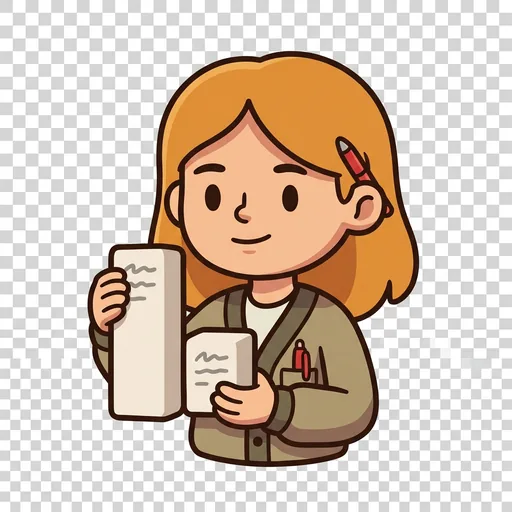
Cappy
Capitalization — makes proper nouns and every sentence's first word stand tall; its defining act is catching a lowercase name or opener
-
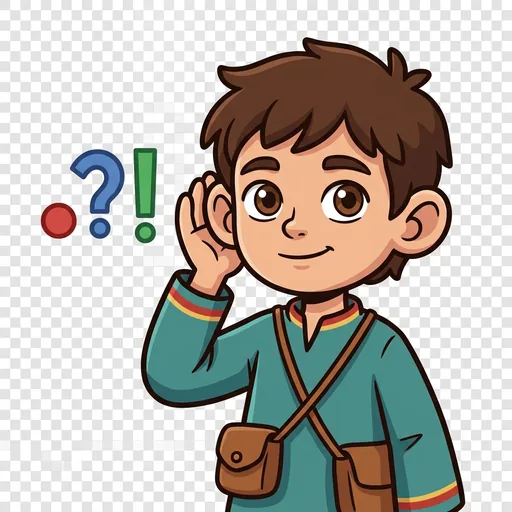
Pip
End punctuation — gives each sentence its right ending (. ? !); catches a sentence that stops with the wrong mark or none
-

Splice
Comma splices & run-ons — separates two full sentences a comma wrongly glued together, or breaks a run-on that never stops
-
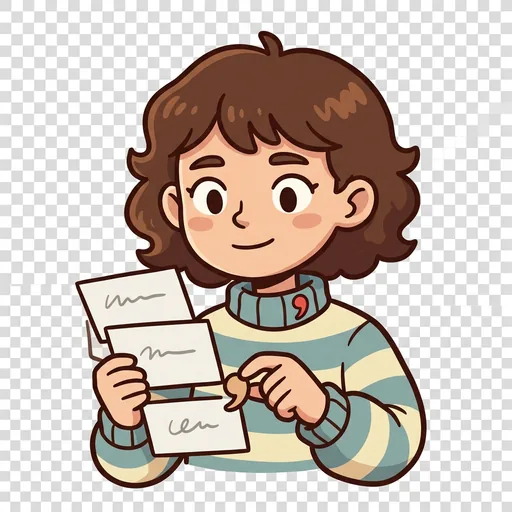
Listy
Commas in a series — sets the pauses between items in a list so the list reads cleanly
-
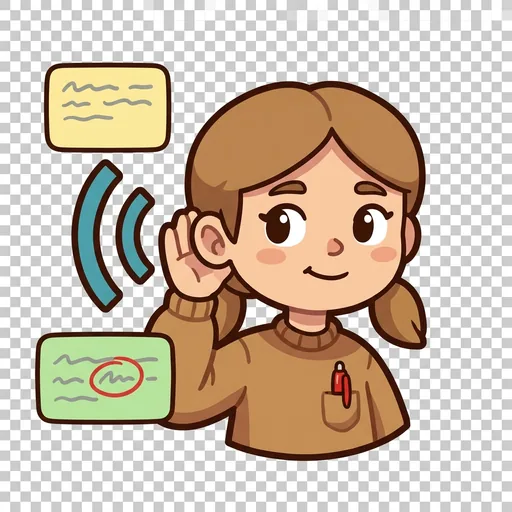
Echo
Homophones / spelling-in-context — hears the words that sound alike and picks the right one (their / there / they're)
-
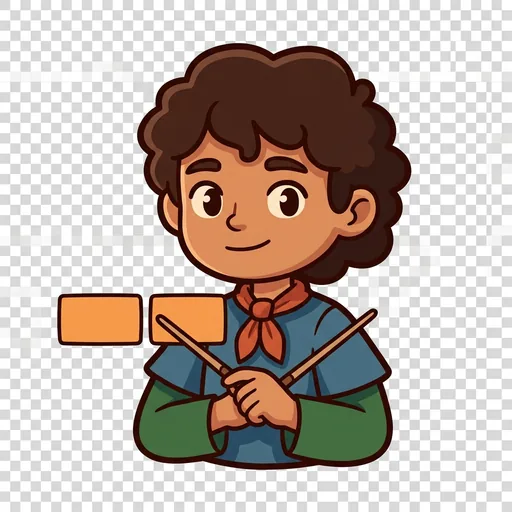
Concord
Subject–verb agreement — matches a verb to its subject's number (one bird sings, two birds sing)
-
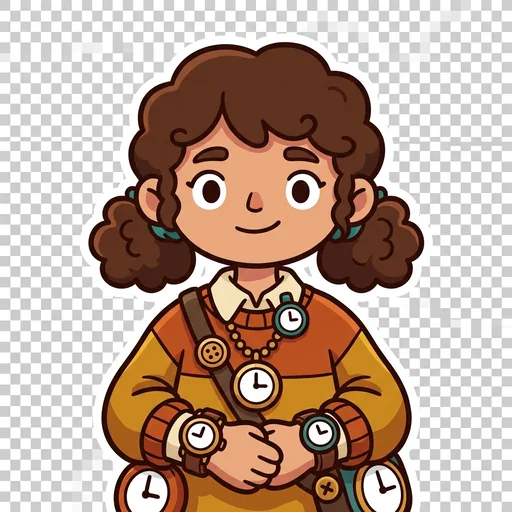
Tempo
Verb-tense consistency — keeps a passage in one time; catches a sentence that slips from past to present
-
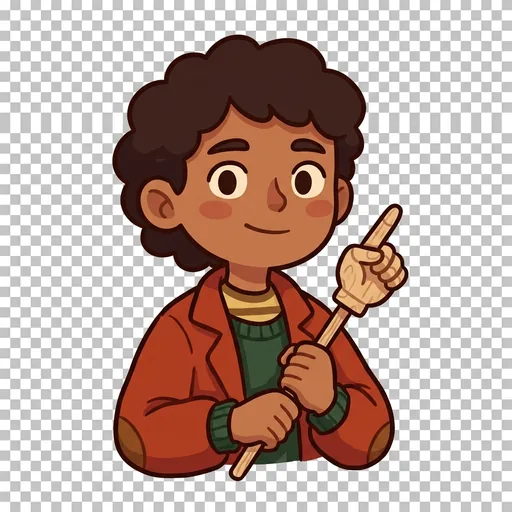
Ana
Pronoun clarity — makes every pronoun point clearly to the one noun it stands for
-

Trim
Concision — cuts wordiness and redundancy so the sentence says it once, clearly