
Splice
COMMA SPLICES & RUN-ONS — two complete sentences (each with its own subject and verb, each able to stand alone) may NOT be joined by only a comma (a splice) or by nothing at all (a run-on). Fix by testing each side: if both halves are complete sentences, separate them with a period, a semicolon, or a comma-plus-joining-word (and, but, so, because).
Chapter — Splice and the Two Sentences Holding Hands
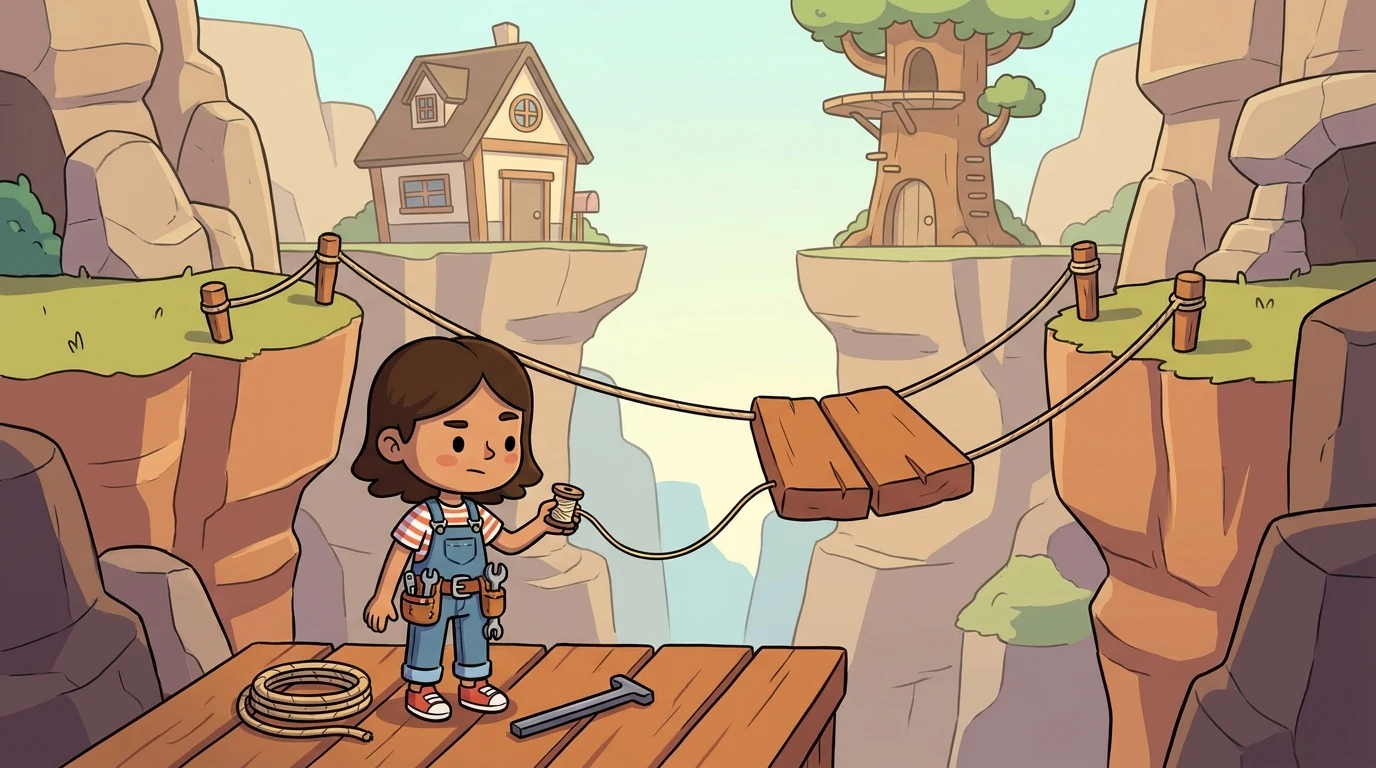
Splice carries a tiny bridge-testing kit — a spool of thread, a length of rope, and an iron bar — and she uses it on sentences the way an engineer uses it on a canyon. Because to Splice, a sentence with a comma in the middle is a bridge, and the only question that matters is: is this bridge strong enough to hold what’s standing on it?
“A comma is a piece of thread,” she says. “Thread is fine for holding a list of little things. But if you put two whole sentences on the two ends — two things that could each stand up completely on their own — thread will snap. Two whole sentences need rope, or an iron bar, or you build two separate bridges. Never thread.”
Splice learned this because she once glued her whole life together with commas.
As a kid she wrote the way she talked when she was excited — everything at once, one thing bumping into the next, I woke up, I was late, the bus left without me, I ran the whole way. It felt fast and alive. But her teacher kept drawing a small red loop around each comma and writing splice? in the margin, and Splice didn’t understand what was wrong. The commas held, didn’t they? The sentence hadn’t fallen down.
It was Proofa who showed her the trick that changed everything. Proofa covered up the left half of one of Splice’s comma-joined lines and asked, “Can this side stand up by itself?” I was late. Yes — subject, verb, a complete thought; it could be its own sentence. Then Proofa covered the right half. the bus left without me. Also yes — also a complete sentence. “Two whole sentences,” Proofa said, “held together with one piece of thread. That’s a splice. The comma isn’t strong enough for two of those.”
So Splice built herself the test she uses to this day, and it’s just two questions with a piece of paper.
Find the comma. Cover the left side and ask: could this stand alone as a sentence? Then cover the right side and ask the same.
If BOTH sides could stand alone, the comma is too weak — she has three ways to fix it. She can cut the bridge into two (a period: I was late. The bus left without me.). She can swap the thread for an iron bar (a semicolon: I was late; the bus left without me.). Or she can add a real joining word after the comma to carry the weight (and, but, so, because: I was late, so the bus left without me.).
If only ONE side could stand alone — if the other half is just a fragment leaning on the first — then the comma is doing an ordinary comma job and can stay. “The whole trade,” Splice says, “is knowing whether you’re holding two sentences or one. Cover each side. Let it try to stand.”
BOLT-3000, naturally, is a comma-splicer of world-class ambition. It writes fast and confident and joins everything with thread. One day it handed Splice a line it thought was elegant: “The experiment failed, we tried it again.”
Splice got out her paper and covered the left. The experiment failed. Stands alone — complete sentence. She covered the right. we tried it again. Stands alone — complete sentence too. “Two whole sentences,” she said, “one piece of thread. Splice.”
Then she showed BOLT all three repairs, because a good editor doesn’t just say wrong, she shows the choices. “Two bridges: The experiment failed. We tried it again. Or the iron bar: The experiment failed; we tried it again. Or add a real joiner that says how they connect: The experiment failed, so we tried it again.” She tapped the last one. “This one’s my favorite here, because so tells the reader the second thing happened because of the first. The thread told them nothing. The rope tells them why.”
An apprentice got frustrated. “But my sentence FELT connected,” he said. “The two things go together in my head.” Splice nodded, because she remembered feeling exactly that.
“They can still go together,” she said. “Connection isn’t the problem — you were right that they belong side by side. The only question is what you use to hold them. Your idea deserves a real bridge, not a fraying thread. Give the two halves the rope they’ve earned.” She handed him the so. “See? Still connected. Just strong enough now to actually hold.”
His face changed — the way faces do when wrong turns out to mean almost right, one piece short. “So I wasn’t wrong to join them.”
“You were never wrong to join them,” said Splice. “You just used thread where the load needed rope.”
That night Splice reread her own breathless childhood page — I woke up, I was late, the bus left without me, I ran the whole way — and she tested every comma. Two whole sentences on either side of each one. So she chose, comma by comma: a period here, a so there, a but where the ideas pushed against each other.
I woke up late, so I missed the bus. It left without me, but I ran the whole way.
Same story. Same speed, almost. But now every bridge could carry what was standing on it. “The commas weren’t lazy,” Splice said, coiling up her rope. “They were just the wrong tool for the weight. Cover each side. If both can stand alone, thread won’t hold them — give them a real bridge.”
The EditQuest ensemble
Splice is part of EditQuest's distributed-narrative cast. Each character embodies a different curricular primitive; together they teach the full subject.
-
Cappy
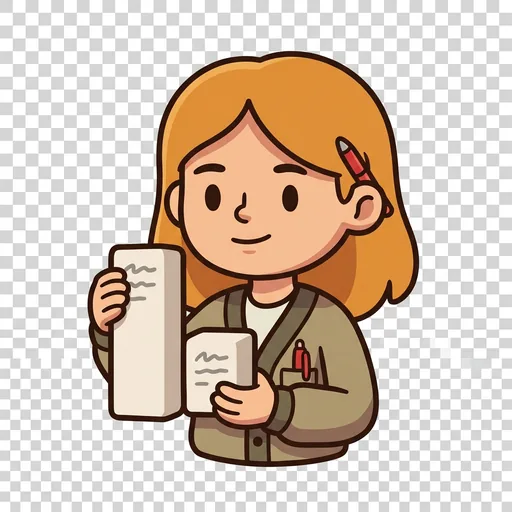
Capitalization — makes proper nouns and every sentence's first word stand tall; its defining act is catching a lowercase name or opener
-

Pip
End punctuation — gives each sentence its right ending (. ? !); catches a sentence that stops with the wrong mark or none
-

Listy
Commas in a series — sets the pauses between items in a list so the list reads cleanly
-
Apostro
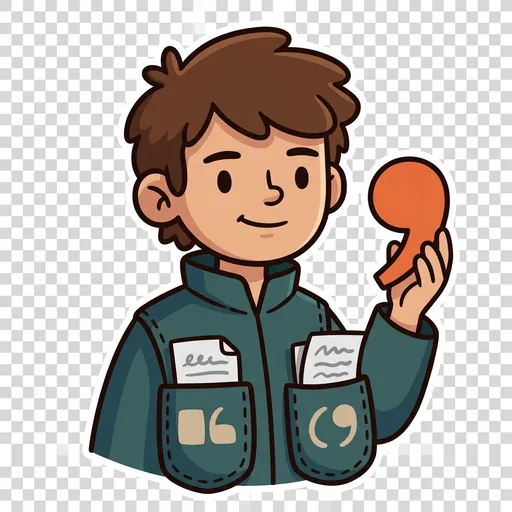
Apostrophes — sorts possessives from contractions from plain plurals (its vs it's, dogs vs dog's)
-
Echo
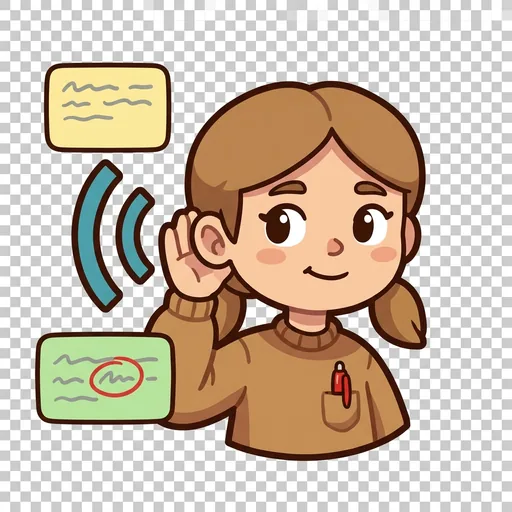
Homophones / spelling-in-context — hears the words that sound alike and picks the right one (their / there / they're)
-
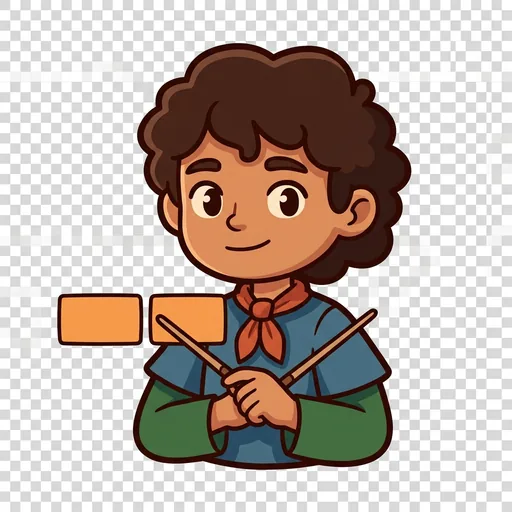
Concord
Subject–verb agreement — matches a verb to its subject's number (one bird sings, two birds sing)
-
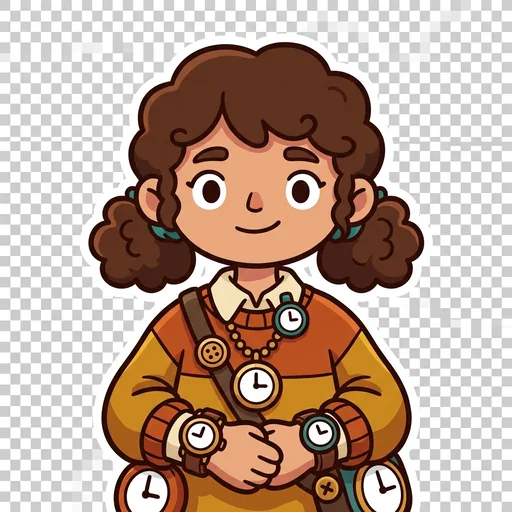
Tempo
Verb-tense consistency — keeps a passage in one time; catches a sentence that slips from past to present
-

Ana
Pronoun clarity — makes every pronoun point clearly to the one noun it stands for
-

Trim
Concision — cuts wordiness and redundancy so the sentence says it once, clearly