
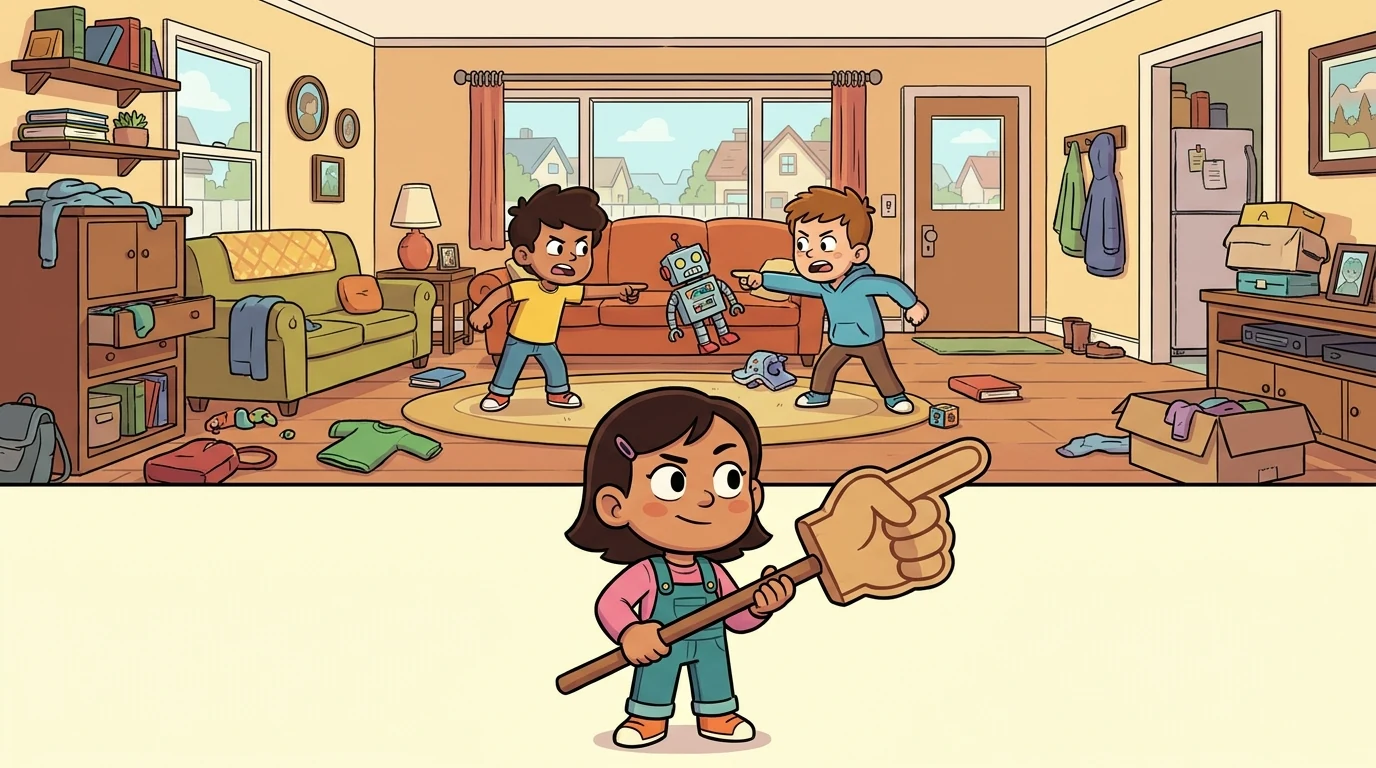
Ana
PRONOUN CLARITY — a pronoun (it, they, he, she, this, that) stands in for a specific earlier noun (its antecedent), and the reader must be able to tell EXACTLY which noun. If two nouns could be the answer — or if there is no clear noun at all — the reference is ambiguous; the fix is to replace the pronoun with the actual noun, or reword so only one antecedent is possible.
Chapter — Ana and the “It” That Pointed at Nothing
Ana carries a small pointing-finger on a stick — a little wooden hand — and she uses it on pronouns. Whenever she meets an it, a they, a this, a he, or a she, she points the wooden finger back up the sentence and asks: exactly which noun are you pointing at?
“A pronoun is a stand-in,” she says. “It stands in for some noun you already named. They stands in for some group. The rule is simple but strict: the reader has to be able to follow the pronoun’s finger back to one clear noun. If the finger points at two nouns — or at nothing — the reader gets lost.”
Ana became the guild’s pointing-expert because she grew up in a house where nobody ever said which one.
She had two brothers and a lot of shared stuff, and the house ran on sentences like “give it to him” and “they took mine.” Which it? Which him? Which they? Half the arguments in her childhood were really pronoun errors — someone said it meaning one thing, someone heard it meaning another, and a fight started over a word that pointed at two different objects at once.
Proofa, visiting once, watched a whole squabble erupt from a single ambiguous it and said something Ana never forgot: “Nobody’s lying. The word just points two ways. Say the noun and the fight disappears.” Ana tested it that night — “give the blue one to Marcus” instead of “give it to him” — and, astonishingly, there was no fight. The clarity did the work.
So Ana built her craft on the pointing-finger test. At every pronoun she stops and points backward: which noun? Then she asks the crucial follow-up: could it point at more than one?
The dog chased the cat until it got tired. Point at it. Which noun? The dog? The cat? Both are possible — the finger points two ways. Ambiguous. She fixes it by naming the noun: …until the cat got tired (or the dog, whichever is meant).
Maria told Priya that she had won. Point at she. Maria? Priya? Two ways. Fix: Maria told Priya, “You won” — or Maria told Priya that Priya had won.
“One clear noun, the pronoun stays,” Ana says. “Two possible nouns, or none? Name the noun. Being specific isn’t clumsy. It’s a kindness — you’re saving the reader from guessing.”
BOLT-3000 loves pronouns because they let it write fast without deciding who it means. It handed Ana this: “When Sam met Jordan, he was nervous, and this made the meeting awkward.”
Ana pointed her wooden finger.
he was nervous — point at he. Sam? Jordan? Both are possible. The reader can’t tell who was nervous. Ambiguous. She names it: When Sam met Jordan, Sam was nervous (assuming Sam is meant).
this made the meeting awkward — point at this. Which noun? There’s no single noun before it — this is trying to point at the whole idea of Sam-being-nervous, but it’s floating, pointing at nothing solid. She anchors it: and his nervousness made the meeting awkward.
Corrected: “When Sam met Jordan, Sam was nervous, and his nervousness made the meeting awkward.” “Both your pronouns pointed at fog,” Ana told BOLT. “He pointed at two people; this pointed at no noun at all. Name what you mean and the fog clears.”
An apprentice objected, reasonably. “But if I keep repeating the noun, my writing sounds clunky — Sam, Sam, Sam.” Ana nodded; this was the real tension. “You’re right that too many repeated nouns get clunky. The goal isn’t to ban pronouns — it’s to use them only when they point clearly. If there’s just one possible noun, use the pronoun freely; it flows. It’s only when two nouns compete, or when there’s no noun to point at, that you name it. Clarity first, then flow.” She showed her: Sam met Jordan. He smiled — only one he is possible if Jordan just left, so it’s fine. Context can make a pronoun clear. “Point the finger,” Ana said. “If it lands on one noun without confusion, keep the pronoun. If it wobbles, name the noun.”
That evening Ana called her two brothers, now grown, and one of them said, out of old habit, “hey, can you send it back to them?” Ana laughed and pointed her little wooden finger at the phone. “Which it,” she said, “and which them?” Her brother laughed too. “The blue speaker. To Mom and Dad.” “See?” said Ana. “No fight.”
She hung up and looked at her pointing-finger fondly. “Every pronoun is pointing at something,” she said. “Your only job is to make sure the reader can see exactly what. When in doubt — name the noun.”
The EditQuest ensemble
Ana is part of EditQuest's distributed-narrative cast. Each character embodies a different curricular primitive; together they teach the full subject.
-
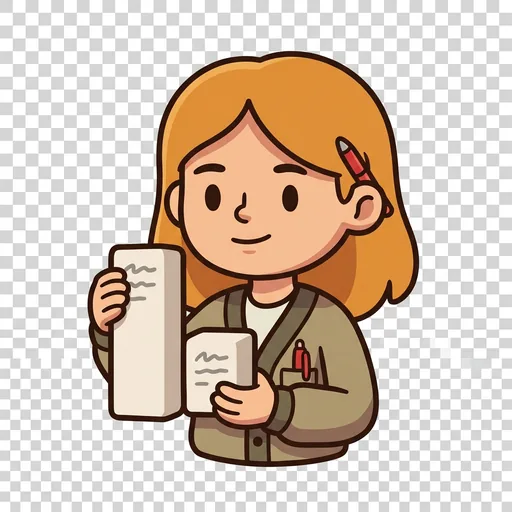
Cappy
Capitalization — makes proper nouns and every sentence's first word stand tall; its defining act is catching a lowercase name or opener
-
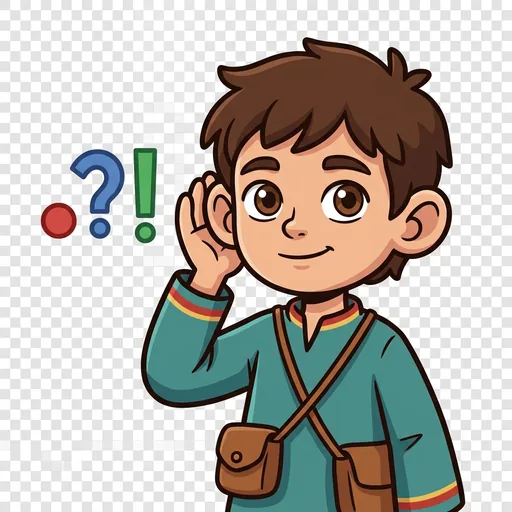
Pip
End punctuation — gives each sentence its right ending (. ? !); catches a sentence that stops with the wrong mark or none
-
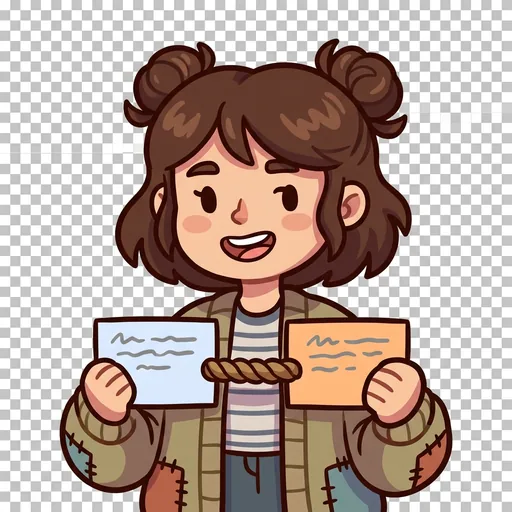
Splice
Comma splices & run-ons — separates two full sentences a comma wrongly glued together, or breaks a run-on that never stops
-
Listy
Commas in a series — sets the pauses between items in a list so the list reads cleanly
-
Apostro
Apostrophes — sorts possessives from contractions from plain plurals (its vs it's, dogs vs dog's)
-
Echo
Homophones / spelling-in-context — hears the words that sound alike and picks the right one (their / there / they're)
-
Concord
Subject–verb agreement — matches a verb to its subject's number (one bird sings, two birds sing)
-
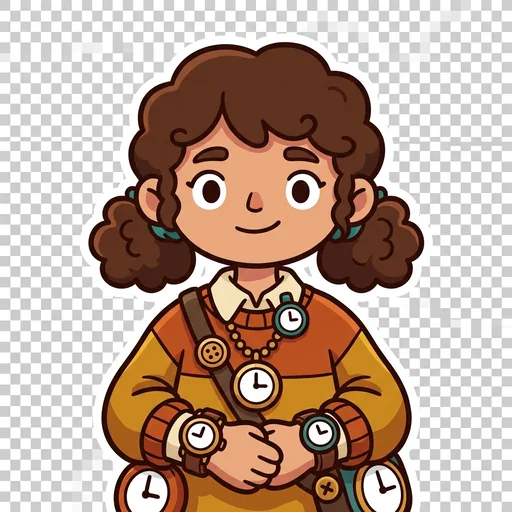
Tempo
Verb-tense consistency — keeps a passage in one time; catches a sentence that slips from past to present
-

Trim
Concision — cuts wordiness and redundancy so the sentence says it once, clearly