
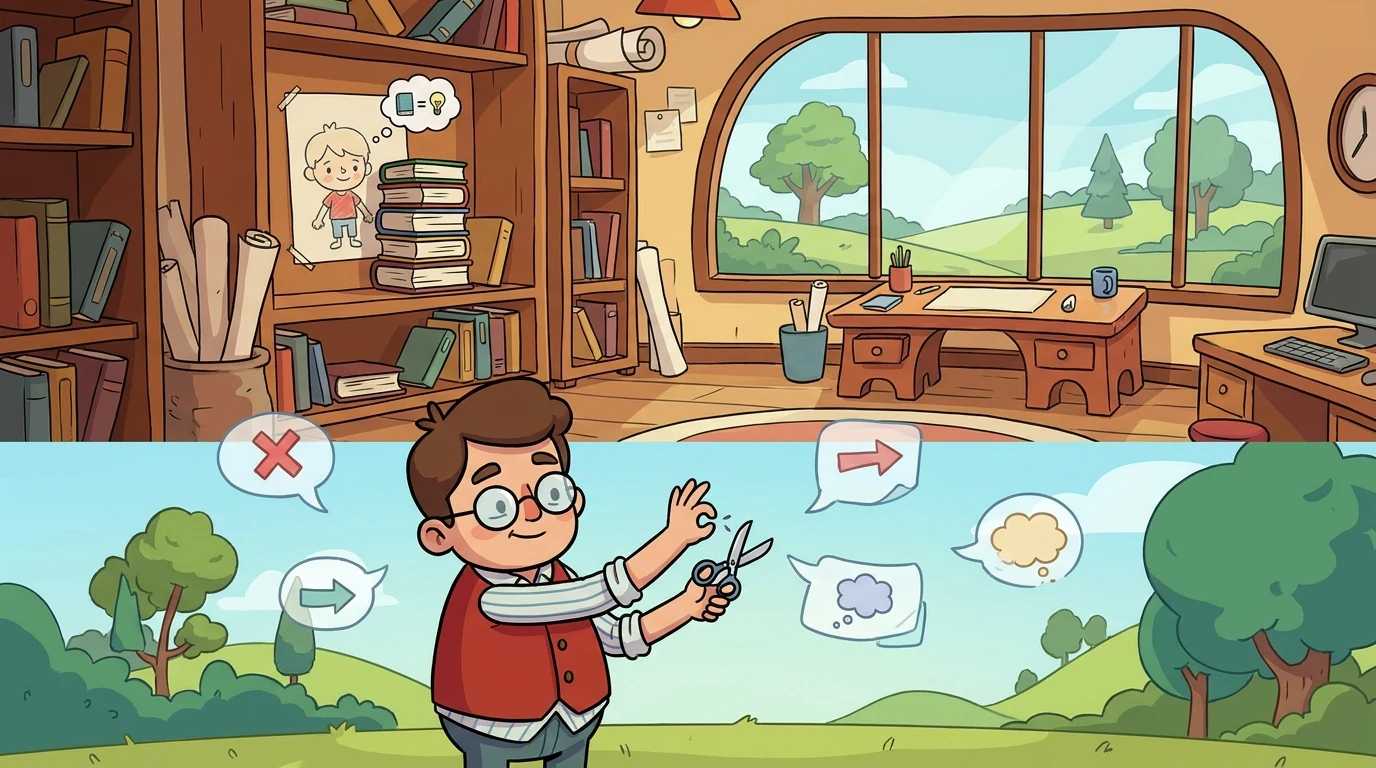
Trim
CONCISION (Advanced) — concision is not shortness; it is the ratio of meaning to words. A cut is right only when the meaning survives intact AND the reader's effort drops. Over-cutting removes working nuance (qualifiers, transitions, the honest 'usually'); under-cutting buries the point in filler. The advanced test weighs both directions: cut the word, then ask not only 'did the meaning survive?' but 'did the sentence get EASIER to read, or did it get thinner?'
Chapter — Trim and the Sentence He Almost Cut to Nothing
Trim has a rule the apprentices learn on their first day: if a word can vanish without changing the meaning, it was never working. What they learn on their second year is the rule’s shadow — the one that separates an editor from a butcher. Because the same scissors that free a sentence can gut it, and Trim has done both.
“Concision isn’t shortness,” he tells the advanced class, and he lets that sit, because most of them arrived believing it was. “A short sentence can be useless and a long one can be lean. Concision is a ratio — how much meaning you carry per word the reader has to move through. My scissors don’t chase a lower word count. They chase a higher ratio.”
The lesson that taught him the shadow-rule came from cutting too well.
Flush with the confidence of someone who’d just learned to spot filler, young Trim took a colleague’s careful paragraph and stripped it to the bone. Out went usually. Out went in most cases. Out went a small but that turned a corner. The result was half the length and read like a fist. It was also wrong — the original had said a thing was usually true, and Trim’s lean version now claimed it was always true. He hadn’t cut filler. He’d cut a wall that was holding the sentence up and called it decoration.
Proofa found him staring at the wreckage. “You cut usually,” she said. “Read what’s left.” Trim read it. “It says always now.” “Does the writer mean always?” “…No.” “Then usually was a driver, not a passenger. It was doing the quiet work of telling the truth about how often.” Proofa handed the word back. “A qualifier looks like filler because it’s small and modest. But small and modest is not the same as empty. The test was never is this word short? It was does the meaning survive without it? You skipped the test because the word looked cuttable.”
So Trim rebuilt his test with a second question, and the second question is the whole difference between his early recklessness and his craft now.
The first question stayed: cross out the word — did the meaning survive intact? But he added the one that catches over-cutting: and did the sentence get EASIER, or just THINNER? An easier sentence carries the same meaning with less reader-effort — that’s a real cut. A thinner sentence carries less meaning — that’s a wound wearing a cut’s clothes.
She was, in a sense, relieved. Cross out in a sense. Meaning survives? Nearly — but in a sense was hedging, admitting the relief was partial. Losing it makes the relief total, which may overstate it. Easier, or thinner? Thinner — it removed a true shade. Keep it, unless the writer really means pure relief.
The results, as expected, confirmed the hypothesis. Cross out as expected. Meaning survives — and as expected was genuinely dead weight, adding no fact the sentence needed. Easier AND intact. Cut.
“Two words can look identical and be opposites,” Trim says. “In a sense and as expected are both three-syllable interruptions. One is a driver hauling nuance; one is a passenger. The only way to tell is to remove it and weigh what’s left — not by length, by load.”
BOLT-3000 has learned exactly enough concision to be dangerous. Having been scolded for wordiness, it now over-cuts, and it handed Trim a sentence it was proud of shortening: “Cutting some funding hurt the program.” Trim asked to see the original. BOLT’s first draft had read: “Cutting most of the after-school funding badly hurt the reading program, especially for the youngest students.”
Trim laid them side by side. “You didn’t trim this,” he said. “You amputated it. Watch what you threw away.” Most of — became a vague some; the scale of the cut vanished. after-school — the kind of funding, gone. badly — how much it hurt, gone. reading — which program, gone. especially for the youngest students — the entire human point of the sentence, gone. “Every one of those was a driver. You cut them because they were words, and you’d decided words were the enemy.” He rebuilt it, cutting only the true passengers: “Cutting most of the after-school funding badly hurt the reading program, especially for the youngest students.” Barely shorter than the original — because the original had almost no fat. “Concision,” Trim said, “sometimes means cutting nothing. The lean version of a lean sentence is the same sentence.”
An advanced apprentice pushed on the hardest case. “But what if the word I want to cut is good? Not filler, not a driver — just… a nice phrase I’m attached to?” Trim set down his scissors, because this was the real test of an editor. “That’s the cut that makes you an editor instead of a writer defending himself,” he said. “A phrase can be beautiful and still be a passenger — beautiful, and not carrying the meaning, just riding alongside looking lovely. Those are the hardest to cut, because you’re not fighting laziness anymore, you’re fighting pride.” He told her his own worst example: a sentence he’d loved for a year, kept in a paragraph where it did nothing but preen, until he finally admitted it was a passenger in a gorgeous coat. “Cutting filler is a skill,” he said. “Cutting the thing you’re proud of is character. Ask the same two questions of it you’d ask of very. If the meaning survives and the reader’s job gets easier — it goes, no matter how much you love it. Especially then.”
She looked at a line she’d been protecting all week. Cut it, read what remained. Easier. Intact. She let it go, and looked slightly heartbroken and slightly free.
“That feeling,” said Trim, “is the job.”
That night Trim reread the paragraph he’d once amputated — the one where he’d cut usually and turned a careful truth into a lie — and he restored every working word he’d stolen, then, with the second question running, cut only the genuine passengers around them. The paragraph came out almost exactly as long as it had started, and twice as clear, and entirely true.
“People think my job is making things shorter,” he said, capping his scissors with a soft click. “It isn’t. It’s making the meaning visible — sometimes by cutting ten words, sometimes by cutting none, sometimes by putting a small brave usually back where I never should have taken it from. Cross out the word. If the meaning survives and the reading gets easier, it was never working. If it survives but the sentence goes thin — you didn’t find a passenger. You cut a wall.”
The EditQuest ensemble
Trim is part of EditQuest's distributed-narrative cast. Each character embodies a different curricular primitive; together they teach the full subject.
-
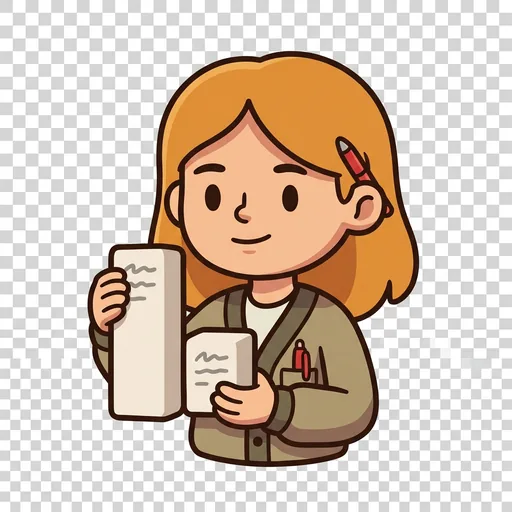
Cappy
Capitalization — makes proper nouns and every sentence's first word stand tall; its defining act is catching a lowercase name or opener
-

Pip
End punctuation — gives each sentence its right ending (. ? !); catches a sentence that stops with the wrong mark or none
-

Splice
Comma splices & run-ons — separates two full sentences a comma wrongly glued together, or breaks a run-on that never stops
-
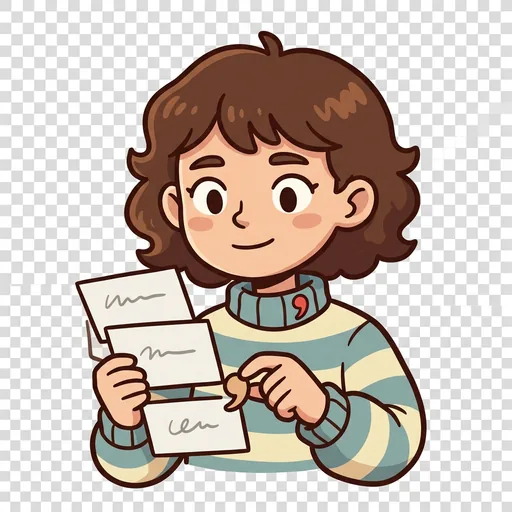
Listy
Commas in a series — sets the pauses between items in a list so the list reads cleanly
-
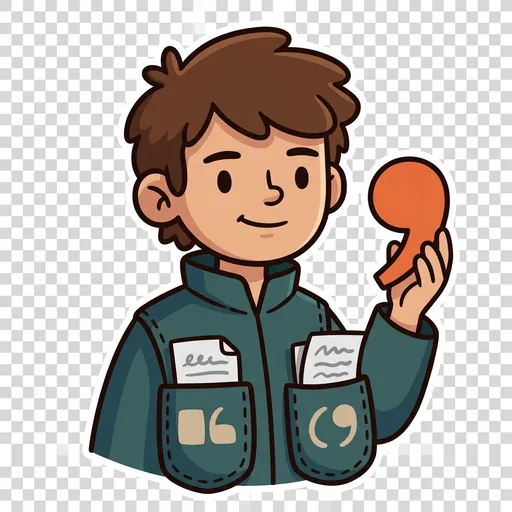
Apostro
Apostrophes — sorts possessives from contractions from plain plurals (its vs it's, dogs vs dog's)
-

Echo
Homophones / spelling-in-context — hears the words that sound alike and picks the right one (their / there / they're)
-
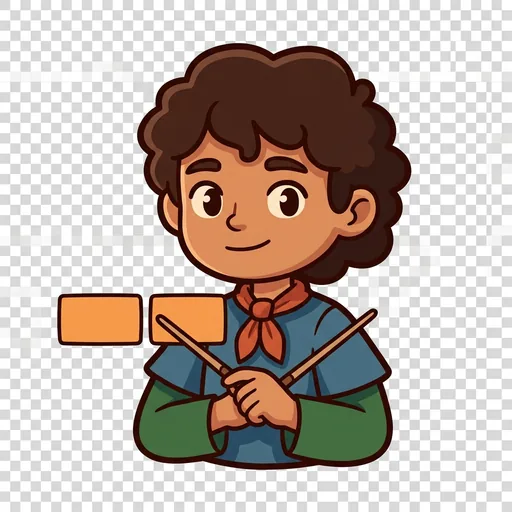
Concord
Subject–verb agreement — matches a verb to its subject's number (one bird sings, two birds sing)
-
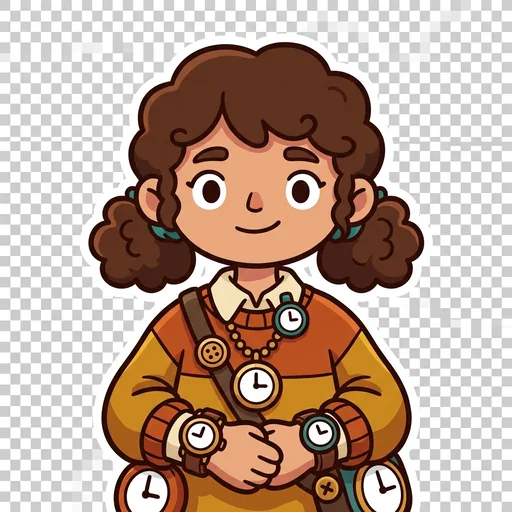
Tempo
Verb-tense consistency — keeps a passage in one time; catches a sentence that slips from past to present
-
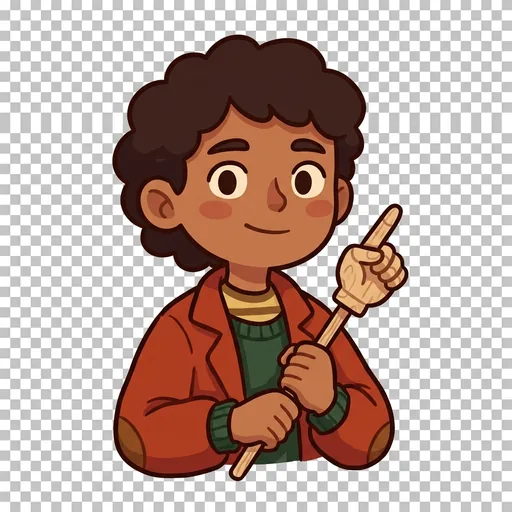
Ana
Pronoun clarity — makes every pronoun point clearly to the one noun it stands for