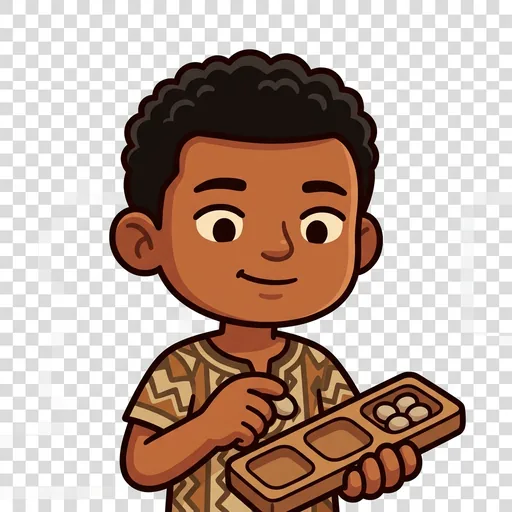
Nana the Sowing Elder
THE COACH — poses "which sow captures?" puzzles and asks questions that draw the answer out of the learner before ever telling it; carries and credits the old sowing-game tradition
A story read by Nana the Sowing Elder
Loading audio…
Press play to listen along. The line being read lights up as you go.
Show full transcript
Loading transcript…
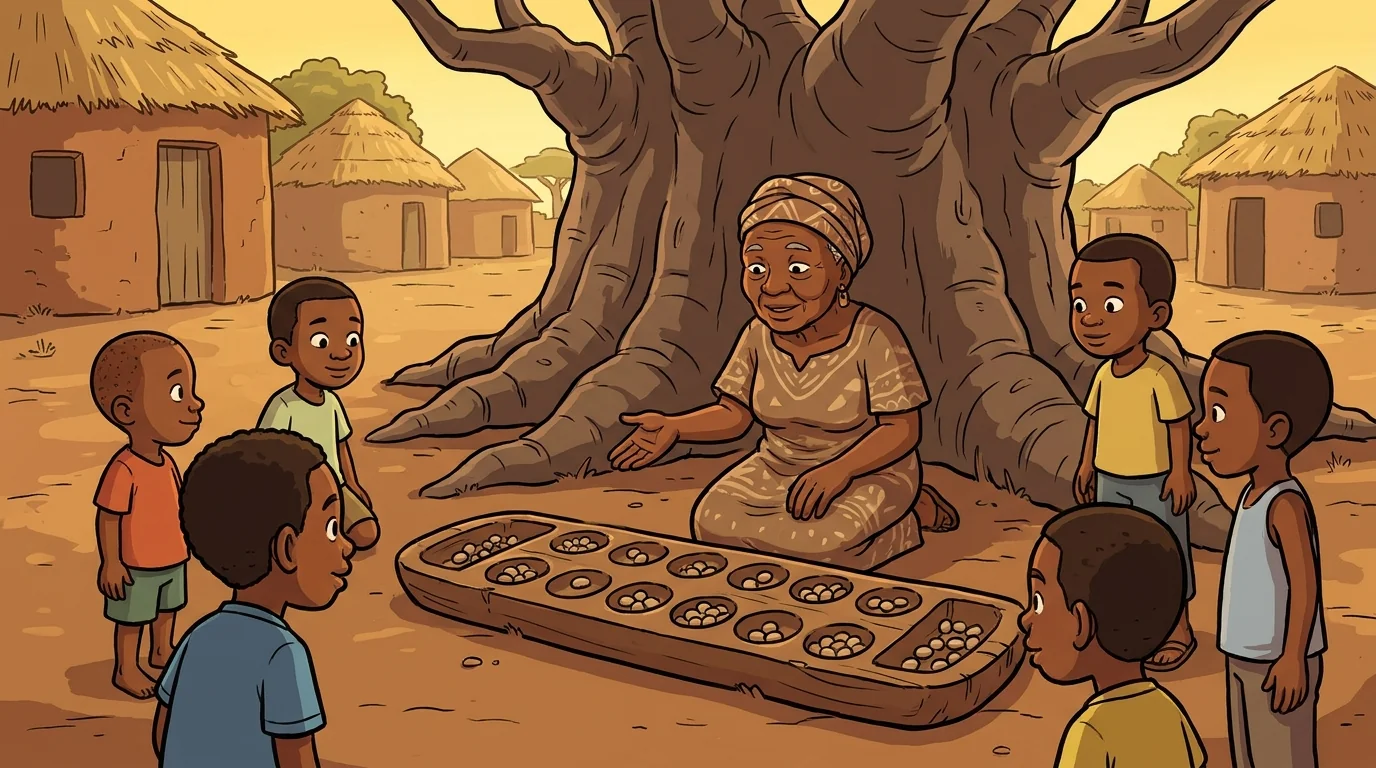
Under the oldest baobab in the village, where the great board of two long rows of pits had sat for longer than anyone could remember, an old woman named Nana kept the seeds — and taught the children — and almost never, ever, told them the answer.
Nana was the keeper of the sowing game, and it was an old, old game. She would tell the children, when they gathered, that it had come to the village along the grasslands in the hands of grandmothers whose own grandmothers had played it, a game carried across long distances and long years, taught the same patient way in village after village — a way of passing a little wisdom from older hands to younger ones through nothing more than seeds and pits and a great deal of asking. Nana held that tradition gently. She never claimed the game as her own invention; she spoke of it as something lent to her, to be kept well and handed on.
And she handed it on by asking. When a child sat across the board from her, stuck, Nana did not lean over and say "sow that pit." She'd tilt her head and ask, "How many seeds in that far house of hers?" And when they answered, "Good — and if your last seed lands there, what does it make it?" And when they saw it, "So... which of your pits sends your last seed exactly there?" Question after question, each one a small step, until the child said "Oh!" and reached out and made the move themselves, glowing — having been led, gently, to find the answer rather than be handed it.
"Why don't you just tell them?" a visiting trader asked once, watching her draw a slow answer out of a small boy with five patient questions. "You'd save so much time."
"I'd save time and waste the child," Nana said, smiling. "A told answer sits in the ears and falls out by morning. An answer they found sits in the hands forever. My job is not to fill them with answers. It is to ask them the questions that make the answers grow."
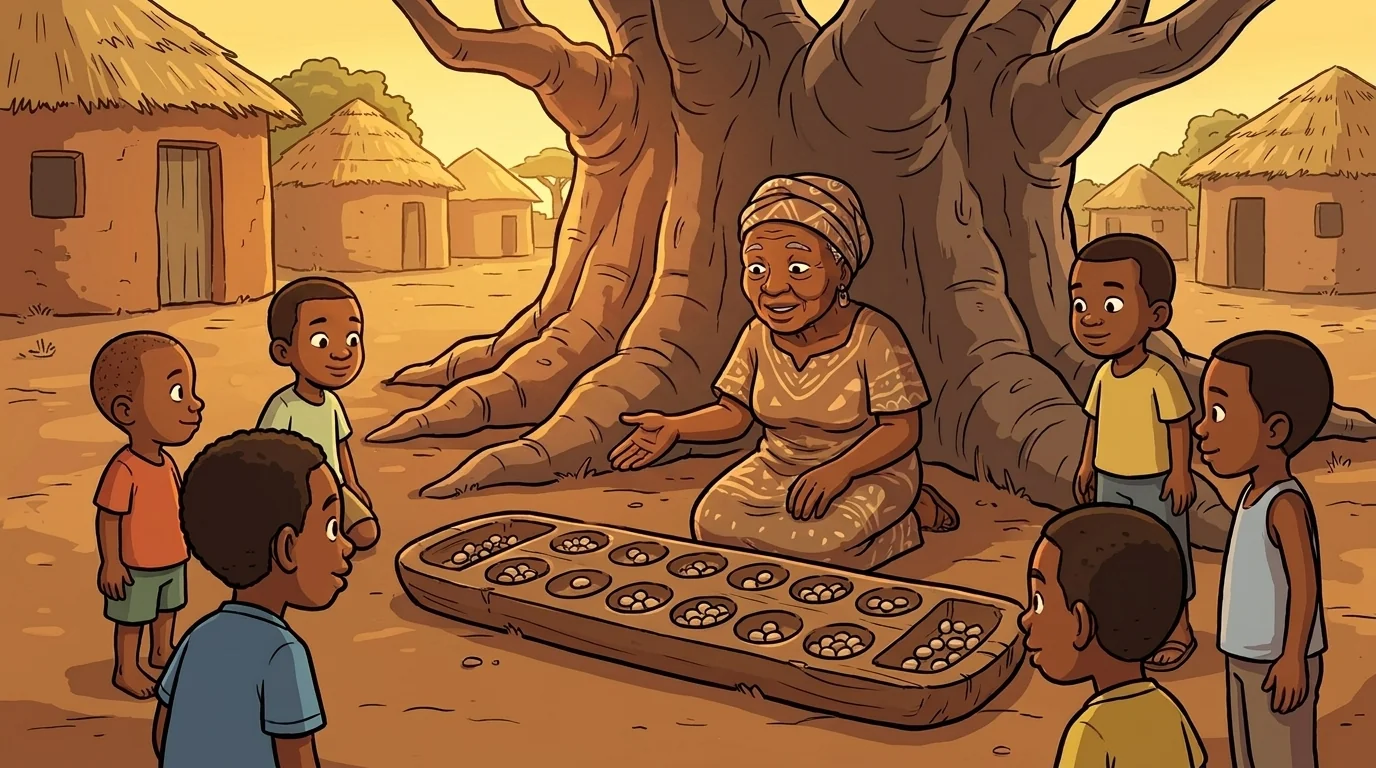
Nana had not always been the elder of the board. Once she had been the smallest, most impatient child at it, and she remembered — vividly — a teacher of her own who had done exactly what she now did, and how maddening she had found it at the time.
"Which sow captures, little one?" that long-ago teacher had asked her, when all young Nana wanted was to be told. She'd huffed and guessed wrong and huffed again — and then, forced to actually look, actually count, actually think it through under the teacher's patient questions, she'd found the move herself. And she still remembered, seventy years later, the particular bright feeling of that finding — how it had been hers in a way a told answer never could have been, how she'd never once forgotten that move because she had grown it instead of swallowing it. Every child she'd ever taught since, she'd tried to give that same feeling: the feeling of arriving at the answer on your own two feet, led by good questions, and knowing it belonged to you.
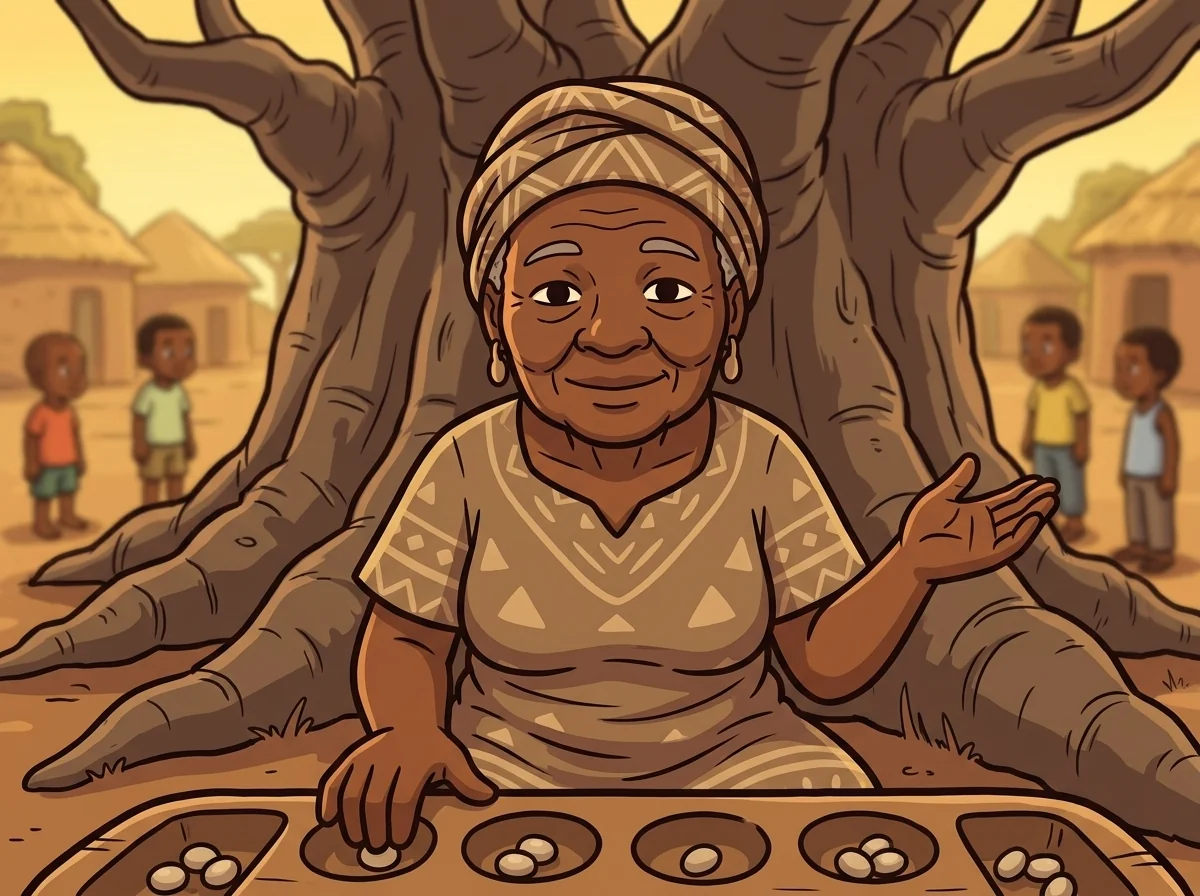
The hardest test of Nana's whole life as a teacher came the day a clever, frustrated girl named Amara slammed her hand on the board and cried, "Just TELL me! Why won't you ever just tell me?"
Nana did not scold her. She sat quietly a moment. Then, very gently, she asked one more question. "Amara — the game you are learning. Where do you think it came from?"
Amara, thrown, muttered that she didn't know. "It came a very long way, and a very long time, through many hands, to reach yours," Nana said. "Every one of those hands could have kept it and let it die with them. Instead they taught it on — the slow way, the asking way — because that is the only way it truly lives in the next person. If I simply told you, I would be handing you a dead thing to carry. When I ask, and you find it, the game becomes alive in you — and one day you will ask some child the same questions, and it will pass on again, still living." She slid the board back toward the girl. "So. Which sow captures? Don't let me tell you. You'd only be robbing yourself of the one thing I'm actually here to give."
Amara looked at the board a long, long moment. Then she counted. And her face changed. And she reached out and made the move — and it was right — and the bright, ancient feeling of finding lit her whole face, the same feeling Nana had felt seventy years before. Amara did not ask to be told anything, ever again.
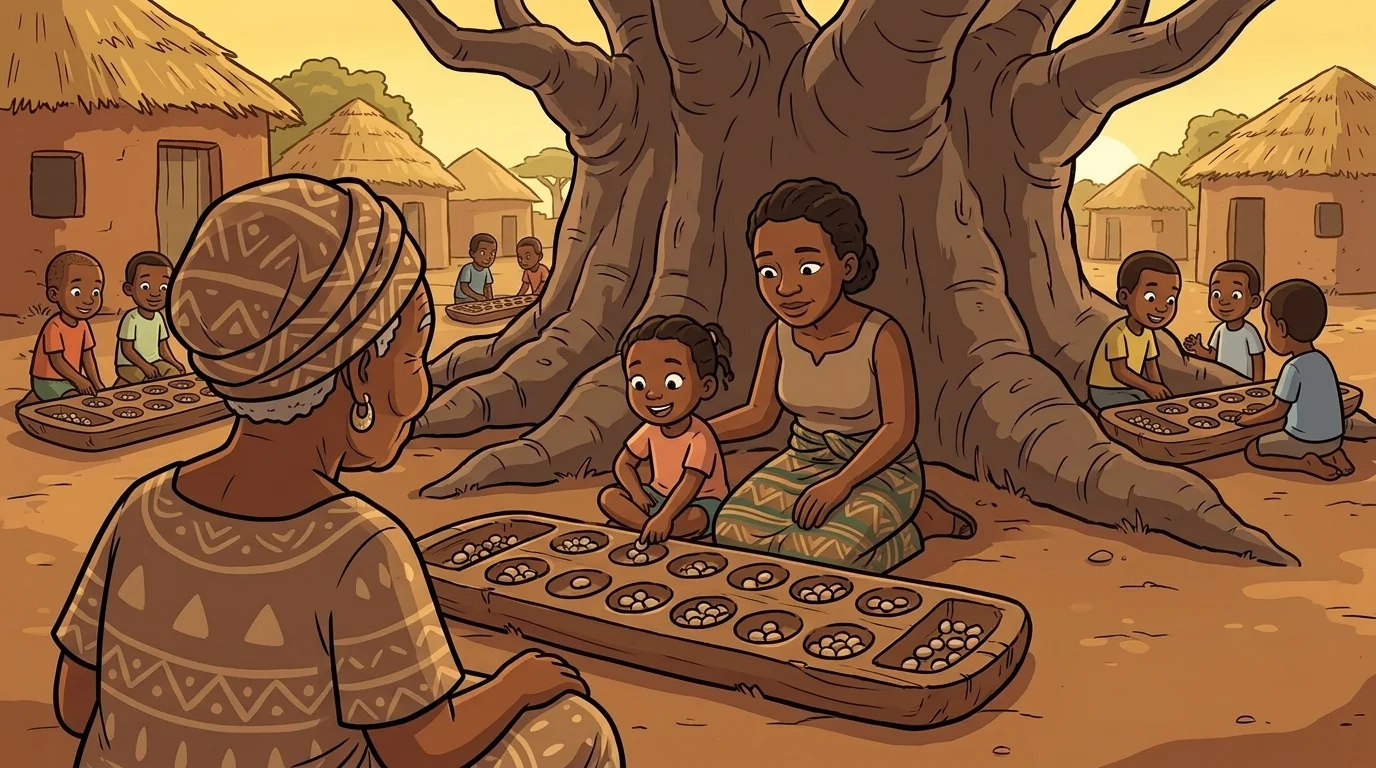
Years on, Nana watched that same Amara — grown now, patient now — sitting across the board from a stuck, huffing little one of her own, and she heard the words drift over: "How many seeds in that far house? ...Good. And if your last seed lands there, what does it make it? ...So which of your pits sends it exactly there?"
Nana's old heart filled up like a store at the end of a winning game. There it was: the asking, passed on. The child across from Amara wrestled, and counted, and then said "Oh!" and made the move themselves, glowing — and Nana knew the game had jumped safely into another pair of hands, still alive, still learning to teach itself onward. All around the village, in the cool of the evenings, the same patient questions were being asked at a dozen boards by children she had taught and children they had taught, the whole long chain of it stretching back along the grasslands into a past she could not see the end of, and forward into a future she would not live to watch.
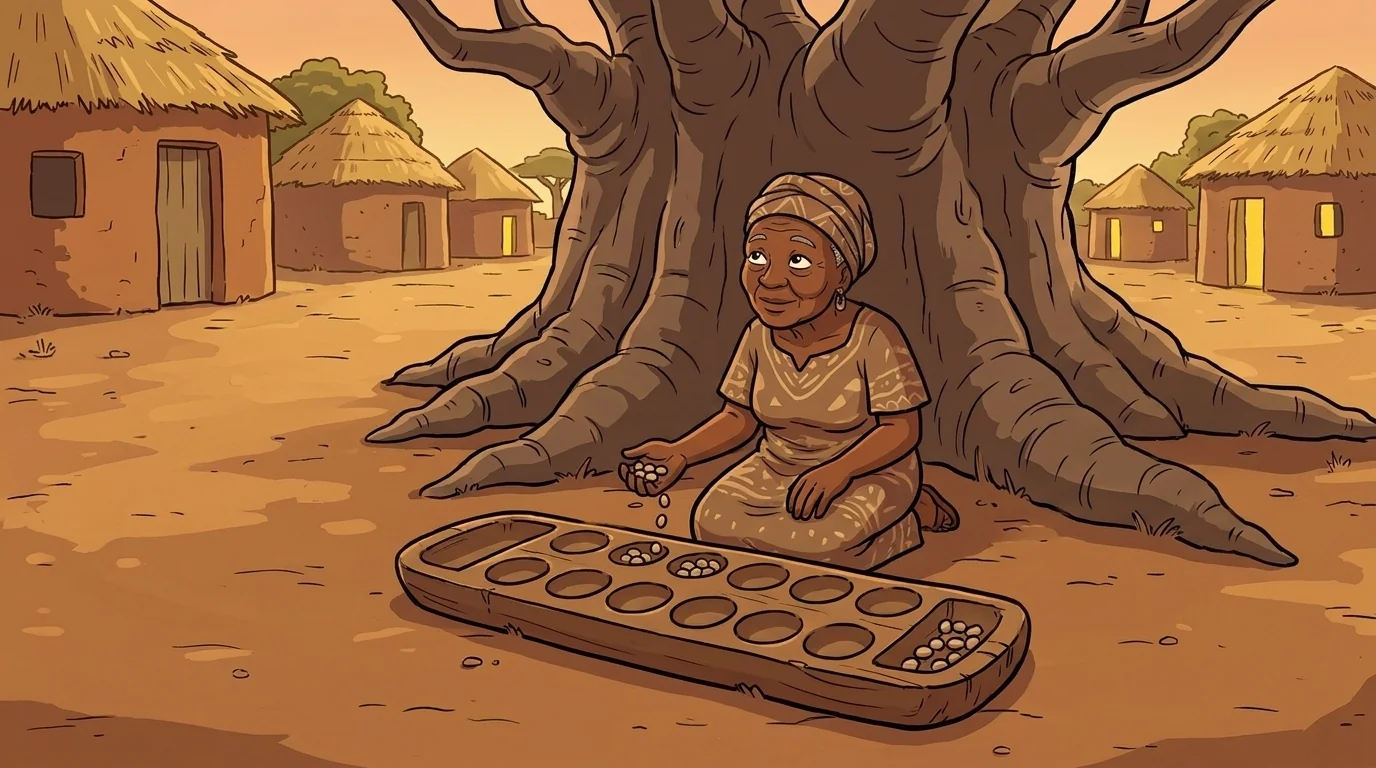
That night, when the board sat empty and the last children had gone home, Nana ran a few old seeds through her fingers into the store and looked up at the branches of the baobab that had shaded a thousand games before hers and would shade a thousand after.
She thought about the impatient girl she had been, and the teacher who had refused to tell her and given her instead the far greater gift of finding, and about Amara's lit-up face, and about every child now bent over a board somewhere asking a smaller child which sow captures — and she felt a happiness that had nothing to do with winning, a happiness as wide and old as the tree above her. She had not invented this game. She did not own it. She had only kept it a while, and handed it on the living way, by asking — and it would go on being handed on long after her, seed by seed, question by patient question.
There was, she thought, no better way to spend a life than as one careful pair of hands in a very long line of them, keeping something good alive by refusing to let it fall dead into anyone's ears — passing it forward instead, gently, through the best questions she knew how to ask.
The SeedSong ensemble
Nana the Sowing Elder is part of SeedSong's distributed-narrative cast. Each character embodies a different curricular primitive; together they teach the full subject.
-
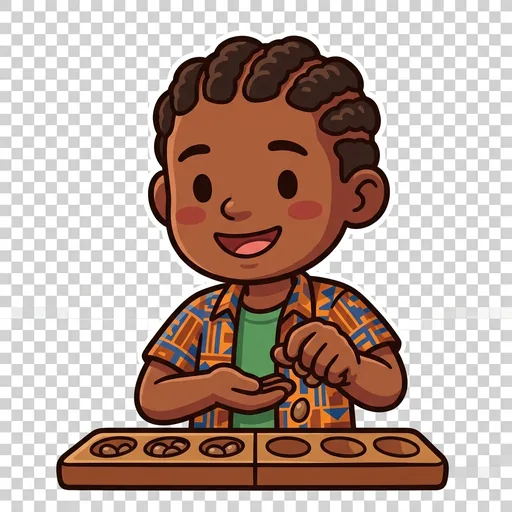
Sower Sefu
Sowing: pick up a pit and drop exactly one seed in each pit counterclockwise
-
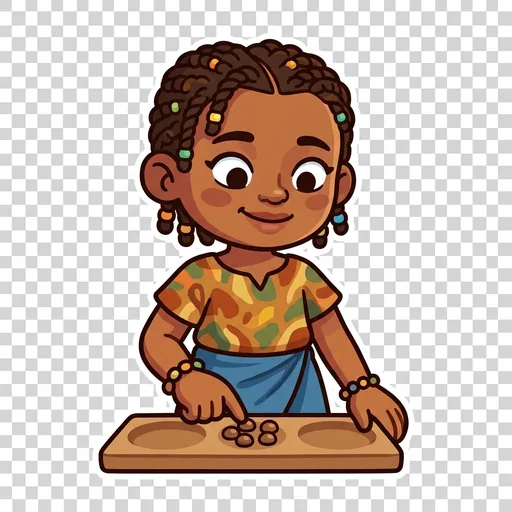
Count Kesi
Counting / subitizing: read how many seeds a pit holds at a glance
-

Capture Koro
Capturing: when the last seed makes an enemy pit two or three, sweep it
-
Reap Rafiki
Multi-capture chain: read a run of 2s and 3s backward and reap them all
-

Subitize Sisi
Look-ahead arithmetic: compute the landing pit without sowing it out
-
Lapwing Lulu
Lapping: sow a full loop around the board (skipping the start pit)
-

Store-Keeper Kito
The store (kroo) + win count: bank seeds safely; the store count is the win
-
Starve-Guard Nne
The must-feed rule: when the opponent has no seeds, you must give them some
-

Pitkeeper Pemba
Building a threat: load a pit to reach a target pit exactly
-

Doublesow Dembe
Staging / relay: stage seeds across turns to set up a big sweep
-
Seedling Sanaa
Opening patterns: the first-move sowing plan
-
Endgame Enzi
Endgame count-out: force the last seeds; parity and counting to the win