Doublesow Dembe
STAGING / RELAY — plan across several turns, moving seeds a step at a time into position, so that a future sow releases a much bigger capture than any single turn could
Loading audio…
Press play to listen along. The line being read lights up as you go.
Show full transcript
Loading transcript…
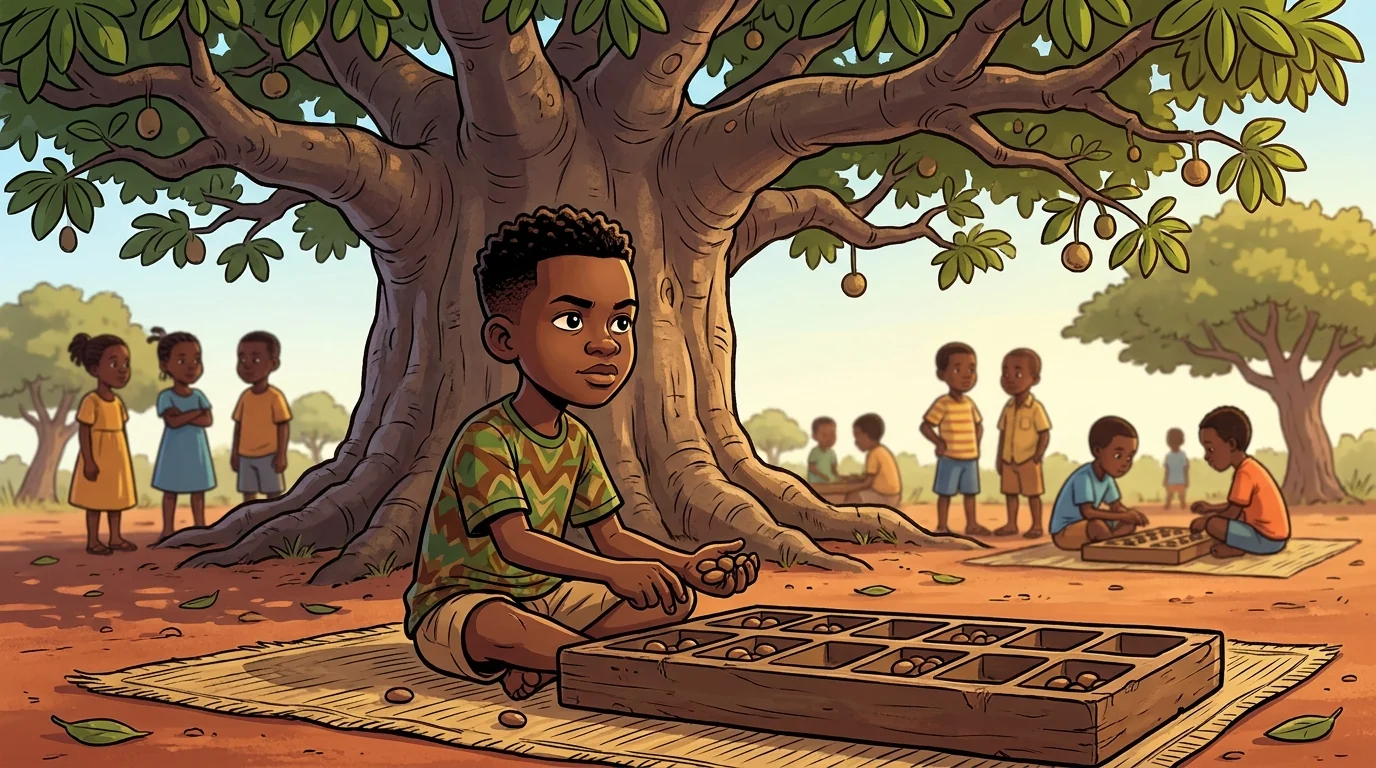
Most children at the great baobab board thought only about this turn — what can I capture right now? But there was a boy named Dembe who thought in twos and threes and fours of turns, and whose biggest harvests were always things he'd started building long before anyone noticed.
Dembe was a relay-setter. He knew that you couldn't always make a great sweep in a single move — the seeds weren't in the right places yet. So he'd stage them. This turn, a small sow to nudge some seeds one step nearer where he'd need them. Next turn, another quiet shuffle, feeding a pit toward the size it would have to be. The turn after, one more piece slotting into place. None of these moves looked like much on their own — a seed here, a seed there — but they were all secretly aimed at one future moment, when everything he'd been arranging would finally line up and a single sow would release a harvest far bigger than any one turn could ever have made.
To the other children, Dembe seemed to make a lot of small, dull moves and then, out of nowhere, an enormous capture. They didn't see the three turns of quiet arranging that had loaded the spring.
"How did you suddenly take all that?" a girl gasped.
"It wasn't sudden," Dembe said. "I started three turns ago. Every little move you thought was nothing was me carrying seeds one step closer to this. The big sweep is just the last step of a long walk."
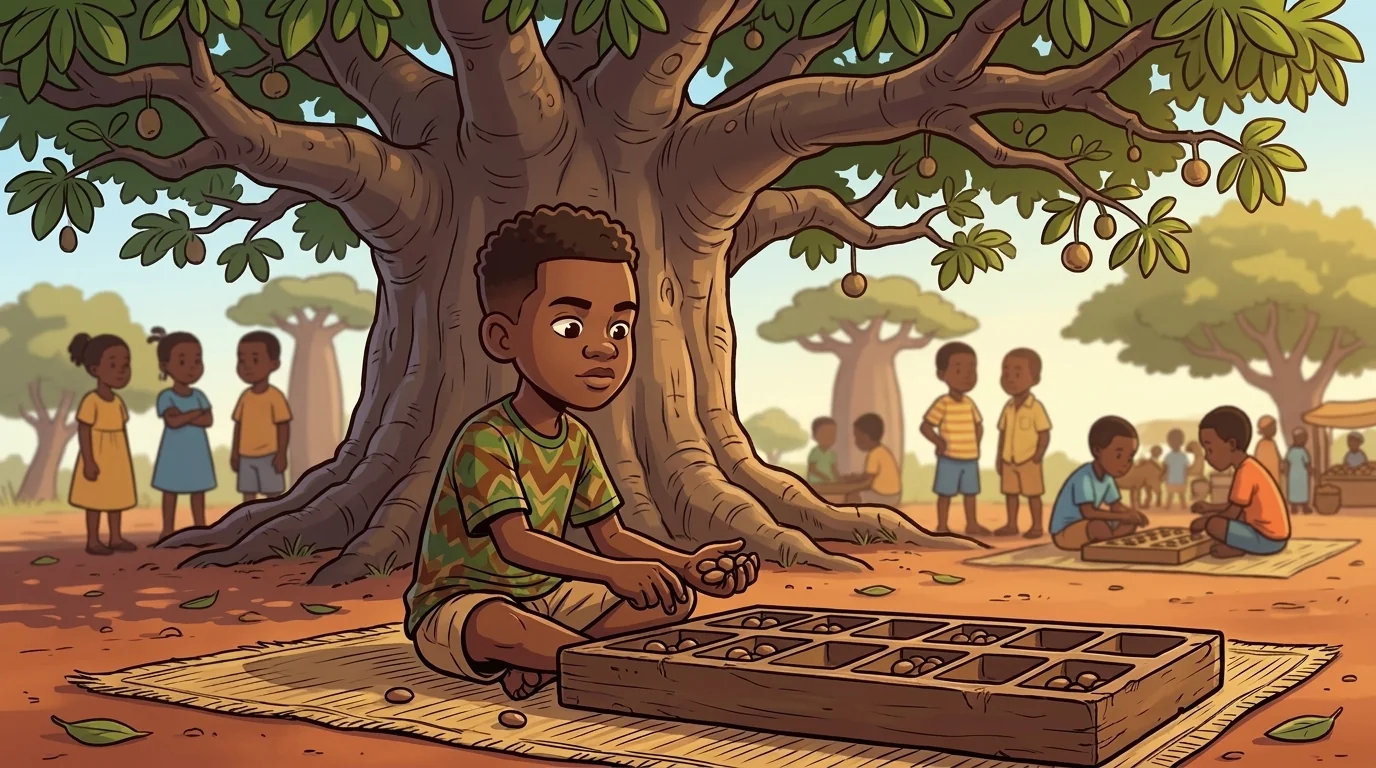
Dembe had once been a pure now-player, grabbing whatever was capturable this turn and never planning past it — and so he only ever got the small harvests that happened to be sitting ready, never the great ones you had to build. He kept losing to patient players who seemed to conjure huge sweeps from nowhere, and it baffled and frustrated him.
The understanding came from his father, who traded at the far market. His father would send goods off with one caravan, receive different goods weeks later, trade those on, and only many steps down the line turn it all into the thing he'd actually wanted — a plan with several patient links in it, each one setting up the next. "You don't get the big trade in one swap," his father said. "You get it by lining up the small swaps so each one hands to the next." Dembe watched a season's worth of patient trading turn a basket of salt into a fine new plough, and he brought it to the board: stop trying to win the turn. Start lining up the turns so each one sets up the next, and the great harvest falls out at the end of the chain.
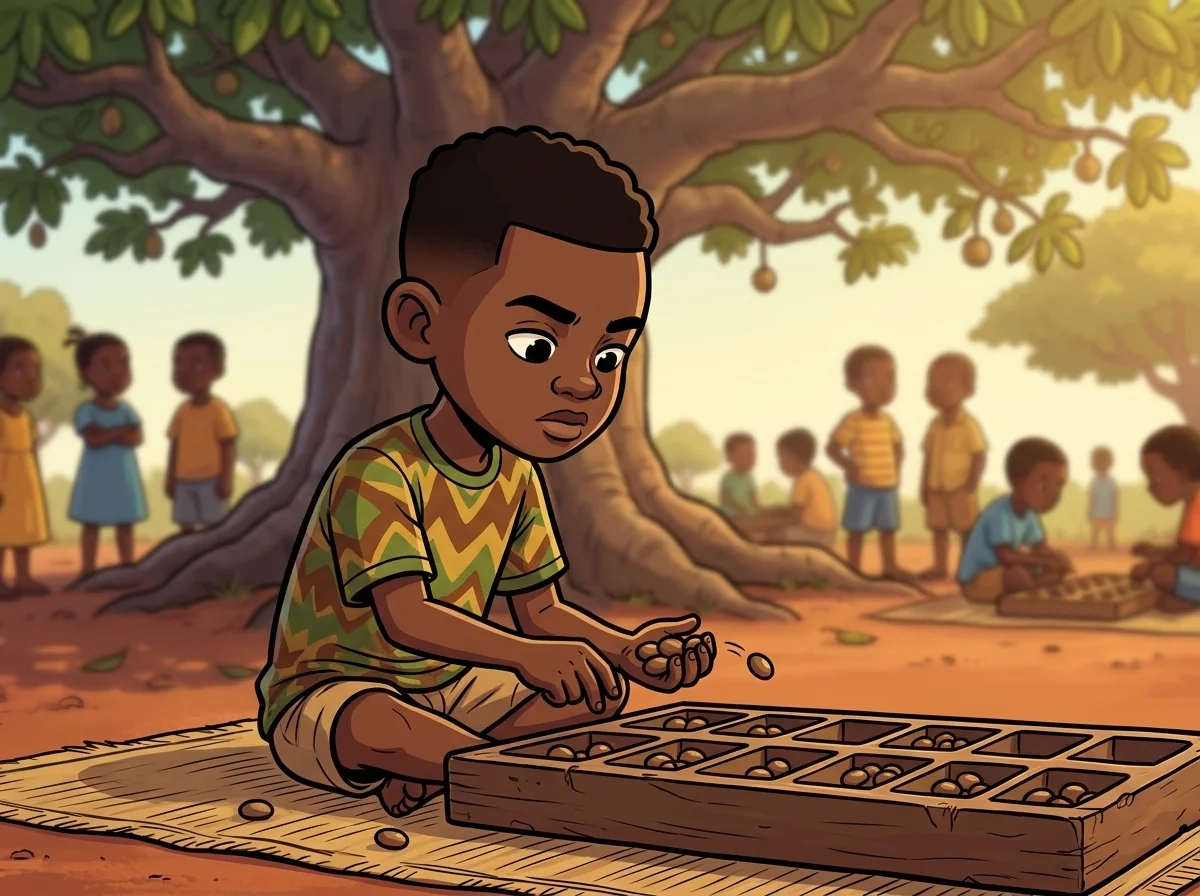
Nana the Sowing Elder gave him a board that offered nothing much this turn — no capture ready — but was rich with possibility two or three turns out.
"There's nothing to take," Nana said, testing him. "What will you do?"
"There's nothing to take yet," said Dembe. And he began to build. First turn: a small sow that quietly shifted seeds toward a pit he'd need loaded. Second turn: another, growing that pit while nudging an enemy house toward the count he wanted. Third turn: the last piece, everything now poised. And on the fourth turn he sowed the pit he'd been feeding all along — and its last seed landed to spring a capture that unzipped backward down a whole readied row, a harvest three times bigger than anything the board had offered on turn one.
Nana clapped, delighted. "The now-players took their little scraps and went home," she said. "You looked at a board with nothing on it and built something over four turns that none of them could see coming. That is the longest sight there is at this board. But hear the hard part, Dembe: you must hold your plan across all those turns while the game keeps moving — and be ready to change it if the board changes under you. A plan you can't let go of is a trap. Sit at my board. Teach these children to set things up turns ahead — and to hold the plan lightly enough to change it."
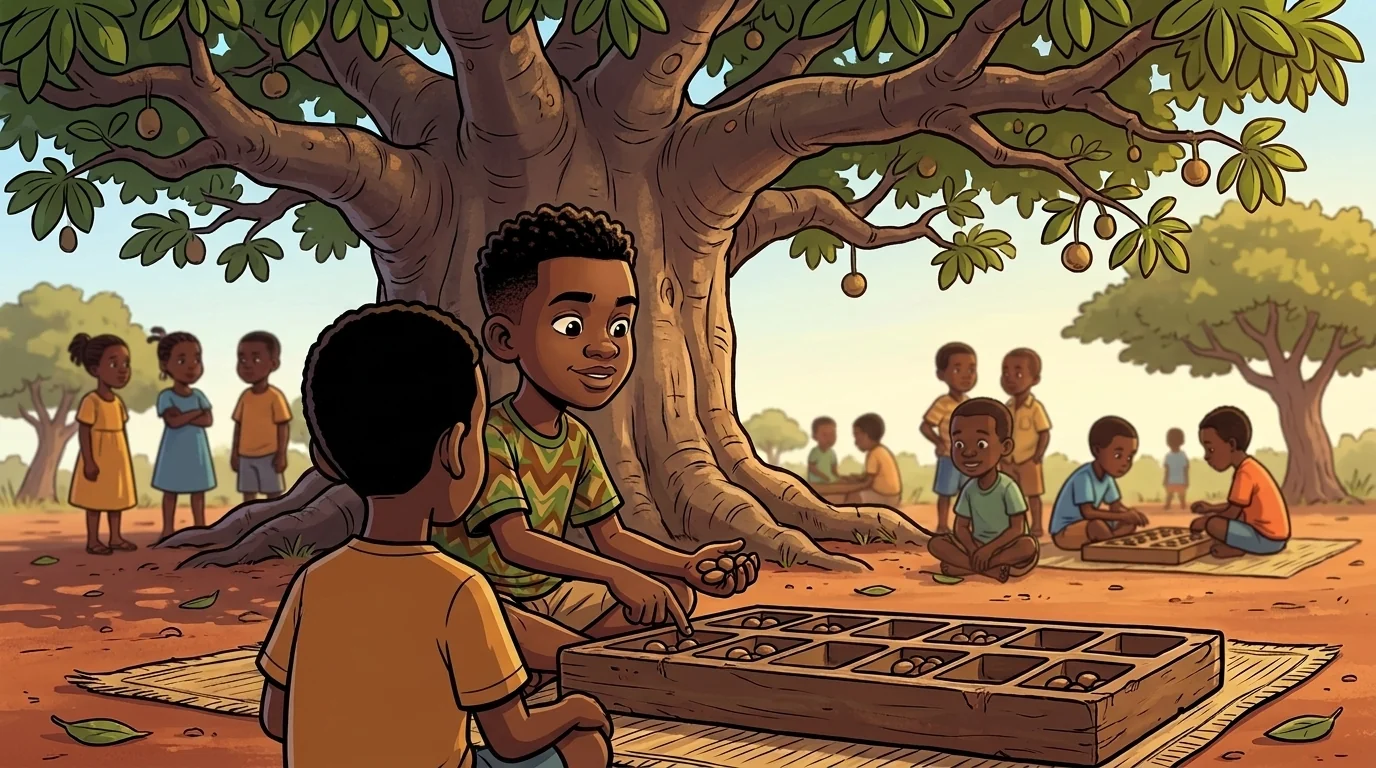
Dembe's student was a restless boy named Kofi who understood the idea of setting up but couldn't hold it — he'd start a three-turn plan, get bored or tempted on turn two, abandon it for some small shiny capture, and so never once collected the big harvest at the end of a chain he kept breaking.
"You keep starting good plans and dropping them," Dembe told him. "Look — you set this pit growing last turn for a big sweep two turns from now. This turn there's a tiny capture over here tempting you. If you grab it, you spend the very seeds your plan needed, and the big sweep dies. Hold the plan. Make the small setup move instead." He showed Kofi the quiet move that kept the chain alive. "The little capture is worth two seeds now. The plan is worth eight seeds in two turns. Don't trade the eight for the two."
Kofi, biting his lip, let the shiny little capture go and made the dull setup move instead. And two turns later — holding on, holding on — his big sow finally sprang, and eight seeds poured into his store. He stared at them. "I nearly threw that away for two," he said. "The waiting was the whole thing."
"The waiting is the move," said Dembe. "It just doesn't look like one until the end."
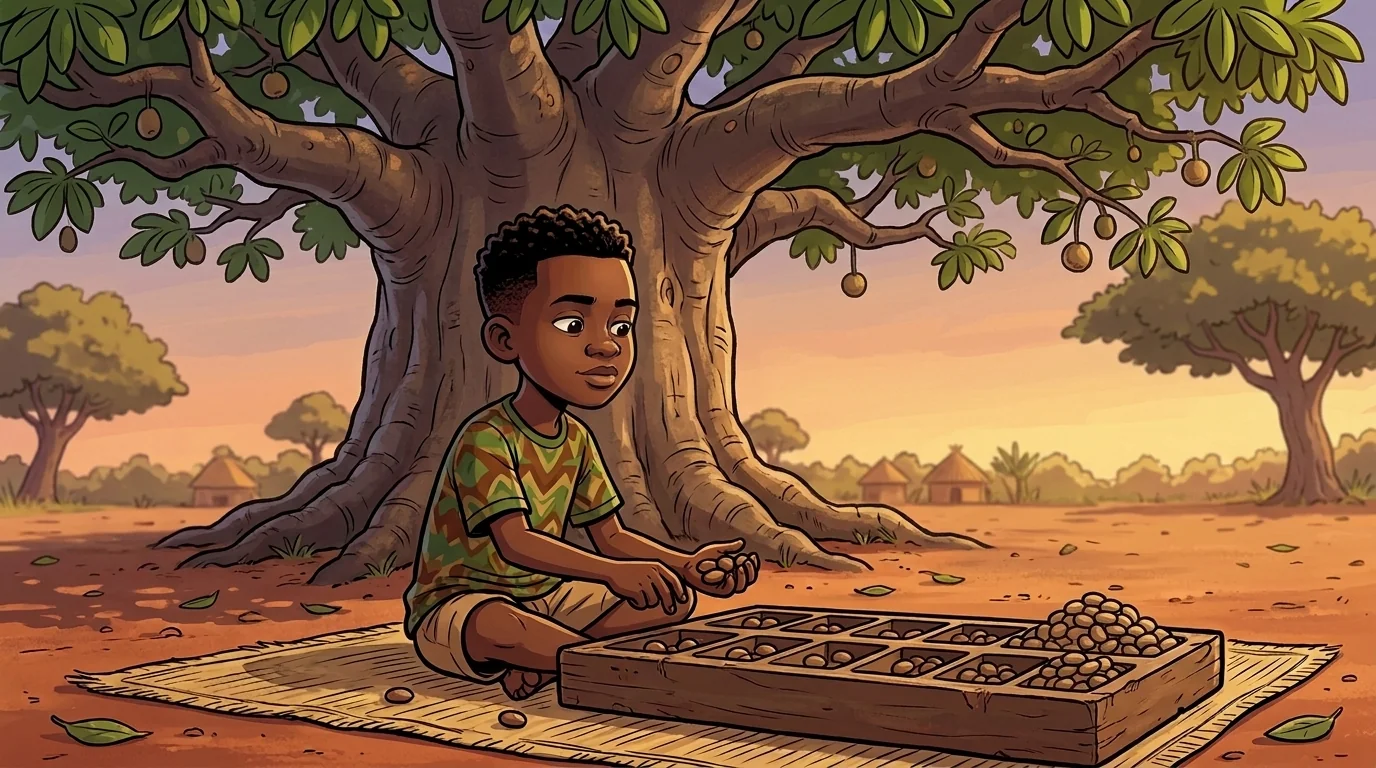
That evening Dembe sat alone at the board and set up a slow four-turn relay just for the pleasure of it — small move, small move, small move, and then the great releasing sow that sprang the whole thing at once, seeds pouring home.
He thought about the impatient boy who only ever took what was already ready, and his father's patient chain of market trades turning salt into a plough over a whole season, and how the largest, most satisfying harvests he'd ever made were invisible for turns on end — quiet arrangements that only became a triumph at the very last step. There was a slow, deep joy in it, the joy of a long plan paying off all at once, the spring you loaded turns ago finally let go.
He reset the board and sat with the calm of someone who had learned to think in more turns than one. The now-players would always have their little scraps. He would keep setting things up turns ahead, holding his plans lightly, ready to bend them — and every so often, at the end of a long patient chain, he'd feel the whole board fall into his store at once, and know that the best moves are the ones you make long before anyone can see why.
The SeedSong ensemble
Doublesow Dembe is part of SeedSong's distributed-narrative cast. Each character embodies a different curricular primitive; together they teach the full subject.
-
Sower Sefu
Sowing: pick up a pit and drop exactly one seed in each pit counterclockwise
-
Count Kesi
Counting / subitizing: read how many seeds a pit holds at a glance
-

Capture Koro
Capturing: when the last seed makes an enemy pit two or three, sweep it
-
Reap Rafiki
Multi-capture chain: read a run of 2s and 3s backward and reap them all
-

Subitize Sisi
Look-ahead arithmetic: compute the landing pit without sowing it out
-

Lapwing Lulu
Lapping: sow a full loop around the board (skipping the start pit)
-

Store-Keeper Kito
The store (kroo) + win count: bank seeds safely; the store count is the win
-
Starve-Guard Nne
The must-feed rule: when the opponent has no seeds, you must give them some
-

Pitkeeper Pemba
Building a threat: load a pit to reach a target pit exactly
-
Seedling Sanaa
Opening patterns: the first-move sowing plan
-
Endgame Enzi
Endgame count-out: force the last seeds; parity and counting to the win
-

Nana Sowing Elder
The sowing elder (mentor): poses which-sow-captures puzzles; credits the tradition warmly