Seedling Sanaa
OPENING PATTERNS — the handful of early, sensible first sowings that set up a strong position, keep your seeds working, and don't hand the other side an easy harvest
Loading audio…
Press play to listen along. The line being read lights up as you go.
Show full transcript
Loading transcript…
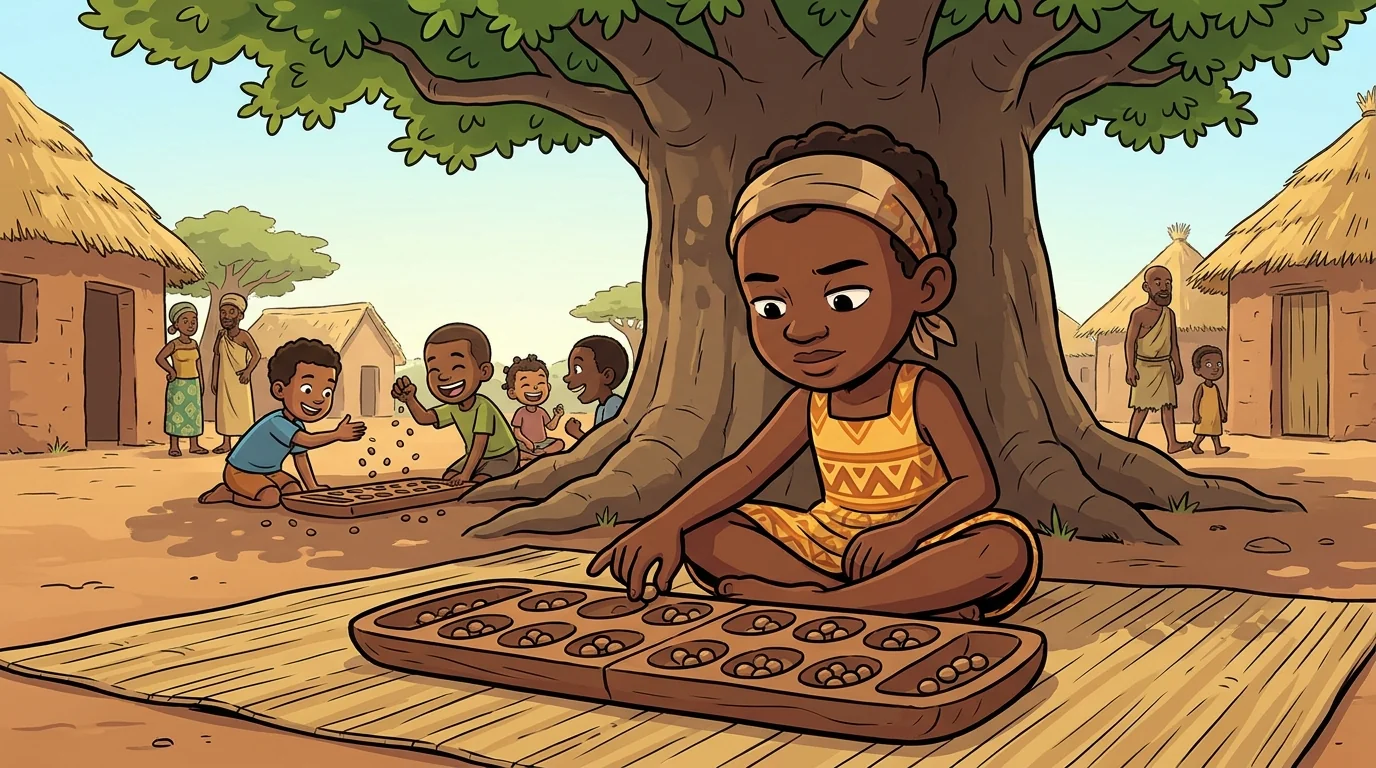
While most children at the great baobab board only got interested once the captures started flying, there was a girl named Sanaa who watched the very first moves of a game with the closest attention of all — because she believed, and was usually right, that the game was half-decided before anybody captured a thing.
Sanaa was the opener. At the start of a game, when every pit sat with its same tidy handful and nothing had happened yet, the other children sowed almost at random, just to get going. Sanaa didn't. She had learned that the first few sowings quietly shape everything: they decide which of your pits stay strong, whether your seeds keep flowing forward or pile up uselessly, and — most of all — whether you hand your opponent an easy early harvest or make them work for every seed. So she played her openings on purpose: sensible first moves that kept her seeds working, guarded her vulnerable pits, and gave the other side nothing cheap to grab.
They weren't flashy, her openings. Nobody cheered them. But by the time the middle of the game arrived and the captures began, Sanaa was almost always the one sitting in the stronger position — and it was because of the quiet, careful way she'd begun.
"Nothing even happened those first moves," a boy complained. "Why do you think so hard about them?"
"Because nothing looks like it happened," Sanaa said, "while everything is quietly being decided. A game is like a plant. How it starts is how it grows. Sow the beginning badly and you'll spend the whole rest of the game fixing it."
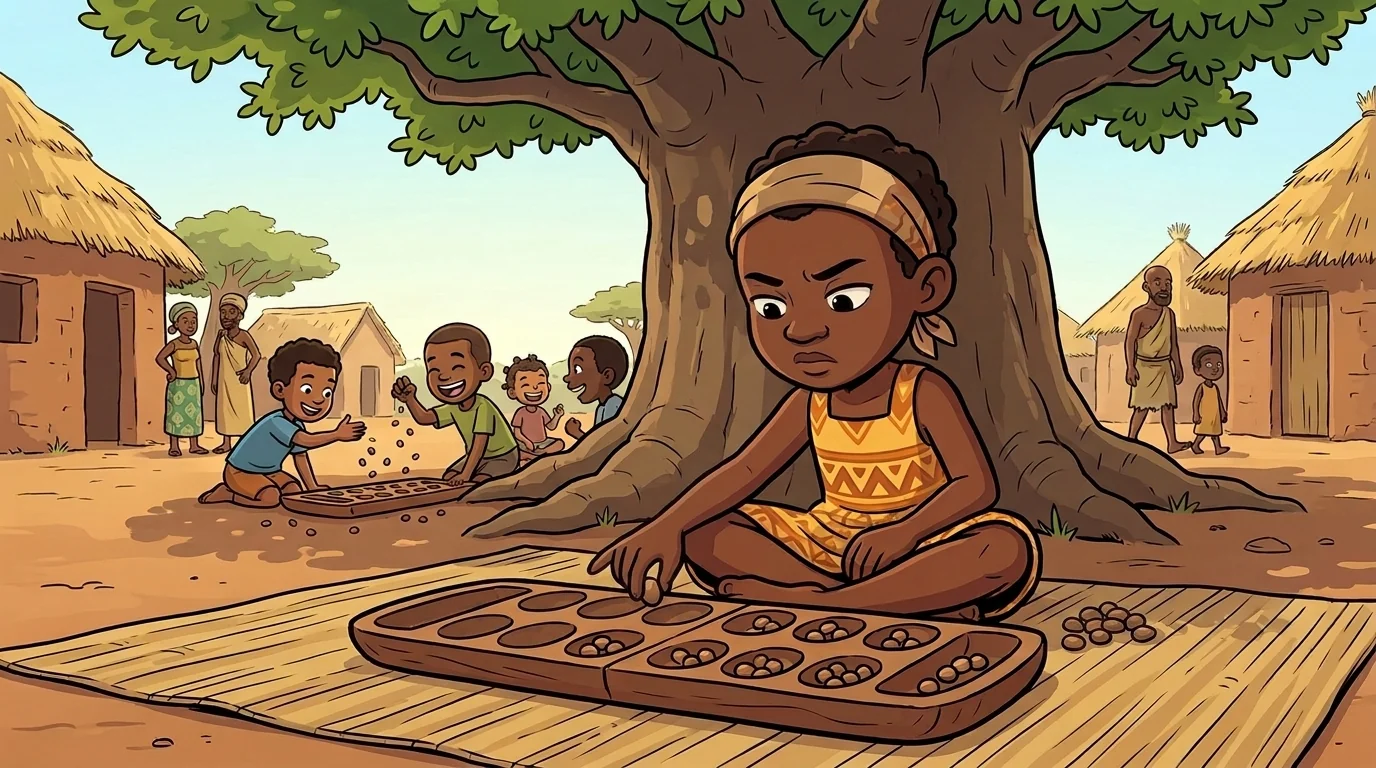
Sanaa had once been exactly like that boy — bored by openings, flinging her first few sows anywhere just to reach the interesting part — and she'd spent game after game wondering why she always seemed to be behind by the time the real fighting started, scrambling to fix weaknesses she'd carelessly built in the first minute.
The lesson came, of course, from planting. Her family began each growing season with a few days of unexciting work — clearing, spacing, choosing which seed went where — long before a single green shoot appeared. Young Sanaa had wanted to skip it and get to the fun of the harvest. Her mother wouldn't let her. "The harvest is decided now," her mother said, pressing seeds into well-spaced soil, "in the boring part, when nothing's growing yet. A field sown carelessly can't be fixed in autumn." Sanaa watched a well-begun field outgrow a carelessly-scattered one all season long, and it rearranged her whole idea of beginnings. She brought it to the board: the opening isn't the boring bit before the game. The opening is the game, planted.

Nana the Sowing Elder sat her at a fresh board, every pit full and even, nothing yet played.
"Show me your first three moves," Nana said. "The part everyone rushes."
Sanaa didn't rush. Her first sow kept her seeds flowing forward and left no thin pit an opponent could pounce on. Her second quietly strengthened her side while nudging the enemy's seeds into shapes she could use later. Her third set up a flow that would keep feeding her good pits for many turns to come. She built no capture — it was far too early — but by her third move her side of the board sat balanced, flowing, and hard to attack, while a careless opener across from her would already have been full of soft spots.
Nana smiled her slow, pleased smile. "Every child here yawns through the opening and wonders, ten moves later, why their board is a mess," she said. "You plant the opening like a field, and reap the ease of it all game long. That is the rarest patience of all — to care about the part where nothing seems to be happening. Sit at my board, Sanaa. Teach these children that a game is won or lost in how it begins — and teach the good openings as habits, not as chains."
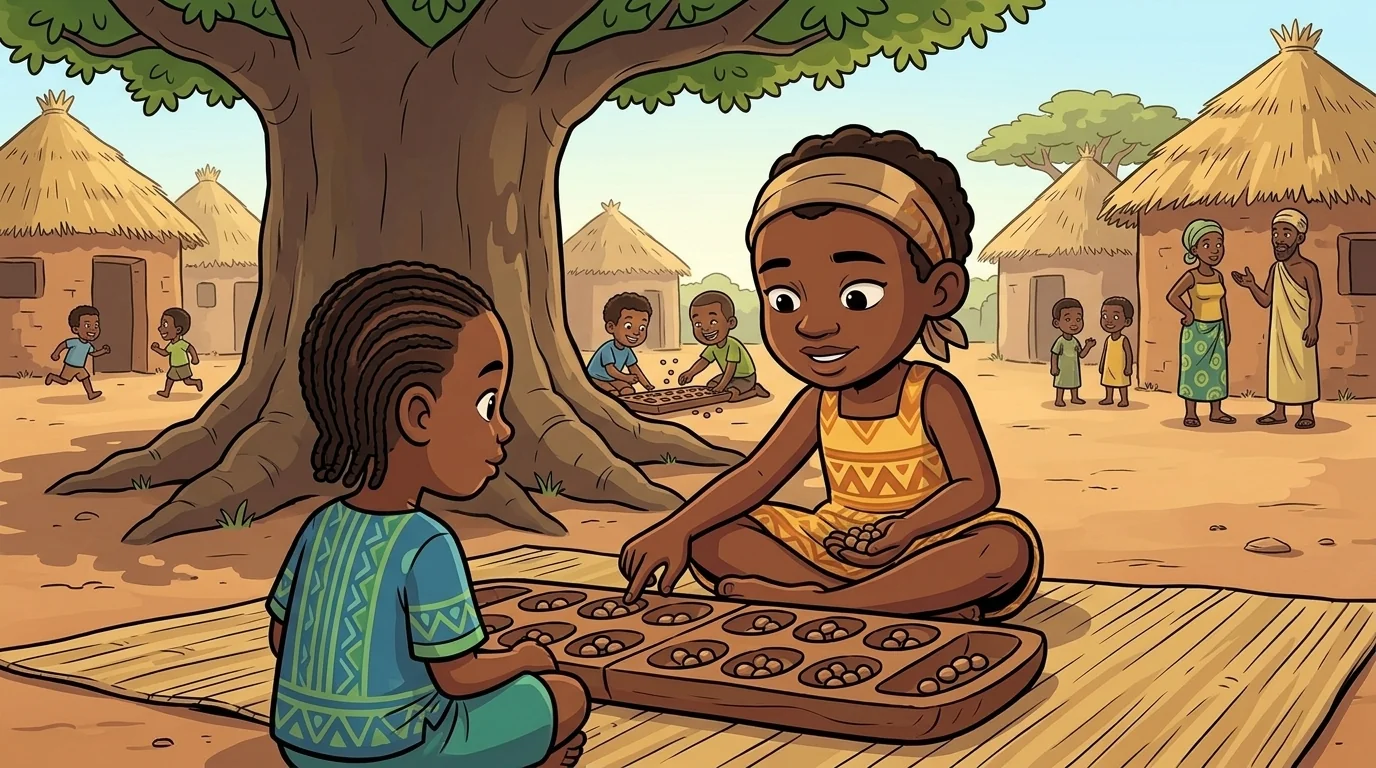
Sanaa's student was an impatient girl named Efia who slapped down her first moves anywhere and then spent the whole game in trouble. But Efia had the opposite danger too, once Sanaa showed her a few good openings: she started following them rigidly, playing the memorised first moves even when the game in front of her called for something else.
"Good — you've learned some sensible openings," Sanaa told her. "Now here's the harder part. These aren't laws. They're good habits — sensible ways to begin most games. But look at this board: your opponent's already done something unusual, so your memorised move doesn't fit here. You have to see the game in front of you and bend the habit to it." She showed Efia where the standard opening would walk straight into trouble, and where a small change kept its spirit while answering what the opponent had actually done. "Learn the patterns so well you don't have to think about them — and then be willing to leave them the moment the real game asks you to."
Efia tried it: she played her sensible openings by habit when the game was ordinary, and bent them, once, when her opponent did something strange — and came out of the opening strong either way. "So I learn the good start," she said slowly, "but I don't marry it."
"Learn it like a friend, not a cage," said Sanaa. "The pattern serves the game, not the other way round."
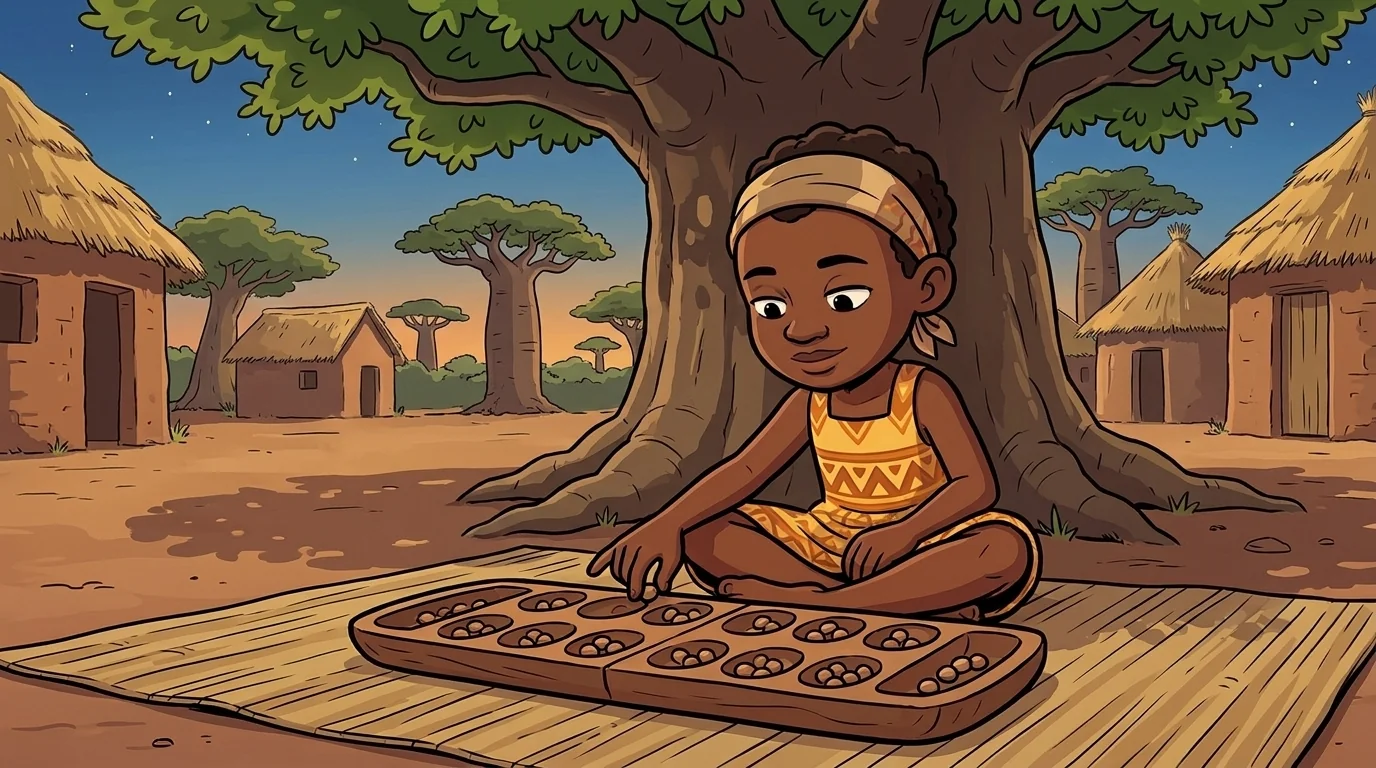
That evening Sanaa sat at a fresh, full board under the baobab and played the first few quiet moves of a game just to feel them — the careful planting of a beginning, nothing captured, everything set up.
She thought about the impatient girl who used to fling her openings and spend all game paying for it, and her mother's well-spaced planting deciding the harvest months before a shoot appeared, and how the part of the game nobody watched was the part that quietly decided all the parts they did. There was a gardener's contentment in it — the deep, forward-looking pleasure of beginning something well, of knowing that a careful start was a gift you gave your future self.
She looked at the balanced board she'd planted and felt the calm of someone who had learned to love beginnings. Let the others rush to the captures. She would keep tending the openings — the quiet, decisive first moves — and she would teach them as friends and not as cages, so that every child at this board learned the oldest truth of any growing thing: that how you begin is, very nearly, how you end.
The SeedSong ensemble
Seedling Sanaa is part of SeedSong's distributed-narrative cast. Each character embodies a different curricular primitive; together they teach the full subject.
-

Sower Sefu
Sowing: pick up a pit and drop exactly one seed in each pit counterclockwise
-

Count Kesi
Counting / subitizing: read how many seeds a pit holds at a glance
-

Capture Koro
Capturing: when the last seed makes an enemy pit two or three, sweep it
-
Reap Rafiki
Multi-capture chain: read a run of 2s and 3s backward and reap them all
-

Subitize Sisi
Look-ahead arithmetic: compute the landing pit without sowing it out
-
Lapwing Lulu
Lapping: sow a full loop around the board (skipping the start pit)
-

Store-Keeper Kito
The store (kroo) + win count: bank seeds safely; the store count is the win
-
Starve-Guard Nne
The must-feed rule: when the opponent has no seeds, you must give them some
-

Pitkeeper Pemba
Building a threat: load a pit to reach a target pit exactly
-

Doublesow Dembe
Staging / relay: stage seeds across turns to set up a big sweep
-

Endgame Enzi
Endgame count-out: force the last seeds; parity and counting to the win
-

Nana Sowing Elder
The sowing elder (mentor): poses which-sow-captures puzzles; credits the tradition warmly