Starve-Guard Nne
THE MUST-FEED RULE — if your opponent has no seeds at all on their side, you are obliged to make a move that puts seeds into their pits, so they can keep playing; you may never simply starve them out
A story read by Starve-Guard Nne
Loading audio…
Press play to listen along. The line being read lights up as you go.
Show full transcript
Loading transcript…
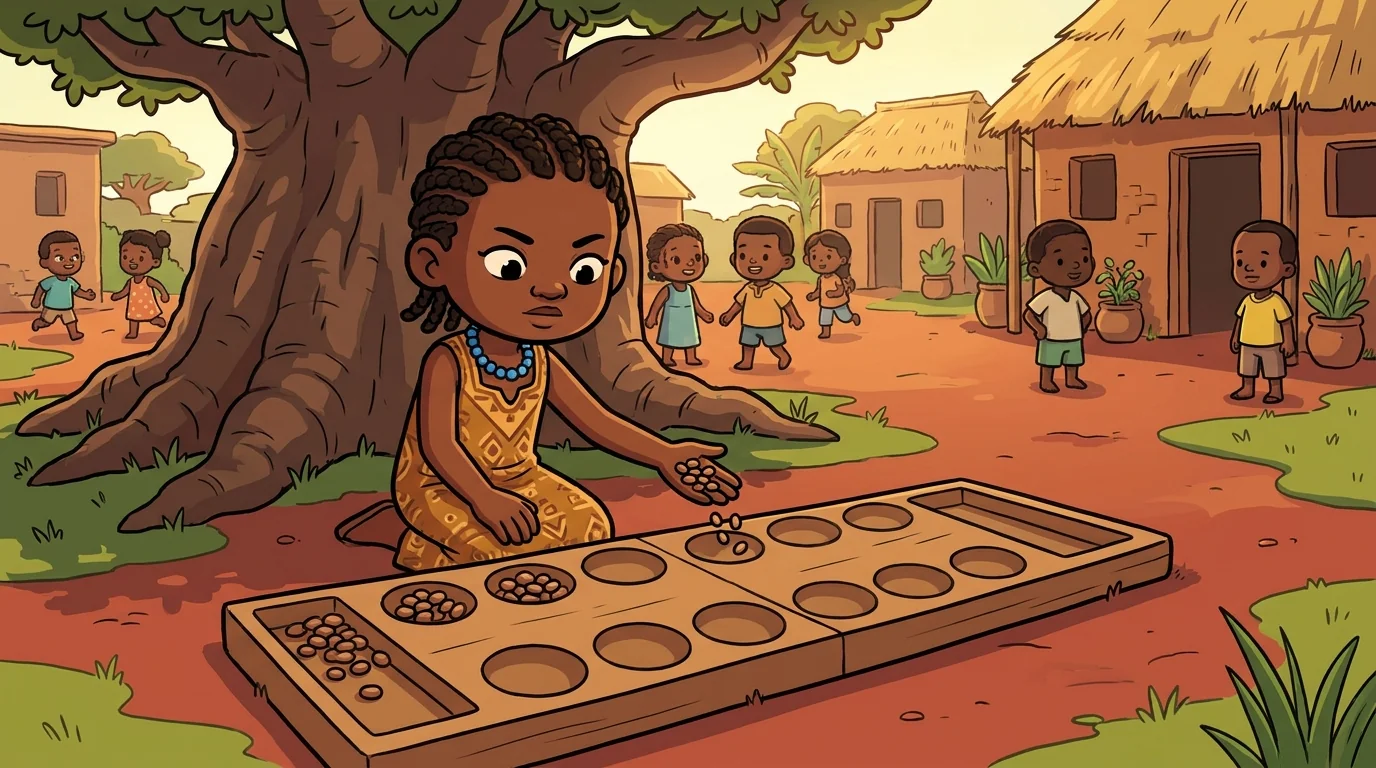
There was a rule at the great baobab board that most children forgot until it caught them, and there was a girl named Nne who never forgot it, because it was the very thing she stood for.
The rule was this: you may not starve the other side. If your opponent's whole row of pits sits empty — not a single seed left for them to move — then you cannot just play whatever you like on your own side and leave them stuck with nothing to do. You are obliged to make a move that sends seeds across into their empty pits, so they have something to play with and the game can go on. Whatever you might want to do, if only one of your moves feeds the starving side, that is the move you must make.
Nne guarded this rule fiercely. When an opponent's row went bare, she would scan her own pits, find the sow that carried seeds across the board into their empty houses, and make it — even when part of her would rather have done something else — because that was the law of the board, older than any of them, and it kept the game from ending in a mean, sudden stop.
"Why would you give them seeds?" a boy demanded, scandalised, watching Nne sow across into her opponent's empty side. "You're supposed to be beating her!"
"I am beating her," Nne said calmly. "But I can't starve her. If she's got nothing, I have to feed her — that's the rule. You don't win by leaving the other person with an empty board. You win with the count, fairly, while they can still play."
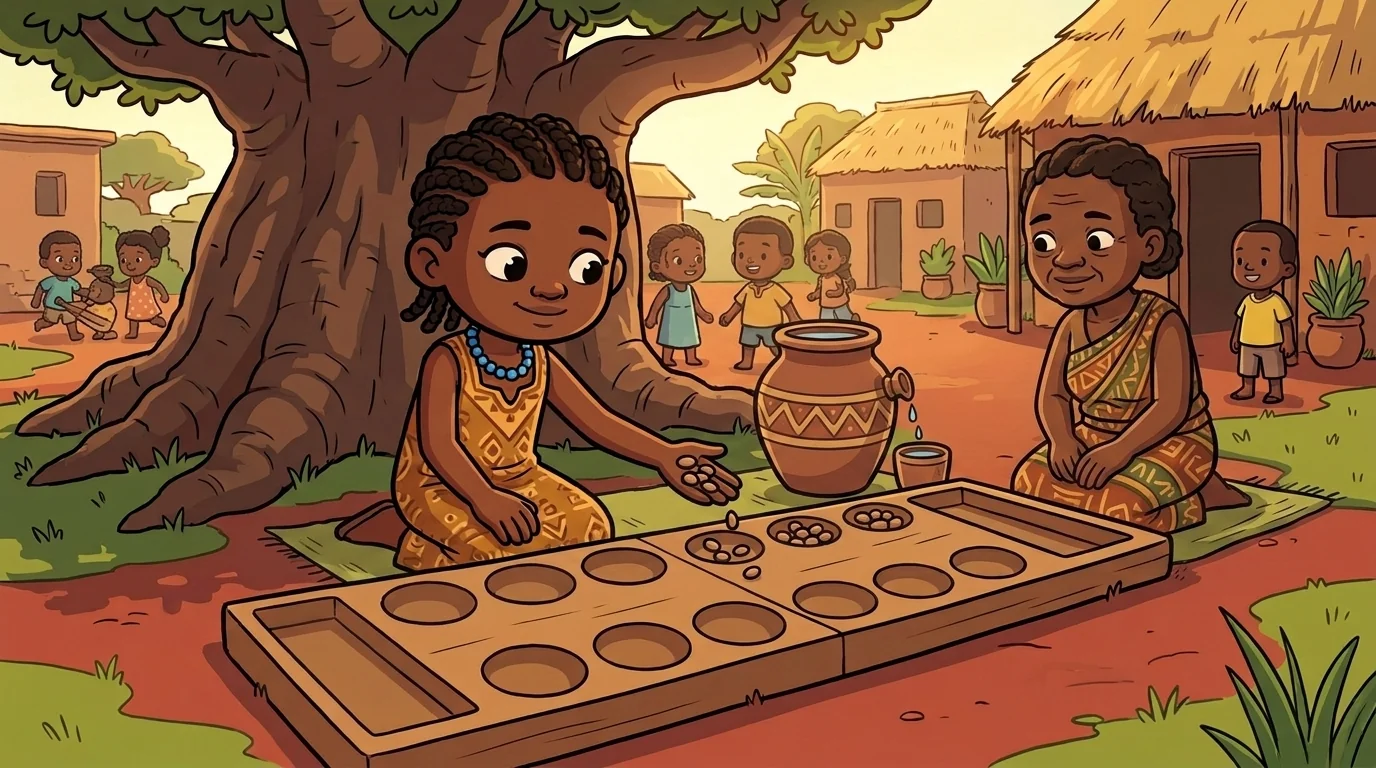
Nne had once broken the rule without even knowing it — and worse, she'd tried to use starving as a trick. Early on she'd noticed she could sometimes leave an opponent with no seeds and thought, cleverly, good, now they can't move, I've trapped them. And an elder had quietly stopped the game and shown her the leftover seeds sitting on her own side, and explained the part she'd missed.
The understanding came from the well again — or rather from the water-jar custom of her village. There was an old way, when you drew water, of always leaving the dipper full for the next person, and never draining the last of a shared jar without refilling it. "You never leave the next hands empty," her aunt had told her, tipping a little water back. "Not because they'll thank you — because that's how we keep the water going." Nne had carried that to the board and finally understood: the feeding rule wasn't softness. It was the thing that kept the whole game alive long enough for the honest count to decide it. You don't win by shutting the game down. You win by keeping it going and holding the better store.
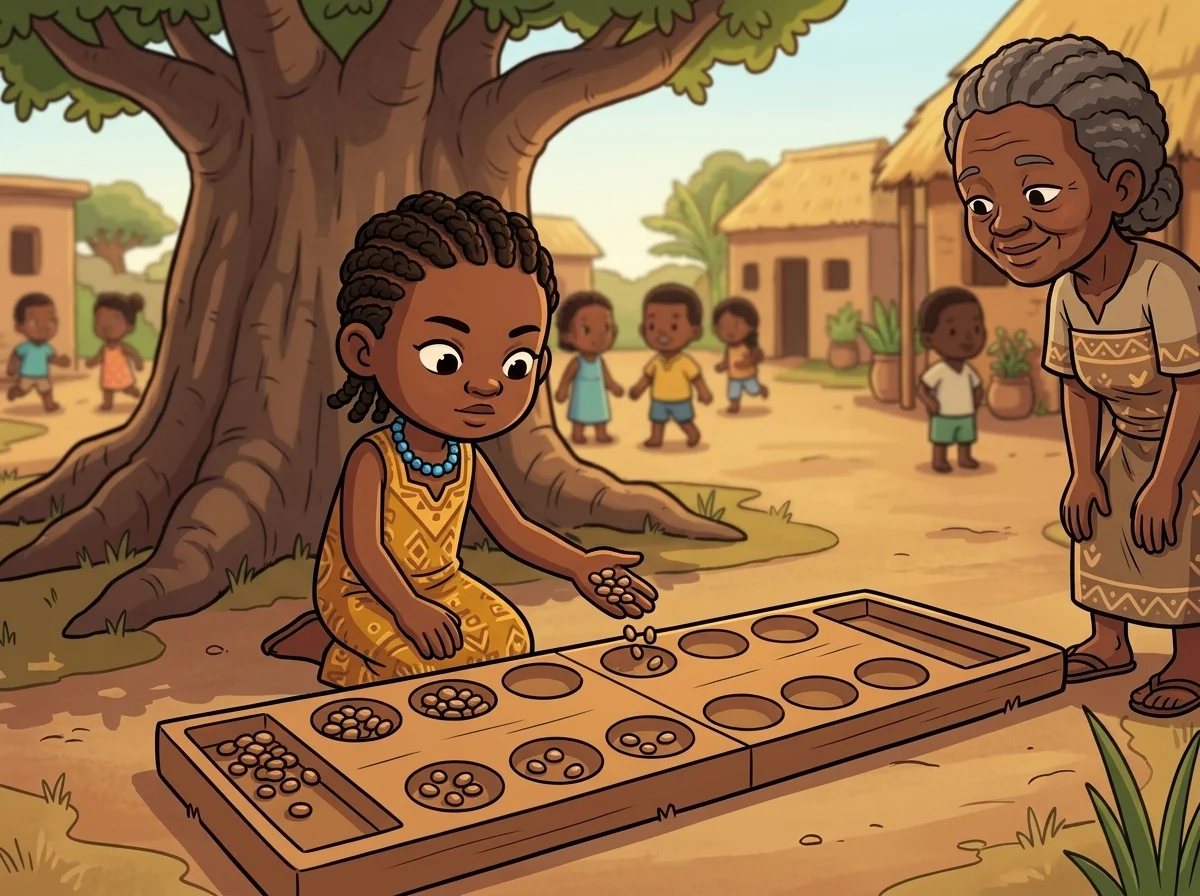
Nne's real test came the day she found herself with a move she loved — a fat, tempting sow on her own side that would have set up a lovely capture — at the very moment her opponent's row had gone completely empty.
Nana the Sowing Elder was watching. "Well?" the Elder said, giving nothing away.
Nne looked at her beautiful, tempting, selfish move. And she looked at her opponent's bare pits. And she looked for the other move — the one that carried seeds across into those empty houses. It was a plainer move. It gave up her lovely capture. But it was the only sow on the board that fed the starving side, so it was the only sow she was allowed to make. She made it, sending seeds across into her opponent's empty row, letting the pretty capture go.
Nana let out a long, satisfied breath. "Every child at this board, sooner or later, sits exactly where you just sat," she said. "A move they want in one hand, the feeding rule in the other. Most of them, the first time, take the move they want and break the law and never even notice. You gave up the sow you loved to keep the game honest. Sit at my board, Nne. Teach these children the rule that guards their opponents — because a child who learns to be fair to the person across the board has learned the deepest thing this game has to teach."
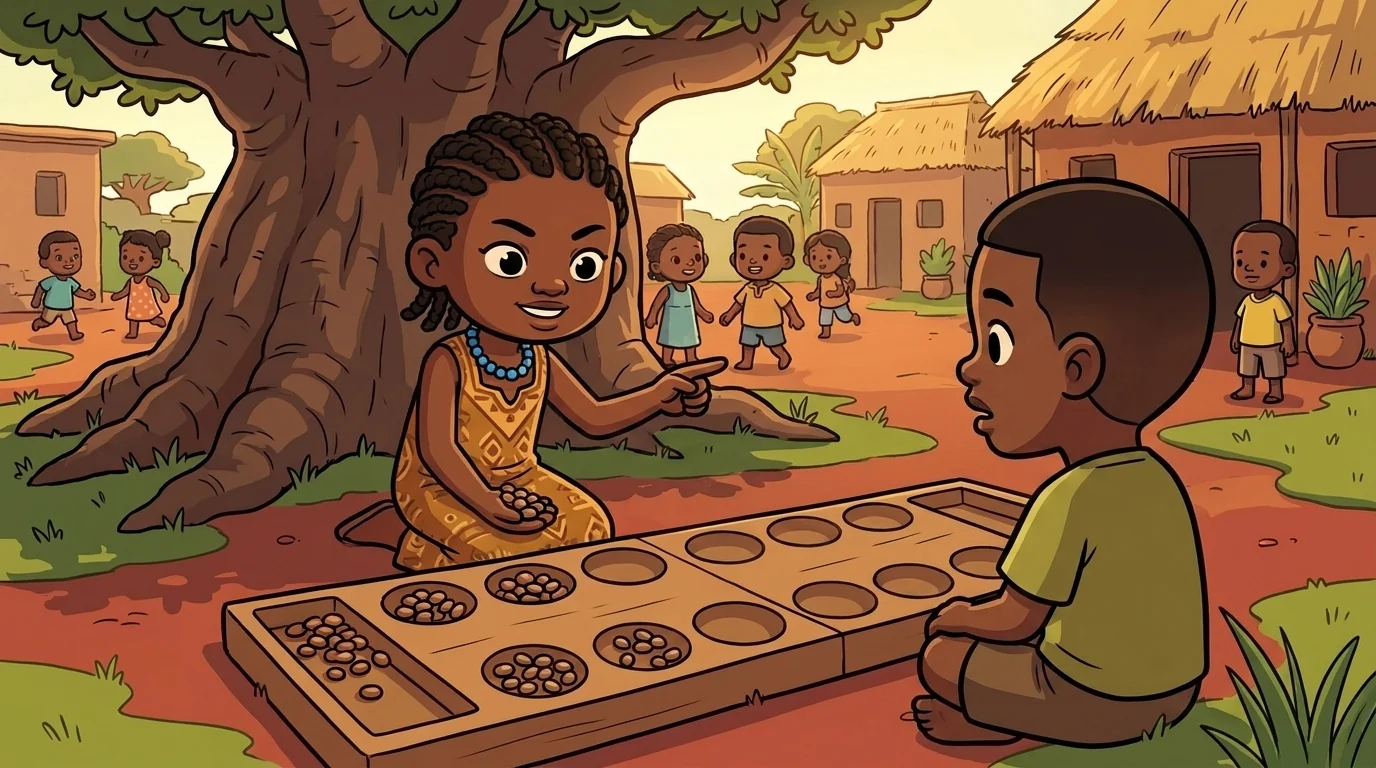
Nne's student was a sharp, competitive boy named Sefwe who'd just discovered the starving trick and thought it was the cleverest thing in the world. He'd emptied his opponent's row and was gleefully setting up to play on his own side and leave her stuck.
"You can't do that," Nne told him. "Look — her side's empty. You're not allowed to just play your own pits and strand her. You have to feed her. Find the move that sends seeds across." Sefwe protested that it was stupid to help someone he was beating — and Nne surprised him. "It's not only fair, it's smart," she said. "Here's what you missed: if you truly couldn't feed her at all — if no move of yours reached her side — then the game would end right there, and all the leftover seeds on your own side would go into her store, not yours. Starving her doesn't trap her. It hands her your leftovers." Sefwe's mouth opened. He'd thought starving was a win. It was closer to a loss.
He found the feeding move, grumbling, and made it. And a few turns later, playing the honest count instead of the mean trap, he won properly — by the store, fair and clear. "Feeding her kept my leftover seeds mine," he said, working it out. "The fair thing was the winning thing."
"It usually is, at this board," said Nne. "That's not an accident."
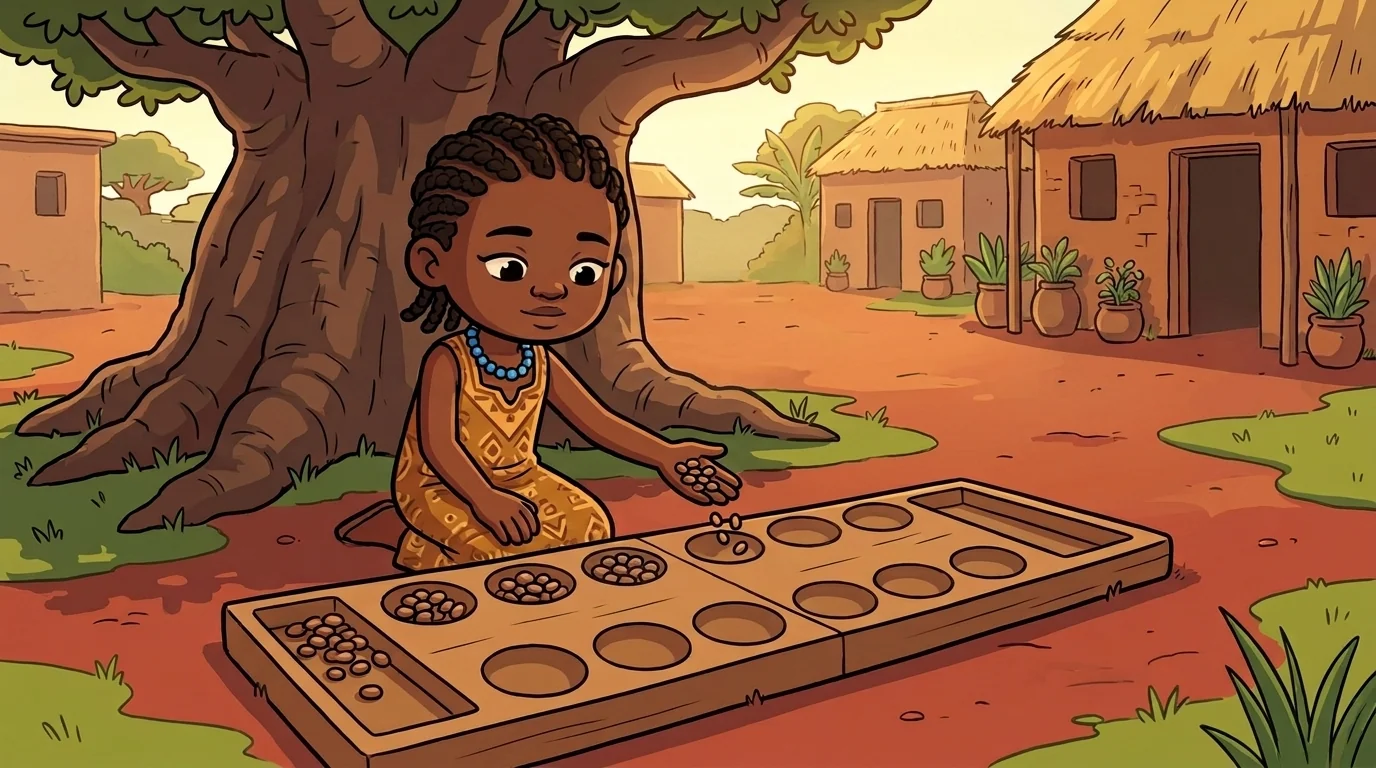
That evening Nne sat alone and set up an empty opponent's row just to practice the thing she guarded — finding, among all her pits, the one sow that reached across and fed the bare side.
She thought about the girl who'd once thought starving was a clever trap, and the dipper always left full for the next hands, and how the rule she loved best on the whole board was the one rule that protected the person she was trying to beat. There was a quiet, upright gladness in it — the gladness of playing a game that would not let you be cruel to win, that built kindness right into its bones and then, wonderfully, made the kind move the wise one too.
She sowed her practice seeds across into the empty pits and watched the far side come back to life, ready to play on, and a warm, upright gladness rose in her at the sight — the settled, unashamed happiness of someone who had learned that you keep the game, and everything else worth keeping, going; that you never leave the other hands empty; and that being fair had never once, at this board, made her feel small — only, quietly, glad.
The SeedSong ensemble
Starve-Guard Nne is part of SeedSong's distributed-narrative cast. Each character embodies a different curricular primitive; together they teach the full subject.
-
Sower Sefu
Sowing: pick up a pit and drop exactly one seed in each pit counterclockwise
-
Count Kesi
Counting / subitizing: read how many seeds a pit holds at a glance
-

Capture Koro
Capturing: when the last seed makes an enemy pit two or three, sweep it
-
Reap Rafiki
Multi-capture chain: read a run of 2s and 3s backward and reap them all
-

Subitize Sisi
Look-ahead arithmetic: compute the landing pit without sowing it out
-
Lapwing Lulu
Lapping: sow a full loop around the board (skipping the start pit)
-
Store-Keeper Kito
The store (kroo) + win count: bank seeds safely; the store count is the win
-

Pitkeeper Pemba
Building a threat: load a pit to reach a target pit exactly
-

Doublesow Dembe
Staging / relay: stage seeds across turns to set up a big sweep
-
Seedling Sanaa
Opening patterns: the first-move sowing plan
-
Endgame Enzi
Endgame count-out: force the last seeds; parity and counting to the win
-

Nana Sowing Elder
The sowing elder (mentor): poses which-sow-captures puzzles; credits the tradition warmly