Sower Sefu
SOWING — lift all the seeds from one pit and drop exactly ONE seed in each pit that follows, counterclockwise, one house at a time
Loading audio…
Press play to listen along. The line being read lights up as you go.
Show full transcript
Loading transcript…
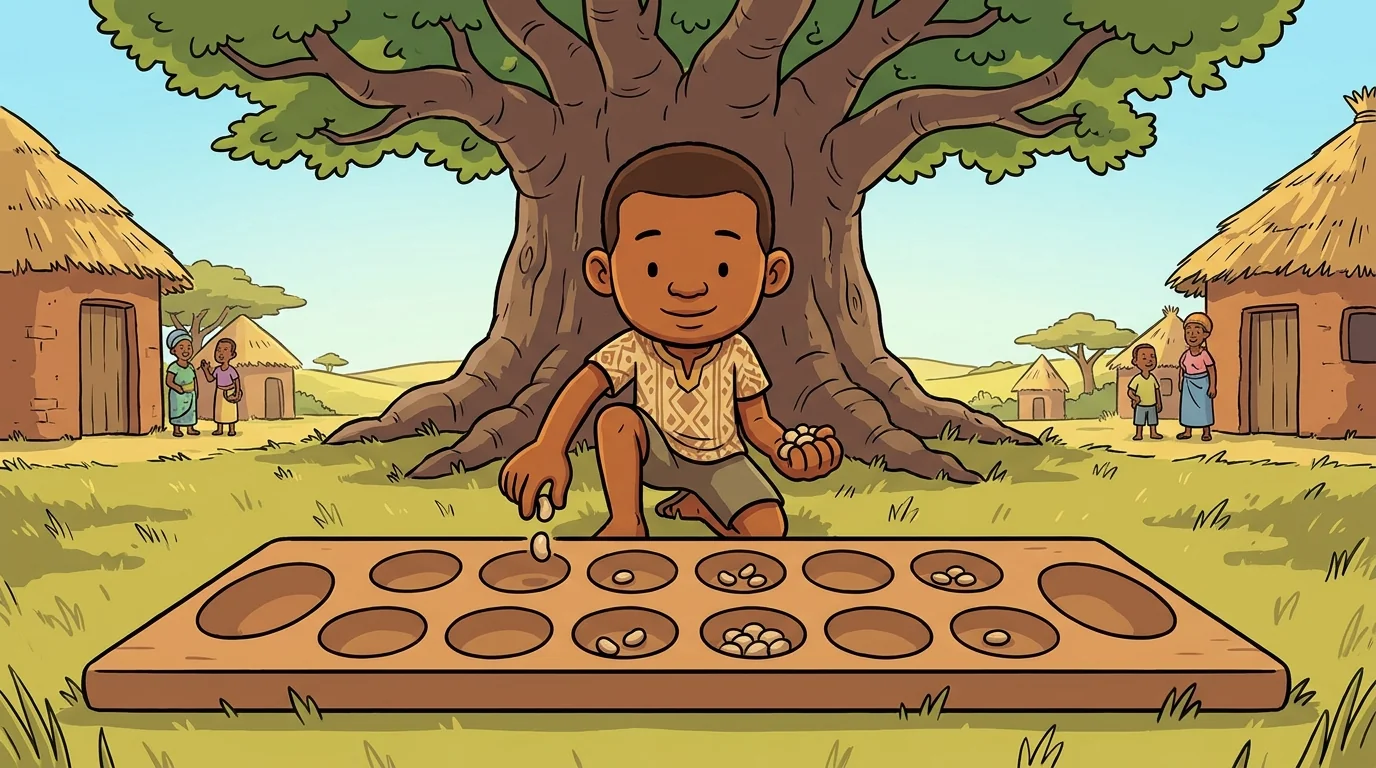
Under the wide old baobab at the heart of the village, on a board of two long rows of six pits with a great store-house cupped at each end, a boy named Sefu was sowing seeds — and he was doing it the way he did everything, one at a time.
Sefu would scoop up all the little seeds from a single pit, close them warm in his fist, and then walk them around the board counterclockwise, dropping exactly one seed into the very next house, and one into the house after that, and one into the one after that — never two in a pit, never none, never skipping a house because he was tired of it. One seed, one home. One seed, one home. He went all the way round the ring of pits like that, spilling his handful evenly, until the last seed fell and his fist was empty.
The elders called this the sowing, and it was the oldest thing anyone did at the board — a game the grandmothers of grandmothers had carried across the grasslands long before there was a village here to play it in. Everything clever that ever happened on those two rows of pits, every sweeping capture and every long clever chain, started with somebody doing exactly what Sefu did: taking a fistful of seeds and giving one, fairly, to each house in turn.
"You could go faster," a small girl told him once, watching him drop seed after single seed. "You could just dump them."
"I could," Sefu agreed, letting the next seed fall into the next pit. "But then some houses would get three and some would get none. This way everybody gets one. That's the whole trick of it. One each."
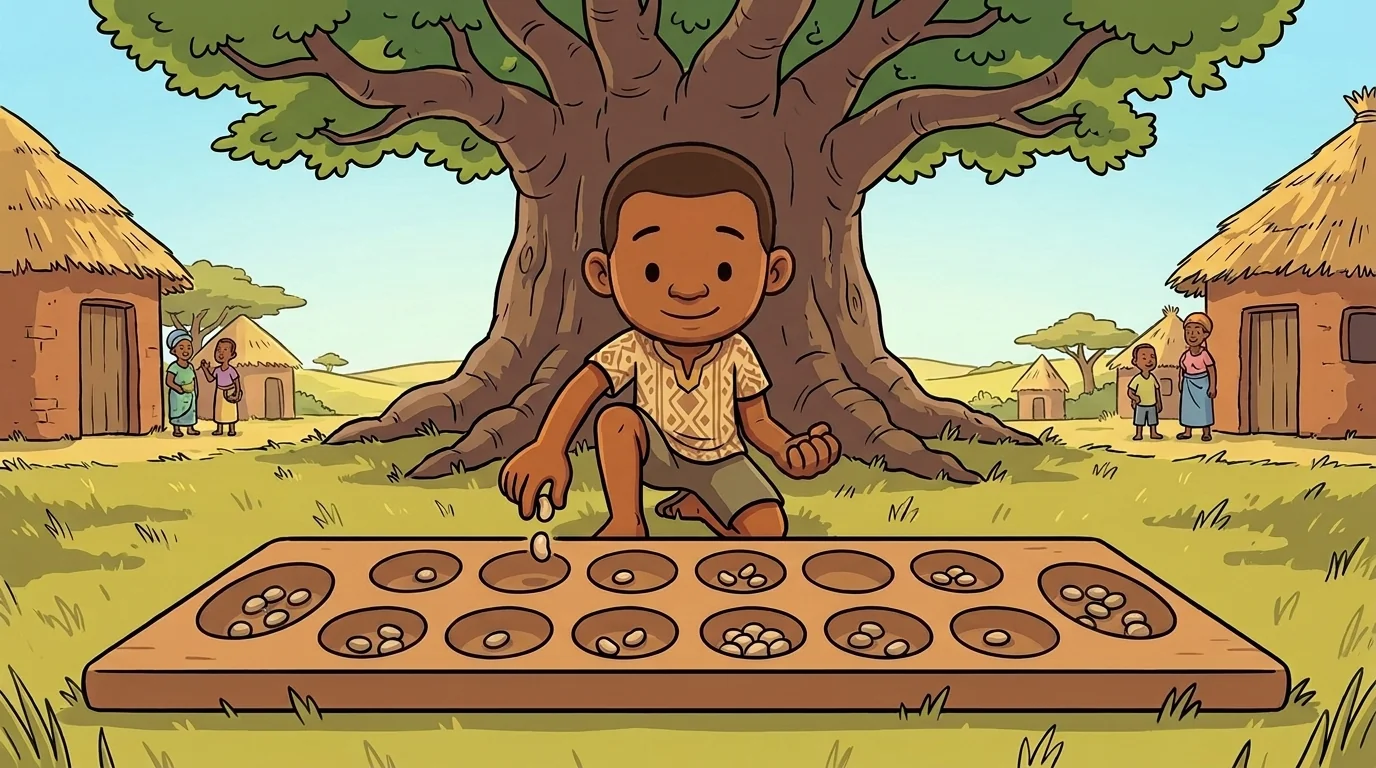
Sefu had not always been so patient. When he was very small he had hated the sowing — it felt slow and fussy, like being made to greet every single person in a long line when he only wanted to reach the food at the end.
The turning came the season the rains were late and the whole village had to plant the millet field together. Sefu had grabbed a big handful of grain and flung it across his row of soil in a great spray, proud of how fast he was — and his grandmother had come along behind him, shaking her head at the bare gaps and the crowded clumps where nothing would grow well. Then she had knelt and shown him: one seed, pressed into one little hole, a hand-width on to the next hole, one seed there. Slow. Even. Every stretch of soil given exactly one chance.
"The field is the board and the board is the field," she'd said. "You cannot cheat a row of soil, and you cannot cheat a row of pits. Go past a house without giving it its seed, and later you will wonder why nothing came up there." Sefu had watched the even rows she planted come up thick and green weeks later while his flung patch grew ragged, and something in him settled. He did not need to be fast. He needed to be fair to every house he passed.
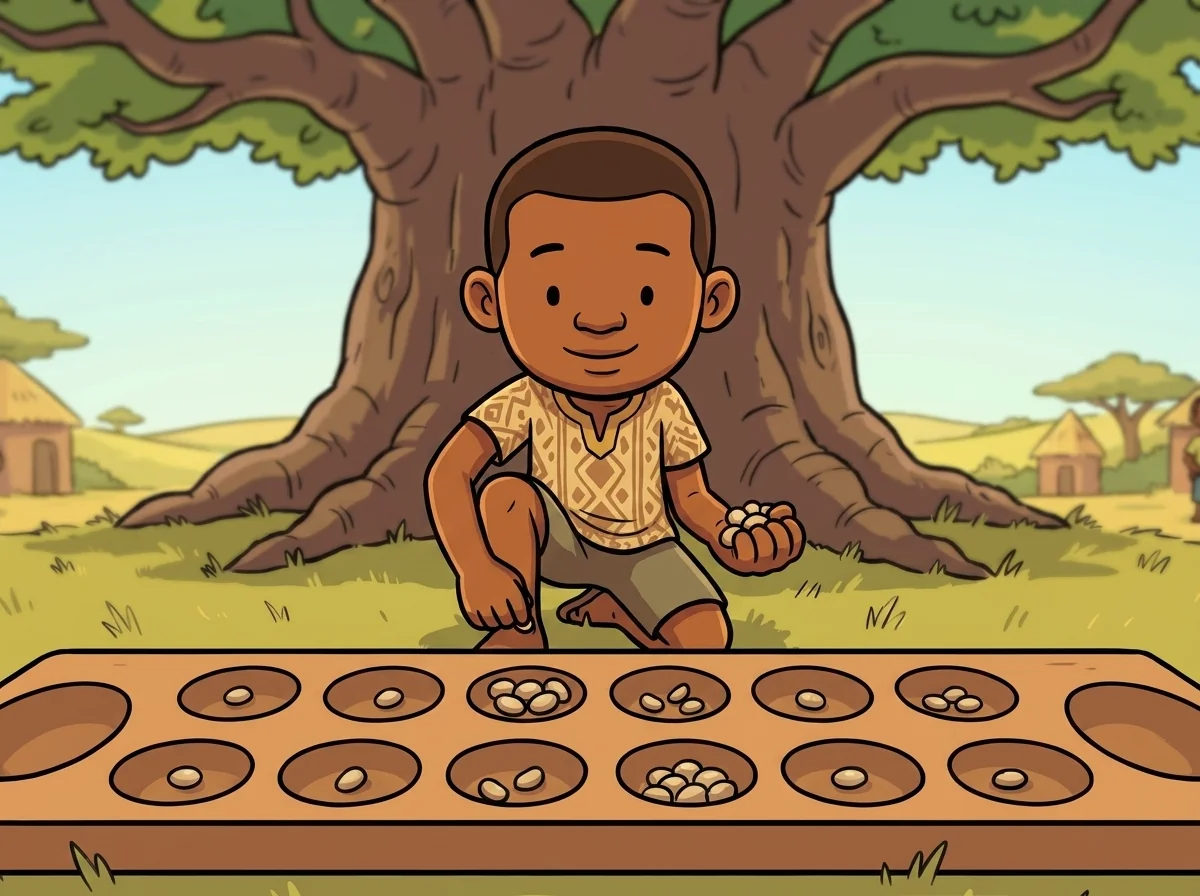
When Sefu was old enough, Nana the Sowing Elder — who kept the great baobab board and taught the village children its ways — beckoned him to sit across from her.
"They tell me you are slow," Nana said, her eyes bright and teasing.
"They tell me that too," said Sefu.
"Show me your slow." Nana pointed at a pit heavy with seeds. Sefu scooped it clean, and began to walk the handful around the ring — one into this house, one into that, calm and unhurried, his lips moving very slightly with the count, until the last seed dropped softly into place. Not one pit had been skipped. Not one had been doubled. Nana looked at the tidy, even trail he had laid down all around her board and smiled the smile she saved for something done properly.
"Child," she said, "that is not slow. That is sure. Any wild player can throw seeds. Only a real one can promise every house exactly what it is owed and then keep the promise all the way round the board. Sit here at my board. You will teach the fair drop, and everything else these children learn will stand on top of it."
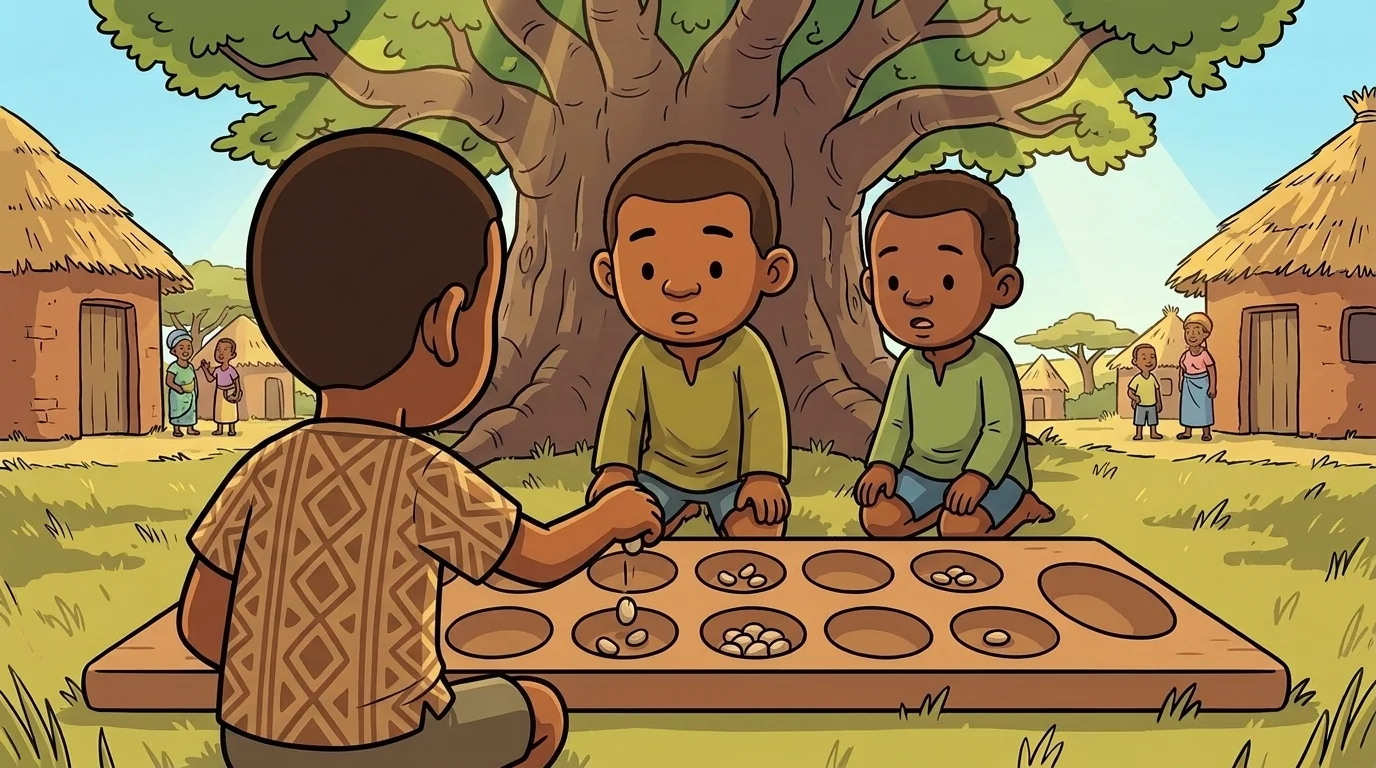
Sefu's first student was a restless boy named Bonzi who wanted only to capture, capture, capture, and who dumped his seeds in careless heaps trying to make big things happen fast. His seeds landed anyhow — three here, none there — and his grand plans kept collapsing because he never actually knew where his last seed would fall.
"You keep missing the pit you're aiming for," Sefu told him. "Watch why." He took Bonzi's fat pit of seeds and sowed it the fair way — one, one, one, one — landing each seed in the next house down the line, and his hand came to rest with the final seed in exactly the pit Bonzi had been hoping to reach all along. "See? I didn't guess. I gave one to every house between here and there, so I knew precisely where I'd end. Your dumping throws the count away. The one-at-a-time way is how you steer."
Bonzi tried it. He picked up a pit, and instead of flinging, he made himself set down one seed per house, saying each one under his breath. His hand stopped, at last, exactly where he'd meant it to. He stared at the neat trail he'd laid. "It landed where I wanted," he said, astonished. "I didn't hope. I knew."
"That's the difference," said Sefu. "Dumping is wishing. Sowing is knowing."
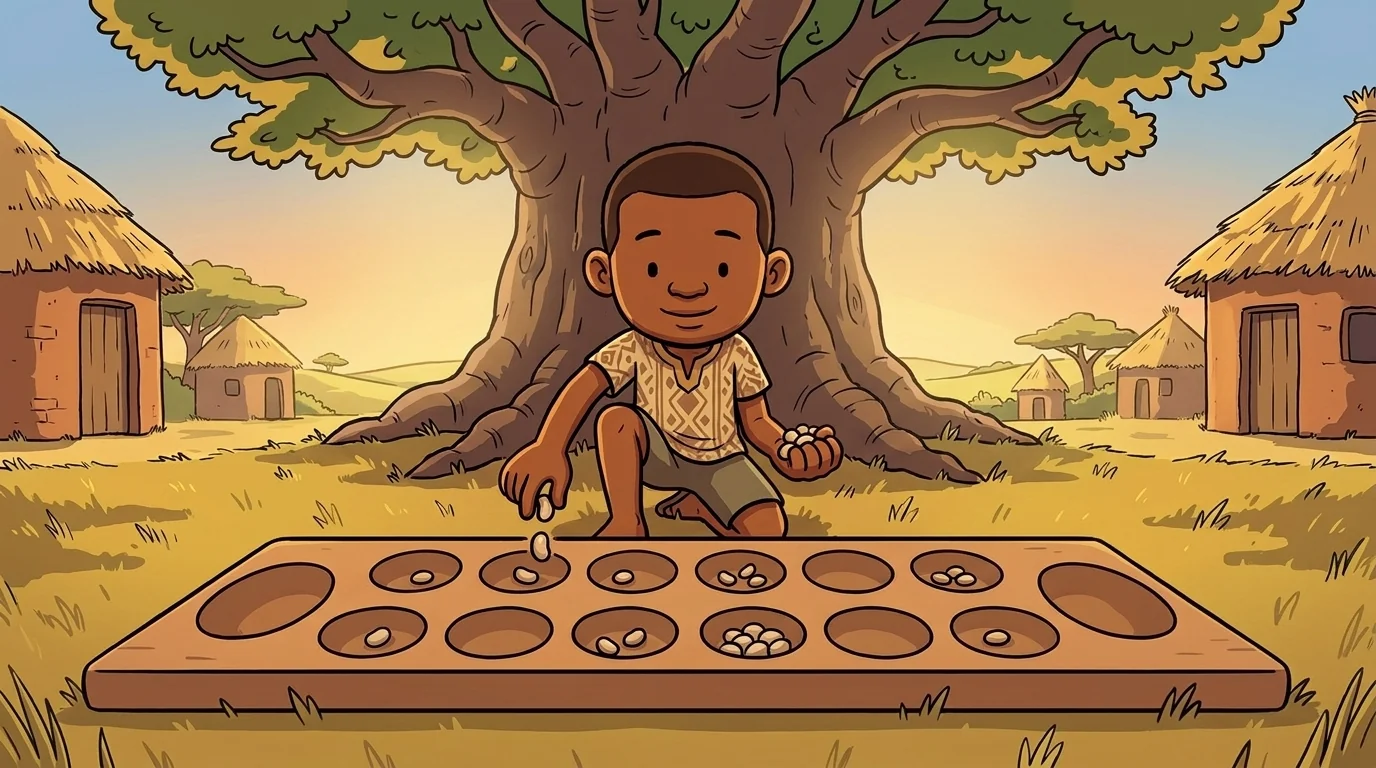
That evening, when the other children had gone and the board sat quiet in the last gold light under the baobab, Sefu sowed one slow handful all by himself, just to feel it — one seed into one house, all the fair way round.
He thought about the small boy who had flung grain across a field and grown a ragged, gappy patch, and about his grandmother's even green rows, and about how nobody ever cheered the sowing the way they cheered a big capture. His part of the game was the plainest part. It made no crowd gasp. And yet every clever thing that happened on this board, every sweep and chain the loud players were so proud of, sat on top of a quiet handful of seeds given fairly, one to each house, by somebody willing to go all the way round without skipping.
There was a deep, steady gladness in that — the gladness of being the ground other things grew from. Sefu did not mind being overlooked. Let them cheer the captures. He would keep giving one seed to every house he passed, sure as sunrise, and the whole beautiful game would go on standing on his even little rows. He closed his empty fist, and it felt, somehow, full.
The SeedSong ensemble
Sower Sefu is part of SeedSong's distributed-narrative cast. Each character embodies a different curricular primitive; together they teach the full subject.
-
Count Kesi
Counting / subitizing: read how many seeds a pit holds at a glance
-

Capture Koro
Capturing: when the last seed makes an enemy pit two or three, sweep it
-
Reap Rafiki
Multi-capture chain: read a run of 2s and 3s backward and reap them all
-

Subitize Sisi
Look-ahead arithmetic: compute the landing pit without sowing it out
-
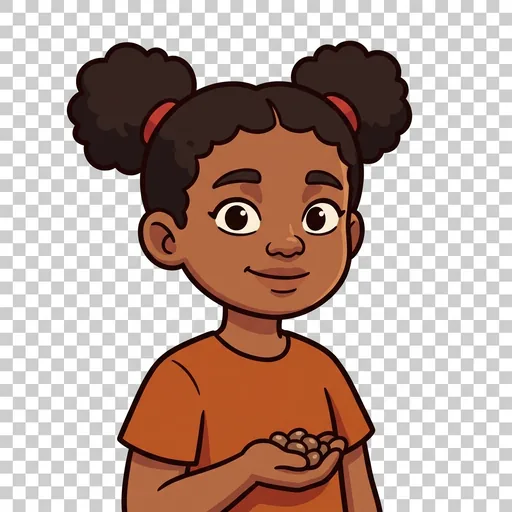
Lapwing Lulu
Lapping: sow a full loop around the board (skipping the start pit)
-
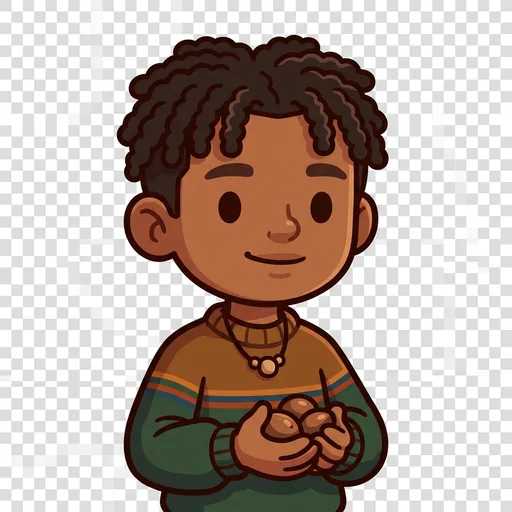
Store-Keeper Kito
The store (kroo) + win count: bank seeds safely; the store count is the win
-
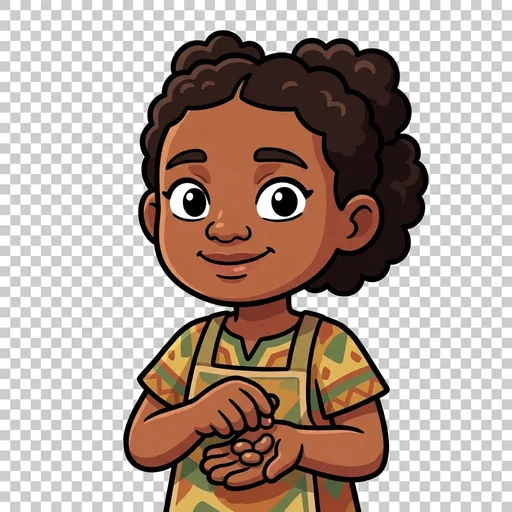
Starve-Guard Nne
The must-feed rule: when the opponent has no seeds, you must give them some
-
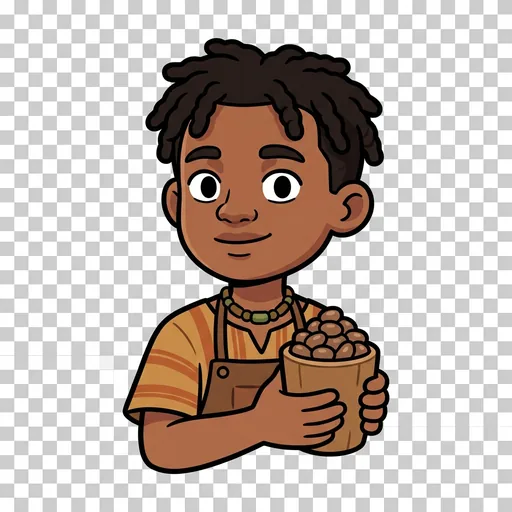
Pitkeeper Pemba
Building a threat: load a pit to reach a target pit exactly
-
Doublesow Dembe
Staging / relay: stage seeds across turns to set up a big sweep
-
Seedling Sanaa
Opening patterns: the first-move sowing plan
-
Endgame Enzi
Endgame count-out: force the last seeds; parity and counting to the win
-

Nana Sowing Elder
The sowing elder (mentor): poses which-sow-captures puzzles; credits the tradition warmly