Store-Keeper Kito
THE STORE & THE WIN COUNT — captured seeds go into your store-house, safe and out of play; and the game is won by whoever's store holds more than half of all the seeds
A story read by Store-Keeper Kito
Loading audio…
Press play to listen along. The line being read lights up as you go.
Show full transcript
Loading transcript…
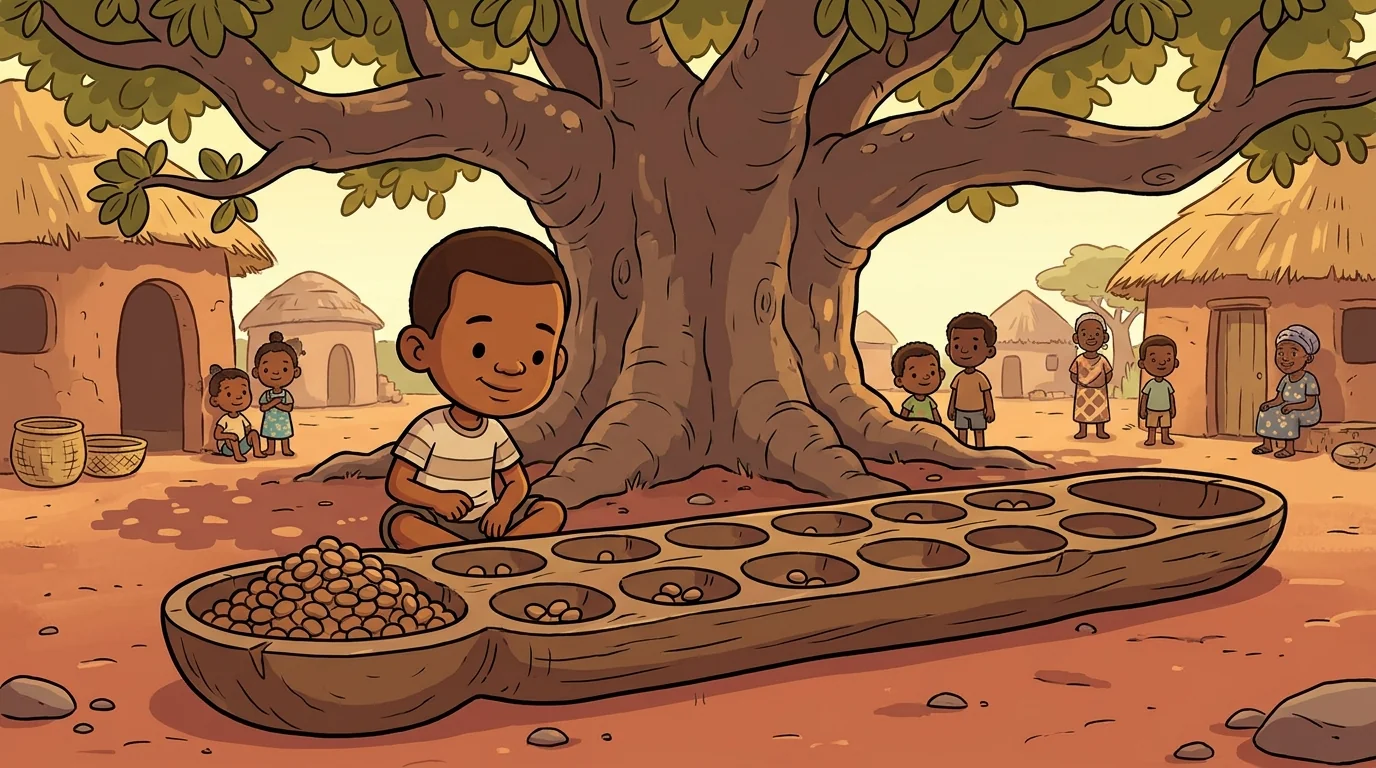
At each end of the great baobab board sat a wide, deep store-house, and at one of them, more often than not, you'd find a steady boy named Kito, watching his fill.
The pits on the board were a busy, dangerous place. Seeds sat in the pits, but seeds in the pits could always be sown away, captured, lost, swept off by a clever opponent. The store was different. When Kito harvested a pit — swept its two or three seeds up — he poured them into his store-house, and there they stayed. Out of play. Safe. No sow could reach them, no capture could take them back. A seed in the store was a seed that would never move again.
And that was the whole point of the game, Kito understood better than anyone. All those seeds — forty-eight of them, filling both rows at the start — were only ever really worth anything once they reached a store. Whoever's store came to hold more than half of them, more than twenty-four, had won. Not whoever had the fullest pits. Not whoever made the most exciting sweep. Whoever banked the most.
"You keep counting your store," a girl observed, watching Kito's lips move over his safe pile.
"It's the only pile that counts," Kito said. "Seeds on the board are borrowed. Seeds in my store are mine. And when mine passes twenty-four, the game's already decided, no matter how fat everyone's pits still look."
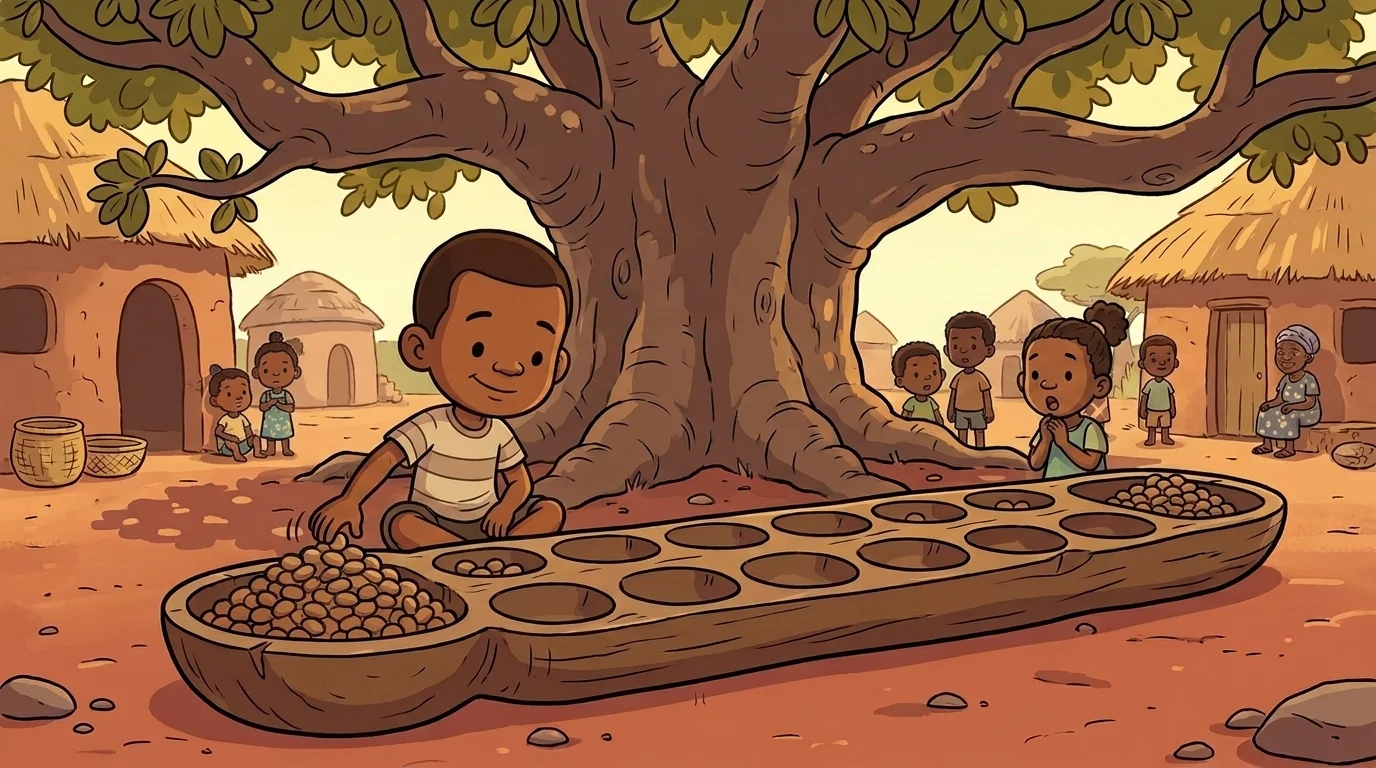
Kito had once played like the busiest, showiest child at the board — loving the action in the pits, the big sows, the flashy captures — and losing, again and again, because he never bothered to notice his store. He'd sweep a pit and, half the time, forget to bank it properly, leaving harvested seeds loose where they got tangled back into play. He measured his games by how much he was doing, not by how much he had kept.
The lesson came from the grain harvest. His family filled a great sealed jar with millet to last the dry season, and his mother let him help — but she was fierce about one thing: what went in the sealed jar stayed sealed. "The grain in the basket by the door, we'll nibble that away by next week," she said. "The grain in the sealed jar is what we live on. Don't you dare treat them the same." Kito watched the loose basket empty in days while the sealed jar carried the whole family through the dry months, and it rearranged something in his head. At the board the next evening he stopped counting his busy pits and started counting his store — his sealed jar — and for the first time he understood which pile the game was actually about.
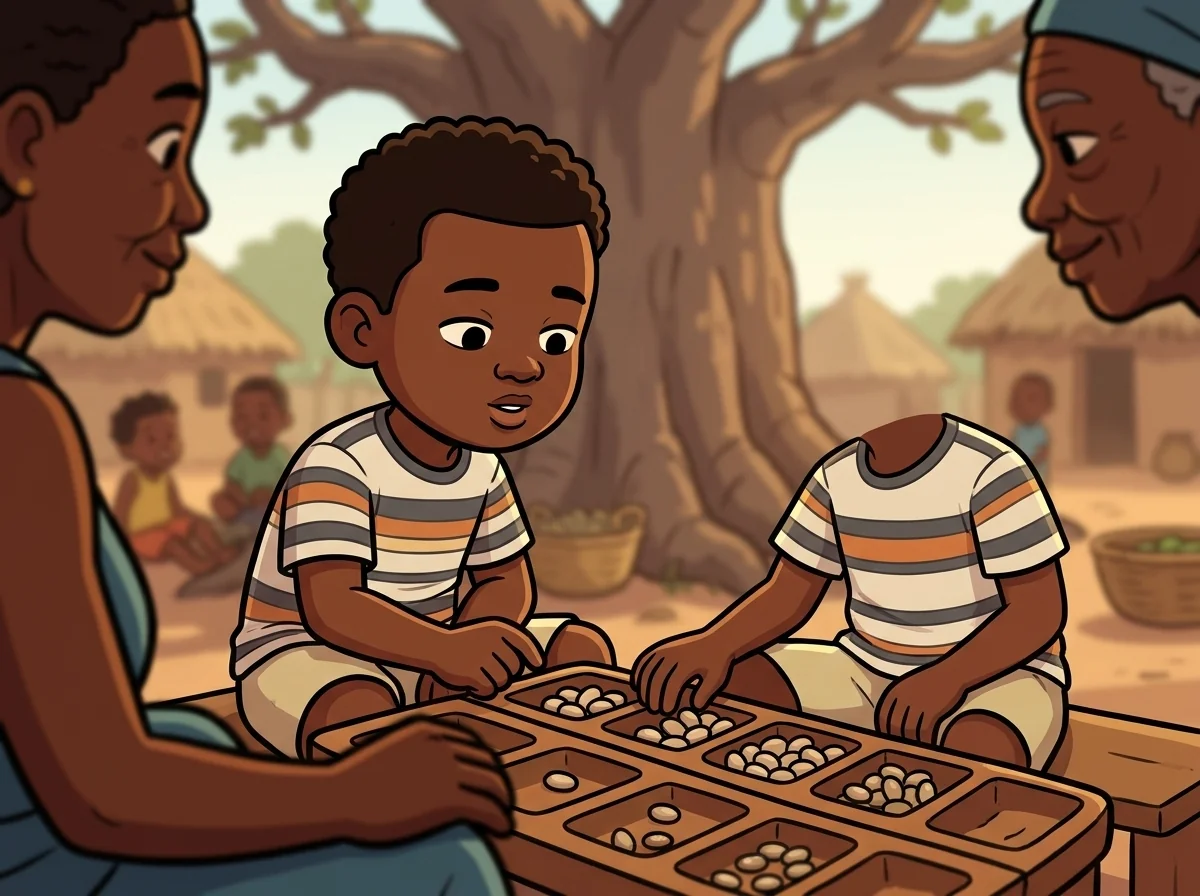
Nana the Sowing Elder sat him at a board late in a game, both players' pits still fairly full, the ending near.
"Who's winning?" she asked him. "Look properly."
Kito didn't look at the pits at all. He looked at the two stores. He counted his own — twenty-three — and his opponent's — nineteen. "I am," he said. "Just. I've banked twenty-three; there are only forty-eight seeds in the whole game. If I get just two more into my store, I'm past twenty-four, and it's over — it won't matter what's left in anybody's pits."
Nana beamed. "Every child at this board watches the pits — the noise, the movement, the drama," she said. "You watch the two quiet piles that actually decide it. A player can have magnificent, bulging pits and still be losing, because a pit is only a maybe and a store is a yes. Sit at my board. Teach these children where the real count lives — and that they only ever need enough of it, not all."
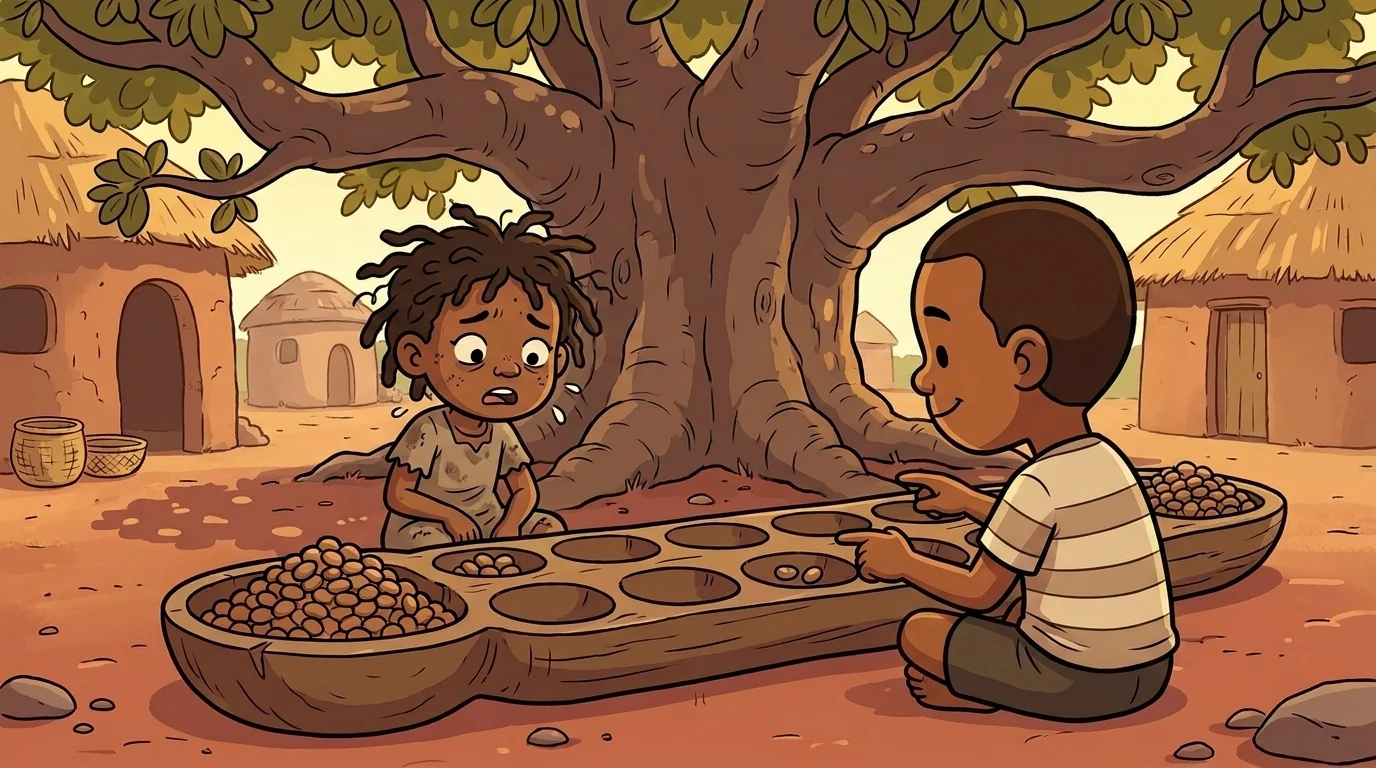
Kito's student was a frantic girl named Zola who played as if she had to grab every seed on the board or lose. She'd exhaust herself chasing captures she didn't need, take wild risks to reach one more far-off pit, and often lose the seeds she'd already banked because she couldn't stop reaching.
"You've already banked twenty-two," Kito told her, midway through her game. "Look at your store. You are four seeds from winning — twenty-five and it's yours. You don't need the whole board. You need four safe seeds." Zola blinked at her own store as if seeing it for the first time. "Stop lunging at that far pit — it's a risk, and you don't need it. Make the small safe capture right in front of you. Bank two. Then two more. Twenty-five. Done." He showed her the modest, certain harvest sitting one sow away.
Zola, breathing hard, made herself ignore the tempting far reach. She took the small sure pit — two seeds, into the store, twenty-four — and then the next small one — twenty-five — and stopped. She had won, quietly, with half the board's seeds still sitting in pits she'd never needed. "I didn't have to get them all," she said slowly. "I just had to get enough, and keep it."
"That's the whole game," said Kito. "Enough, and kept."
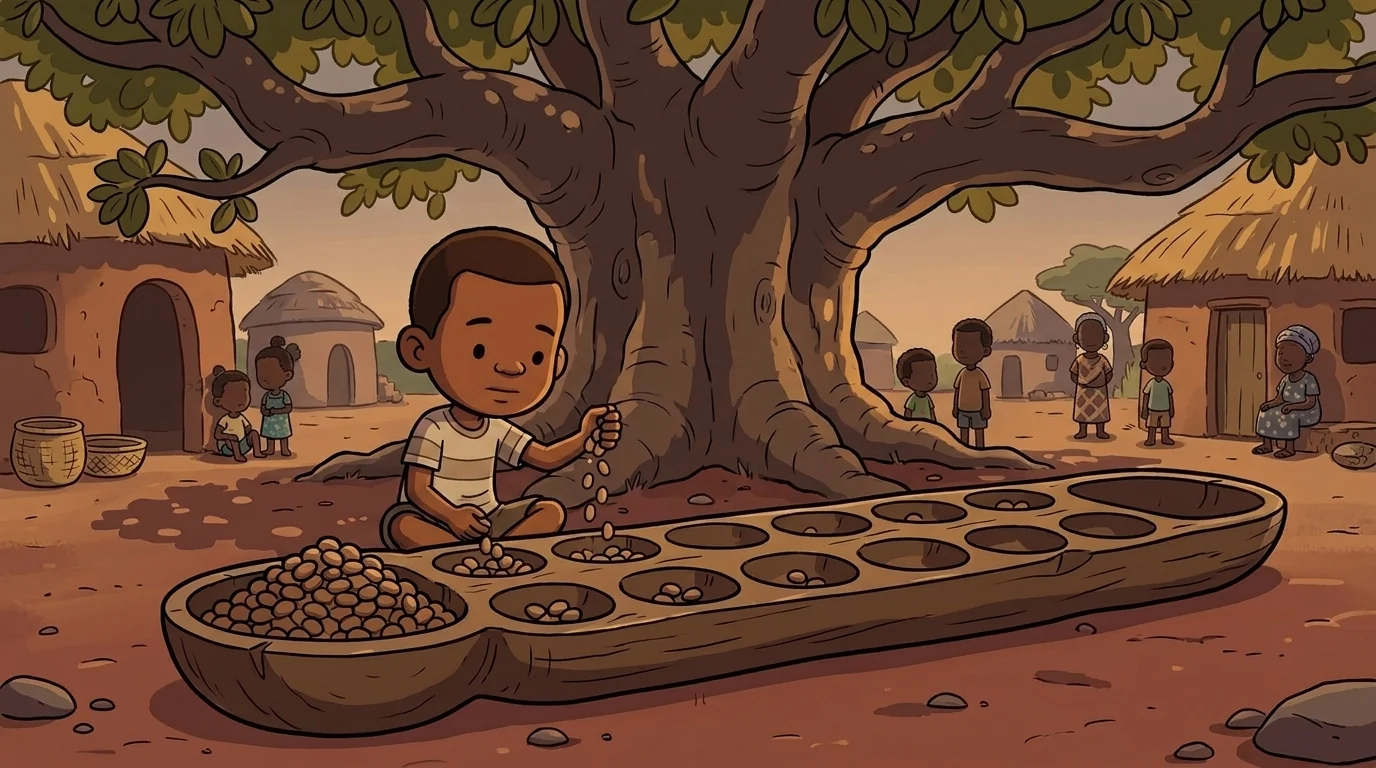
That evening Kito sat by his store in the fading light under the baobab and let the day's seeds run once more through his fingers into the deep, safe bowl of it — the soft, final sound of seeds that would never move again.
He thought about the busy, losing boy who'd measured his games by how much he was doing, and his mother's sealed jar of millet carrying the family through the dry season while the loose basket vanished in a week, and how the whole roaring, dramatic game on the board was really only ever a quarrel over which quiet store would end up holding a little more than half. There was a deep, settling peace in the store — the peace of a thing that is done, that cannot be lost, that no clever move can reach.
He counted his safe seeds one last time and felt the calm of someone who had learned the difference between the borrowed and the kept. Let the others thrill to the busy pits. He would keep the store, and count what was truly his, and remember always that you do not need every seed in the world to win — only more than half of them, banked where nothing can ever take them back.
The SeedSong ensemble
Store-Keeper Kito is part of SeedSong's distributed-narrative cast. Each character embodies a different curricular primitive; together they teach the full subject.
-

Sower Sefu
Sowing: pick up a pit and drop exactly one seed in each pit counterclockwise
-

Count Kesi
Counting / subitizing: read how many seeds a pit holds at a glance
-

Capture Koro
Capturing: when the last seed makes an enemy pit two or three, sweep it
-
Reap Rafiki
Multi-capture chain: read a run of 2s and 3s backward and reap them all
-

Subitize Sisi
Look-ahead arithmetic: compute the landing pit without sowing it out
-

Lapwing Lulu
Lapping: sow a full loop around the board (skipping the start pit)
-

Starve-Guard Nne
The must-feed rule: when the opponent has no seeds, you must give them some
-

Pitkeeper Pemba
Building a threat: load a pit to reach a target pit exactly
-

Doublesow Dembe
Staging / relay: stage seeds across turns to set up a big sweep
-

Seedling Sanaa
Opening patterns: the first-move sowing plan
-

Endgame Enzi
Endgame count-out: force the last seeds; parity and counting to the win
-

Nana Sowing Elder
The sowing elder (mentor): poses which-sow-captures puzzles; credits the tradition warmly