Pitkeeper Pemba
BUILDING A THREAT — patiently grow the seed-count in one pit over several turns so that, when you finally sow it, its last seed lands exactly on the pit you mean to capture
Loading audio…
Press play to listen along. The line being read lights up as you go.
Show full transcript
Loading transcript…
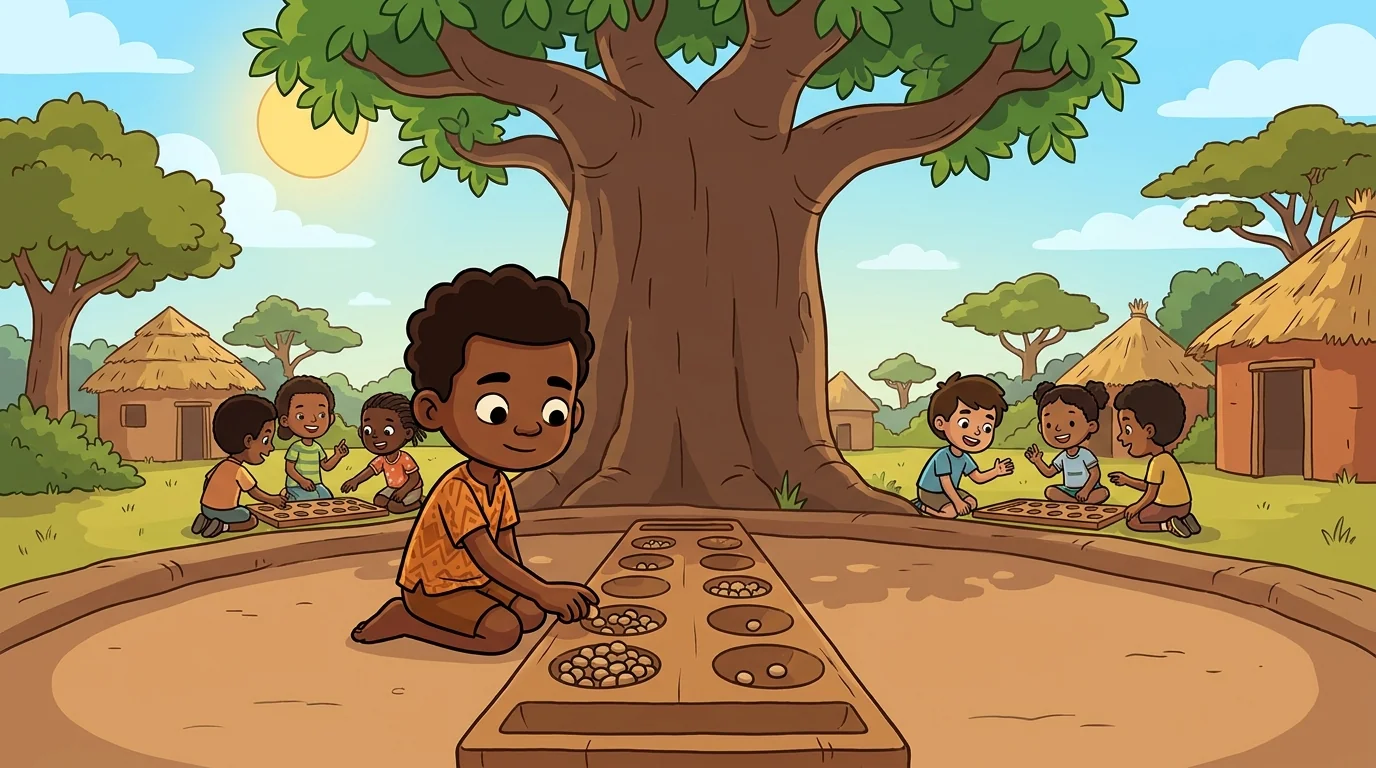
While the busy children at the great baobab board emptied and sowed, emptied and sowed, there was a boy named Pemba who often did the opposite: he'd choose one pit and simply leave it alone, turn after turn, watching it slowly fatten.
Pemba was a builder of threats. He understood that a pit's power was its seed-count — that the number of seeds in a pit decided exactly how far its last seed would fly when sown. So if he wanted to strike a particular far-off pit, he didn't just hope; he grew a pit to the right size. Say the pit he wanted to capture sat seven houses away. Then a pit with seven seeds, sown, would land its last seed right there. So Pemba would nurse a chosen pit — adding to it through the ordinary sowing of the game, protecting it, not spending it — until it held precisely seven, and then, at the moment of his choosing, he'd let it fly, and its last seed would fall exactly on the pit he'd been aiming at all along.
To the loud players it looked like Pemba was doing nothing for turns on end. In truth he was doing the patient, invisible thing: measuring the distance, and growing his seeds to match it.
"You keep not playing that pit," a girl said, puzzled. "It just sits there getting fatter."
"It's not fat enough yet," Pemba said. "The pit I want is seven houses off. I need my pit to hold exactly seven. It's got five. Two more turns of growing, and then it flies — and lands right where I mean."
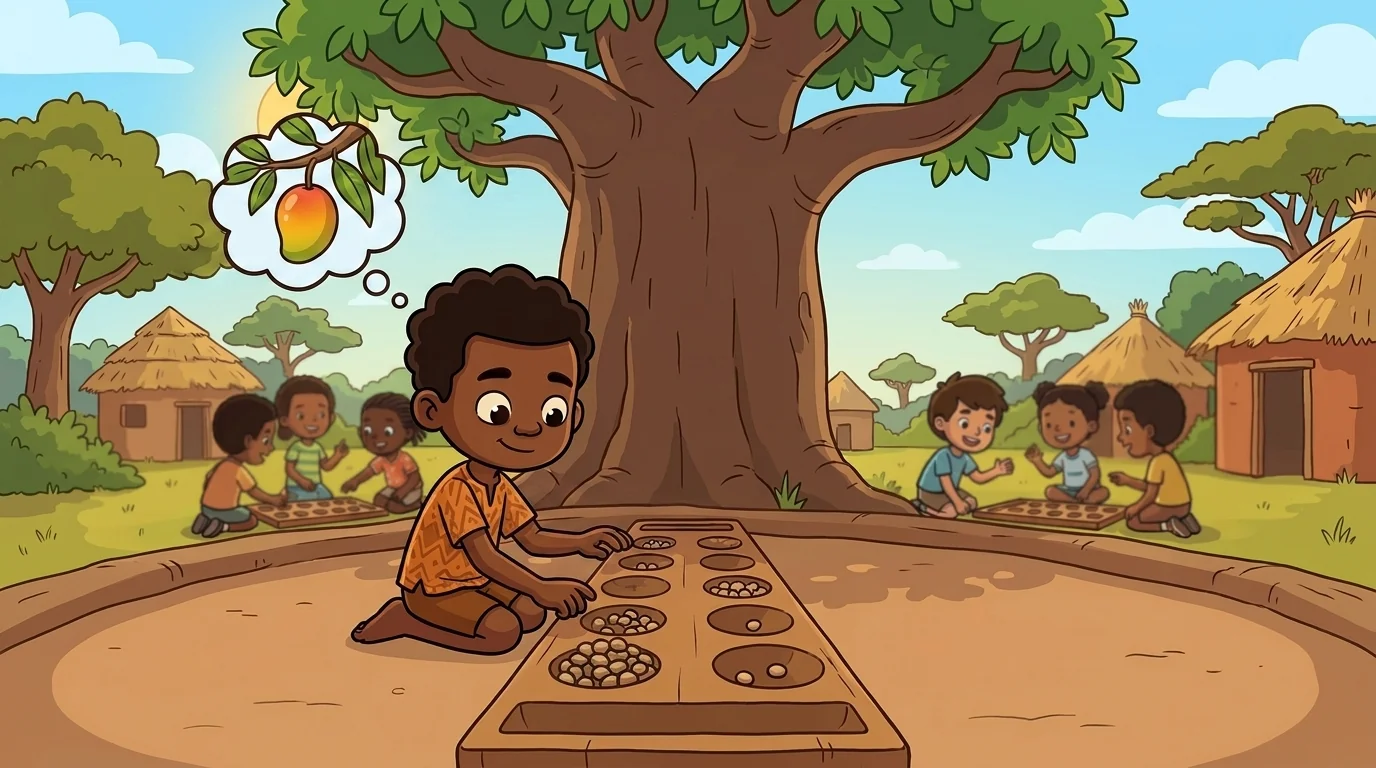
Pemba had once been as busy and impatient as anyone, spending every pit the moment it looked useful, never letting anything grow. And so he never had a pit the right size for the shot he wanted — he was always one or two seeds short, or two too many, forever missing his target by a house because he'd never taken the time to build to it.
The lesson came from his grandmother's mango tree. She never picked the fruit early, no matter how it tempted the children. "You cannot hurry a mango to the size it needs," she'd say. "You watch, and you wait, and you pick it the day it's ready — not the day you're hungry." Pemba had watched her leave the fruit to grow to exactly its right fullness, and he carried it to the board: some pits you spend now, and some you leave to grow, quietly, patiently, until they reach the exact size that reaches the target. He stopped spending everything the moment it looked ripe. He started growing certain pits, on purpose, to the size the shot required.
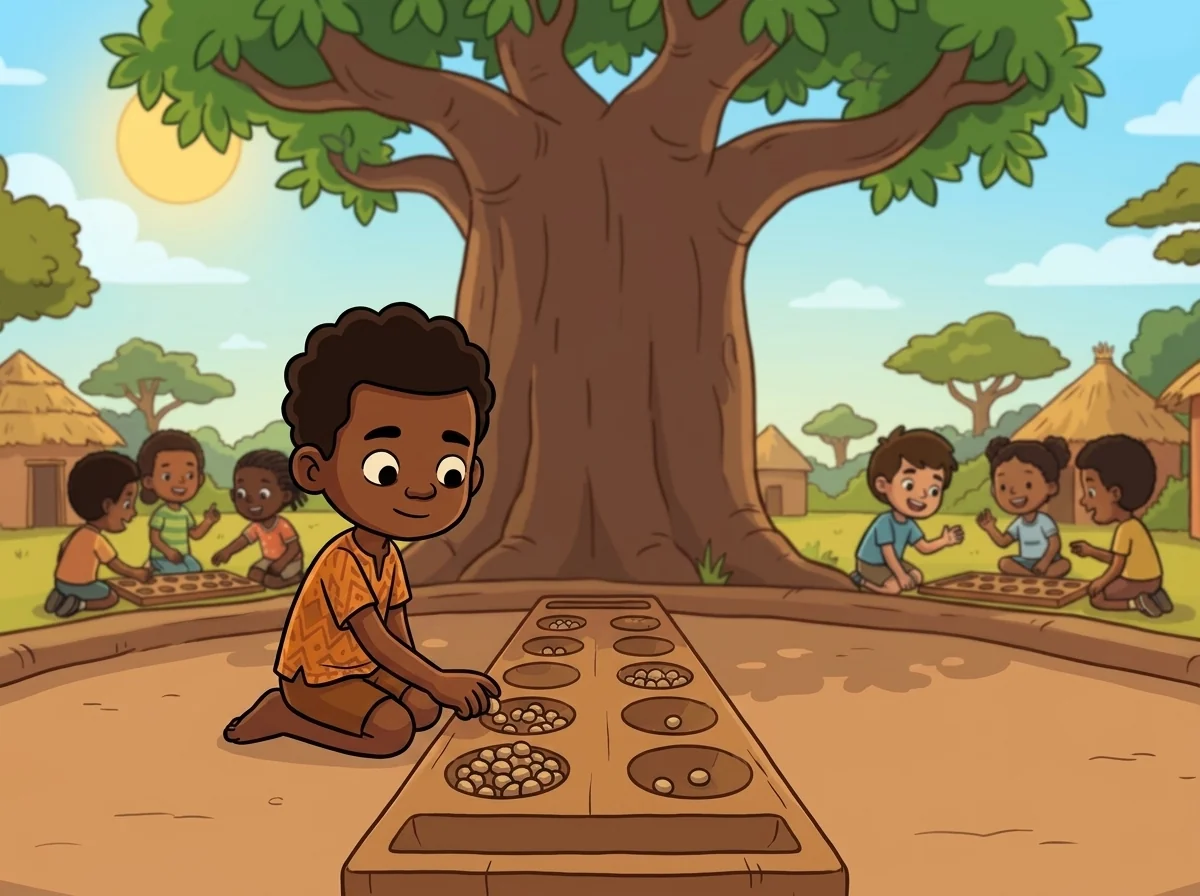
Nana the Sowing Elder set him a board with a juicy enemy pit sitting far away — nine houses off — and asked him to plan a capture of it.
"How will you reach so far?" Nana asked. "None of your pits is nearly big enough."
"Not yet," said Pemba. "But this one" — he touched a pit holding six — "can grow. Nine houses off means I need nine seeds in it. It has six. If I leave it, and let the ordinary sowing drop a seed or two into it over the next turns, it'll come to nine. Then I sow it, and my last seed lands nine houses off — exactly on that pit." And he played the patient game: a small move here, a small move there, guarding his growing pit, until it held precisely nine — and then he let it go, and its final seed dropped, true, into the far pit he'd wanted from the start.
Nana laughed with pleasure. "Every hungry child at this board reaches with whatever they have and falls short," she said. "You build the reach first and then never miss. That is the patience of a farmer and the aim of an archer in one. But mind — a pit grown to ten would overshoot that nine-house target by a house and hit nothing. The art is growing it to exactly the size, and no bigger. Sit at my board, Pemba. Teach these children to grow their threats to the right size — and to know when to stop growing."
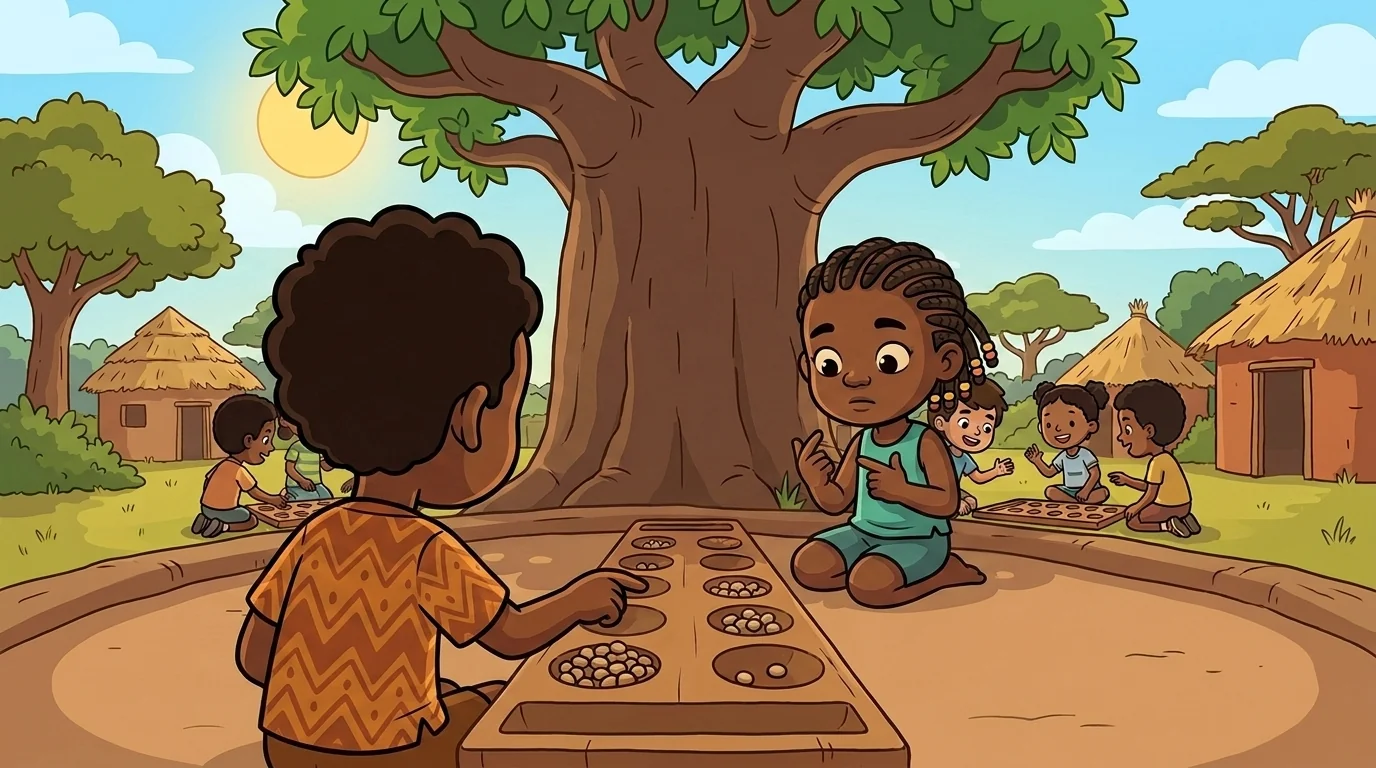
Pemba's student was an eager girl named Rina who had learned that big pits were powerful and had decided, therefore, that bigger was always better. She'd hoard seeds into one pit endlessly, growing it huge, proud of its size — and then sow it and sail her last seed clean past every target, capturing nothing.
"You've grown a mighty pit," Pemba told her. "How far away is the thing you want to hit?" Rina counted: six houses. "And how many seeds in your mighty pit?" She counted, sheepishly: eleven. "Then your last seed lands eleven houses off — five houses past your target. You didn't build a threat. You built an overshoot." He showed her the difference. "The right size isn't the biggest size. It's the size that matches the distance. Six houses away means six seeds. Grow it to six — and then stop."
Rina, chastened, started a fresh pit and grew it carefully — five, then six — and the moment it hit six she made herself stop feeding it and let it fly. Her last seed landed exactly six houses off, on the pit she wanted, and she captured it clean. "I kept thinking more seeds meant a better shot," she said. "But the shot just needed to be the right length."
"Enough, not most," said Pemba. "The mango's ready at ripe, not at biggest."
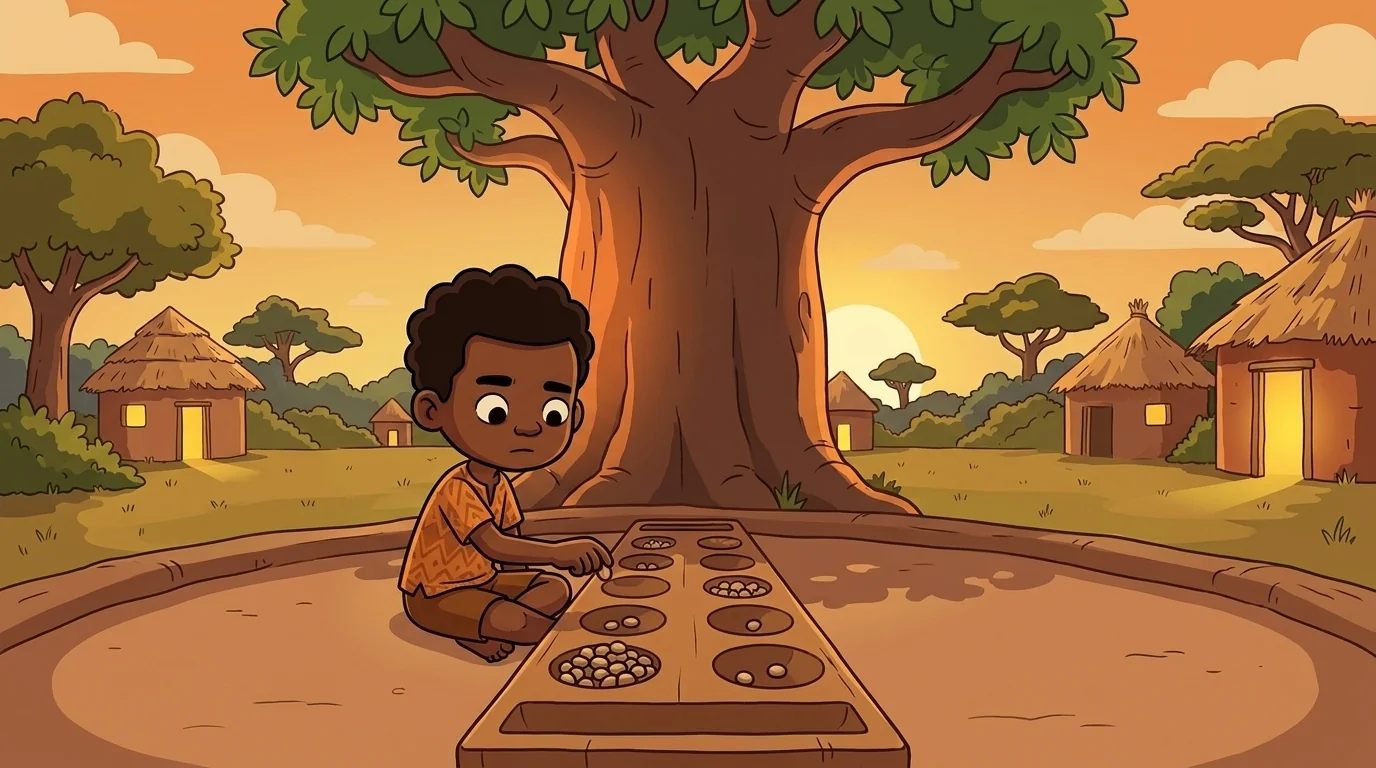
That evening Pemba sat at the quiet board under the baobab and grew one pit slowly to a chosen size, just to feel the patience of it — five, six, seven — and then let it fly to land its last seed exactly where he'd measured.
He thought about the impatient boy who spent every pit the instant it looked useful and never had the right size when it mattered, and his grandmother's mangoes left to ripen to exactly their fullness, and how the strongest move he ever made was one he built quietly over many turns while louder players filled the air around him. There was a deep, unhurried satisfaction in it — the satisfaction of a thing grown deliberately to size, released at exactly the right moment, landing exactly true.
He let his practice pit rest, six seeds, ready. Patience, he had learned, was not doing nothing. It was doing the slow, measured, invisible work of growing a thing to precisely the size the moment would need — and then having the wisdom to stop, and let it go, at ripe.
The SeedSong ensemble
Pitkeeper Pemba is part of SeedSong's distributed-narrative cast. Each character embodies a different curricular primitive; together they teach the full subject.
-

Sower Sefu
Sowing: pick up a pit and drop exactly one seed in each pit counterclockwise
-

Count Kesi
Counting / subitizing: read how many seeds a pit holds at a glance
-

Capture Koro
Capturing: when the last seed makes an enemy pit two or three, sweep it
-

Reap Rafiki
Multi-capture chain: read a run of 2s and 3s backward and reap them all
-

Subitize Sisi
Look-ahead arithmetic: compute the landing pit without sowing it out
-

Lapwing Lulu
Lapping: sow a full loop around the board (skipping the start pit)
-

Store-Keeper Kito
The store (kroo) + win count: bank seeds safely; the store count is the win
-

Starve-Guard Nne
The must-feed rule: when the opponent has no seeds, you must give them some
-

Doublesow Dembe
Staging / relay: stage seeds across turns to set up a big sweep
-

Seedling Sanaa
Opening patterns: the first-move sowing plan
-

Endgame Enzi
Endgame count-out: force the last seeds; parity and counting to the win
-

Nana Sowing Elder
The sowing elder (mentor): poses which-sow-captures puzzles; credits the tradition warmly