
Ellery
COMPARED WITH WHAT? - a claim like 'the worst' or 'terrible' only has a size when you set it beside something; comparing with real examples puts it on the right notch.
Listen along — Ellery
Loading audio…
Press play to listen along. The line being read lights up as you go.
Show full transcript
Loading transcript…
Ellery and the Ribbon With No Numbers
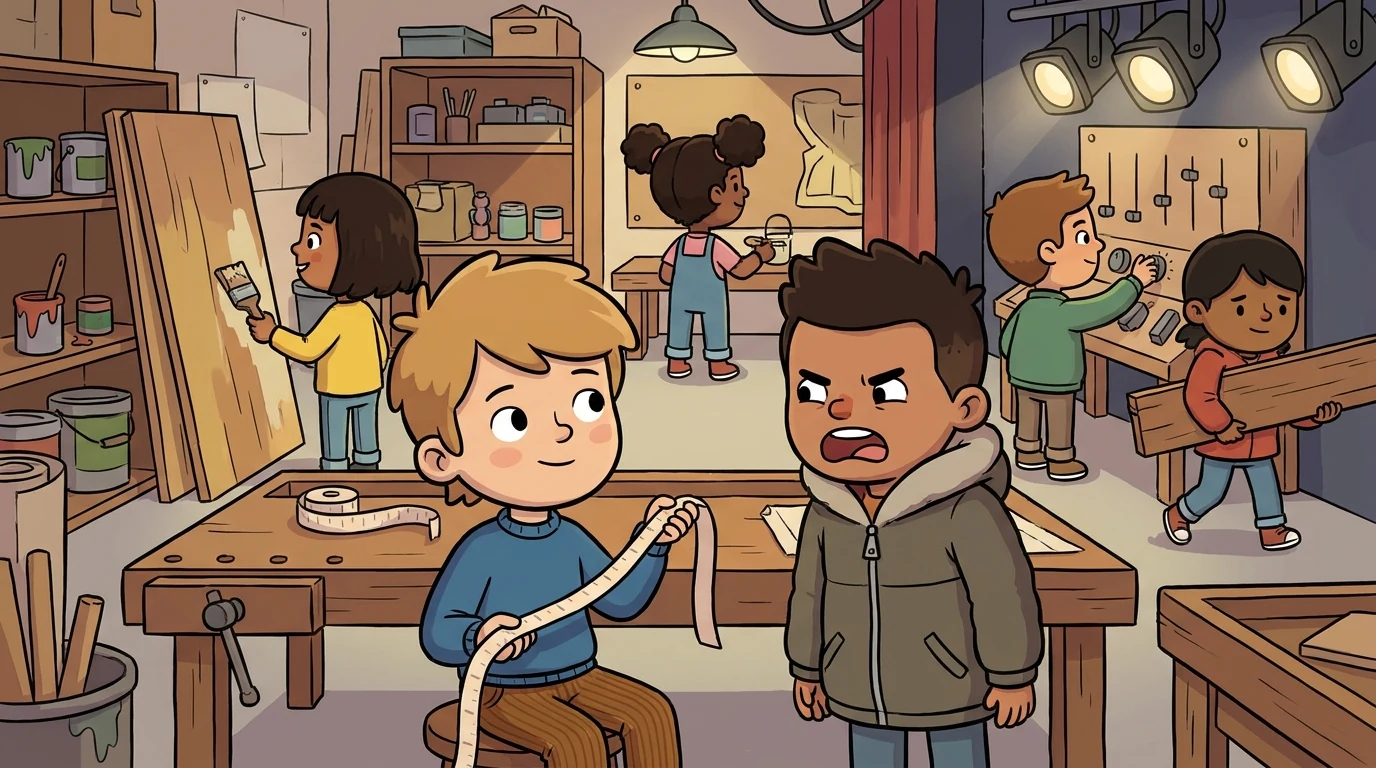
Ellery has a soft cloth tape measure that he winds around his fingers when he’s thinking. It used to belong to the theatre’s costume maker. The numbers have long since worn off, so now it’s just a pale ribbon with faint little lines.
“You don’t need numbers to measure,” he says. “You just need something to put it next to.”
Ellery’s question is always the same. Somebody says a thing is terrible, or the best, or the worst ever, and Ellery tilts his head and asks, “Compared with what?”
It sounds a bit annoying when he says it. People sometimes roll their eyes. But Ellery doesn’t ask it to be annoying. He asks it because he remembers what it felt like when he didn’t know how to.
The week the theatre’s heating broke, a boy named Marlo stomped into the workshop with his coat still on.
“This is the worst week ever,” he announced. “The heating’s broken, I forgot my lines twice, and my sister ate my sandwich.”
Ellery felt a flicker of the old feeling, the one where a bad week fills your whole head and squeezes everything else out. He’d had weeks like that. When you’re inside one, it doesn’t feel like a bad week. It feels like the bad week, the one that’s going to last forever.
He unwound his ribbon and laid it along the workbench, from one end to the other.
“Okay,” he said. “This end is the best week you’ve ever had. That end is the worst. Where does this week go?”
Marlo pointed straight at the worst end. “There.”
“Compared with what, though?” Ellery said. “What was your best week?”
Marlo thought. “The summer we went camping. We saw an owl.”
Ellery put a cotton reel on the best end. “Camping week. Now, a really bad week. The worst one you can actually remember.”
Marlo went quiet. “When Gran was in hospital,” he said. “Last winter.”
Ellery put a second reel near the other end, gently. “Gran week.”
Then he pointed at the empty ribbon in between. “So where does this week go? Next to camping, or next to Gran?”
Marlo looked at the two reels for a long time. Then he put his finger down, much closer to the middle than he’d expected. “Here, I suppose,” he said. “It’s annoying. But Gran was scary. This is just cold.”
“And?” said Ellery.
“And…” Marlo half-smiled. “And Aunt Bea came on Tuesday and helped me run my lines. I forgot about that.”
That’s what Ellery’s ribbon does. When something is set beside a real example, it gets a size. The worst turns out to be annoying, or harder than usual, or sometimes, honestly, really bad. The ribbon doesn’t decide for you. It just stops one bad week from pretending to be every bad week at once.
Ellery is careful about one thing. He never tells anyone their feeling is wrong. Marlo’s week was still cold and frustrating, and saying so is fine. The ribbon isn’t there to make feelings smaller. It’s there to make them the right size, so you can see what to do next.
Marlo took his coat off at last. Ellery wound the ribbon back around his fingers.
“Compared with what?” Marlo muttered, trying it out. “Huh.”
The ShadeForge ensemble
Ellery is part of ShadeForge's distributed-narrative cast. Each character embodies a different curricular primitive; together they teach the full subject.
-
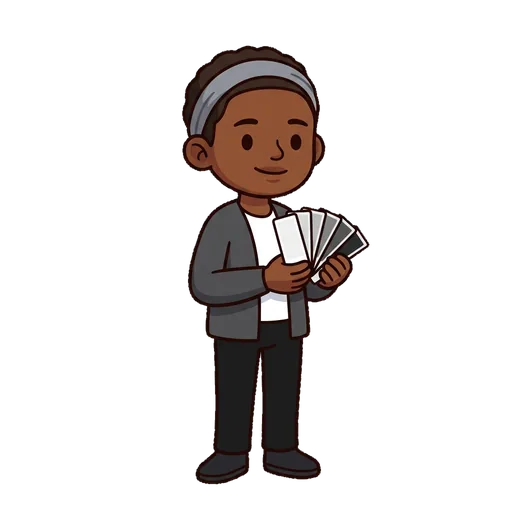
Gamut
(Mentor, a theatre kid with a fan of grey swatches) - never asks who is right; asks what each side really needs
-

Rheo
Turns an all-or-nothing switch into a dial
-

Tolly
Asks how many, really - and counts
-
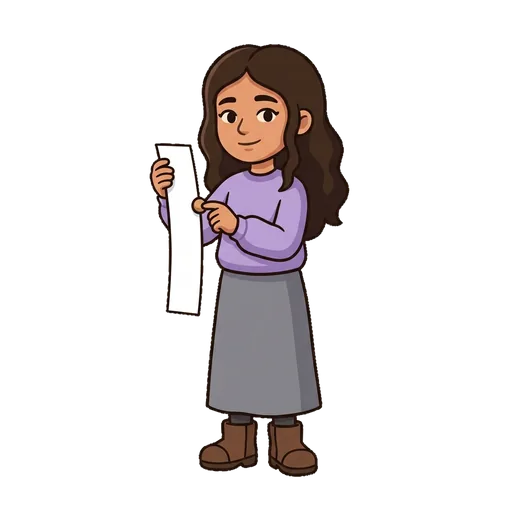
Odelia
Asks how sure we really are
-
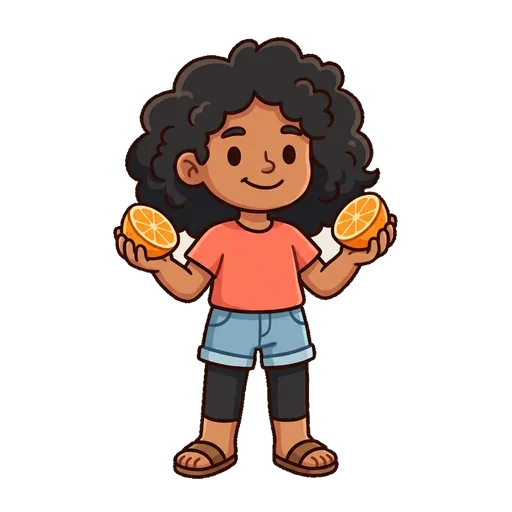
Halvie
The Split move - each side gets part of what they want
-

Turnby
The Alternate move - take turns across time
-

Quid
The Trade move - swap something each side values
-
Tierney
The Stack move - do both, one on top of the other
-

Novo
The Third Option - invents what neither side proposed
-

Truett
Tells a question with a true answer from a trade-off of values