Quid
THE TRADE - two people rarely care about every part of a problem equally; trading what matters less to you for what matters more lets both sides come out ahead.
Listen along — Quid
Loading audio…
Press play to listen along. The line being read lights up as you go.
Show full transcript
Loading transcript…
Quid and the Pencil Swap
Quid’s favourite question sounds simple, but it surprises people every time.
“What do you care about most,” he asks, “that I care about least?”
Quid is the trader at the Little Lamp Theatre. He always seems to have something in his pocket: a spare pencil, a roll of tape, a blank card. He doesn’t collect things to keep them. He collects them to swap.
His big idea is that two people almost never care about every part of a problem by the same amount. If you can find the parts that matter a lot to one person and only a little to the other, you can trade, and both sides end up happier than before.
He found this out during the poster disaster.
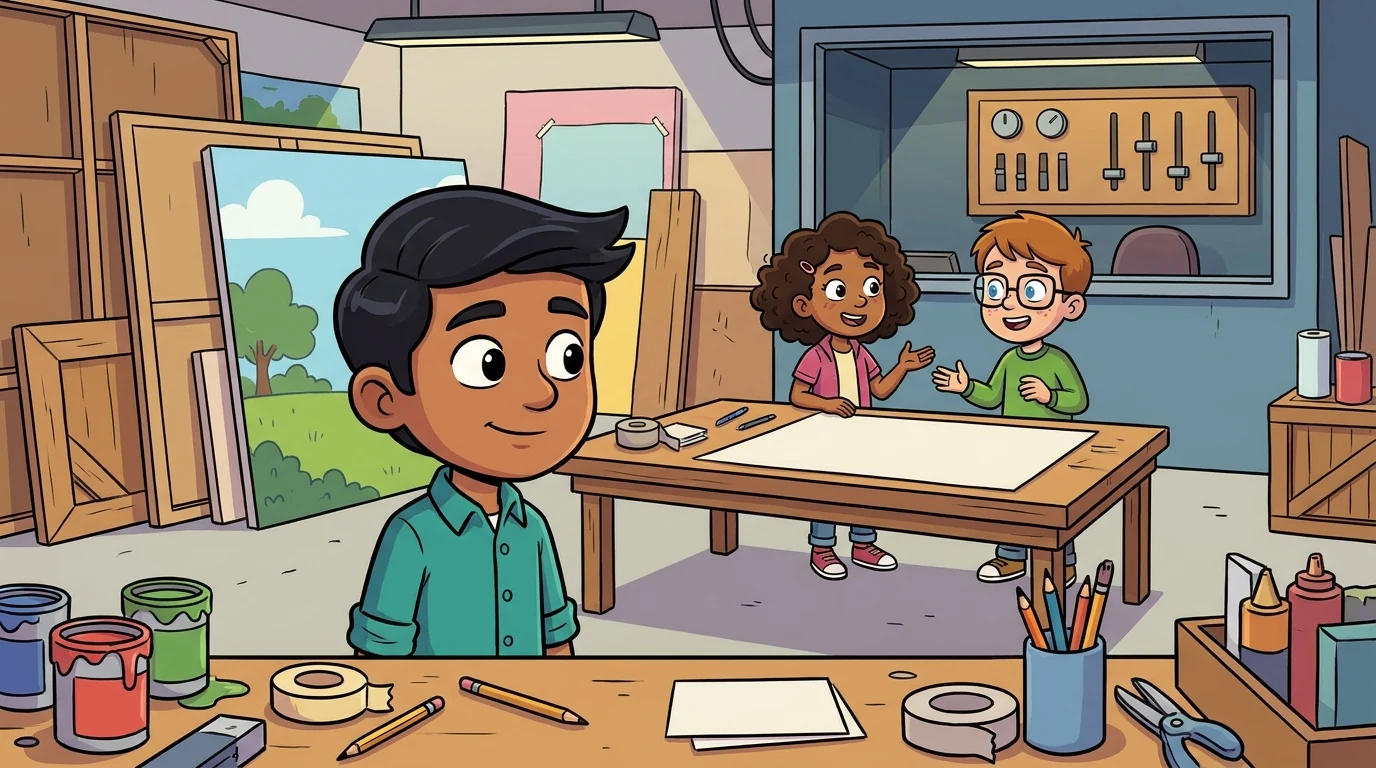
The theatre needed a poster for the spring show, and two kids had volunteered: Inés, who could draw brilliantly, and Bram, who was good at layout. Within ten minutes they were arguing. Inés wanted the poster to be one huge drawing of the main character. Bram wanted it to be clean and simple, with the date and the time big enough to read from across the street.
Quid watched them and felt that awful stuck feeling, the one where both people seem to want the exact same piece of ground. He’d tried taking sides once, in an argument like this, and the other person hadn’t spoken to him for a week. He didn’t want to do that again.
So he asked his question. “Inés, what do you care about most?”
“The drawing,” she said straight away. “It’s the first poster I’ve ever done. I want people to see it.”
“And what do you care about least?”
She shrugged. “The writing. I don’t really mind where the words go.”
Quid turned to Bram. “What do you care about most?”
“People being able to read when the show is,” said Bram. “Otherwise nobody comes.”
“And least?”
“Honestly? The picture. I can’t draw anyway.”
Quid grinned and held up a blank card in one hand and a pencil in the other. “So trade,” he said. “Inés gets the picture, all of it, as big as she wants. Bram gets the words, and where they go, and how big they are.”
They looked at each other. It turned out the poster had room for both: a big bold drawing filling the top two-thirds, and a clean strip along the bottom with the date and time in letters you could read from a bus.
That’s how a good trade works. Nobody pretends the other person’s wish doesn’t matter. Each side gives up the part they care about less, and gets the part they care about more. Both of them walk away feeling like they won, because in the part they cared about, they did.
Quid is careful with trades, though. A trade isn’t fair if someone is pushed into giving up something they really care about, or if one side knows more than the other and uses it. A trade only works when both people say yes freely, knowing what they’re swapping.
He still carries his pencil and his blank card. When two people get stuck, he holds them up.
“What do you care about most,” he asks, “that the other person cares about least?”
The ShadeForge ensemble
Quid is part of ShadeForge's distributed-narrative cast. Each character embodies a different curricular primitive; together they teach the full subject.
-
Gamut
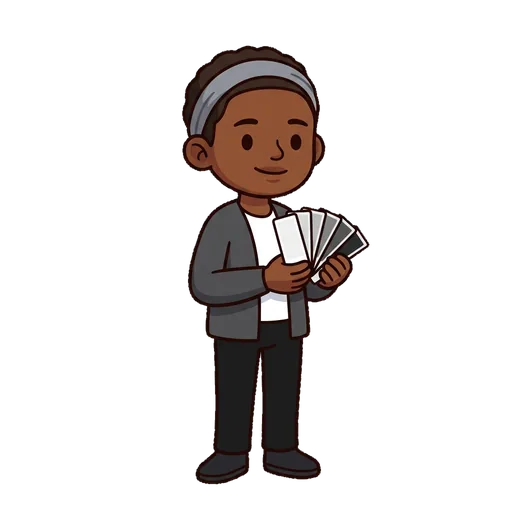
(Mentor, a theatre kid with a fan of grey swatches) - never asks who is right; asks what each side really needs
-
Rheo
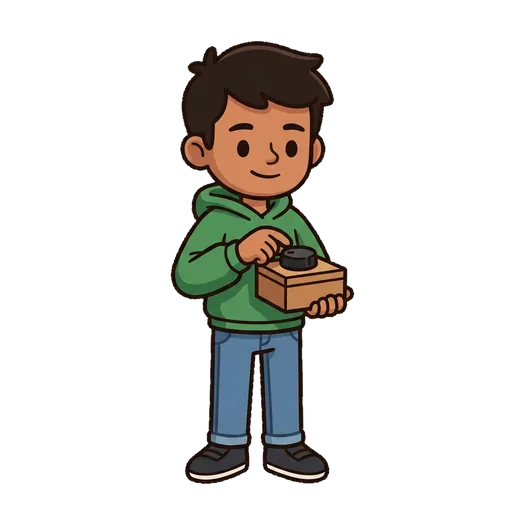
Turns an all-or-nothing switch into a dial
-

Tolly
Asks how many, really - and counts
-
Ellery
Asks how much, compared with what
-
Odelia
Asks how sure we really are
-
Halvie
The Split move - each side gets part of what they want
-

Turnby
The Alternate move - take turns across time
-
Tierney
The Stack move - do both, one on top of the other
-

Novo
The Third Option - invents what neither side proposed
-

Truett
Tells a question with a true answer from a trade-off of values