Turnby
TAKE TURNS - when something can't be split, it can often be shared across time; a fair turn plan is clear, written down, and respected by both sides.
Listen along — Turnby
Loading audio…
Press play to listen along. The line being read lights up as you go.
Show full transcript
Loading transcript…
Turnby and the Sand Timer
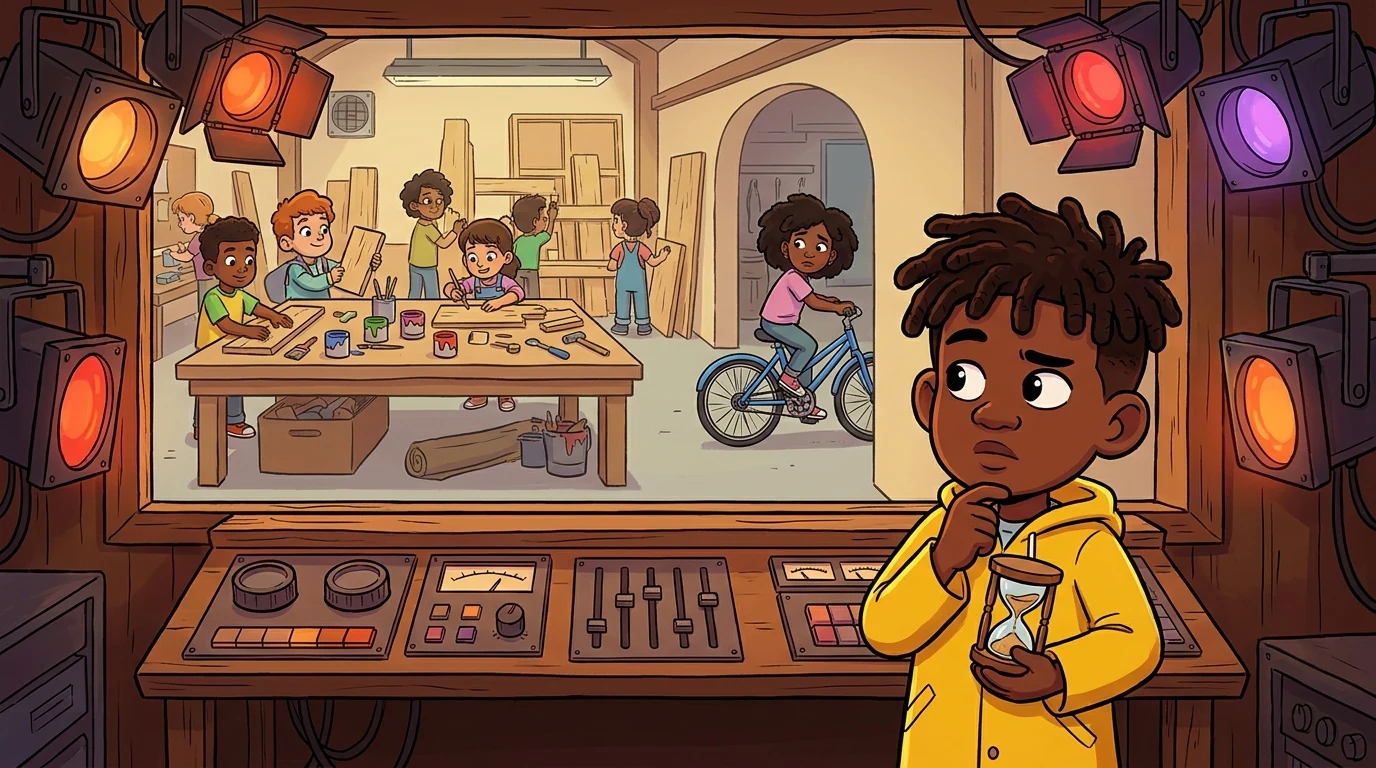
Turnby wears a bright yellow raincoat whether it’s raining or not, and in the pocket he keeps a small wooden sand timer. Three minutes of sand, pouring from the top to the bottom.
“Some things you can’t cut in half,” he says. “So you share them across time.”
He learned it the hard way, with a bike.
There was one good bike at Turnby’s house, a blue one with gears, and he and his cousin Abi both wanted it every single afternoon. If Turnby got it, Abi sulked. If Abi got it, Turnby sulked. Their parents tried telling them to “just share,” which didn’t help, because neither of them knew what sharing a bike was supposed to look like.
One day Turnby watched Abi ride away on it and felt his chest go tight and hot. He was so sure it was unfair that he couldn’t think about anything else. Then he noticed something strange: Abi didn’t look happy either. She kept looking back over her shoulder, as if she was waiting for him to come and take it.
That’s when Turnby realised the problem wasn’t the bike. The problem was that nobody knew when their turn was. Without a plan, every minute on the bike felt like stealing, and every minute off it felt like losing.
So he made a plan. He found a big sheet of paper and drew the days of the week down one side. Monday, Wednesday and Friday were his. Tuesday, Thursday and Saturday were Abi’s. Sunday they’d ride together, one on the bike and one on the old scooter, swapping at the park.
Abi read it twice. “And if it rains on my day?”
“Then you get the next dry day,” Turnby said.
She thought about it and nodded. “Okay.”
And here’s the strange thing. Once there was a plan, waiting got easier. Turnby didn’t mind watching Abi ride on Tuesday, because he knew Wednesday was coming. The tight hot feeling had mostly been about not knowing.
At the Little Lamp Theatre, Turnby is the one people go to when two of them want the same thing and it won’t split. Two actors who both want to sing the solo? They alternate: one sings it on opening night, the other on the second night, and they swap after that. Two crew members who both want to work the spotlight? Turnby flips his sand timer and they take scene-by-scene turns.
A good turn plan, Turnby says, has three things. It’s clear, so everyone knows exactly when their turn is. It’s fair, so nobody gets all the best turns. And both people agree to it out loud, so nobody can say later that they didn’t know.
Turns don’t fix everything. If one person needs something much more than the other, an even swap might not be fair at all. Then Turnby asks Gamut, and they look at what each person really needs.
But for a lot of things, turns are the simplest answer there is. He turns his sand timer over and watches the sand begin to fall.
“Your turn,” he says. “Then mine.”
The ShadeForge ensemble
Turnby is part of ShadeForge's distributed-narrative cast. Each character embodies a different curricular primitive; together they teach the full subject.
-
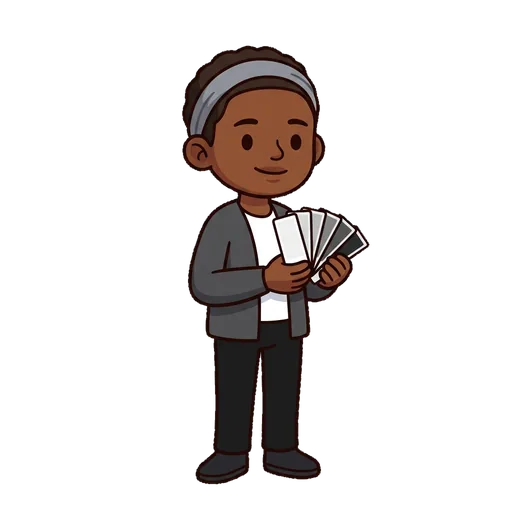
Gamut
(Mentor, a theatre kid with a fan of grey swatches) - never asks who is right; asks what each side really needs
-
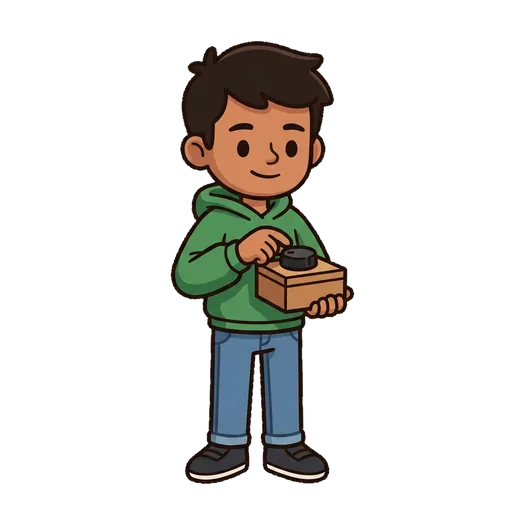
Rheo
Turns an all-or-nothing switch into a dial
-

Tolly
Asks how many, really - and counts
-

Ellery
Asks how much, compared with what
-
Odelia
Asks how sure we really are
-
Halvie
The Split move - each side gets part of what they want
-

Quid
The Trade move - swap something each side values
-
Tierney
The Stack move - do both, one on top of the other
-

Novo
The Third Option - invents what neither side proposed
-

Truett
Tells a question with a true answer from a trade-off of values