Truett
FACT OR VALUE? - some disagreements have an answer you can check, and splitting the difference on those is a mistake; others are trade-offs between things people care about, and those are where a compromise belongs.
Listen along — Truett
Loading audio…
Press play to listen along. The line being read lights up as you go.
Show full transcript
Loading transcript…
Truett and the Plumb Line
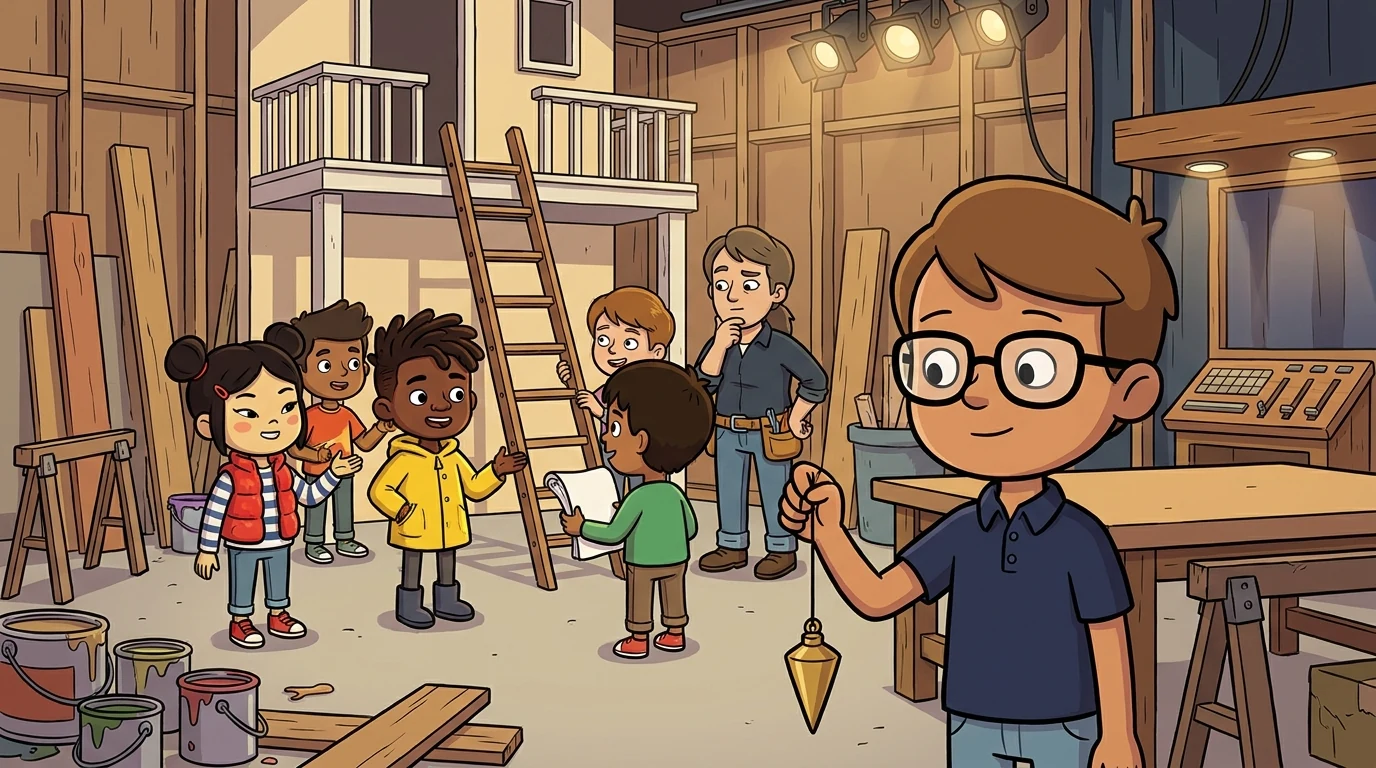
Truett carries a little brass weight on a string. It’s called a plumb bob, and builders have used them for thousands of years. You hold the string up and let the weight hang, and when it stops swinging, the string points perfectly straight down. It doesn’t care what anyone thinks. It just shows you what is true.
“Some questions are like the plumb line,” Truett says. “They have a real answer. You check it. You don’t vote on it.”
Truett is the one at the Little Lamp Theatre who slows everyone down before a compromise. Not to stop the compromise, but to make sure it belongs.
One afternoon the set builders were arguing about a ladder. The script had an actor climb up to a balcony, and the builders needed a ladder to hold her.
“The old wooden ladder will hold her,” said one.
“No way, it’s wobbly,” said another.
Somebody, trying to be helpful, said, “Let’s meet in the middle. She can climb halfway up.”
Everybody laughed, but Truett felt a cold little drop in his stomach. He’d seen this before: people being so keen to be fair that they compromised on something that wasn’t a matter of opinion at all.
“Wait,” he said. “Whether the ladder is safe isn’t something we split. It either holds her weight or it doesn’t. That’s a fact we can check.”
So they checked. The stage manager, a grown-up who knew about these things, tested the ladder with a load much heavier than any actor and found a cracked rung near the top. The ladder was not safe, at any height. Meeting in the middle would have been the worst answer of all.
“Okay,” said the builders, a bit shaken. “New ladder.”
And then, Truett noticed, the argument changed. Once the fact was settled, there was a real disagreement left over, and this one was about values. One builder wanted to buy a shiny metal ladder. Another wanted to spend the money on costumes instead and borrow a ladder from the school. That wasn’t a question with a true answer. It was a trade-off between things people cared about: looking good, saving money, keeping the costume budget. That’s exactly where a compromise belongs.
They borrowed the school’s ladder for this show and saved up for their own. Nobody had to pretend there was only one right answer.
Truett’s check has two steps.
First: Is there a fact here we can look up, measure or test? If yes, check it, and don’t split the difference. Is the ladder safe? Is the river deep? Did the bus leave at four or at five? Splitting the difference on a fact doesn’t make it fair. It just makes it wrong.
Second: Once the facts are settled, what’s left? Usually it’s a trade-off between things people care about. That’s where Halvie, Turnby, Quid, Tierney and Novo come in, with their splits and turns and trades and stacks and third options.
He lets the brass weight hang from its string until it stops swinging.
“Facts first,” he says. “Then the middle.”
The ShadeForge ensemble
Truett is part of ShadeForge's distributed-narrative cast. Each character embodies a different curricular primitive; together they teach the full subject.
-
Gamut
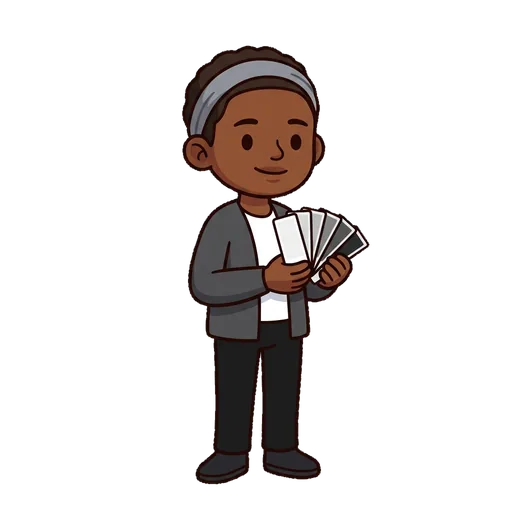
(Mentor, a theatre kid with a fan of grey swatches) - never asks who is right; asks what each side really needs
-
Rheo
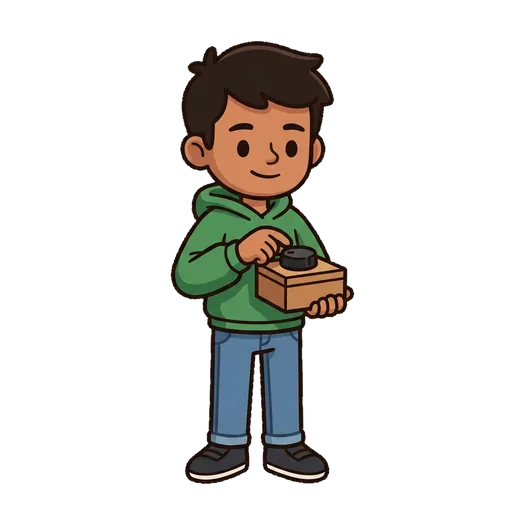
Turns an all-or-nothing switch into a dial
-

Tolly
Asks how many, really - and counts
-
Ellery
Asks how much, compared with what
-
Odelia
Asks how sure we really are
-

Halvie
The Split move - each side gets part of what they want
-

Turnby
The Alternate move - take turns across time
-

Quid
The Trade move - swap something each side values
-
Tierney
The Stack move - do both, one on top of the other
-

Novo
The Third Option - invents what neither side proposed