Bittern
THE TWO-BRIDGE — when two of your tiles share TWO different empty cells that would each join them, you are already safely connected: if a rival takes one link, you take the other. Two paths to the same place cannot both be blocked.
Loading audio…
Press play to listen along. The line being read lights up as you go.
Show full transcript
Loading transcript…
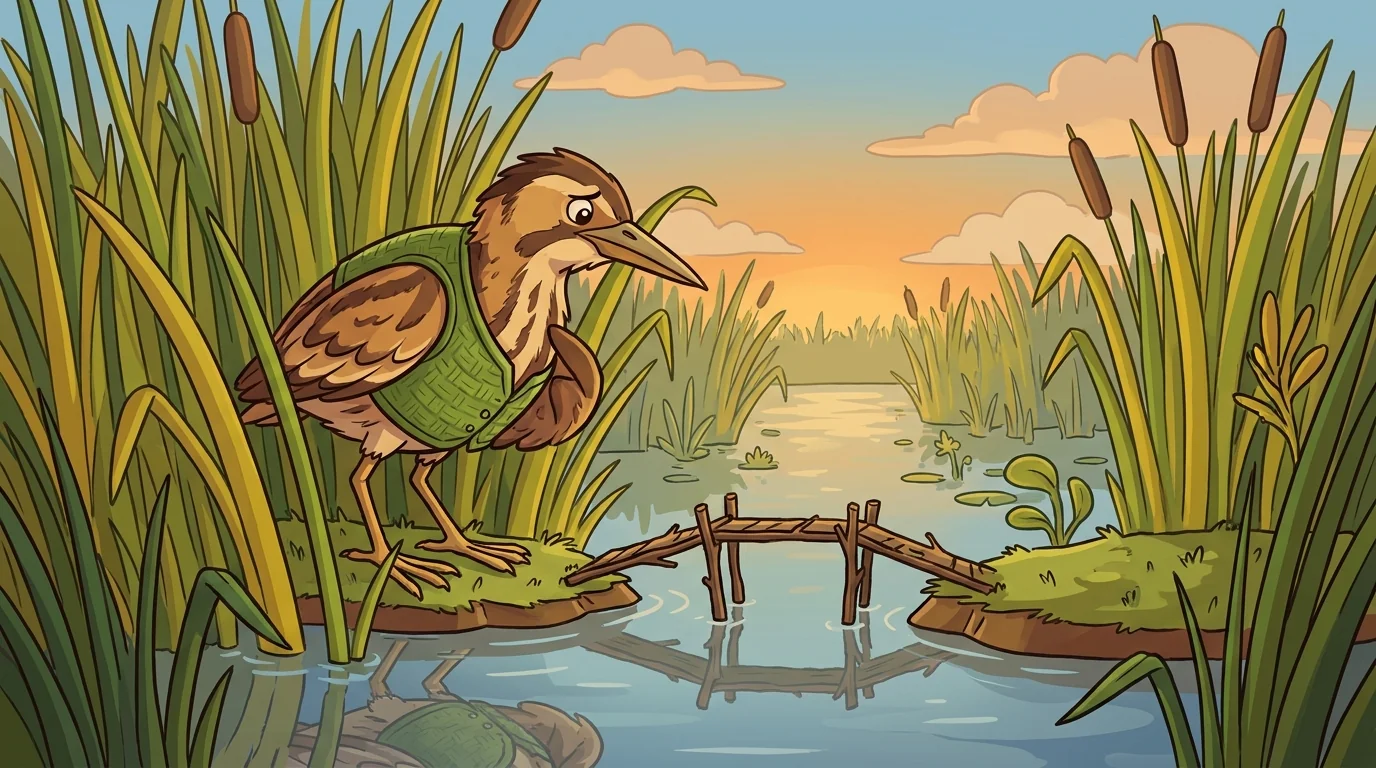
Bittern is a stripy, secretive bird who stands so still among the reeds that you could look right at him and see only grass. He is a quiet thinker, and the thing he thinks about most is this worried little question that haunts every player on the board: what if my bridge gets cut?
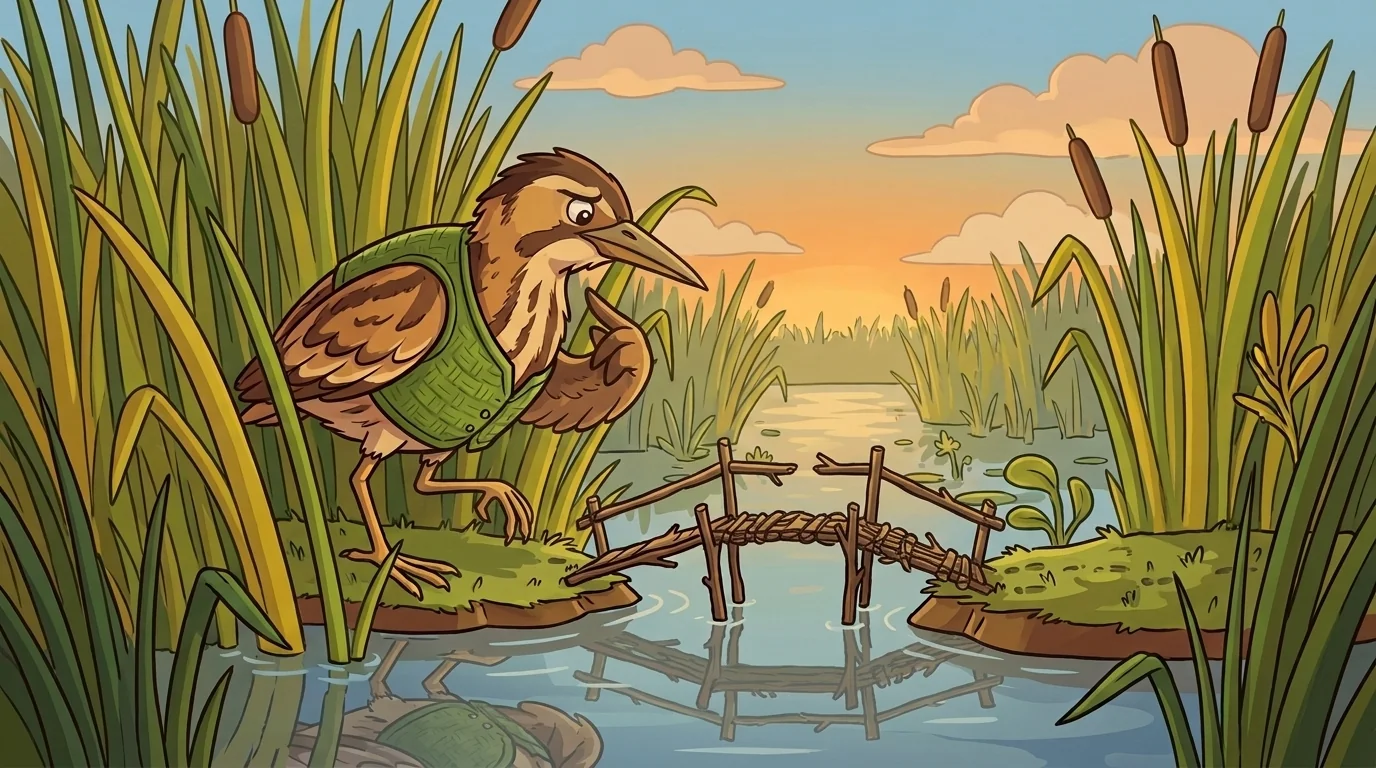
You know the feeling. You have traced a beautiful line of word-tiles halfway across the water, and then a rival drops a stone right in the one gap you needed, and — snap — your bridge is broken and your heart sinks.
Bittern has a rule that makes that fear go quiet. He calls it the two-bridge.
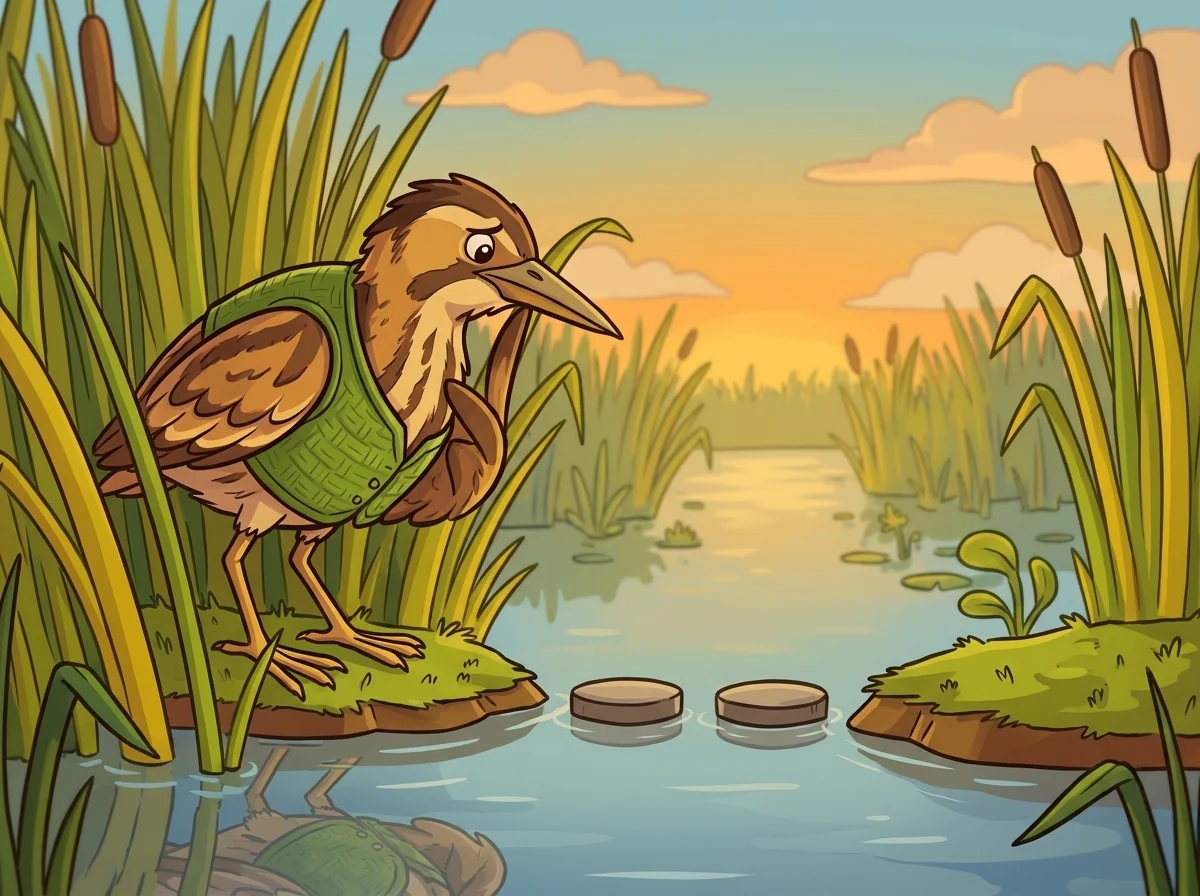
Here is what he does. Instead of leaving a single empty cell between two of his tiles, Bittern arranges his stones so they share two different empty cells — two separate spots, and stepping into either one would join his tiles together. Then he simply… relaxes. He doesn't rush to fill either gap.
"Why aren't you connecting them?" asks an anxious young grebe. "A rival could take that empty cell!"
"Let them," says Bittern, barely moving. "If they take one, I take the other. There are two ways across, and one stone can only block one way. Two paths to the same place cannot both be blocked."
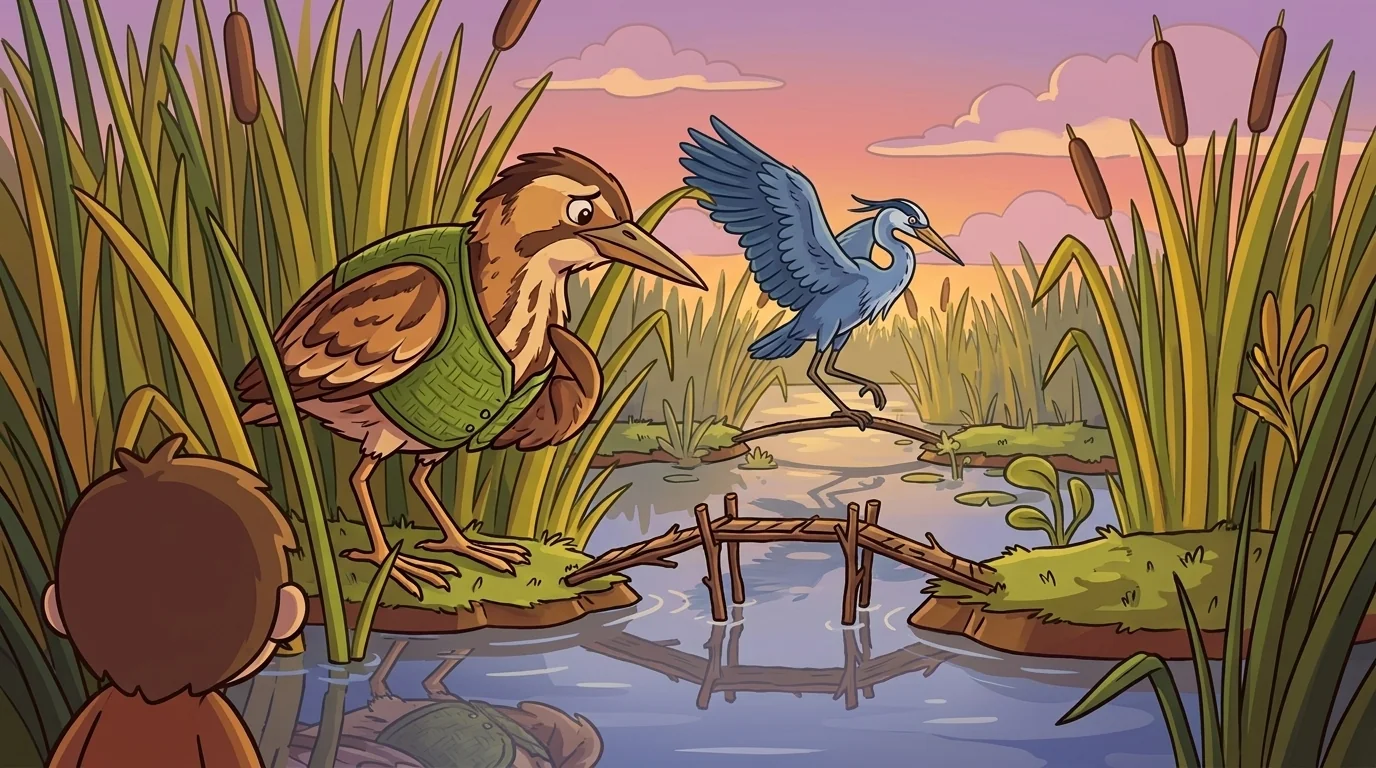
And it's true. The grebe watches a heron rival swoop in and seize one of the two empty cells — and Bittern, unhurried, just steps calmly into the second one. His tiles join. His bridge holds. The block did nothing.
This is Bittern's gift to the marsh: two ways to cross is the same as already being crossed. A connection with a backup isn't a connection you have to defend in a panic. It's one you can trust, which means you can spend your worry somewhere it's actually needed.
The deep reason is worth holding onto. On this board a single narrow gap is a weakness — everyone can see it, and someone will take it. But a pair of gaps that both do the same job is a fortress made of choices. It doesn't matter which one the rival grabs; you were always going to be fine, because you gave your future self options.
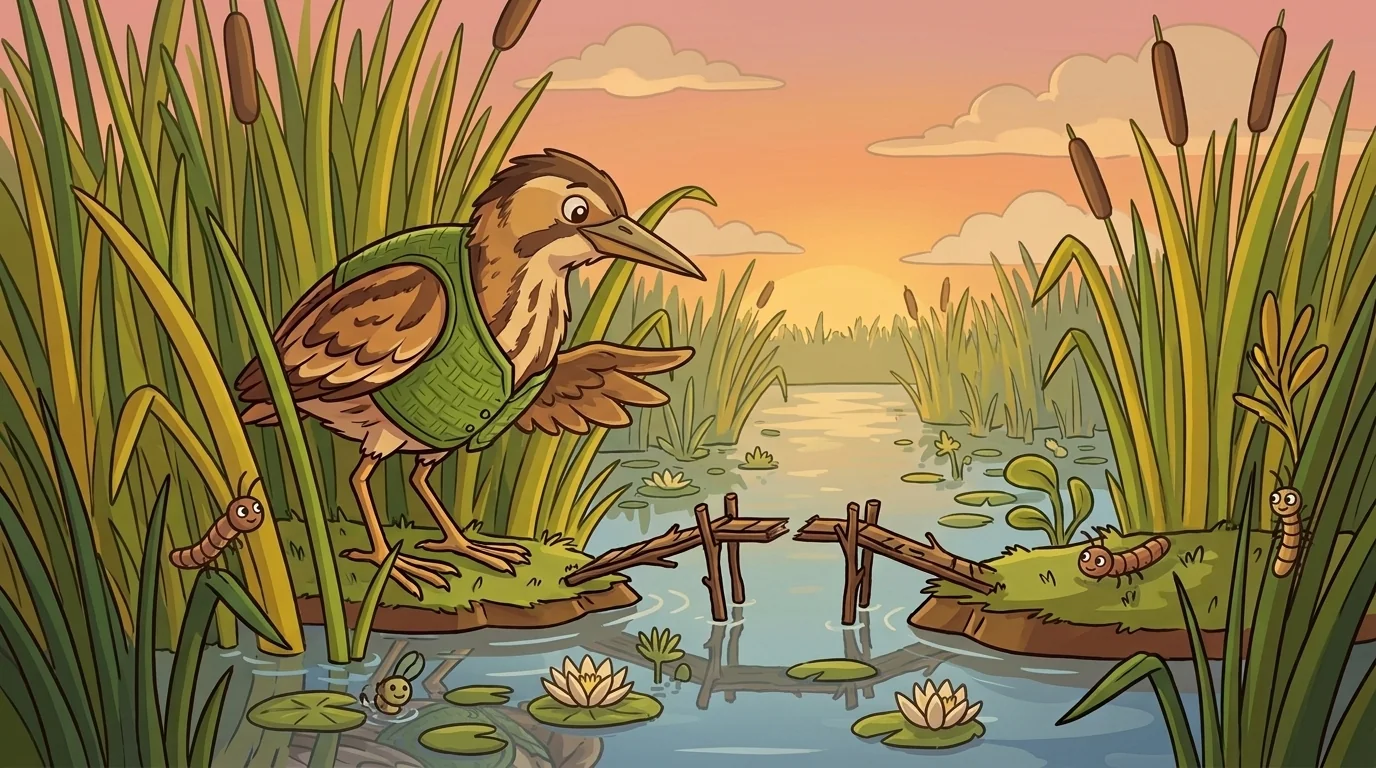
Bittern didn't learn this from winning. He learned it from all the times his bridges got snipped in half when he had left himself only one thin thread. It hurt. So he started, always, to leave himself a second way — and slowly the sinking feeling went away, replaced by a steady, reed-still calm.
You can build that same calm. When you are stretching your word-bridge across the middle of the board and you feel that worried flutter — what if they cut me here? — don't just plug the gap and hope. Ask Bittern's question instead: is there a way to leave TWO empty steps that both connect me? If you can, you have made yourself uncuttable, and you can breathe.
So say it the way Bittern says it, low and sure among the reeds: two ways to cross is the same as crossed. Leave a gap with two empty steps, and no rival's single stone can ever take your bridge from you.
The spanforge ensemble
Bittern is part of spanforge's distributed-narrative cast. Each character embodies a different curricular primitive; together they teach the full subject.