Dunlin
RESOURCE-DEGENERATION — the spellable words are a RESOURCE that runs down as the board fills; when no word-trace is left, the game gracefully degenerates to plain connection (Hex) — you can still win with simple steps, so scarcity changes your plan, not your chances.
Loading audio…
Press play to listen along. The line being read lights up as you go.
Show full transcript
Loading transcript…
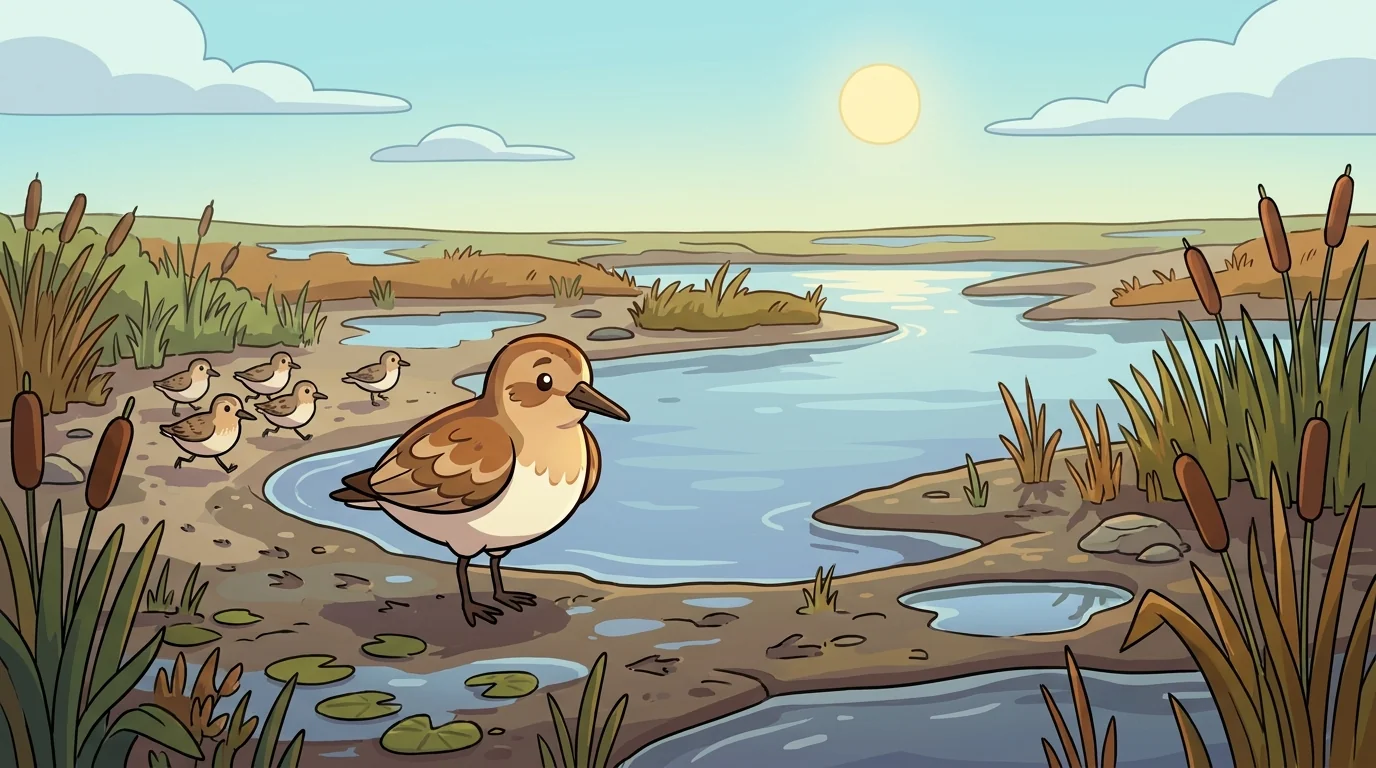
Dunlin is a small, plain, sensible shorebird who runs along the water's edge in tight little flocks, and he is the wisest bird in the marsh about a thing the flashier players forget: the good words don't last forever.
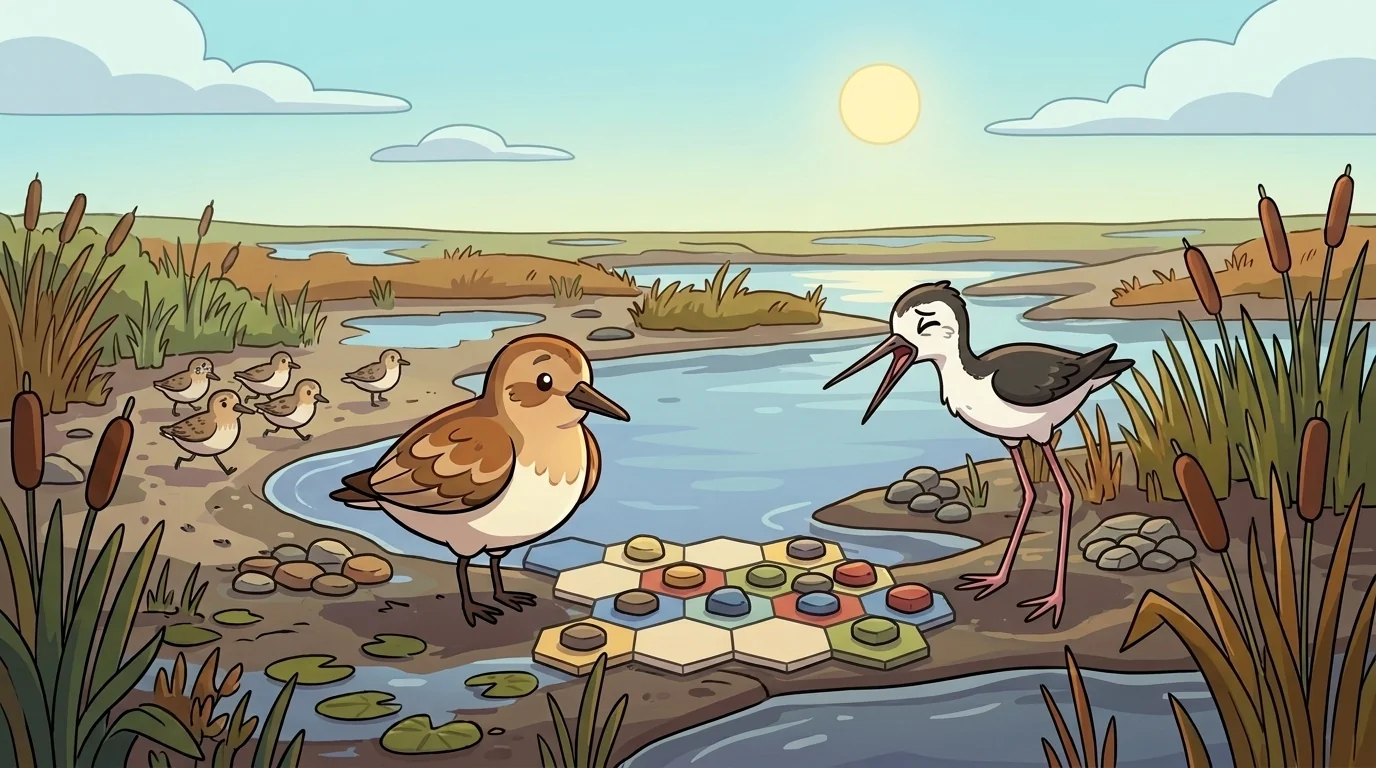
Early in a game, the board is wide open and letters are everywhere. Words are easy — cart, tide, star, planet — the tiles practically spell themselves, and the young birds trace long, glorious bridges and feel like geniuses. But as the board fills up with everyone's stones, the leftover letters get scattered and awkward. The lovely, obvious words run out. And that's when Dunlin watches the panic start.
"There are no more words!" wails a young stilt, staring at a messy corner. "It's hopeless — I can't spell anything, I've lost!"
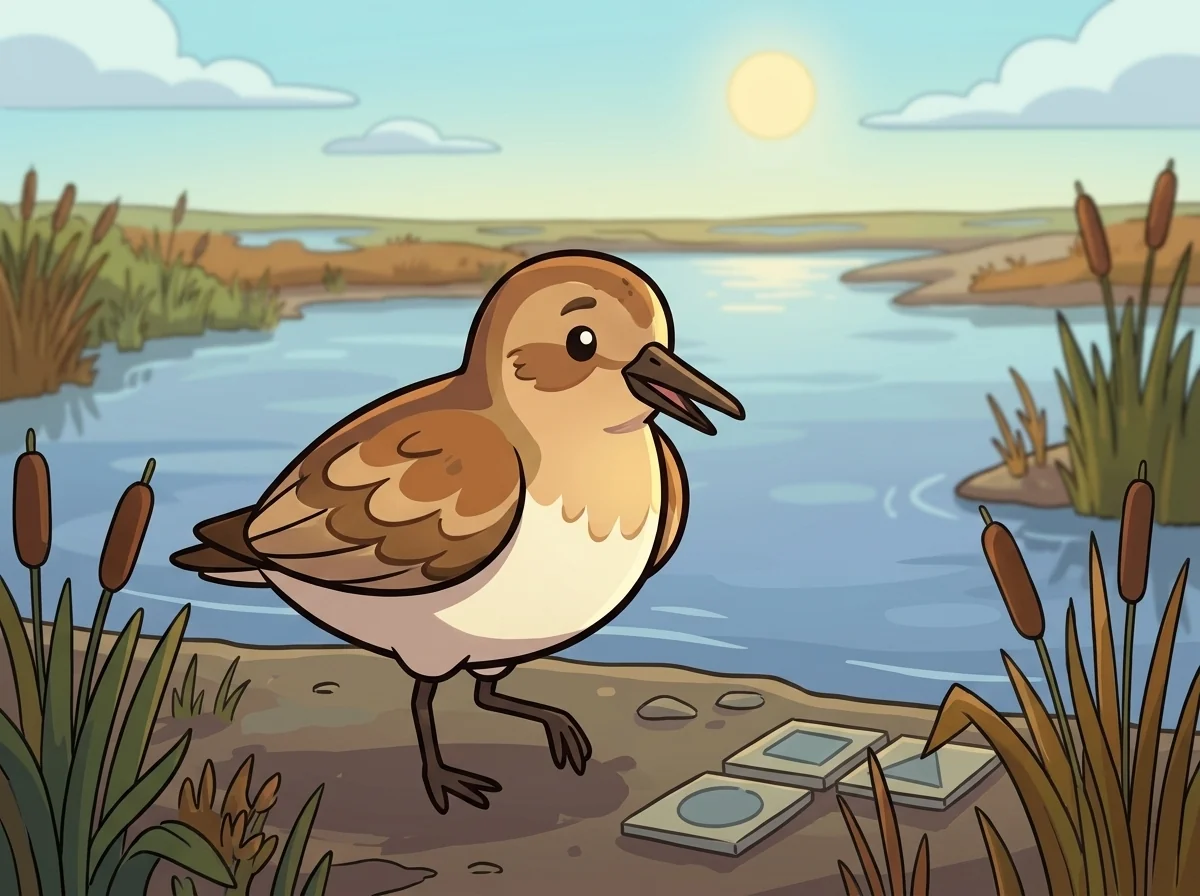
Dunlin, running past, stops and looks. "You haven't lost," he says mildly. "You've just run out of the fancy moves. The game isn't over. It only got simpler."
Because here is Dunlin's deep understanding of the board: the spellable words are a resource, like berries on a bush, and resources run down. When they're gone, the game doesn't stop — it degenerates into something plainer and older. With no word-trace left, you go back to the bare bones underneath: plain connection. You just place a tile next to a tile you own, step by simple step, the way the ancient game of Hex has always been played. No spelling required. And you can still connect your shores. You can still win.
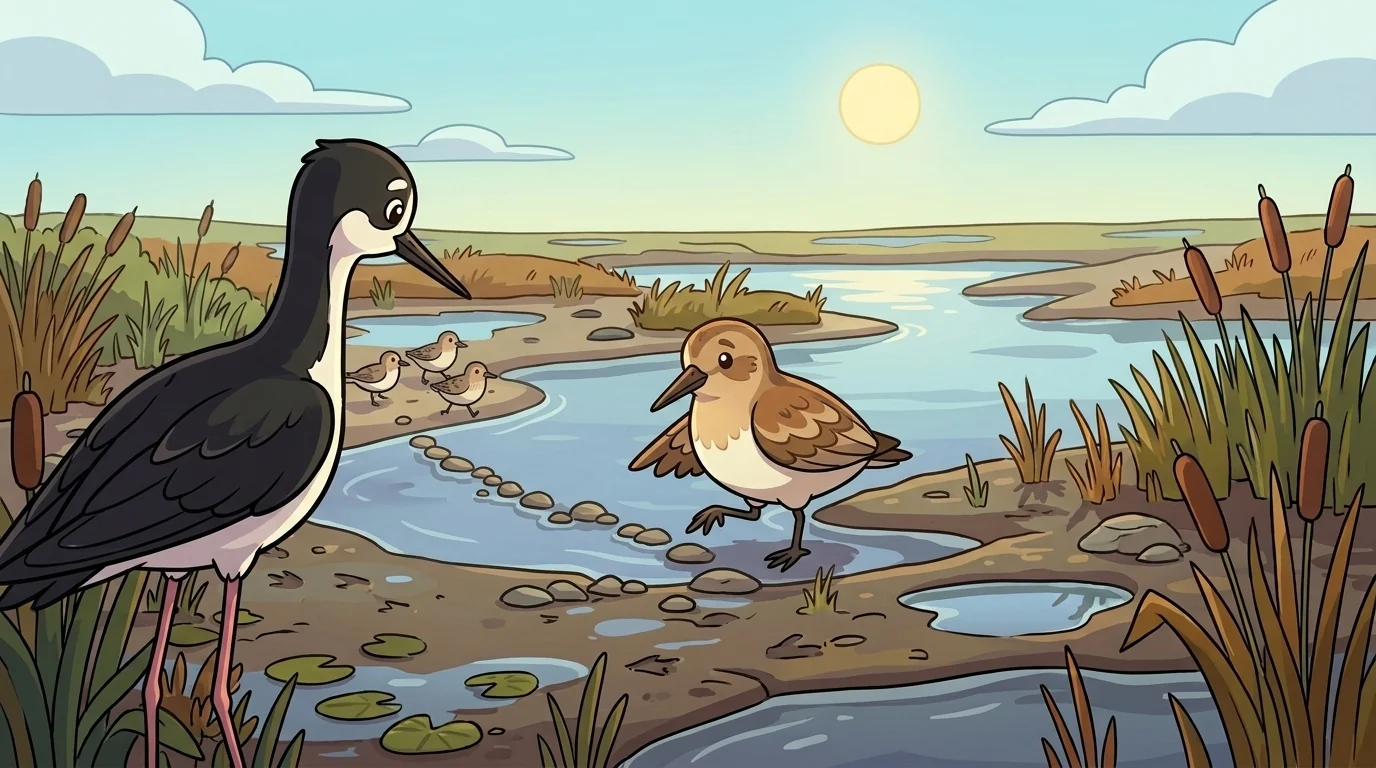
"So I don't need a word for every step?" asks the stilt, hope creeping back in.
"You'd love a word — a word grabs more and does more," says Dunlin. "But when the words are gone, a plain step still reaches. Scarcity changes your plan. It doesn't change your chances."
This is Dunlin's rule: resource-degeneration. The rich moves (spellable words) are limited, and they thin out as the board fills. When they run dry, the game gracefully falls back to the simple game underneath — connect with plain steps. Knowing this changes how a wise bird plays: early, when words are plentiful, you spend them boldly and reach far; late, when they're scarce, you switch to careful, plain, one-cell-at-a-time connection and grind out the crossing.
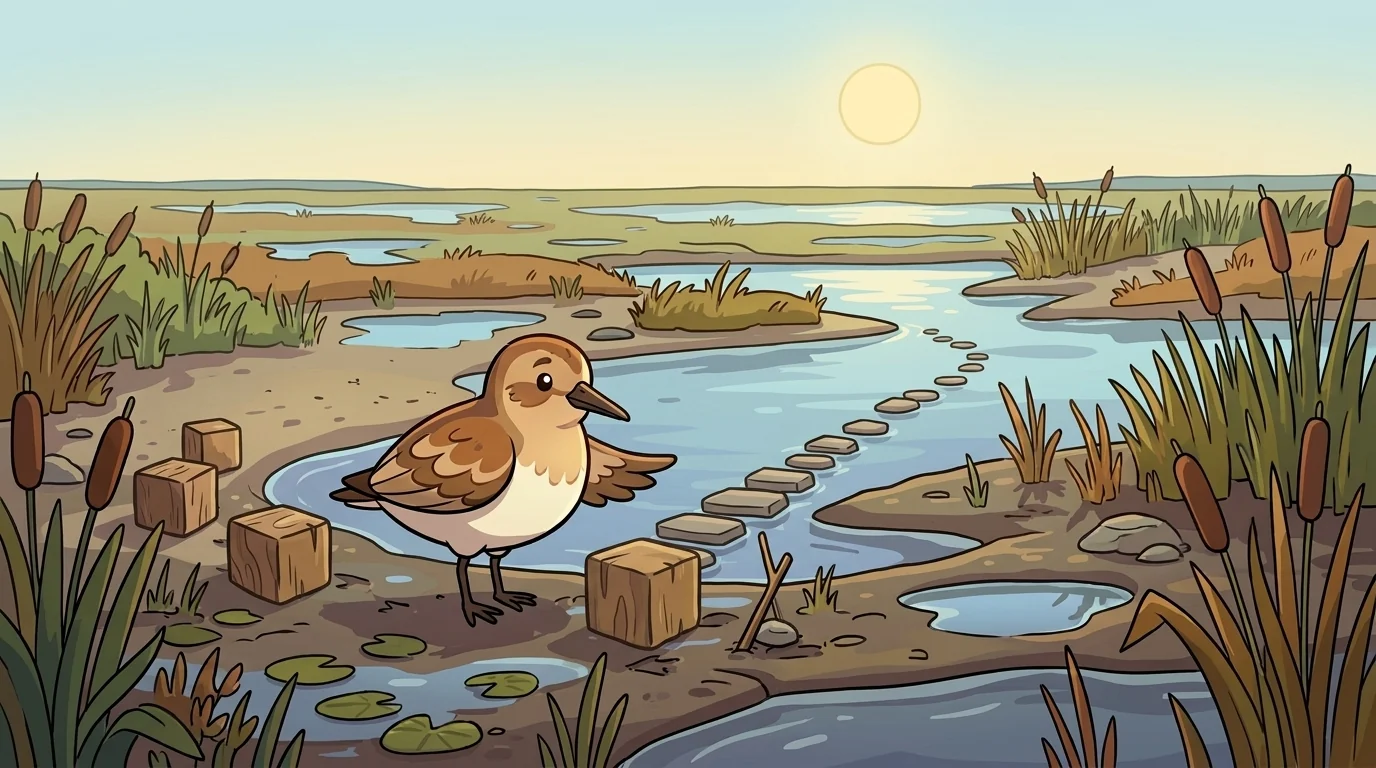
There's a calm, grown-up truth in Dunlin's little grey feathers. So many things feel hopeless only because the easy, obvious options ran out — and we mistake "the easy way is gone" for "there is no way." Dunlin teaches the opposite: when your best resource runs low, don't panic. Notice it (that's the important part), then shift to a simpler tool and keep going. Running out of the fancy option is a signal to change your plan, not a reason to quit — and very often the plain path, walked patiently, still gets you all the way across.
So when your board fills up and the good words vanish and that hopeless flutter rises, be Dunlin. Take a breath and see it clearly: the words are just a resource, and this one's spent. Then drop to the simple game underneath and connect, plain step by plain step, right to the far shore.
Say it the way Dunlin says it, trotting steadily along the water's edge: when the good words run out, the game isn't over — it just gets simpler. No words left? Then connect with plain steps and keep going.
The spanforge ensemble
Dunlin is part of spanforge's distributed-narrative cast. Each character embodies a different curricular primitive; together they teach the full subject.