Godwit
THE DIGRAPH TILE — a digraph (NG, CH, SH, TH, PH) is TWO letters that spell ONE sound and count as ONE step in a trace; treating the pair as a single tile lets you spell words that a letter-by-letter reader would get stuck on.
Loading audio…
Press play to listen along. The line being read lights up as you go.
Show full transcript
Loading transcript…
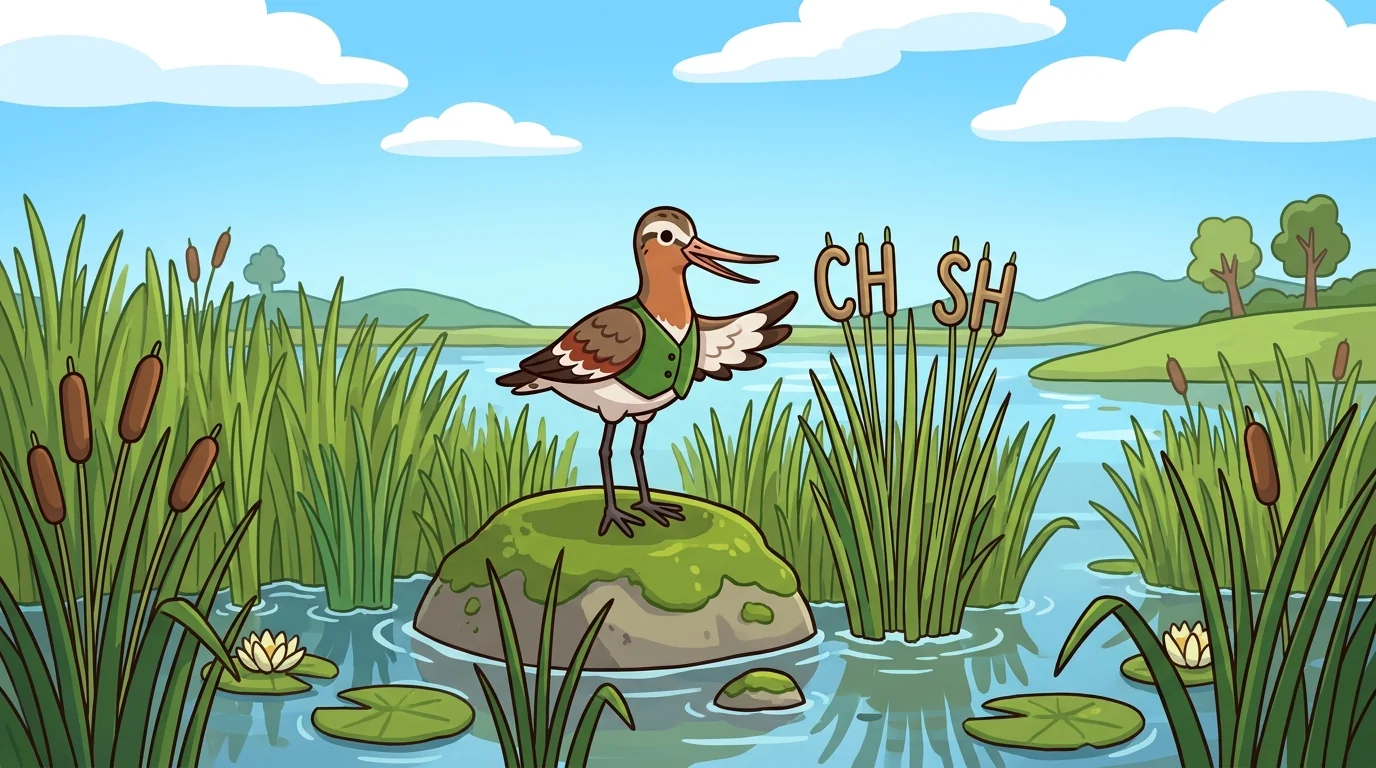
Godwit is a handsome, long-legged wading bird with a beak that is slightly upturned at the tip, and he is the marsh's expert on a puzzle that used to drive him a little bit crazy: *the sounds that are spelled with two letters but heard as one.*
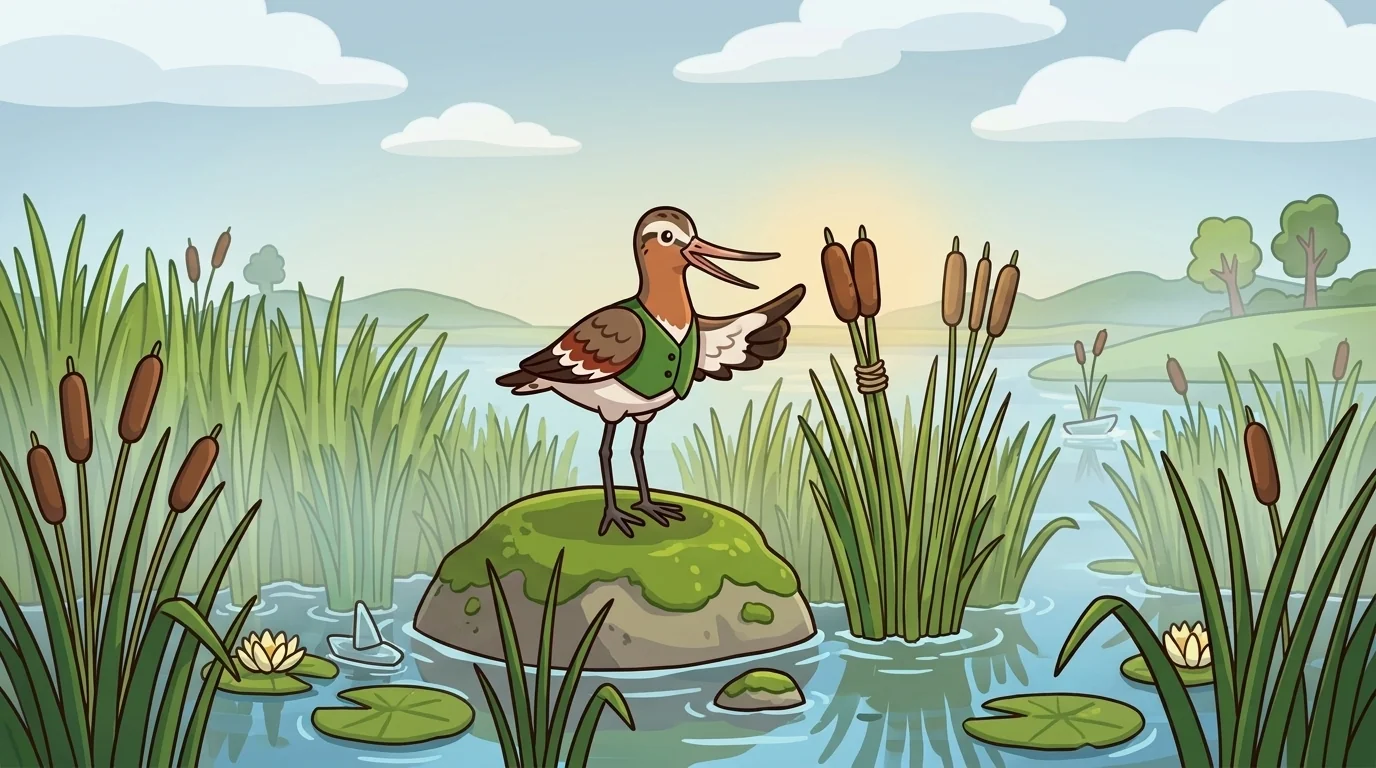
For a long time Godwit read the board the way everyone does at first — one letter, one step, one letter, one step. And it worked fine for words like cat and mud. But then he'd reach a word like SHIP and get completely stuck. He'd step onto the S, then the H, and think: S… H… that makes a "suh-huh" sound? That's not a word! The S and the H refused to behave as two separate steps. He'd stall out, frustrated, sure the board was broken.
Then one misty morning it clicked. S and H aren't two sounds — they're ONE. "Sh." Together they make a single quiet shhh, like wind in the reeds. Two letters, wearing one coat, doing one job. And once Godwit started reading them as a single step — one tile that happens to hold two letters — the word SHIP worked perfectly: SH… I… P. Three steps, not four. The board wasn't broken. He'd just been counting the coat's two buttons as two coats.
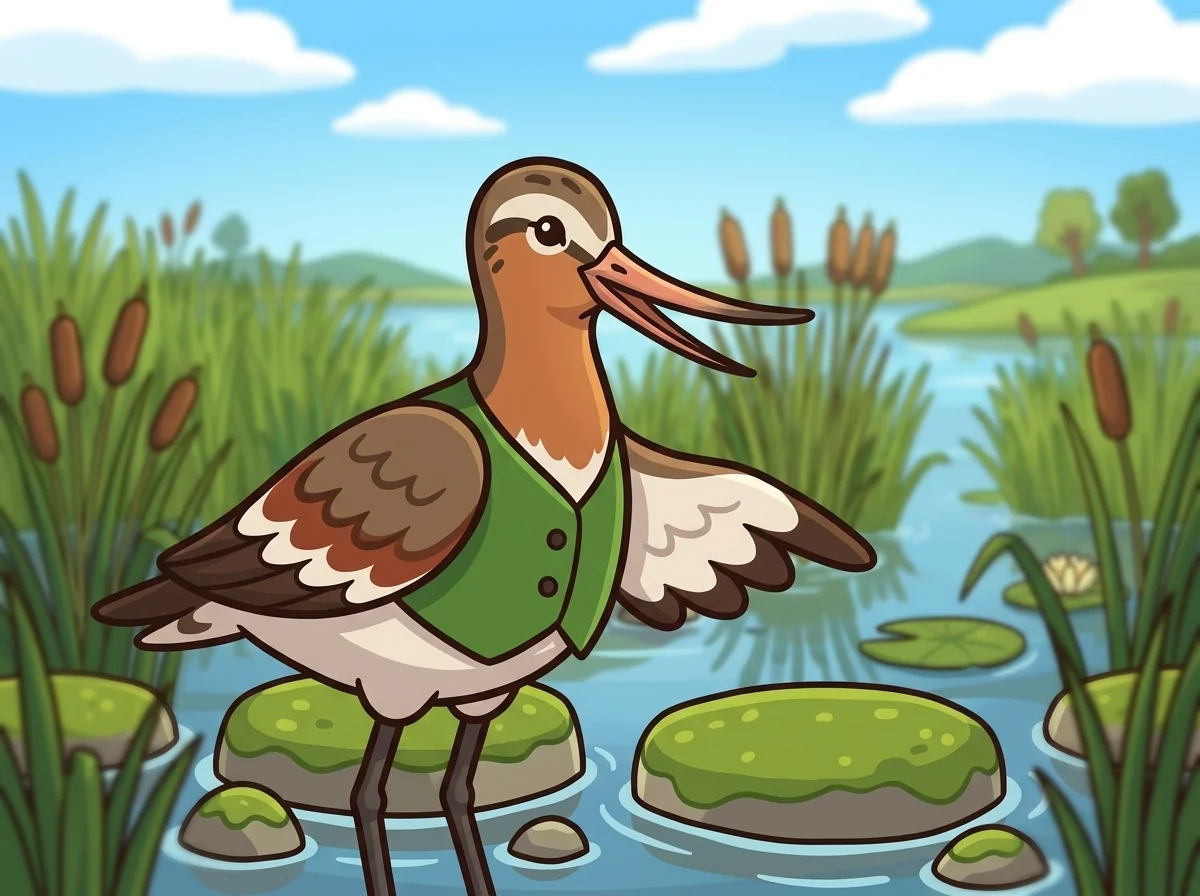
This is Godwit's rule: the digraph tile. Some pairs of letters — NG, CH, SH, TH, PH — are two letters that spell one sound, and in a trace they count as one step. RING isn't R-I-N-G as four fussy little sounds; it's R… I… NG, with the NG humming as a single step at the end. THIN is TH… I… N. CHOP is CH… O… P. Read the pair as one tile, and words that used to trip you up suddenly click into place.
"So NG is like… one stepping stone that's a bit wider?" asks a young stilt.
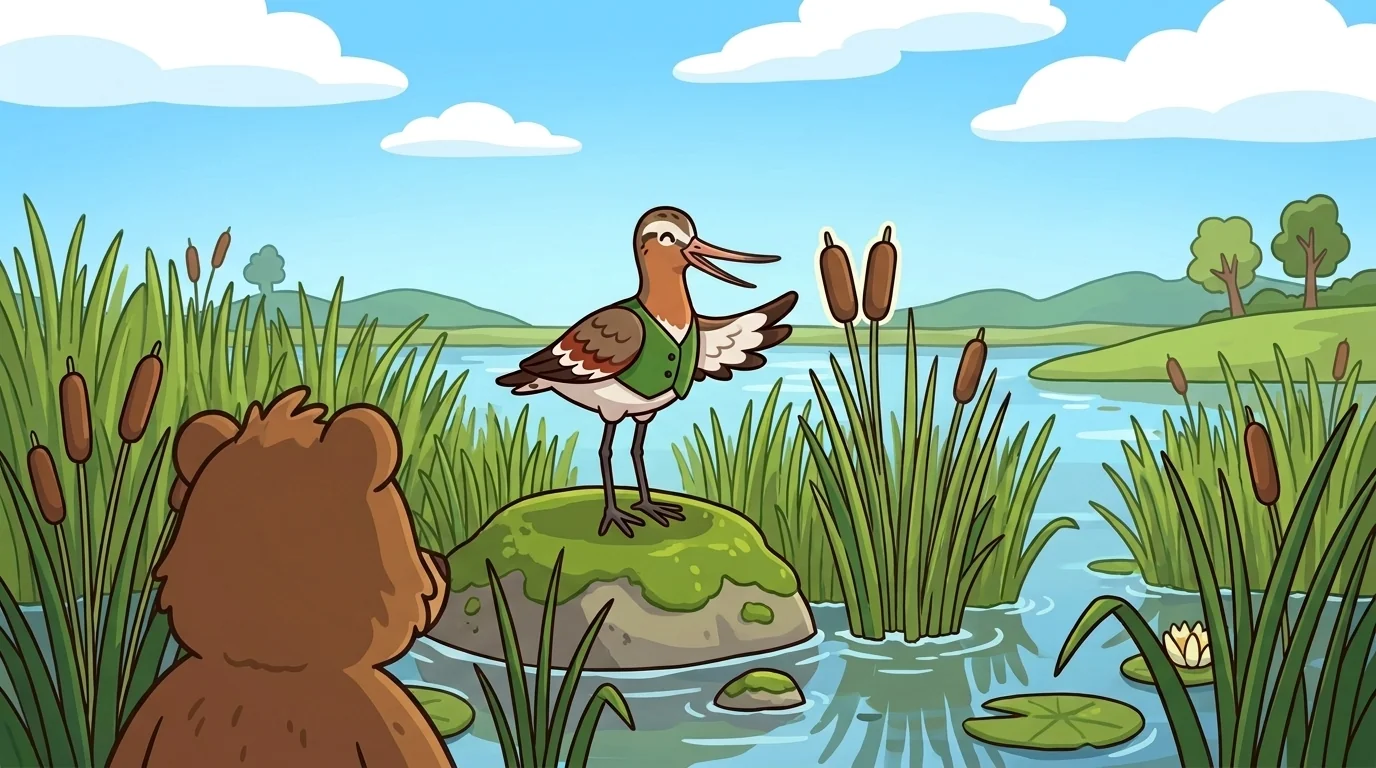
"Exactly," says Godwit, pleased. "Two letters, one sound, one step. Once you see the pair, you stop stumbling."
There's a warm lesson in Godwit's story, and it's about the thing that used to frustrate him. Lots of clever birds get stuck not because they're not smart, but because they're reading something one tiny piece at a time when the pieces are secretly working together. The trick isn't to try harder at the letter-by-letter reading. It's to step back and see the pattern — to notice that these two go together and make one thing. The moment you see the pair, the confusion melts.
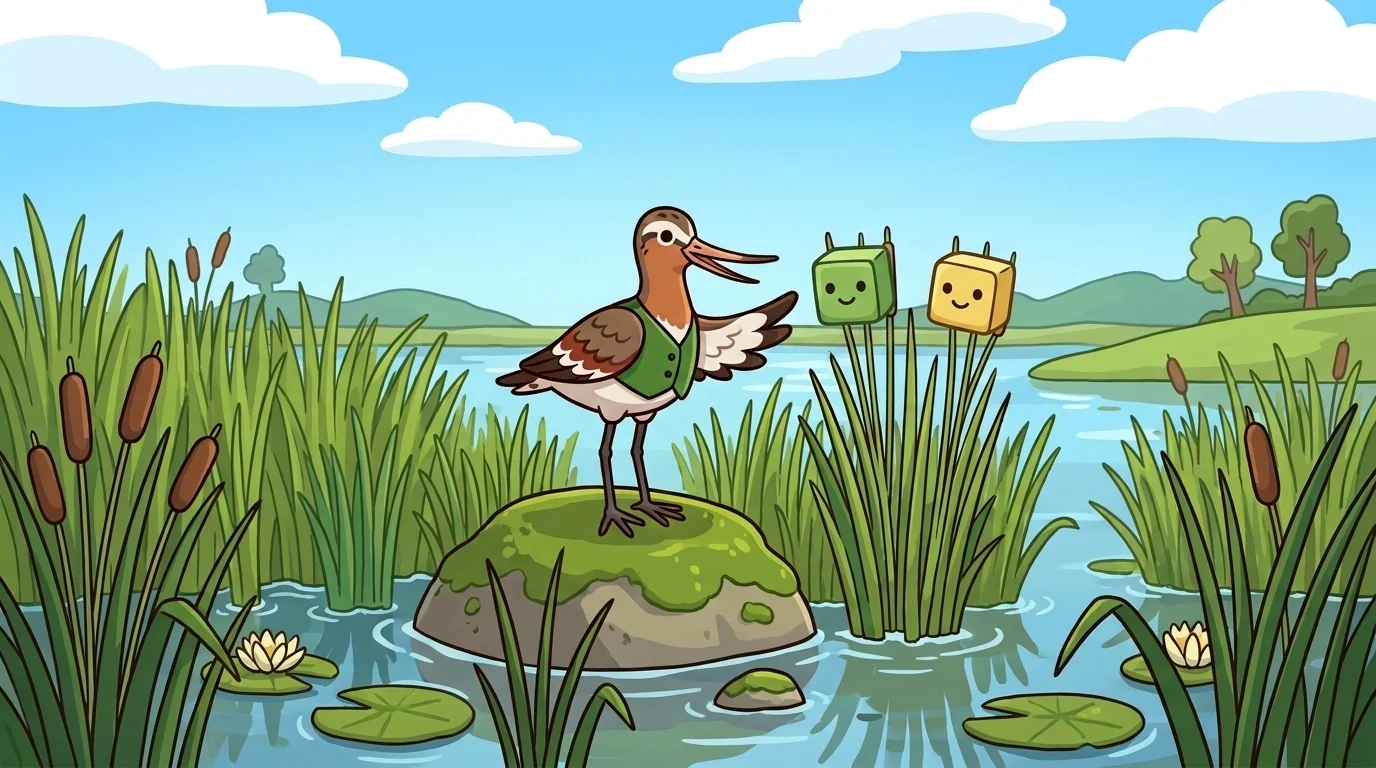
And notice how kind Godwit is about it. He never makes a young bird feel silly for stalling on SHIP. He remembers stalling on it himself. He just points out the coat with two buttons and says, gently, "Say it out loud — hear how the S and H make one sound? That's your clue."
So when a word won't work no matter how you step it, and you feel that old stuck frustration, be Godwit. Say the letters out loud and listen. Do two of them blur into one sound — sh, th, ch, ng? If they do, read that pair as a single tile and step it as one.
Say it the way Godwit says it, that upturned beak tilted to the wind: some sounds are two letters wearing one coat. NG, CH, TH — read them as a single step, and the word finally works.
The spanforge ensemble
Godwit is part of spanforge's distributed-narrative cast. Each character embodies a different curricular primitive; together they teach the full subject.