Reeve
LONGEST-WORD RECONCILE — when two players' traces both want the same cell, the tie is settled in favour of the LONGER valid word; a longer word is a stronger claim, so the cell goes to whoever spelled more with it.
Loading audio…
Press play to listen along. The line being read lights up as you go.
Show full transcript
Loading transcript…
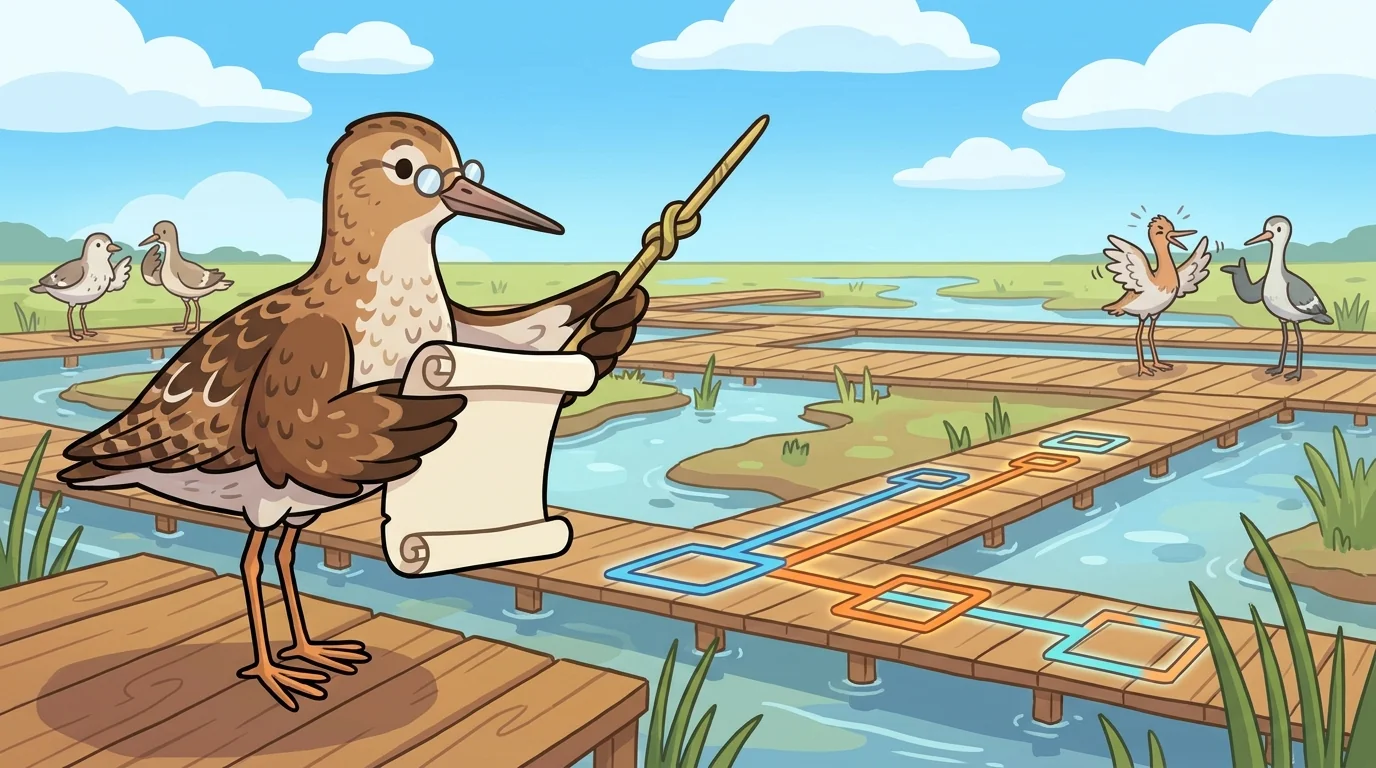
Reeve is a ruff — the females of her kind are actually called reeves — a calm, fair-minded wading bird who has quietly become the marsh's settler of arguments. Because on a busy board, sooner or later, two birds want the very same square. Stilt's trace reaches a cell going one way; a rival's trace wants that same cell going another. Both can't have it. Feathers ruffle. Voices rise. It's mine! No, mine!
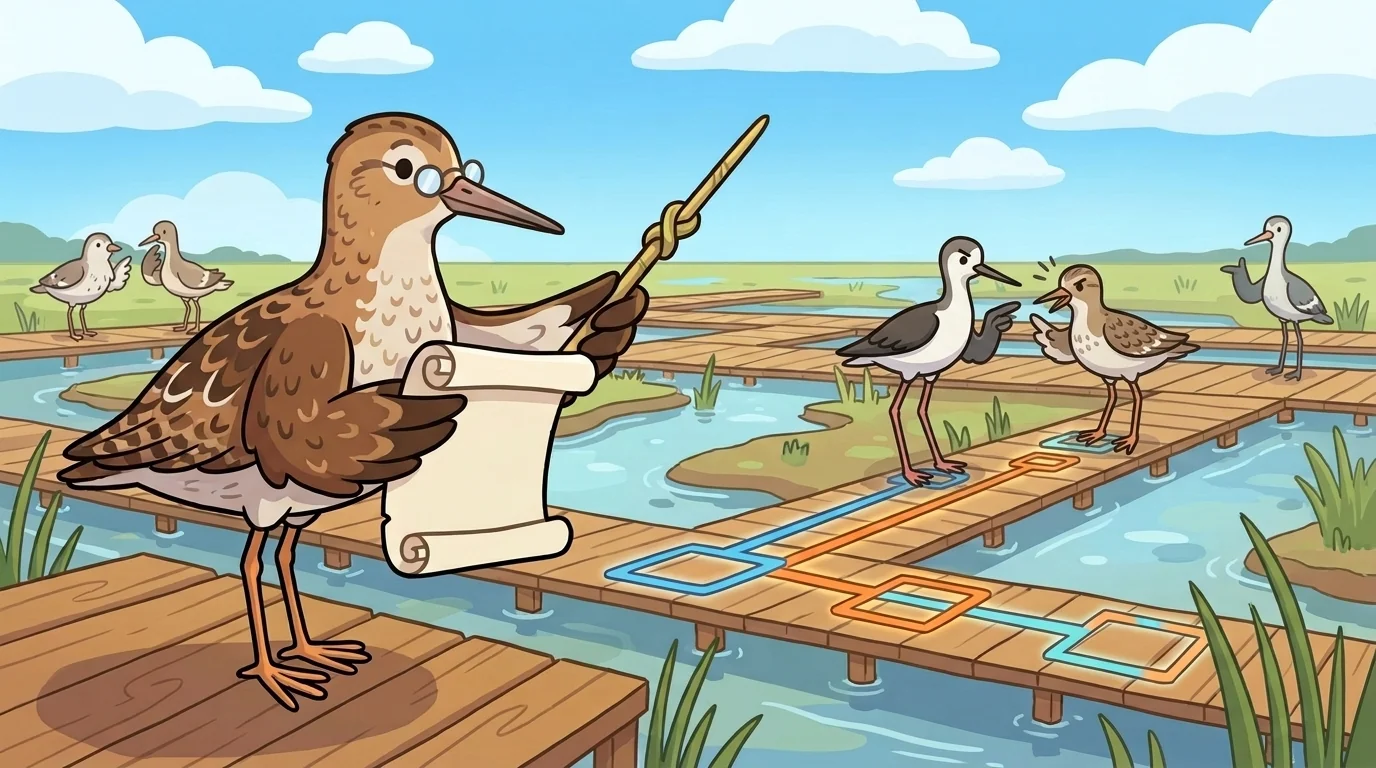
Before Reeve, these squabbles could stall a whole game — two birds glaring at one tile, neither budging. So Reeve gave the marsh a rule so clear and fair that the arguing simply stops.
"When two words want the same square," she announces in her even voice, "the longer word wins it."
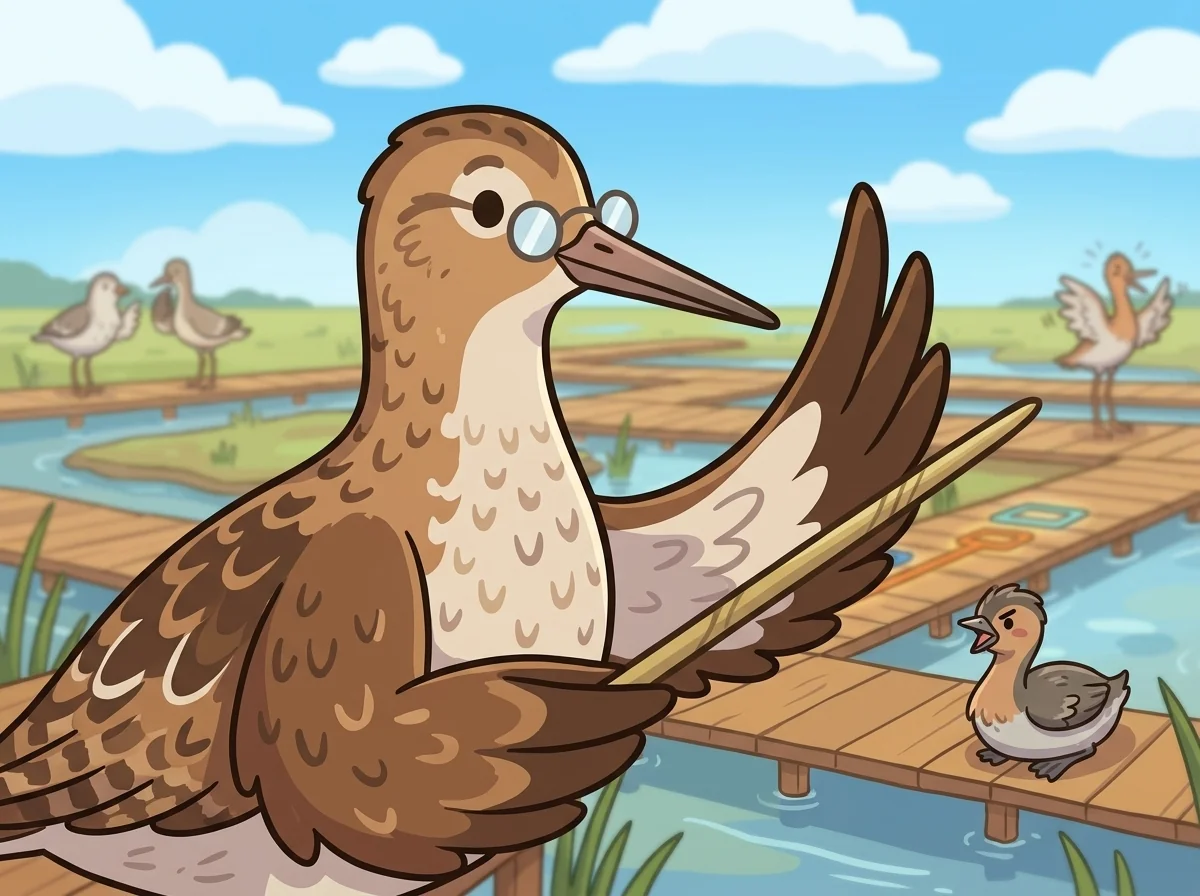
Here's how it works. Suppose your trace wants a cell as part of the word CAT (three letters), and a rival's trace wants that same cell as part of PLANET (six letters). Reeve holds up a wing. "Planet is longer. Planet wins the square." Not because the rival shouted louder, and not because Reeve likes them better — but because the longer word is the stronger claim. They built more with that cell. So the cell goes to the word that did more work.
"That's not fair, I wanted it!" cries a young grebe whose short word just lost.
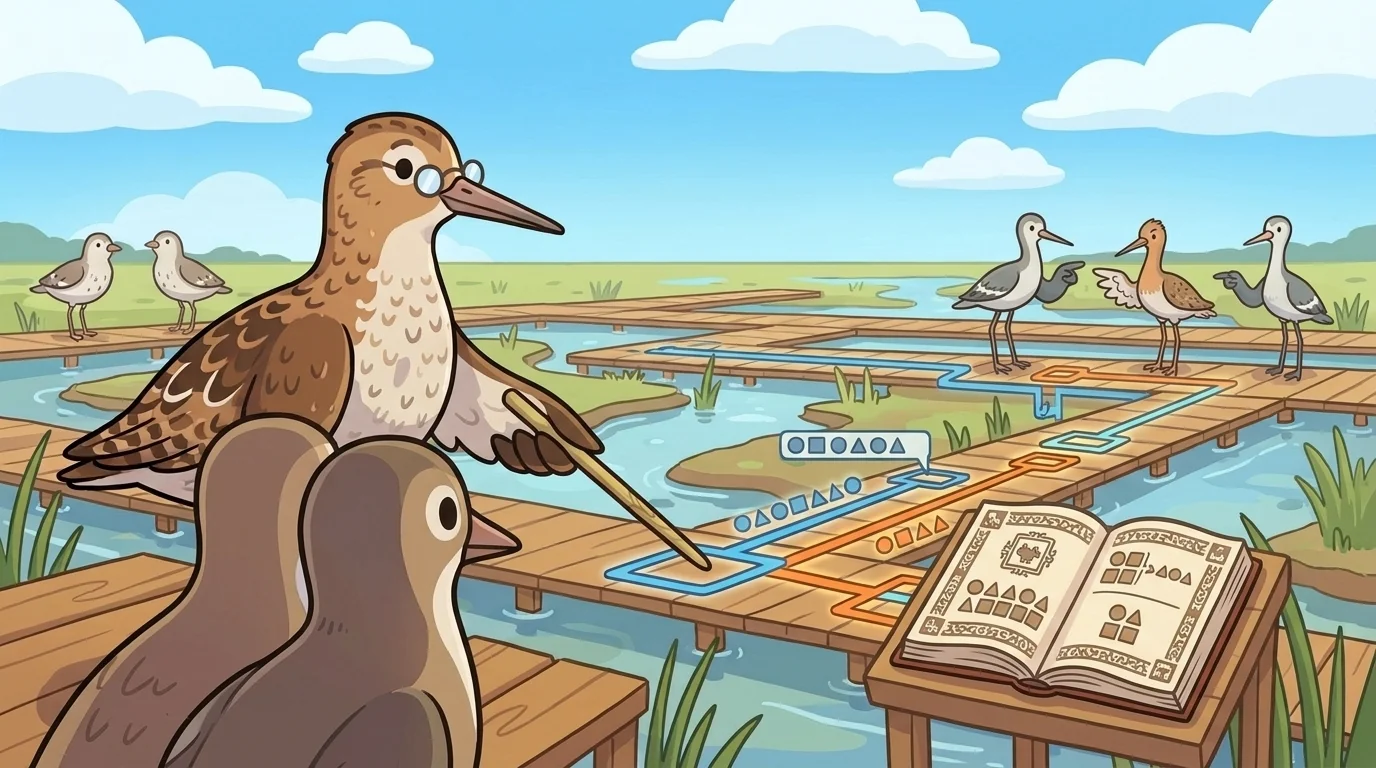
"Wanting it isn't a reason," Reeve says gently. "A longer word is a reason. The claim you can back with more is the claim that holds. Next time, reach for the longer word, and the square will be yours."
This is Reeve's rule: longest-word reconcile. A clash over a cell isn't settled by who's loudest or who got there first in the argument — it's settled by which valid word is longer. And that turns a fight into a fair contest: if you want to win contested squares, make longer, stronger words. The rule quietly rewards ambition and skill instead of stubbornness.
Watch the marsh change because of it. The birds stop shouting over tiles. When two traces clash, they just glance at the two words, see which is longer, and move on — no bruised feelings, because the rule was the same for everyone. And cleverly, they start reaching for longer words on purpose, because a longer word is armour: it wins the squares that shorter words can't defend.
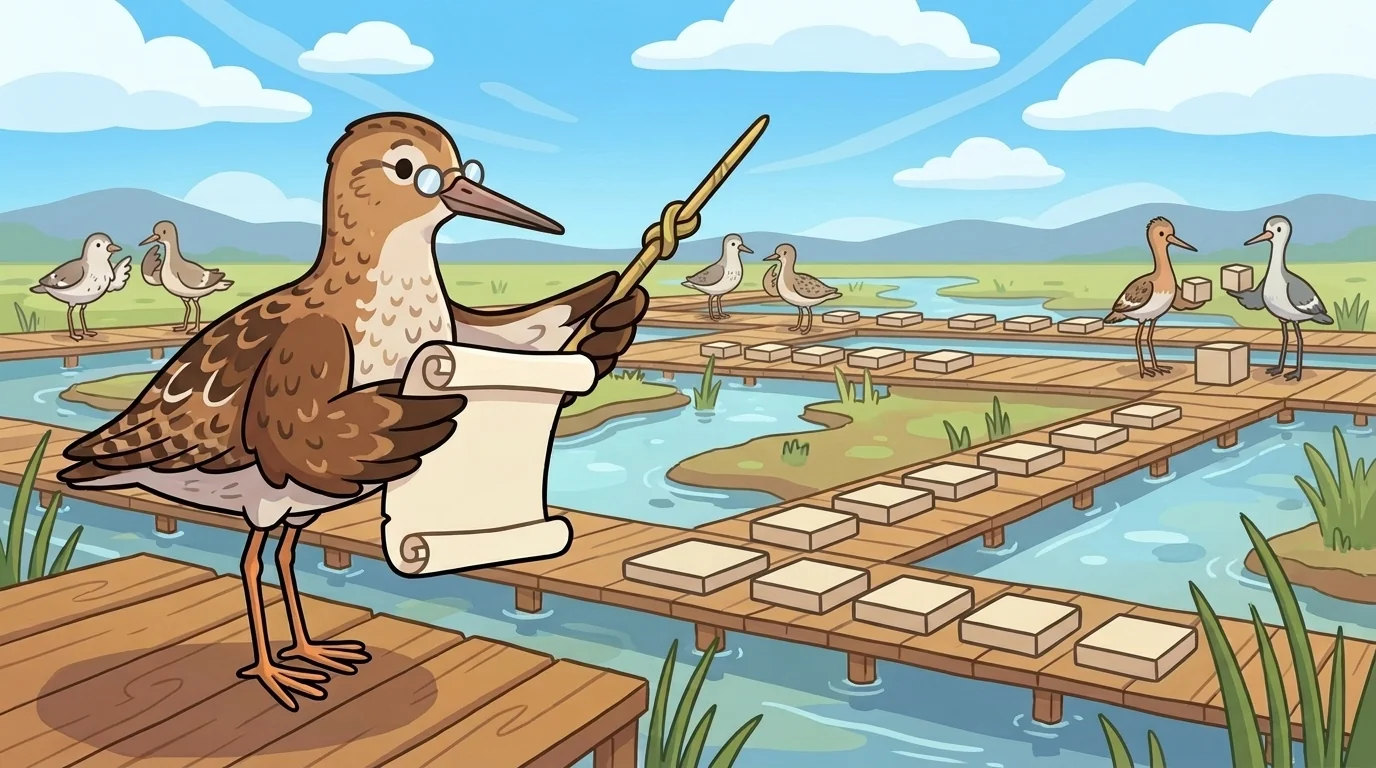
There's a grown-up truth folded into Reeve's fairness. Real disagreements — about who's right, who gets the last word, whose idea wins — go so much better when everyone agrees on a clear, fair rule before the argument, and then lets the rule decide. And the claims that deserve to win usually aren't the loudest ones; they're the ones backed by the most — the most reasons, the most work, the most care. Reeve teaches the marsh to make the strong claim, then accept the fair result with grace.
So when your trace clashes with a rival's over the same tile, don't ruffle up and argue. Be Reeve. Ask the fair question: which of us spelled the longer word here? If theirs is longer, let it go without a sulk — and next time, reach further. If yours is longer, the square is rightfully yours.
Say it the way Reeve says it, calm and even across the water: when two words want the same square, the longer word wins it. The claim you can defend with more is the claim that holds.
The spanforge ensemble
Reeve is part of spanforge's distributed-narrative cast. Each character embodies a different curricular primitive; together they teach the full subject.