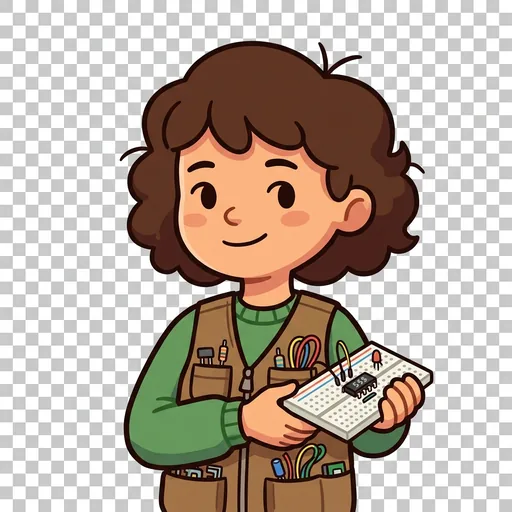
Plover
CLAIM-BY-ADJACENCY — you may only extend your territory from a cell that already touches tiles you own; every new claim must grow from your existing bridge, so your holdings stay one connected whole instead of scattered islands.
Loading audio…
Press play to listen along. The line being read lights up as you go.
Show full transcript
Loading transcript…
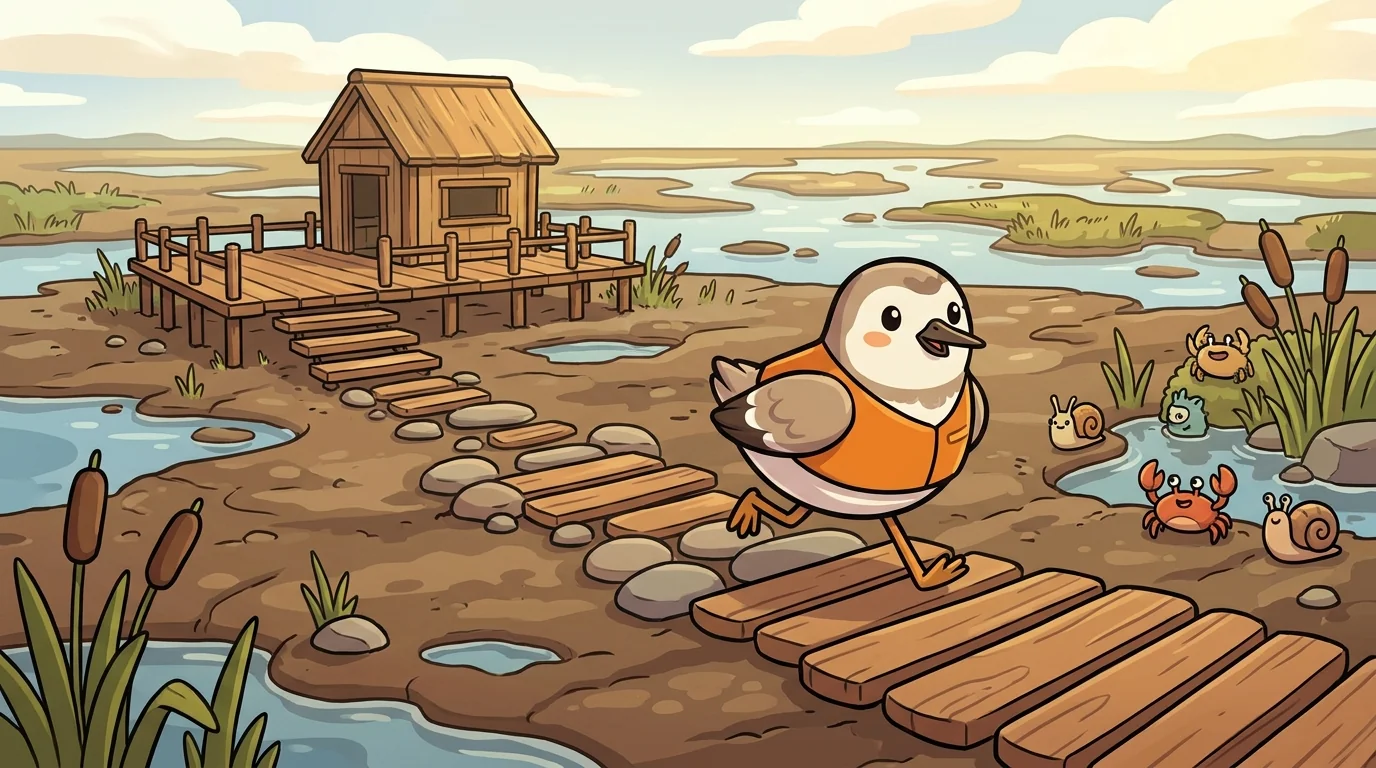
Plover is a round, brisk little shorebird who runs in quick bursts across the mud — run, stop, run, stop — and never, ever takes a step onto ground that isn't connected to where she already stands. She is the marsh's builder of solid, joined-up things, and she has watched too many birds make the same sad mistake to make it herself.
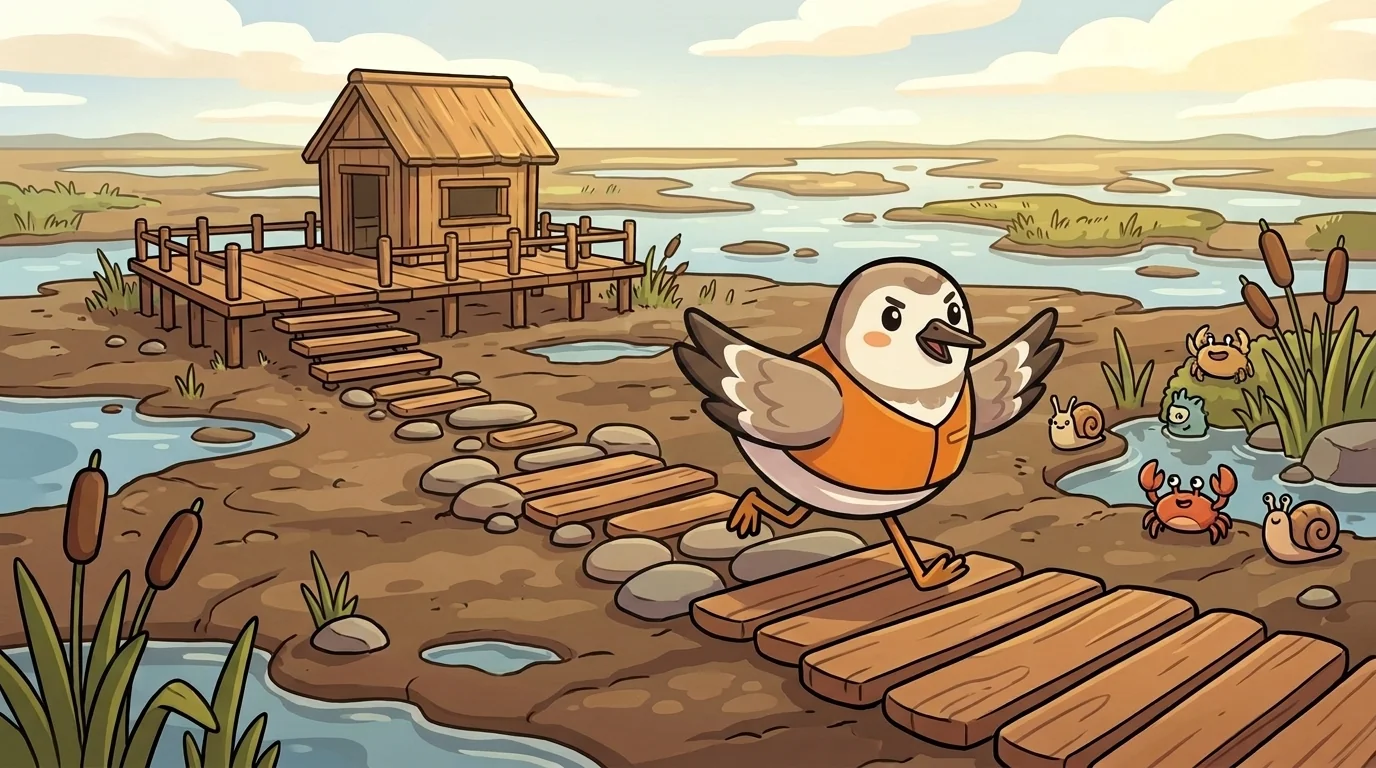
The mistake looks like this. An excited young bird spots a gorgeous cluster of letters way over on the far side of the board, races over, and plants a shiny word-tile there — a beautiful little island, all alone in the deep water. Then he spots another nice cluster somewhere else and plants a second lonely island. And a third. Soon he has tiles scattered all across the board like dropped seeds — and not one of them helps another. When the game ends, his shores are still not connected, because his lovely islands could never reach across the gaps between them.
Plover shakes her head and shows the better way. "Build from where you already stand," she says. She starts at her own shore, and every single new word she traces grows out of a tile she already owns. Her bridge is never a scatter of islands. It is one connected, creeping line, each new claim reaching out from the last, like a vine growing along a fence.
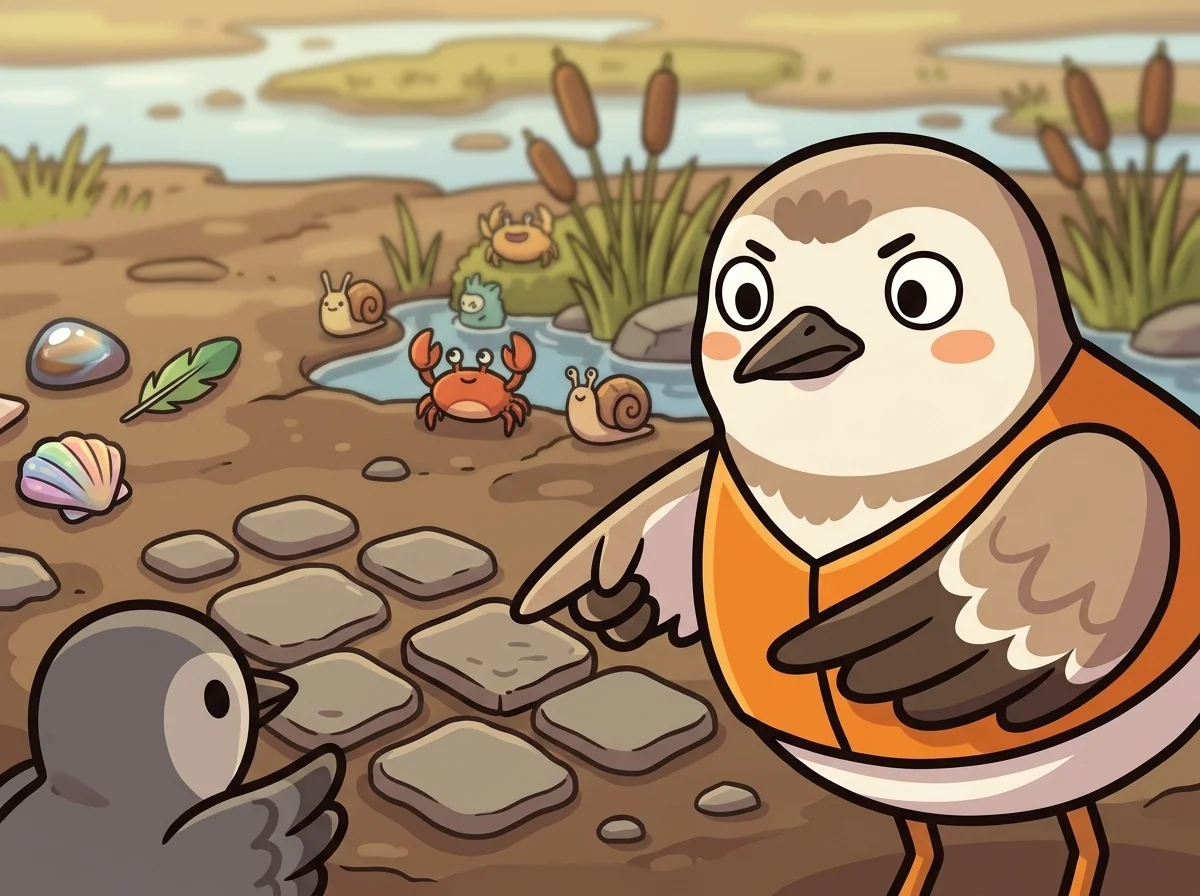
This is Plover's rule: claim-by-adjacency. You may only extend from a cell that already touches your territory. No teleporting to the pretty far corner. No lonely islands. Every new tile holds hands with a tile you already have — so what you build stays one whole thing, and one whole thing can actually reach across and win.
"But the letters over there are better!" the young bird protests, pointing at his scattered treasures.
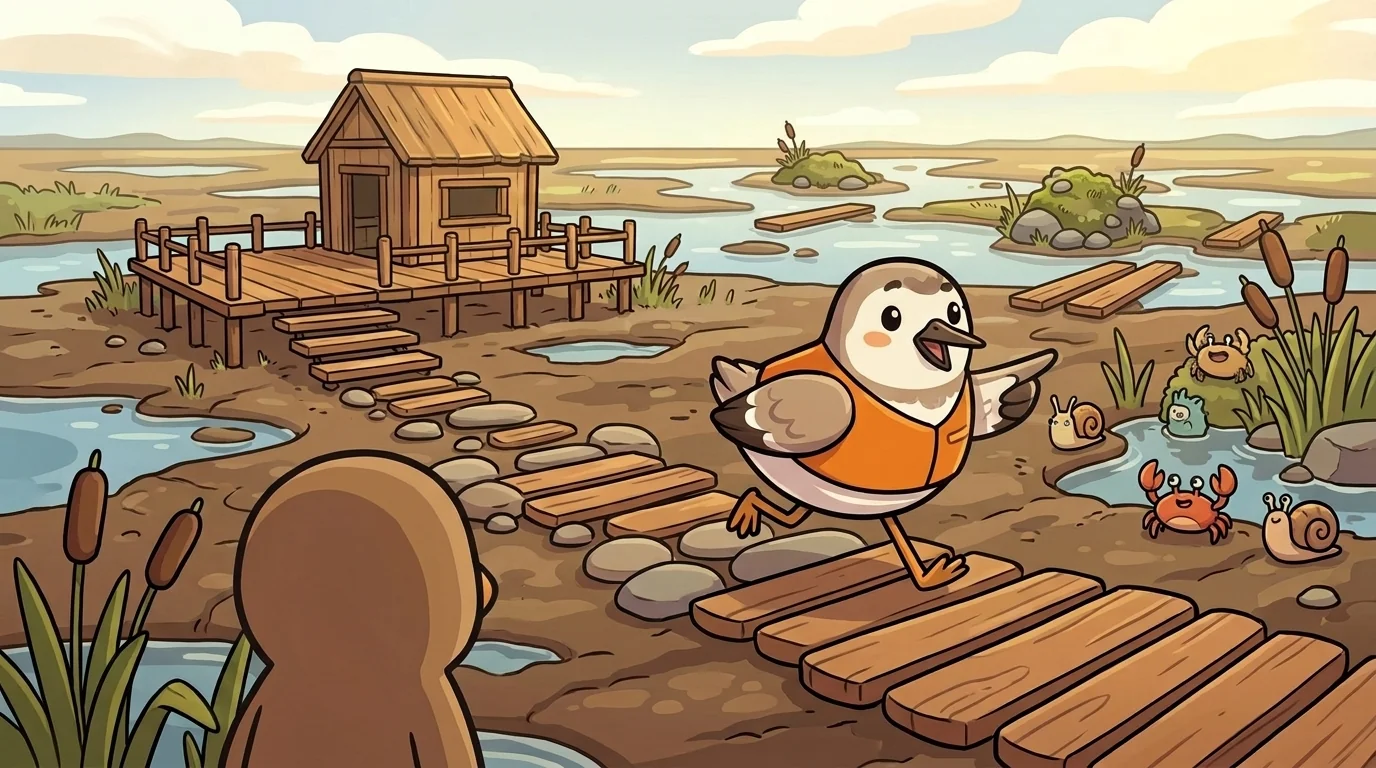
"Better letters that don't connect to you are worth nothing," Plover says kindly, running another quick burst forward. "A step I can't reach from where I stand isn't really mine. I'd rather grow steadily from home than own beautiful islands that can never meet."
There's a quiet wisdom in her busy little legs. Scattered things — islands, half-started projects, facts you learned but never linked to anything — can't support each other. But things you grow from what you already have stay connected, and connected things are strong. Plover's bridge wins not because her words are the fanciest, but because every piece of it is joined to every other piece.
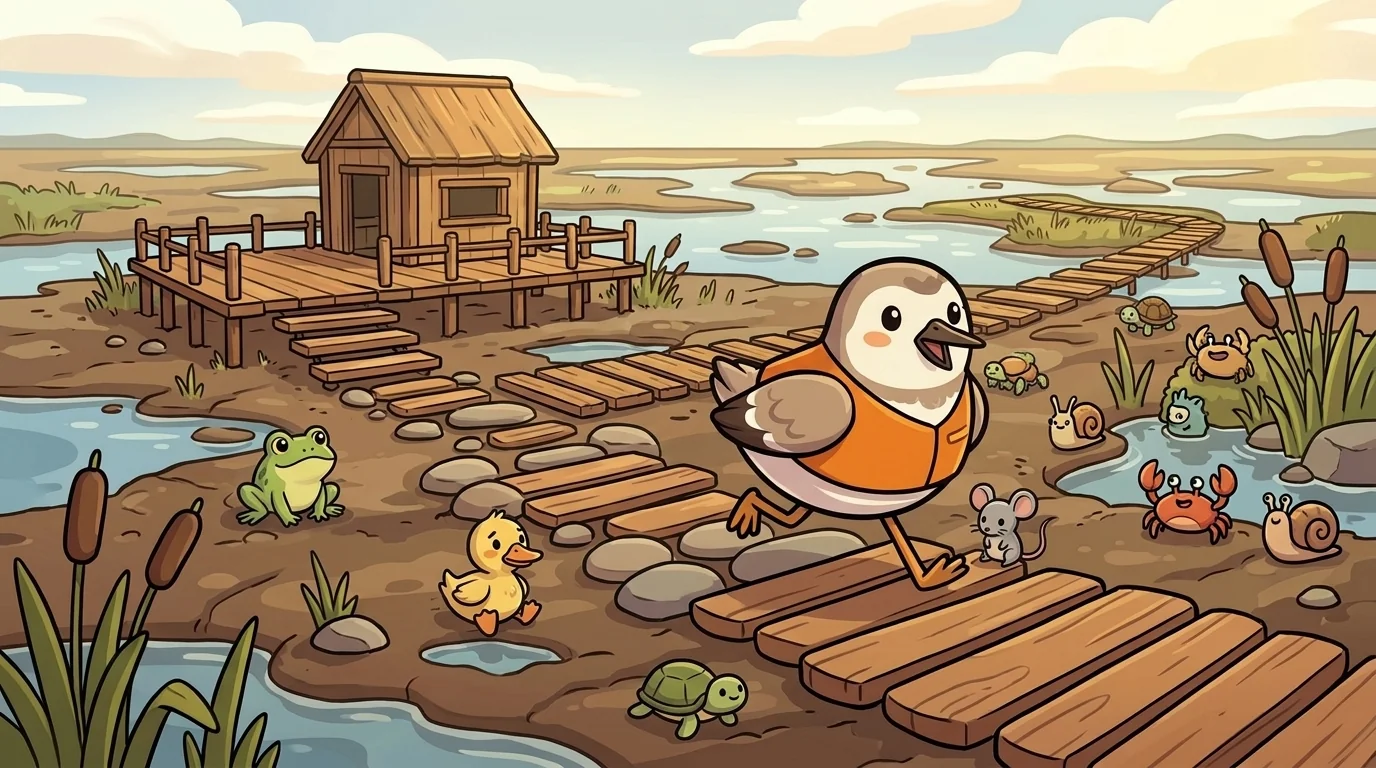
So when you play, resist the shiny far corner. Start where you already stand, and ask Plover's question with every move: does this new word grow from a tile I already own? If it does, step it — your bridge stays whole. If it doesn't, it's just another lonely island, and lonely islands never cross the water.
Say it the way Plover says it, quick and sure on the mud: build from where you already stand. Grow your bridge from a tile you already own — never from an island out in the water.
The spanforge ensemble
Plover is part of spanforge's distributed-narrative cast. Each character embodies a different curricular primitive; together they teach the full subject.