Curlew
BRIDGE-LETTERS — a single letter can be the LAST letter of one traced word and the FIRST letter of the next, so one shared tile links two words into a longer connected span; reusing a letter across the gap stretches your bridge without wasting a step.
Loading audio…
Press play to listen along. The line being read lights up as you go.
Show full transcript
Loading transcript…
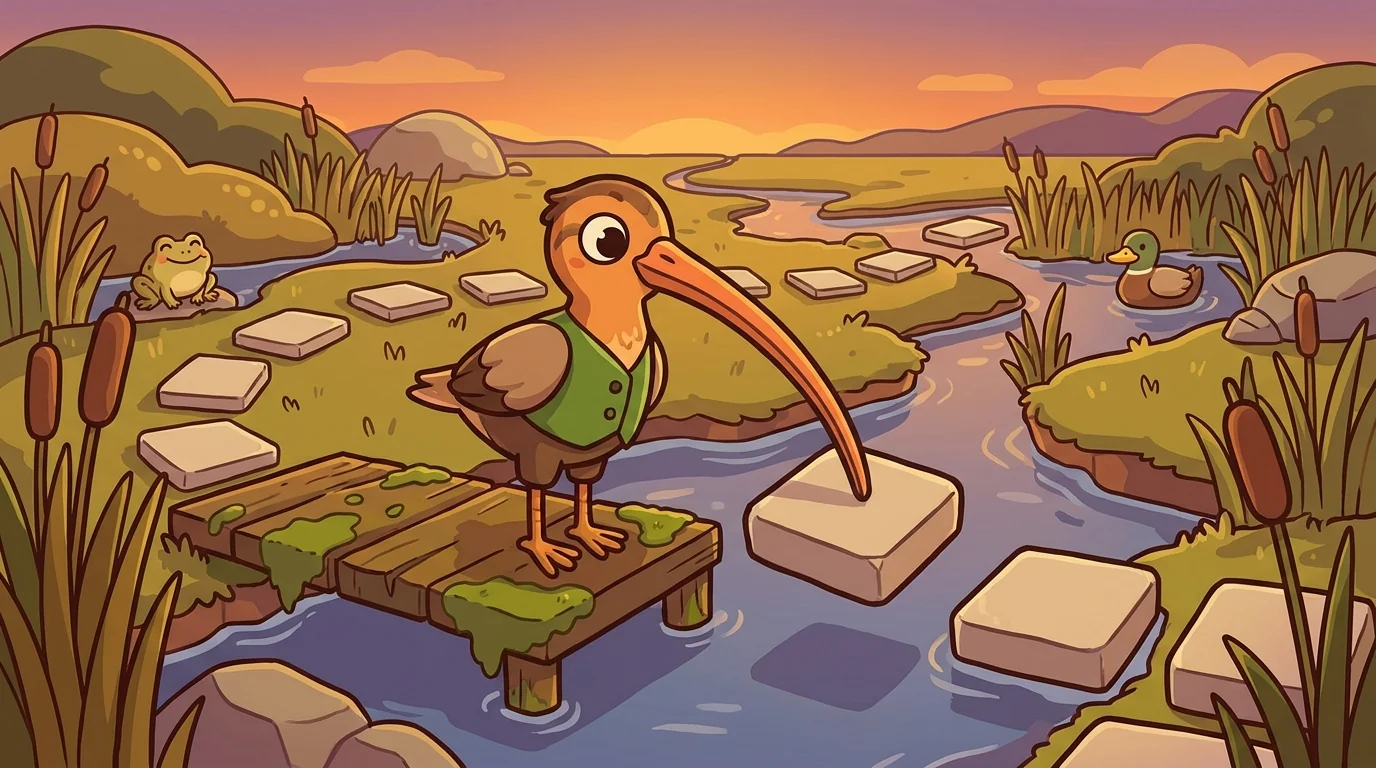
Curlew has the most astonishing beak in the whole marsh — long and thin and curving down in a great graceful arc, made for reaching into places other beaks can't. And reaching across is exactly Curlew's talent, because Curlew has discovered a small piece of magic hidden in the letters of the board.
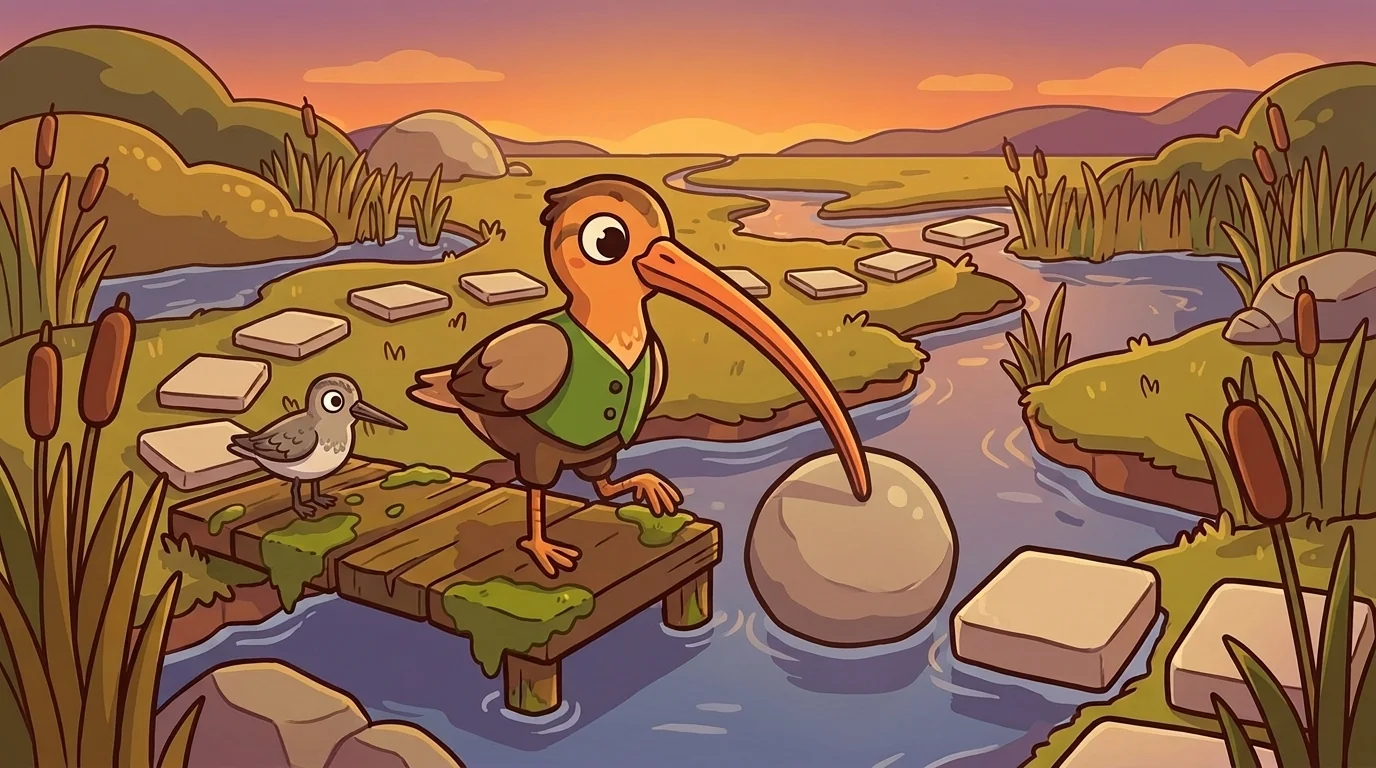
Here is the magic. Curlew traces a word — say STAR — and lands on the final R. Most birds would now hunt for a whole new word somewhere else. But Curlew looks at that R and asks a sly question: what if this letter belongs to TWO words at once? Because the R at the end of star can also be the R at the start of RAIN. One tile — the shared R — is the last step of star AND the first step of rain. So Curlew spells star, then simply keeps going into rain, and the two words become one long connected span, joined at the letter they share.
"You didn't start over!" says a puzzled little dunlin. "You just… kept walking."
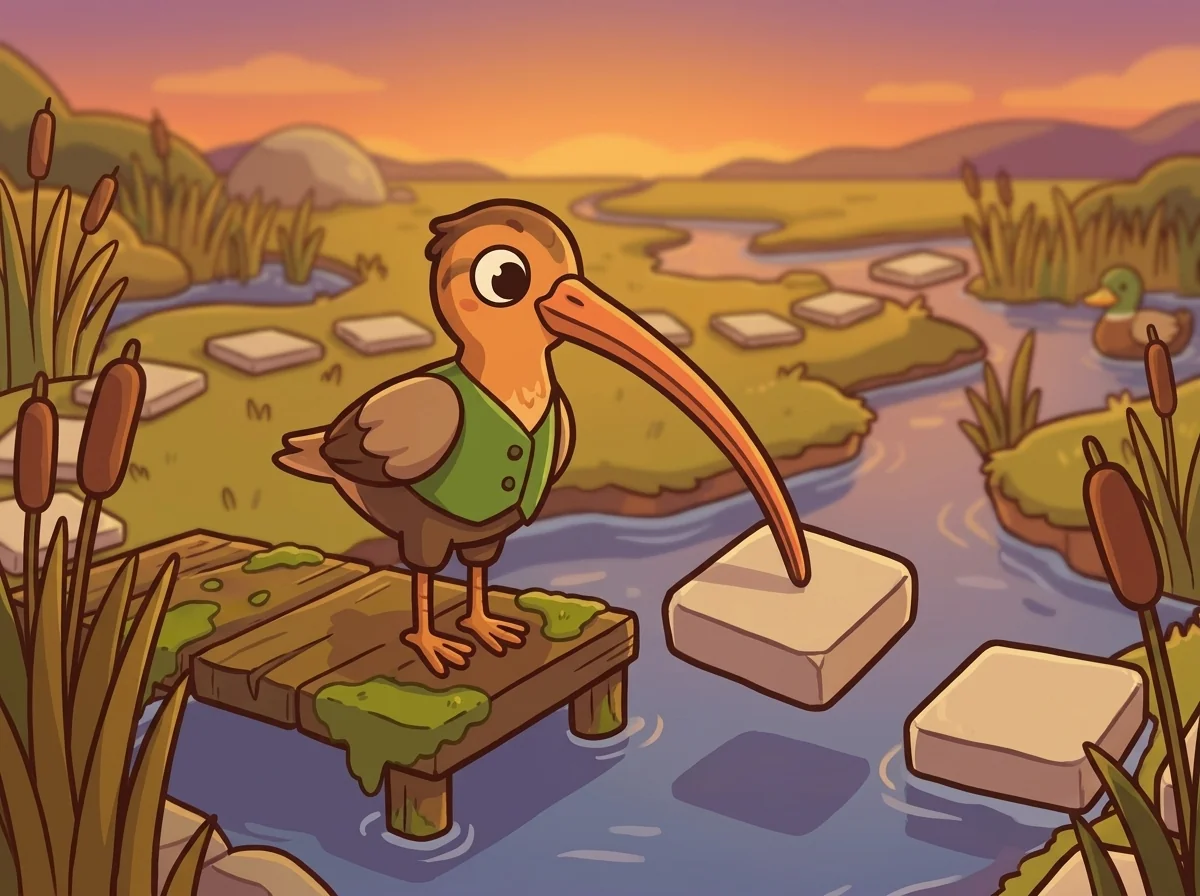
"I reused the letter," says Curlew, sweeping that curved beak along the tiles. "One letter can belong to two words. The R finished my first word and began my second. Why spend a step ending one word and another step starting the next, when a single shared tile can do both jobs?"
This is Curlew's rule: bridge-letters. A single letter can be the last letter of one word and the first letter of the next. Share that letter across the gap, and one tile builds your bridge twice — your span stretches farther with fewer steps, because the join costs you nothing extra. STAR → RAIN → NEST → TIDE: a whole chain, each word grabbing the last letter of the one before, marching clear across the water on shared tiles.
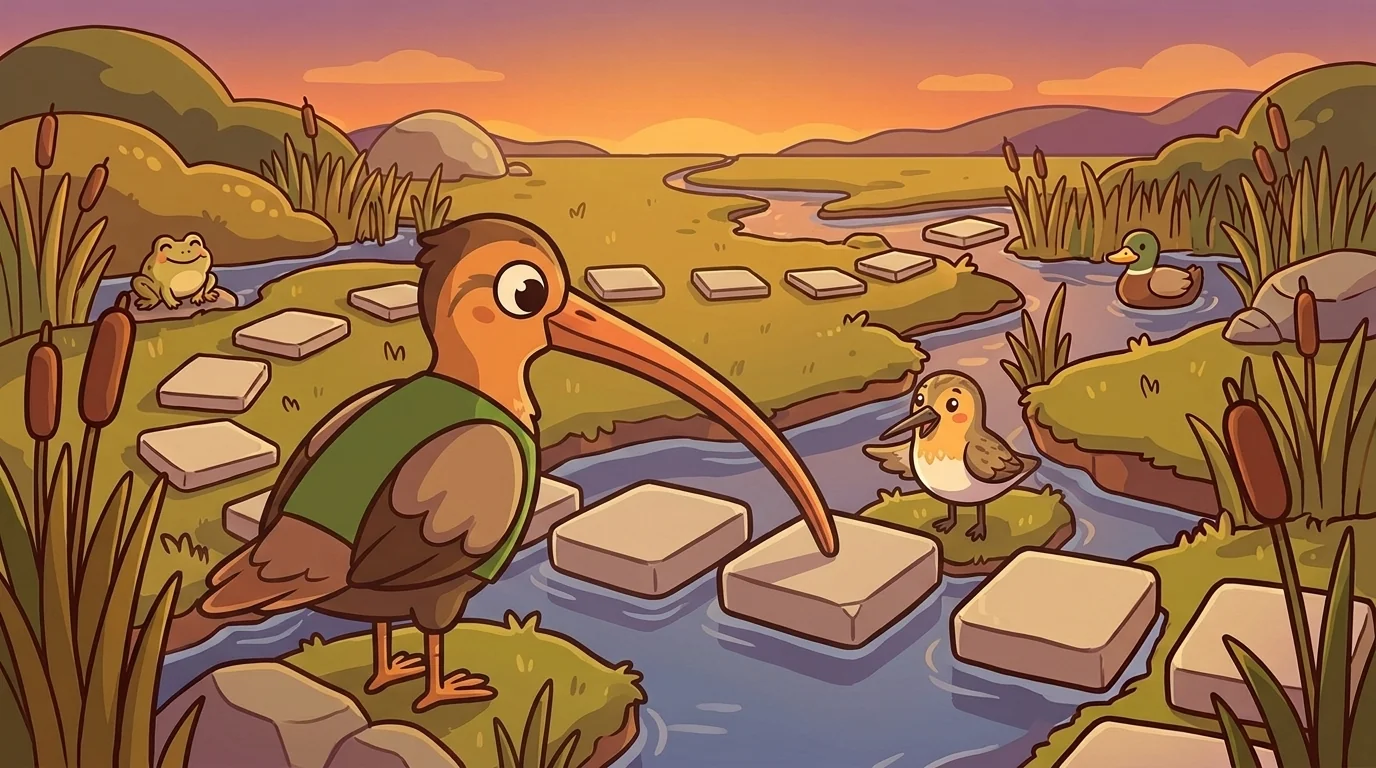
The little dunlin tries it and lights up. By reusing letters, her short words suddenly link into a long, reaching bridge — farther than she'd ever managed by hunting for fresh, disconnected words. "It feels like the words are holding hands," she says.
"They are," says Curlew warmly. "That's the whole idea."
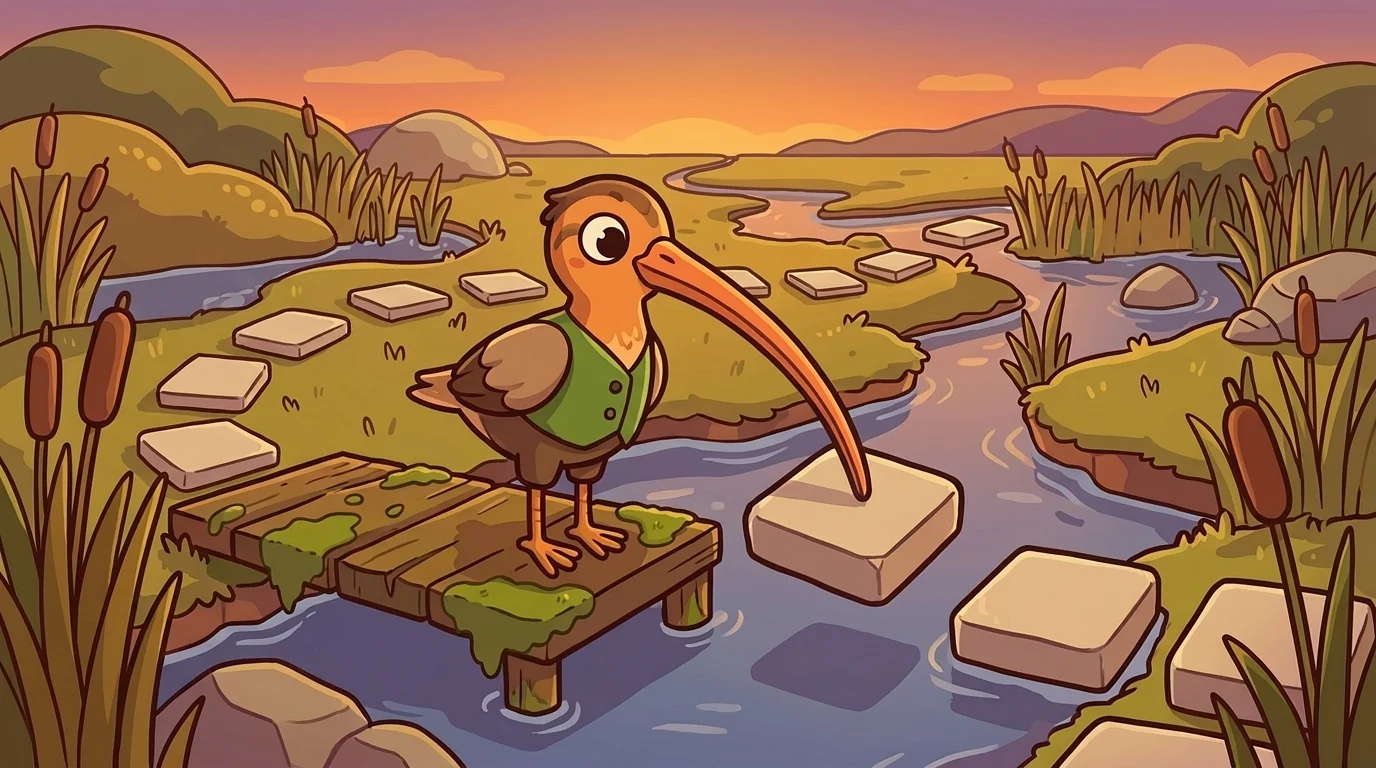
There's a lovely truth in Curlew's curved beak. The farthest reach usually doesn't come from grabbing more — more words, more tiles, more stuff. It comes from being clever with what you already have: letting one thing do double duty, finding the spot where two pieces can share instead of each demanding its own. Curlew reaches across the widest gaps in the marsh not by having the biggest beak (though it is quite big) but by reusing — by seeing that the end of one thing can be the beginning of the next.
So when your bridge stalls and the far shore looks too far, don't hunt frantically for brand-new words in far-off corners. Look at the letter you just landed on and ask Curlew's question: could this letter also START a word? If it can, keep walking — let it end one word and begin the next.
Say it the way Curlew says it, reaching that great curved beak across the water: one letter can belong to two words. Share a letter across the gap, and a single tile builds your bridge twice.
The spanforge ensemble
Curlew is part of spanforge's distributed-narrative cast. Each character embodies a different curricular primitive; together they teach the full subject.