Wader
THE MEANING GATE — a traced word is playable ONLY after its meaning is shown; spelling a shape you don't understand doesn't count. The board rewards words you truly know, not letter-patterns you guessed.
Loading audio…
Press play to listen along. The line being read lights up as you go.
Show full transcript
Loading transcript…
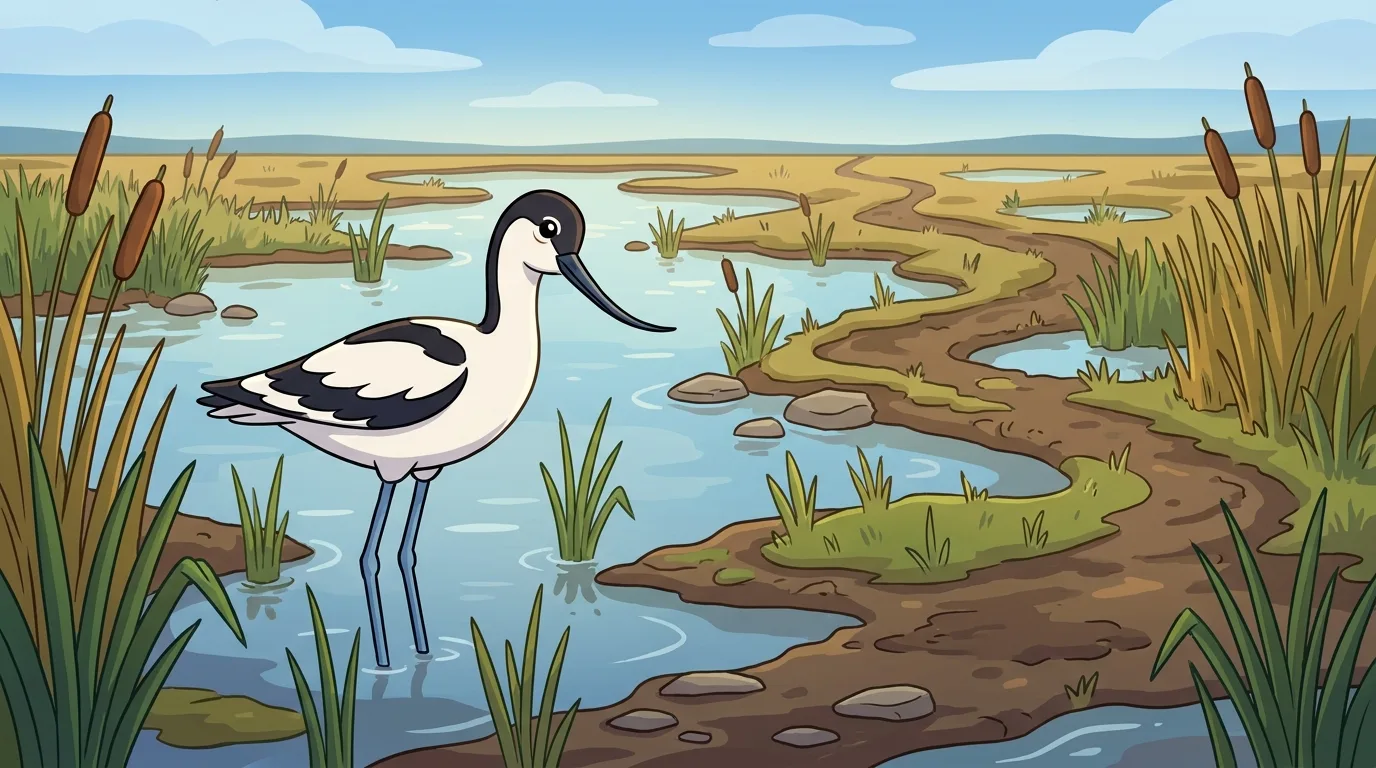
Wader is an avocet — a tall, elegant wading bird with a slender beak that curves gently upward, as if it were always about to ask a polite question. And a polite question is exactly what Wader asks, every single time a bird plays a word.
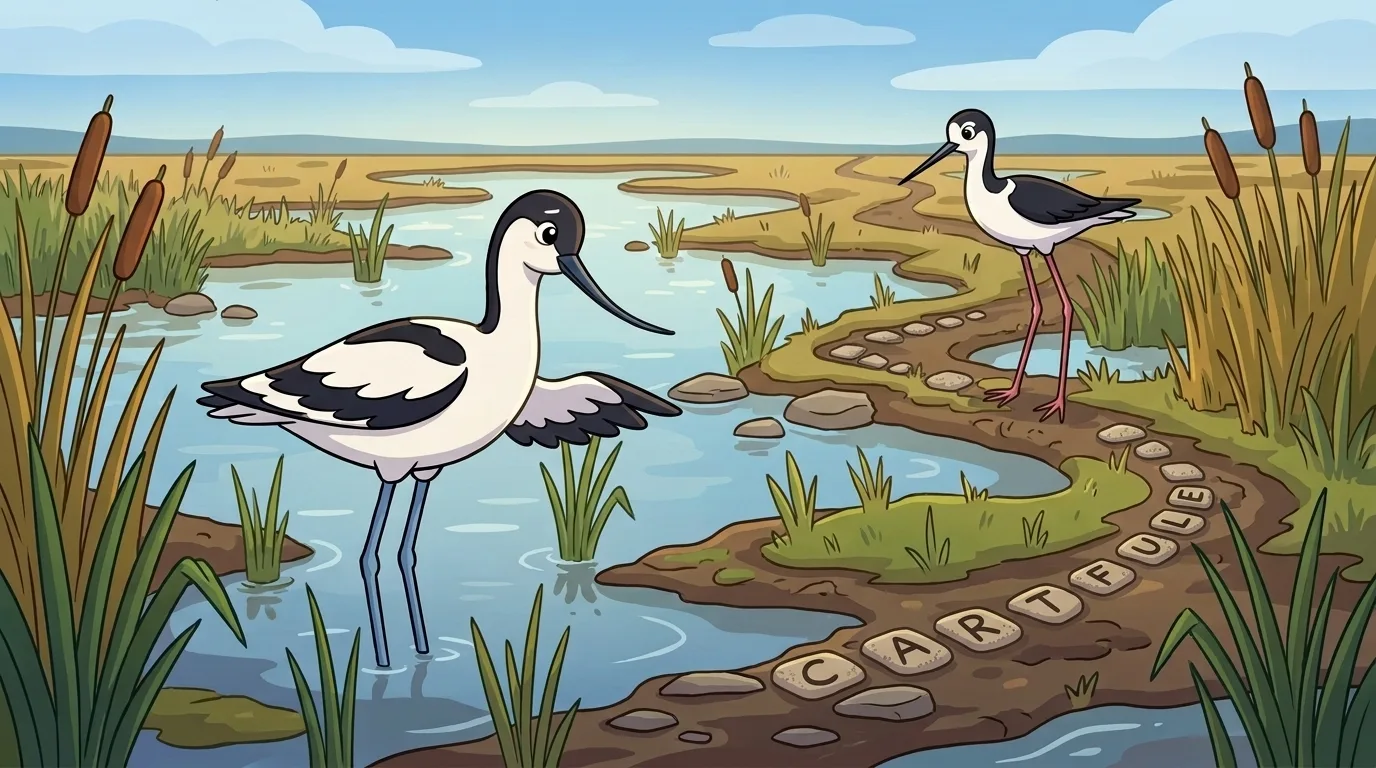
She stands at the edge of the board like a kind gatekeeper. When Stilt traces cart across the tiles, Wader dips her curved beak and asks, softly, "Lovely — and what is a cart?" Stilt answers at once: "A little wagon you pull." Wader nods, the tiles lock in, and the word counts.
But sometimes a clever bird traces a long, impressive-looking string of letters just because they happen to sit in a row — say, F-U-G-L-E — and puffs up, sure it must be worth a lot. Wader tips her head. "And what does fugle mean?"
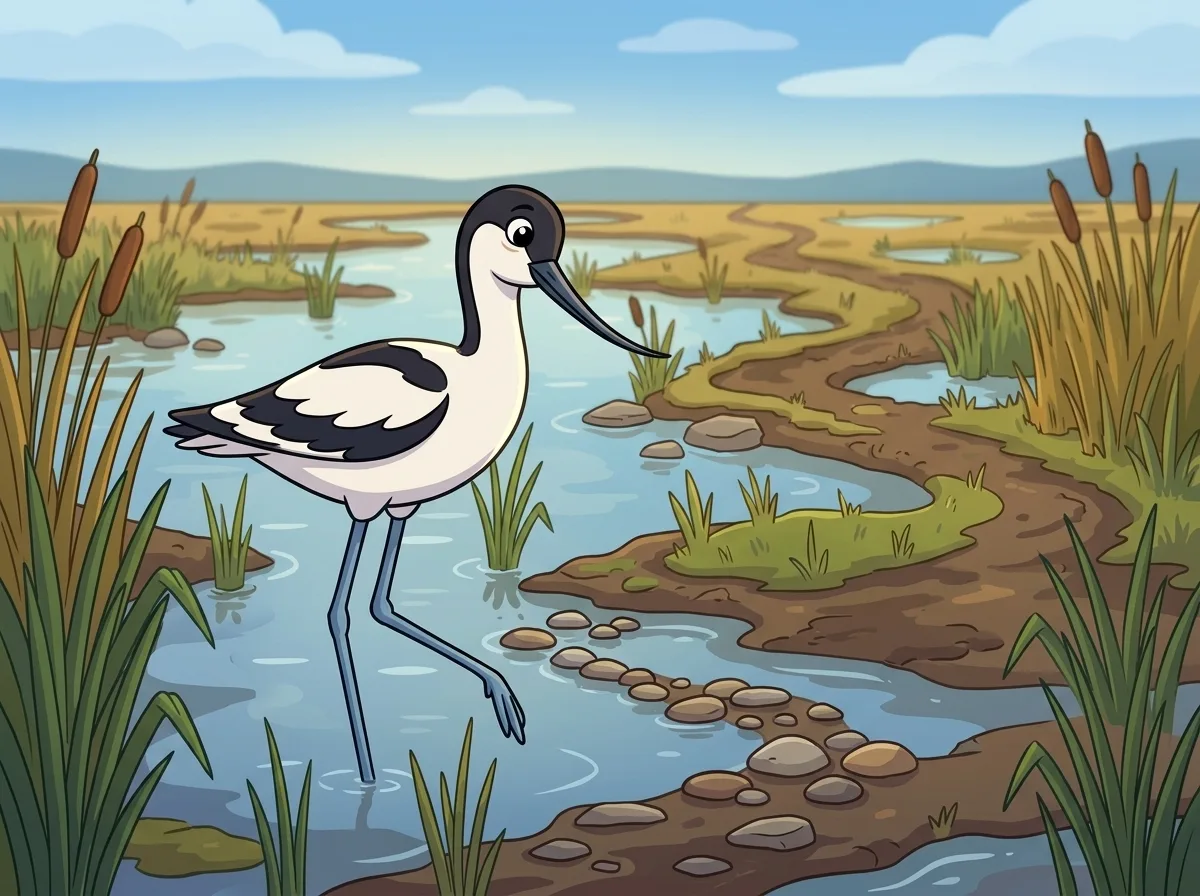
Silence. The bird doesn't know. It only spelled a shape.
"Then it isn't a word yet," Wader says, not unkindly. "It's just letters. A word is a letter-path plus a meaning. Show me the meaning, and it counts."
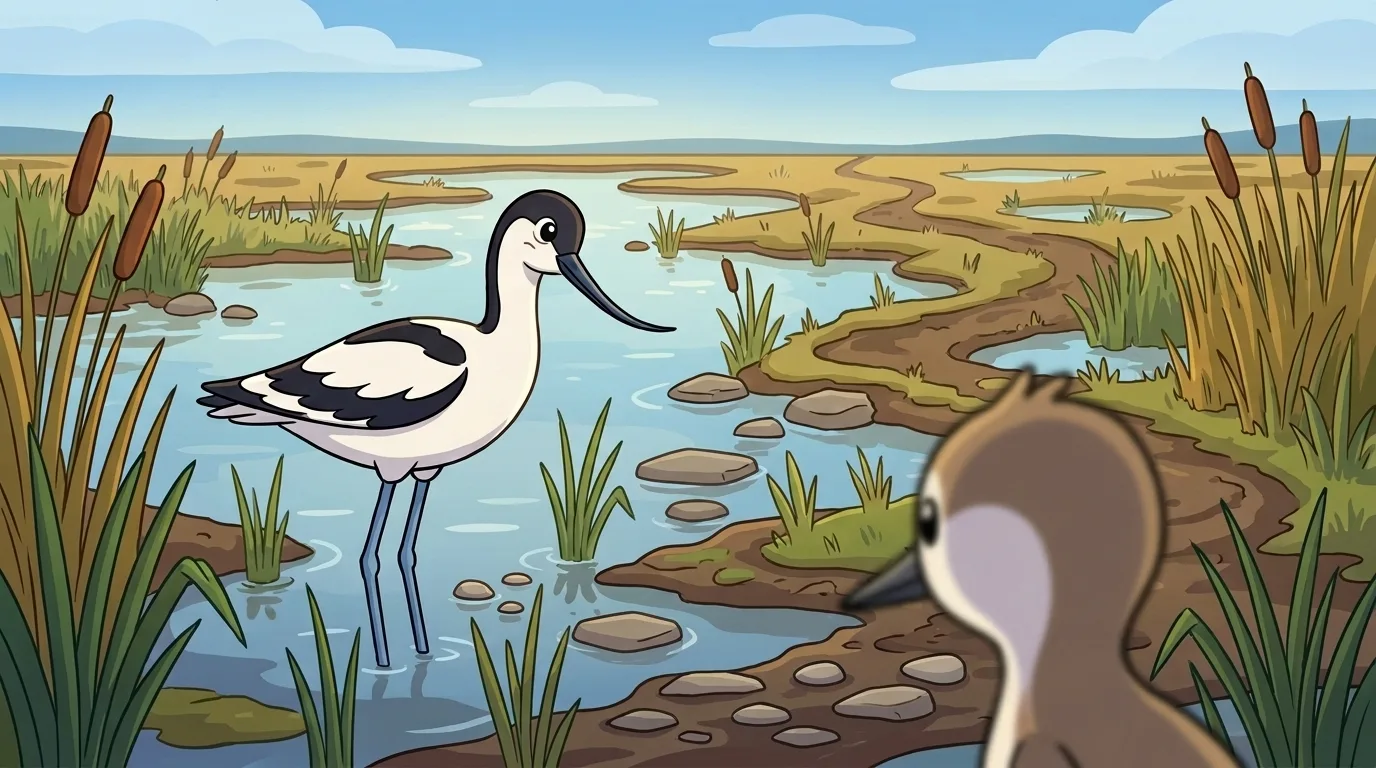
This is Wader's rule, and it is the heart of what makes the marsh's game worth playing: the meaning gate. On this board you do not win by stumbling onto letter-patterns you don't understand. You win with words you truly know — words you could explain to a younger bird. Spelling is the body of a word. Meaning is its heartbeat. Wader will not let a word onto the board with no heartbeat.
At first the young birds grumble. It would be easier, they say, to just grab any old string of letters. But Wader's gate quietly changes how they play. They stop hunting for weird letter-shapes and start hunting for words they can stand behind. And a wonderful thing happens: the game starts teaching them. When a bird traces a word she's almost sure of, Wader's gentle "what does it mean?" sends her to find out — and now she owns that word forever, meaning and all.
Because here is Wader's secret, and it's a generous one: she treats "I didn't know it, so I found out" as one of the best moves on the board. She never shames a bird for not knowing a word. She only asks. And the asking turns a guess into real knowledge. A bird who leaves Wader's gate knowing what estuary means has won something bigger than a single game.
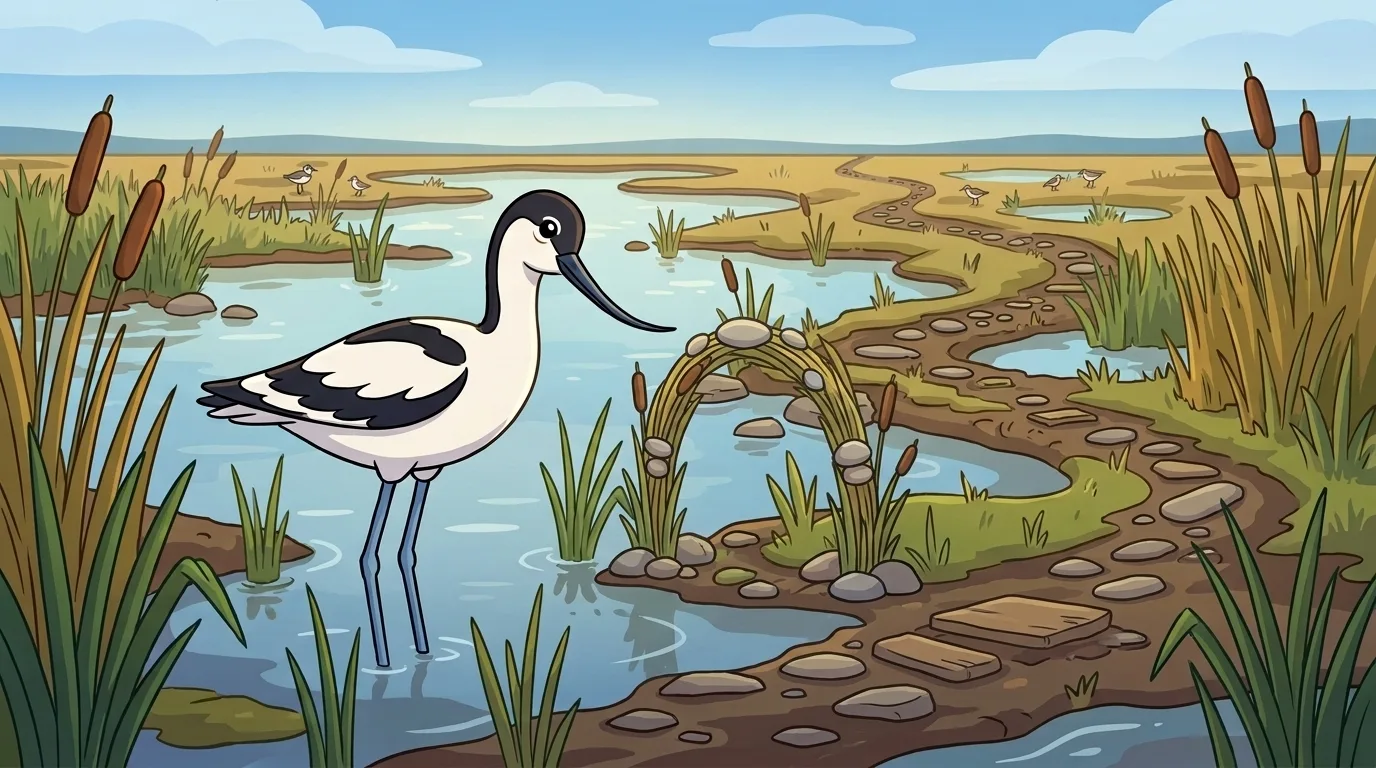
The deep reason matters. It is easy, in any subject, to fool yourself — to repeat a word, copy a step, spell a pattern, and feel like you understand when you've only memorised the shape. Wader's beak, curving up like a question, is the habit of checking: can I actually say what this means? If you can, it's yours. If you can't yet, that's not a failure — it's just the next thing to learn.
So play the way Wader would want. When you trace a word across the tiles, quietly ask yourself her question: what does it mean? If you can answer, step proudly — it counts. And if you can't, don't bluff and don't be ashamed. Go find out, come back, and say it out loud the way Wader taught the whole marsh to say it:
If you can't say what it means, it isn't a word yet — it's just letters. Show the meaning, then it counts.
The spanforge ensemble
Wader is part of spanforge's distributed-narrative cast. Each character embodies a different curricular primitive; together they teach the full subject.