Stilt
TRACE-TO-CONNECT — you win by tracing a real word across the board and claiming the whole path; the letters you can spell ARE the stepping stones, so your bridge is made of words, not luck.
Loading audio…
Press play to listen along. The line being read lights up as you go.
Show full transcript
Loading transcript…
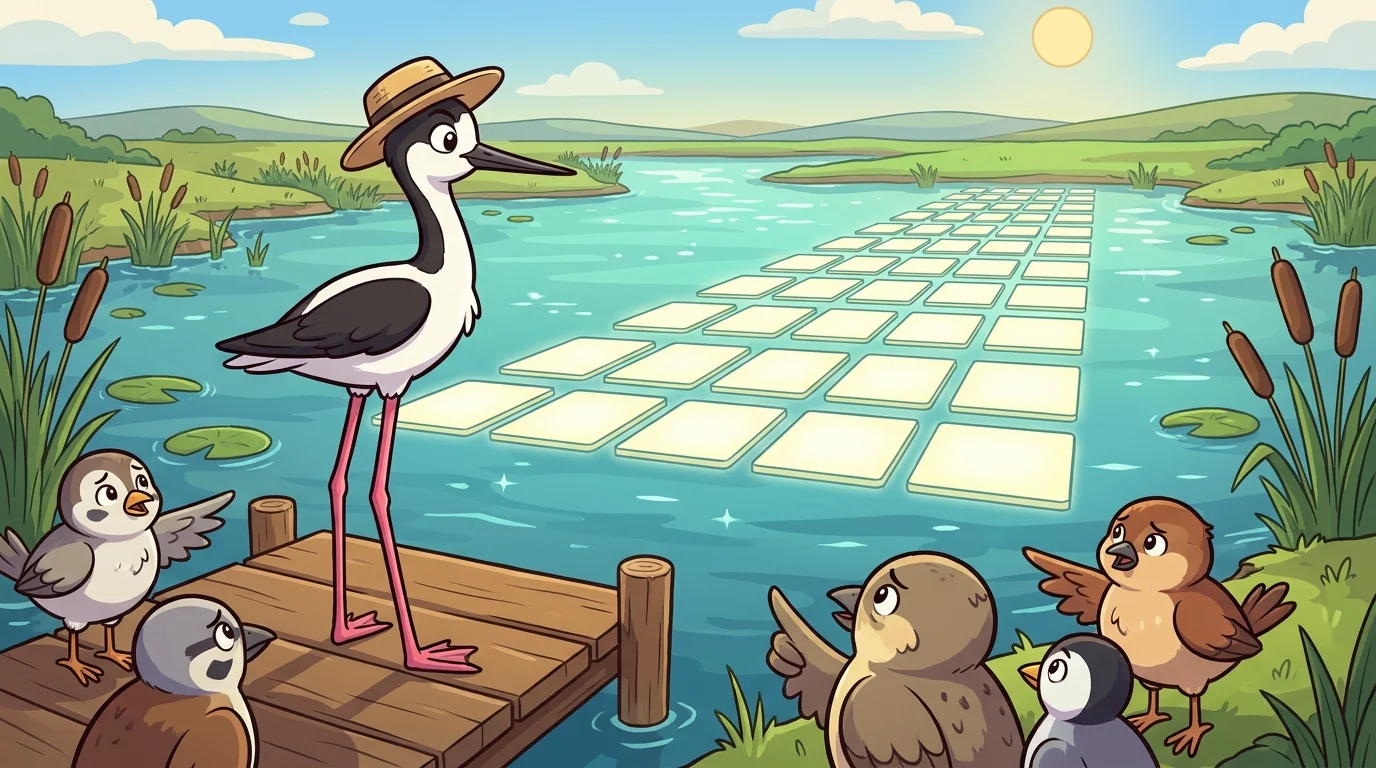
Stilt has the longest, thinnest, pinkest legs on the whole marsh. When the other birds see the shining tiles laid out across the water — a wide grid of letters, your shore on one side and the far shore on the other — they groan. Too far, they say. Too many squares. How would anyone ever cross?
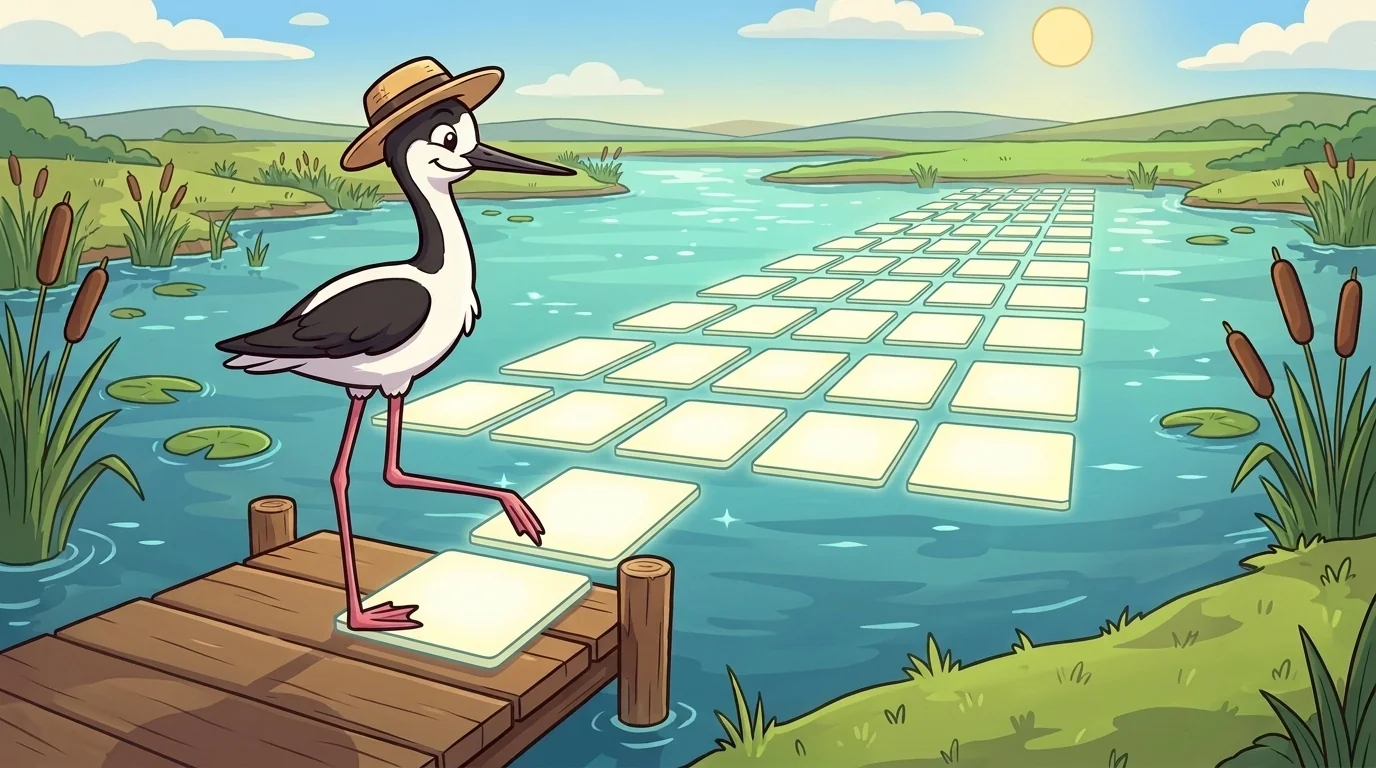
Stilt just tips his head and smiles, because Stilt knows the secret of the board. He does not see squares. He sees words waiting to be walked.
Here is how he crosses. He looks for a letter near his shore — say a C. Beside it, touching it, sits an A. Beside that, an R, and beside that, a T. Stilt lifts one long leg and steps: C… A… R… T. Cart. As he traces the word, each tile he touches lights up and turns his colour. The word he spelled is now a little bridge of his own tiles, reaching out into the water.
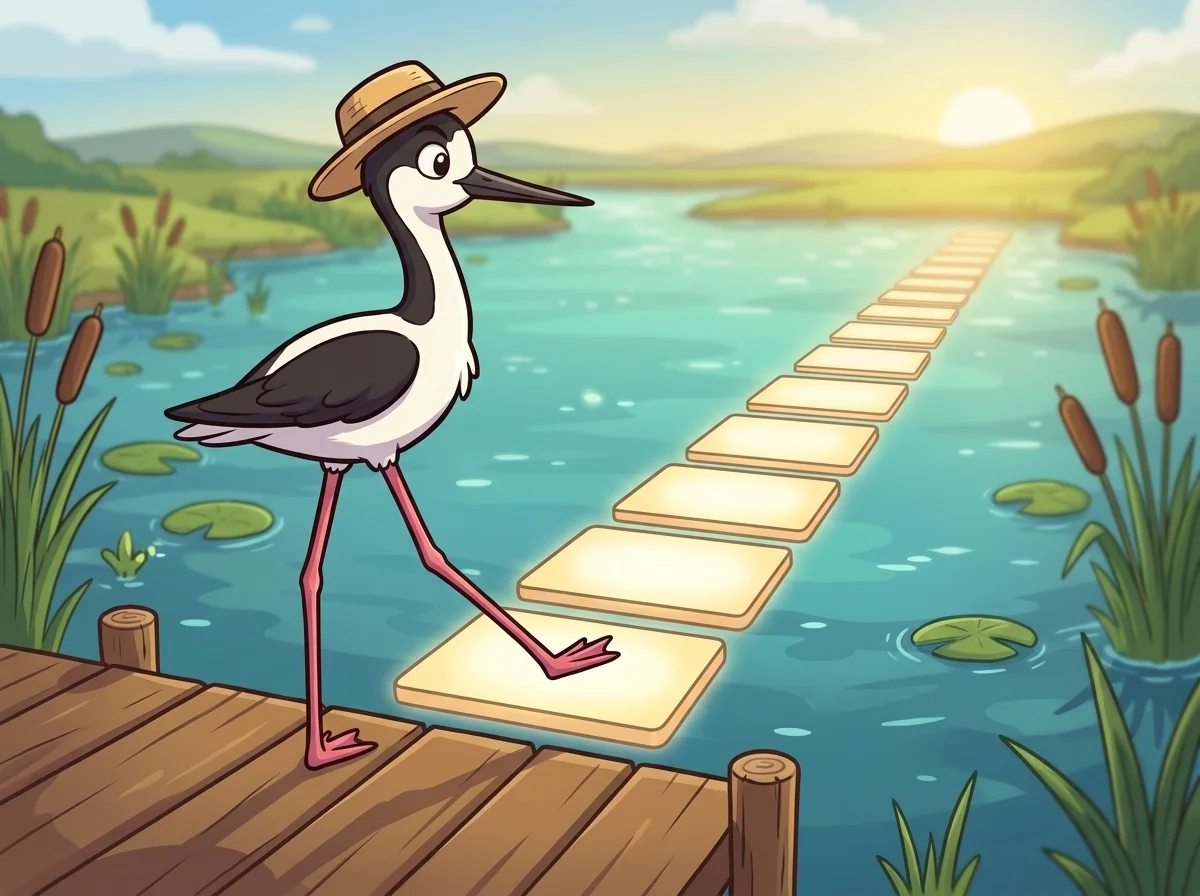
That is the whole game, and it is Stilt's rule: trace-to-connect. You do not win by grabbing squares one at a time, hoping to get lucky. You win by tracing a real word across the board — and the path of that word becomes yours. Your bridge is not made of luck. It is made of words you can spell.
Watch him do it again. From the tip of cart he finds a T that begins TIDE — T, I, D, E — and steps it, and now his bridge is longer. From tide he finds EDGE, and steps that too. Each word grabs the last letter of the one before, the way you hold a friend's hand to make a longer chain. Step by true step, Stilt's line of glowing tiles stretches from his shore, out over the deep middle, all the way to the far side. The moment his bridge touches both shores at once — he has connected. He has won.
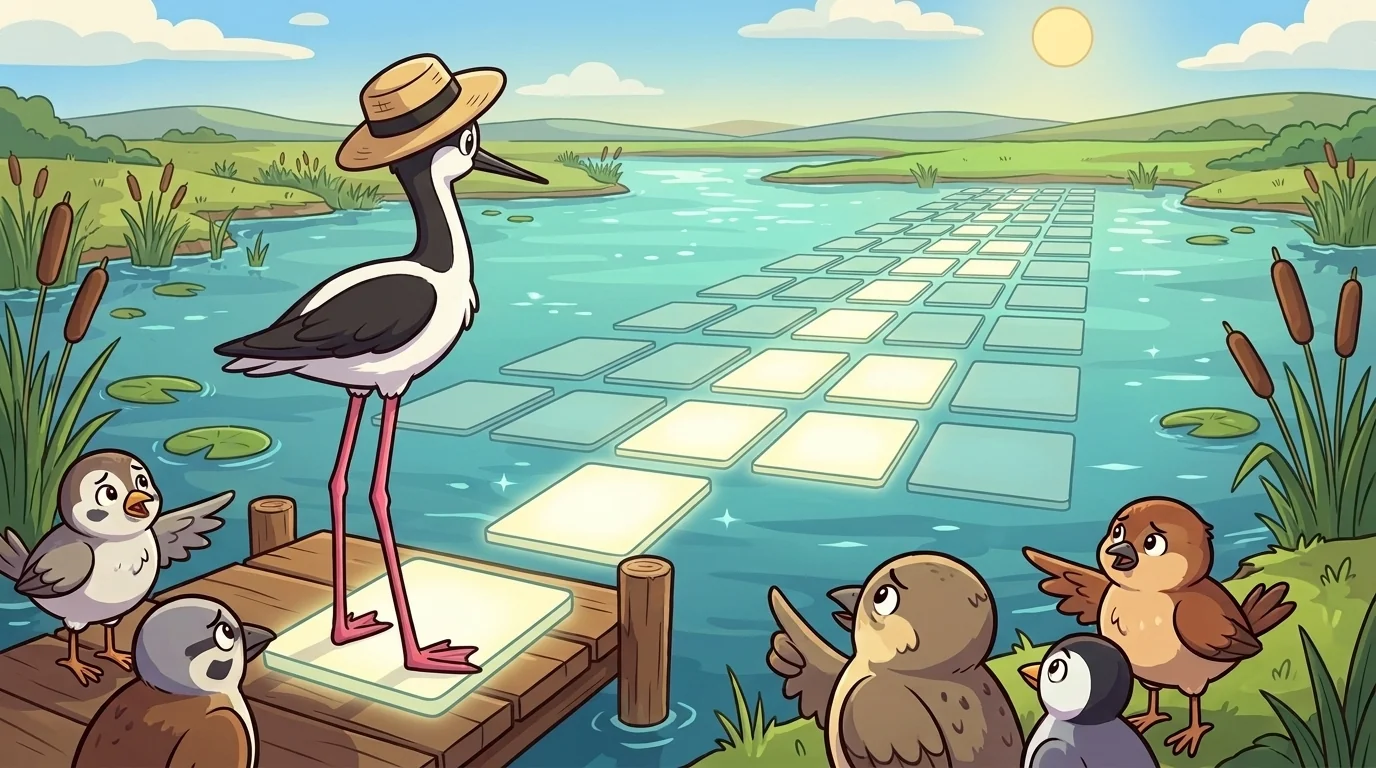
The young birds are amazed. "But how did you know those words were even there?" asks a little sandpiper.
"I didn't wish them there," Stilt says gently. "I looked. The board is full of letters, and letters make words, and words I can spell are the only places that will hold my weight. So I don't count the squares — I count the words. I step only where a word will carry me."
This is the thing worth remembering about Stilt. Plenty of birds stare at the board and freeze, sure it is too big and too far. But the board is not asking you to leap across in one jump. It is asking you to take one true step, then the next. Cart. Tide. Edge. Small words, each one certain, each one holding your weight — and quietly, without any single heroic leap, you have crossed the whole wide water.
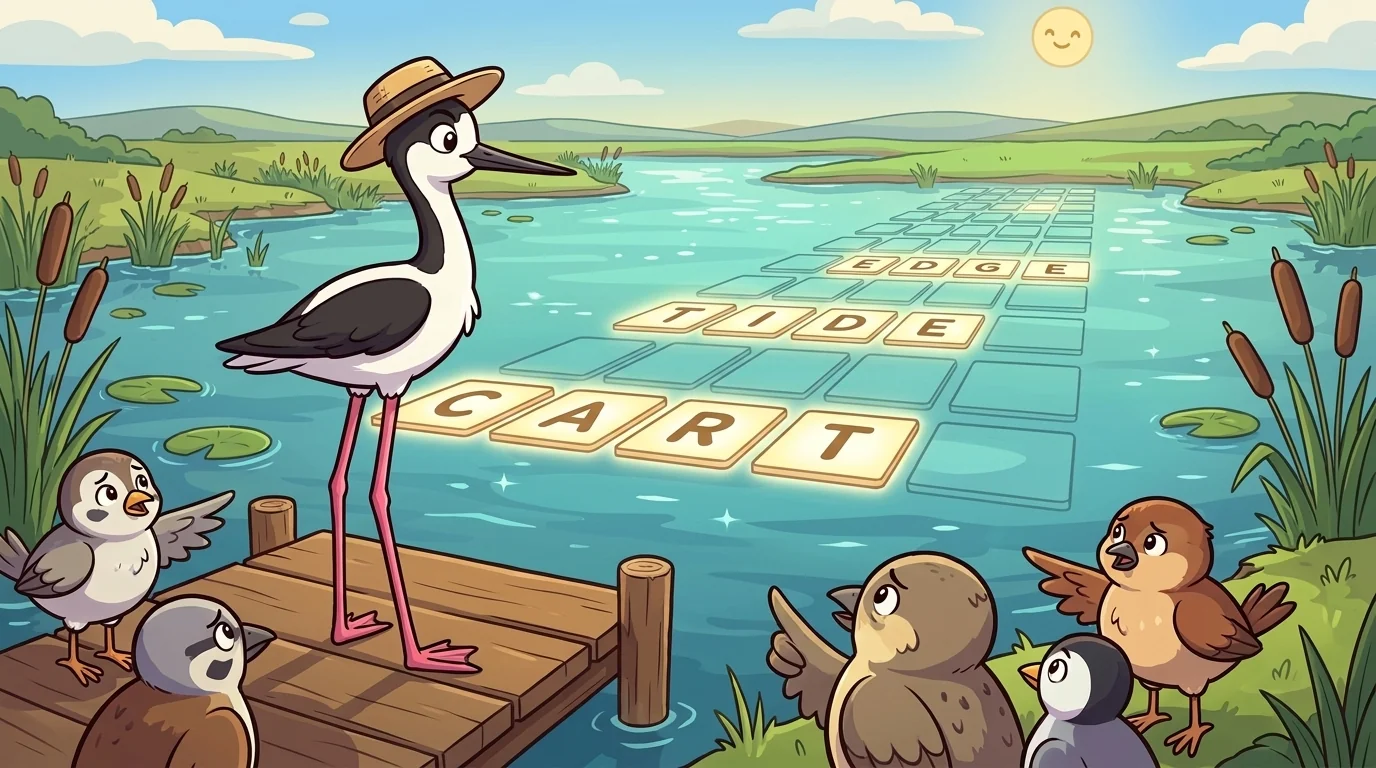
And here is the kindest part of Stilt's secret. He is not spelling fancy words. Cart and tide and edge are words you already know. Stilt's bridge is built almost entirely out of things he learned so long ago he forgot they were skills at all. He simply trusts them. When the marsh looks too wide, he does not reach for something dazzling and new — he reaches for the plain, sure words already in his beak, and he lets them carry him.
So when you sit down at the board and it looks like far too many squares, remember Stilt on his long pink legs. Don't count the squares. Count the words. Find the sure C-A-R-T near your shore, step it, and watch it light up as your own. Then look at the letter you landed on and ask: what true word starts here? Step that one. Then the next.
One honest word at a time, your trail becomes a bridge — and a bridge made of words you can already spell is a bridge that will always, always hold.
The spanforge ensemble
Stilt is part of spanforge's distributed-narrative cast. Each character embodies a different curricular primitive; together they teach the full subject.