
Blenda
CONSONANT BLENDS — two or three consonants in a row where you can still hear EVERY sound, said fast and close together. str = /s/ /t/ /r/, all there. bl = /b/ /l/, both there. A blend is different from a digraph, where two letters fuse into ONE sound.
Loading audio…
Press play to listen along. The line being read lights up as you go.
Show full transcript
Loading transcript…
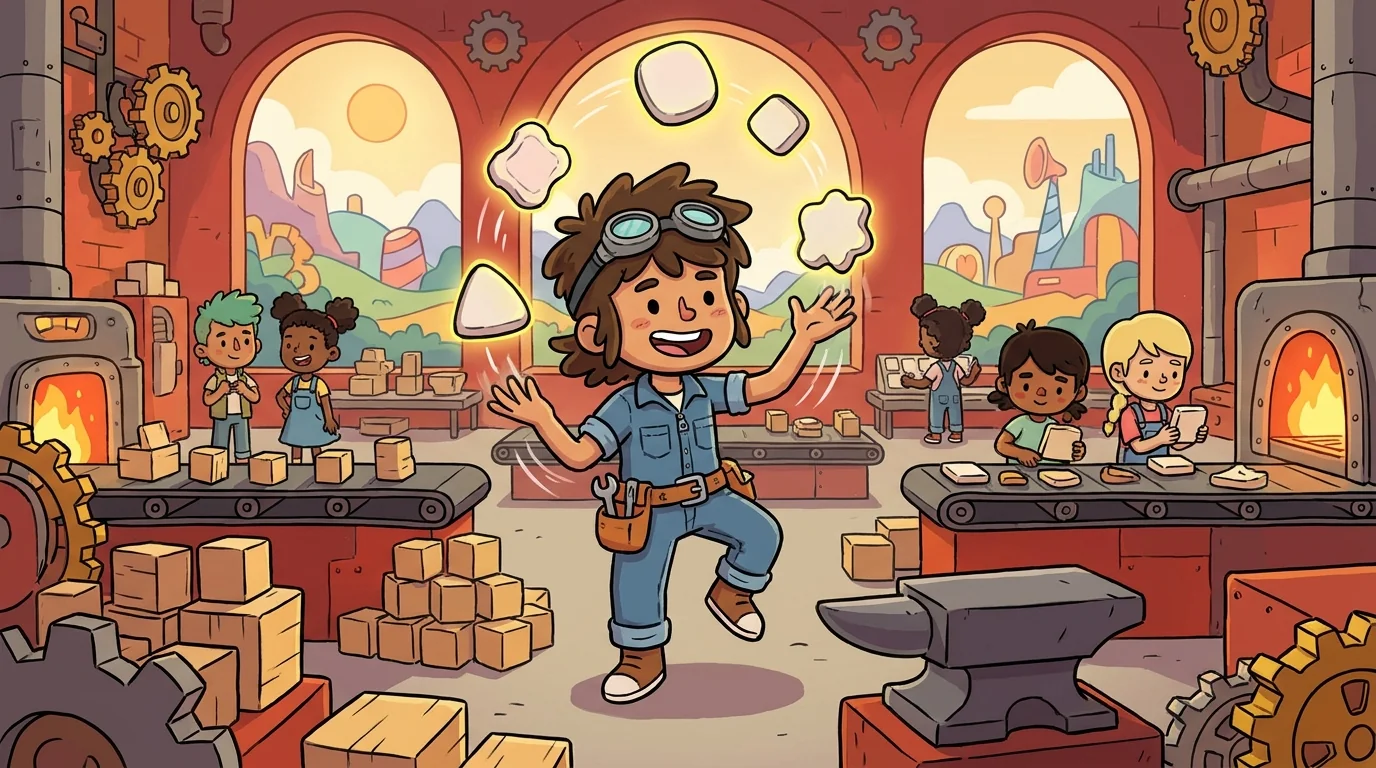
A student named Marlo was stuck on the word strand, and he was stuck in the exact place beginners always get stuck: the front.
"Sr—? St—?" He kept collapsing the str into a mush. Blenda sat down beside him, quick and warm, and did not tell him to "sound it out harder." She said something more useful. "That's not one sound you're missing. It's three, standing in a row, and you're dropping the middle one. str is /s/ — /t/ — /r/. Every single sound is still there. Say them fast and close, but say them all."
Marlo tried. "/s/… /t/… /r/… str."
"That," said Blenda, "is a consonant blend. And here is the thing your last teacher maybe never told you: a blend is not the same as a digraph. In ship, the sh is a digraph — two letters that melt into one brand-new sound, /sh/. But in str, nothing melts. All three sounds survive. Two letters, two sounds. Three letters, three sounds. If you can still hear each one, it's a blend."
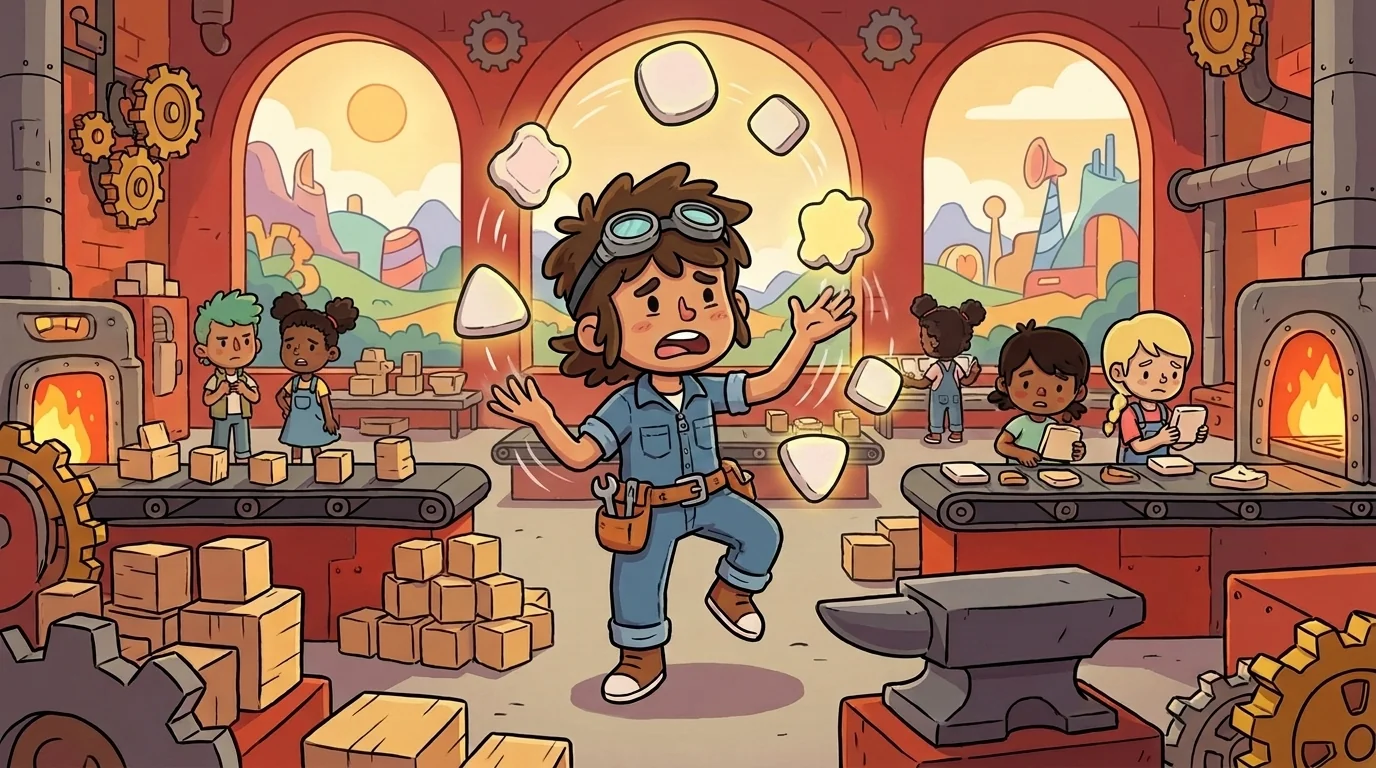
Blenda had not always found blends easy. When she was young, she thought a cluster of consonants was a wall — a solid block she had to leap in one guess.
So she guessed. She'd see split and say "spit," dropping the /l/. She'd see crisp and say "crip," dropping the end. The sounds at the edges of a word — the ones crammed together — were the ones she lost, because holding three separate sounds in your head at once, in order, is genuinely hard work for the mind. She thought she was simply bad at reading. She was not. She was carrying a heavy load and no one had shown her how to set it down one sound at a time.
An old teacher slid three little tiles in front of her — s, t, r — spaced apart. "Touch each one and say its sound," she said. Blenda did: /s/, /t/, /r/. "Now slide them together and say them fast." /str/. "You didn't guess. You held all three and blended them. A blend isn't a wall. It's a row of doors, and you can open them one at a time and still walk through fast."
Blenda learned to hold the cluster — to hear each consonant and let none slip — and the words that had been walls became rows of doors. The panicky, dropping-sounds feeling turned into a steady, everything-accounted-for calm. She had never been a bad reader. She'd been carrying three sounds with two hands and no one had shown her the third.
There is a pattern to where blends hide, and Blenda taught it to anyone ready for it.
"Blends live at both ends of a word," she told Marlo. "At the front — bl, cr, sp, tr, str, spl, scr. And at the back — nd in hand, st in fast, mp in jump, lk in milk. The end blends are the ones people drop most, because by the time you get there you've relaxed." She tapped strand again. "This word has a blend at both ends — str and nd. Five consonant sounds around one vowel. No wonder it looked like a wall. But it's just /s/ /t/ /r/ — /a/ — /n/ /d/. Every sound, in order, none dropped."
Marlo read it clean. "Strand."
"Here is the trap," Blenda went on, because Advanced readers deserve the trap. "Th and bl sit right next to each other in the alphabet of pairs, and they look like the same kind of thing — two consonants together. But th is a digraph: /th/, one fused sound. Bl is a blend: /b/ /l/, two sounds. If you treat a digraph like a blend, you'll try to say two sounds where there's only one — t-h-ing instead of thing. If you treat a blend like a digraph, you'll drop a sound — bue instead of blue. The whole skill is knowing which pairs fuse and which pairs stand in a row. Learn the handful of digraphs — sh, ch, th, wh, ph, ck, ng — and everything else that clusters is a blend, where every sound stays."
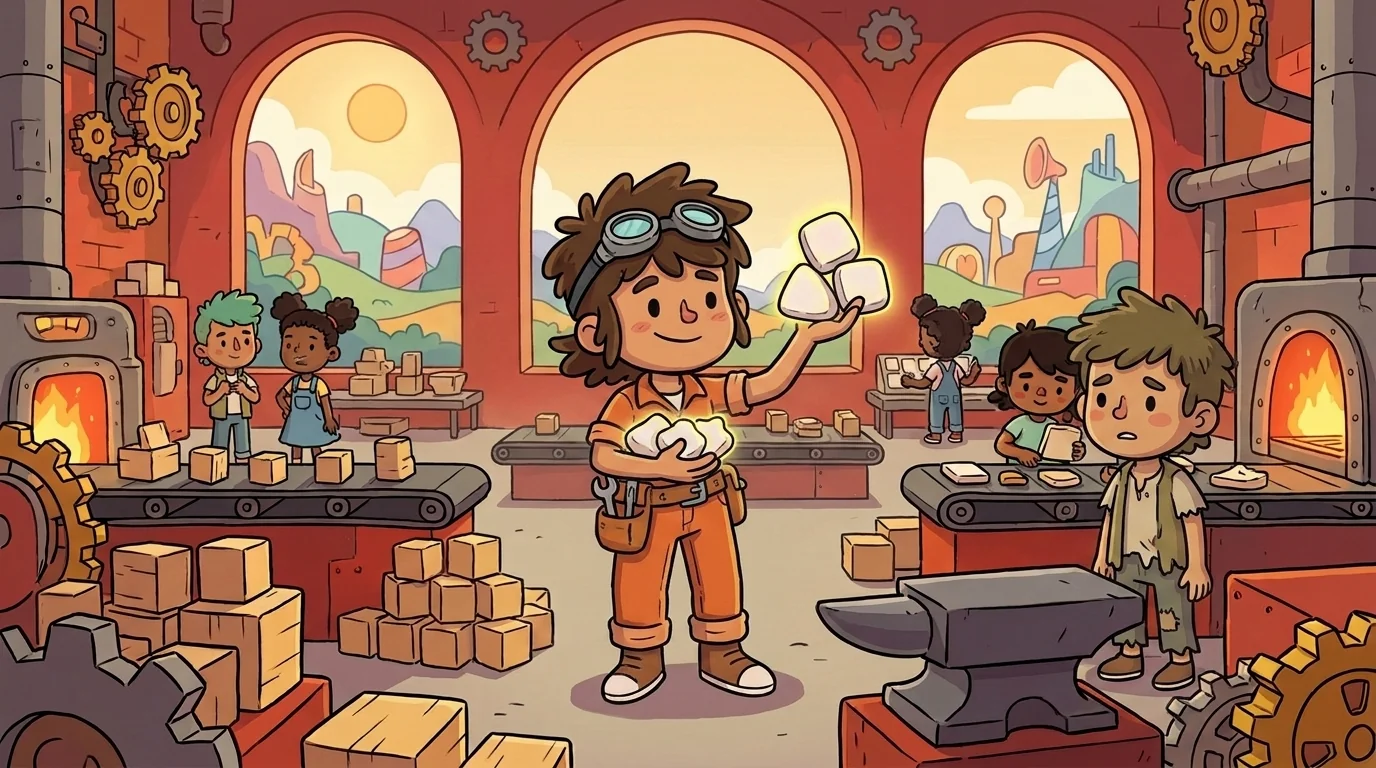
Marlo went back to his book and hit sprint.
Once, he'd have guessed "spit" or "sint." Now he touched the front cluster — /s/ /p/ /r/ — held all three, blended them fast, added the rest. "Sprint." No wall. A row of doors, opened in order, walked through quick.
"That's it," said Blenda. "A blend keeps every sound. You just have to hold them all long enough to say them, and trust that none of them is going to disappear on you." She grinned. "They never do. They only feel like they might."
The dropping-sounds dread that had made Marlo guess settled into something patient and exact. He hadn't been bad at the front of words. He'd just needed someone to tell him the sounds were all still there.
The DecodeForge ensemble
Blenda is part of DecodeForge's distributed-narrative cast. Each character embodies a different curricular primitive; together they teach the full subject.
-

Segwyn
Segment & blend (mentor) — the master decoder who slides a word apart into its sounds and back together, and coaches the rest
-

Chip
Syllable division — chips a big word into syllable chunks you can actually say
-

Digby
Digraphs — fuses two letters into ONE sound (the 'one-breath' trick)
-
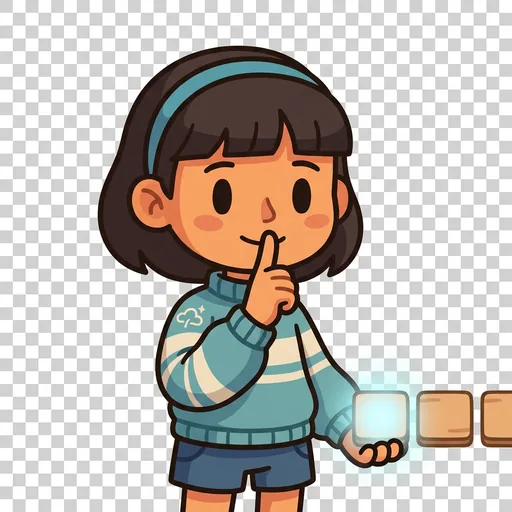
Silent Ellie
Silent / magic-e — stands silent at a word's end and makes the vowel say its name
-
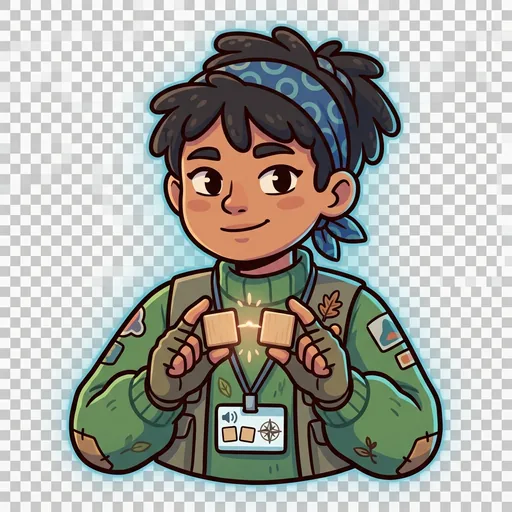
Sylva
Vowel teams — pairs two vowels so the first does the talking
-

Prefa
Prefixes — clips a meaning-unit onto the FRONT of a word
-

Rootley
Roots / bases — holds the meaning core everything attaches to
-

Fixby
Suffixes — tacks a meaning-unit onto the END and guards the spelling-change rule
-

Fluenna
Fluency — reads the same passage until it flows, keeping the beat (repeated reading)
-

Mapper
Phoneme-grapheme mapping — maps each sound to its spelling tile on the board