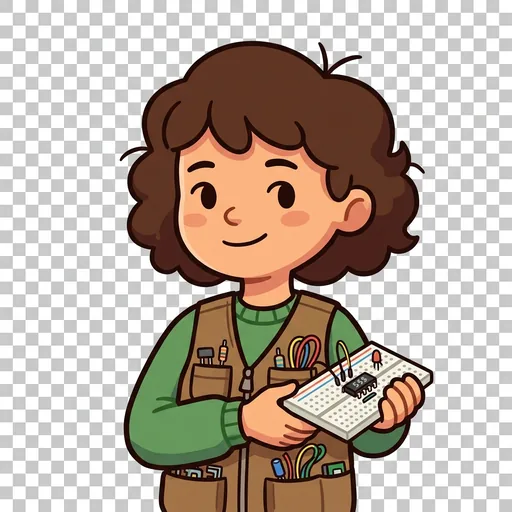
Digby
DIGRAPHS — two letters that team up to make ONE new sound, not two. s and h don't say /s/ /h/; together they say /sh/. Same with ch, th, wh, ck, ph.
Loading audio…
Press play to listen along. The line being read lights up as you go.
Show full transcript
Loading transcript…
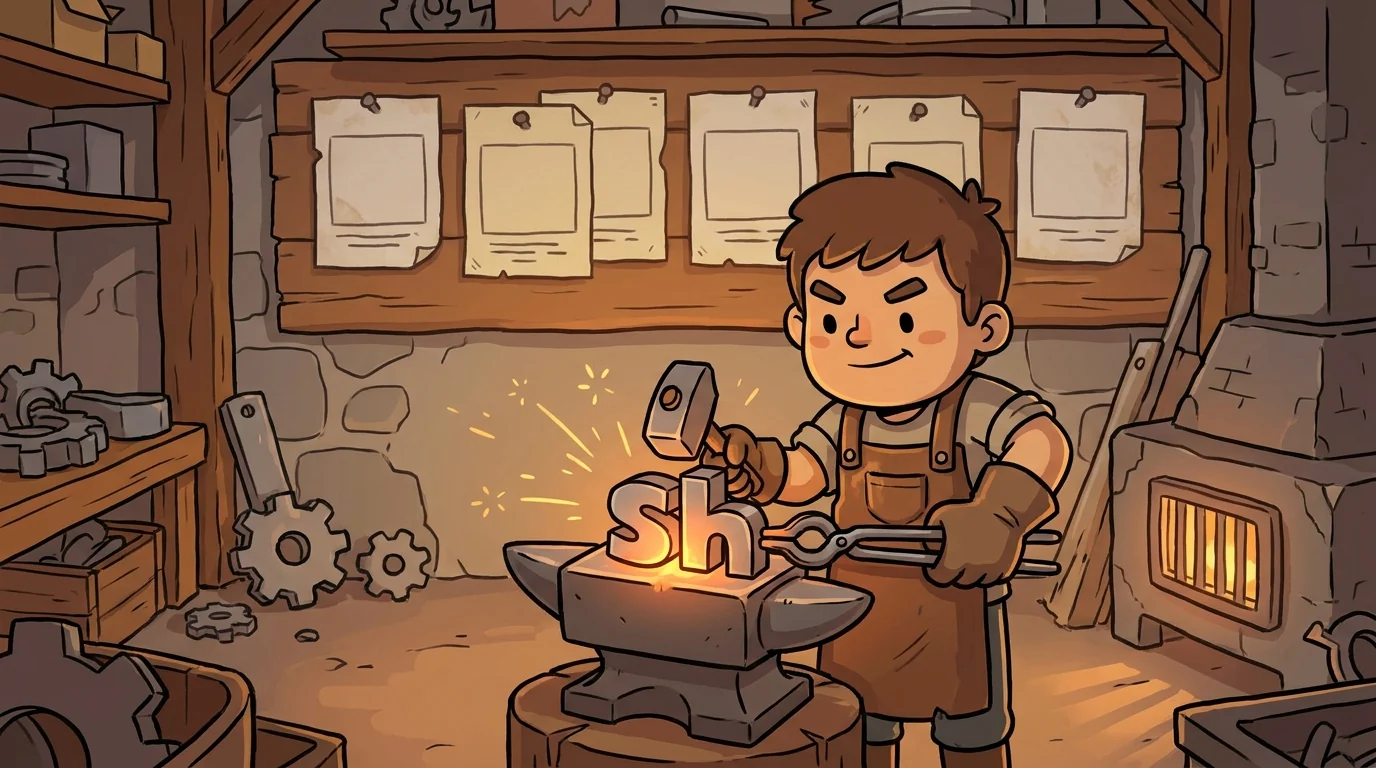
Digby works at the smallest anvil in the Forge, and he does one thing that looks like magic: he takes two letters and welds them into one single sound.
Somebody brings him the word ship. If you read it letter by letter you get /s/ /h/ /i/ /p/, and that gives you something like sss-huh-ip, which is not a word, which is nonsense. That's where Digby comes in. He grabs the s and the h, sets them on his anvil, and — tink — hammers them together into one clean sound. /sh/. Now the word says ship, easy.
"Some letters aren't a team of two," Digby says. "They're one thing wearing two letters. Once you know which ones, they stop tripping you."
He keeps a list of them on the wall like wanted posters: sh ch th wh ck ph. Two letters. One sound. Every time.
Digby knows exactly why those letters trip people, because they nearly broke him as a kid.
Here was his problem: he'd finally learned that every letter makes a sound. He'd worked hard for that. /b/ says buh, /m/ says mmm, he had it. He felt like he'd cracked the code. And then he hit the word this and did what he'd been told — sounded out every letter — and got /t/ /h/ /i/ /s/, tuh-huh-iss, and it wasn't a word.
So he tried harder. Sounded it out slower. Same nonsense. And he thought: the rule they taught me is broken, or I'm too dumb to use it. Since he couldn't fix the rule, he figured it was him.
What nobody had told him — the thing that would've saved him weeks of feeling stupid — was that there was a second rule. Sometimes two letters quit their own jobs and take a new one together. t and h next to each other don't say /t/ /h/. They say one brand-new sound, /th/, the one you make with your tongue behind your teeth. It wasn't that Digby was too dumb to use the rule. It was that he only had half the rules, and half a rulebook makes everything look impossible.
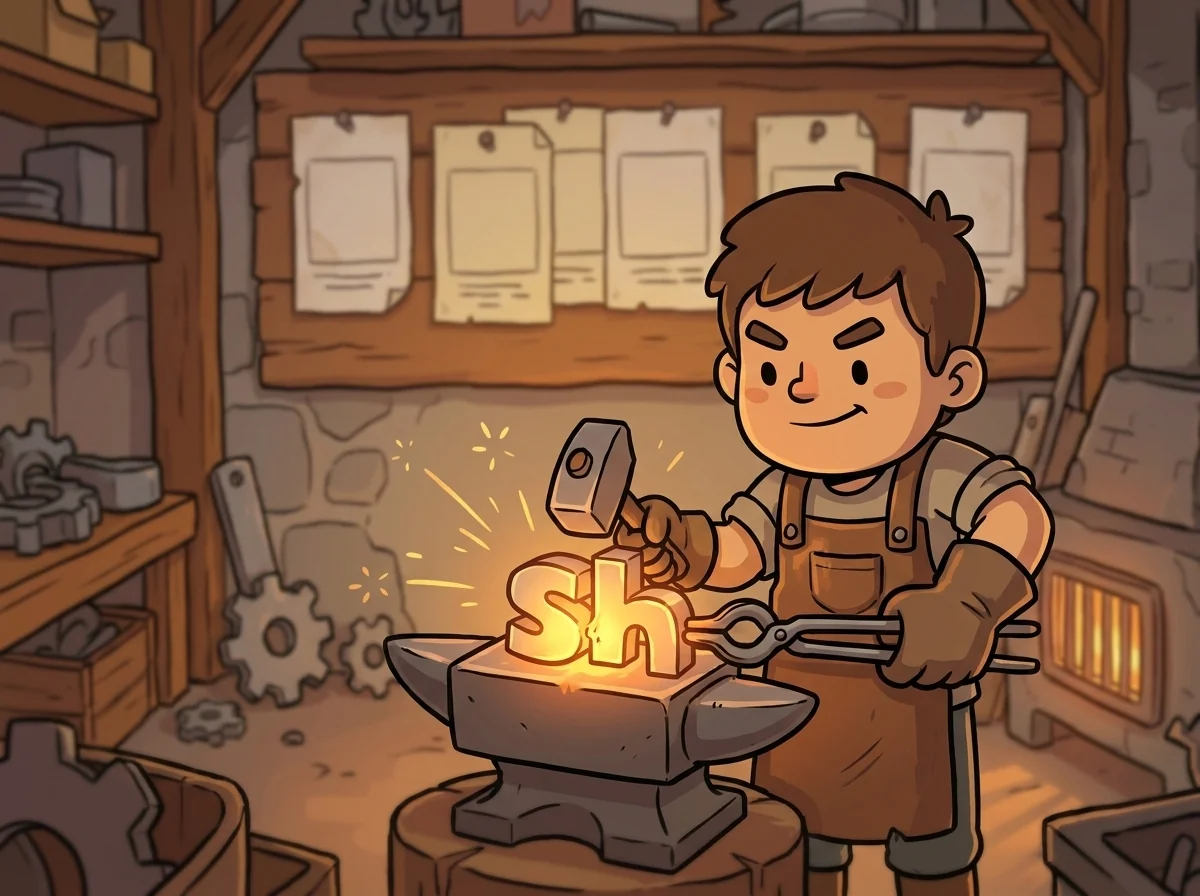
The day he learned the second rule, he felt the floor tilt — in a good way. Suddenly a hundred words that had been nonsense (when, chin, bath, duck, graph) all snapped into place at once. He wasn't behind. He'd just been missing a page.
So he made it his job to hand that page to other people before it cost them weeks.
The kid who needed it most was a serious, careful boy named Marcus who read very, very slowly and hated himself for it. Marcus sounded out every single letter, every time, no shortcuts — he was proud of being careful. But that's exactly what wrecked him on these words. He read chop as /k/... /h/... and stopped, stuck, jaw tight.
"I did it right," Marcus said, and there was real anger in it. "I sounded out every letter. That's the rule. Why doesn't it work?"
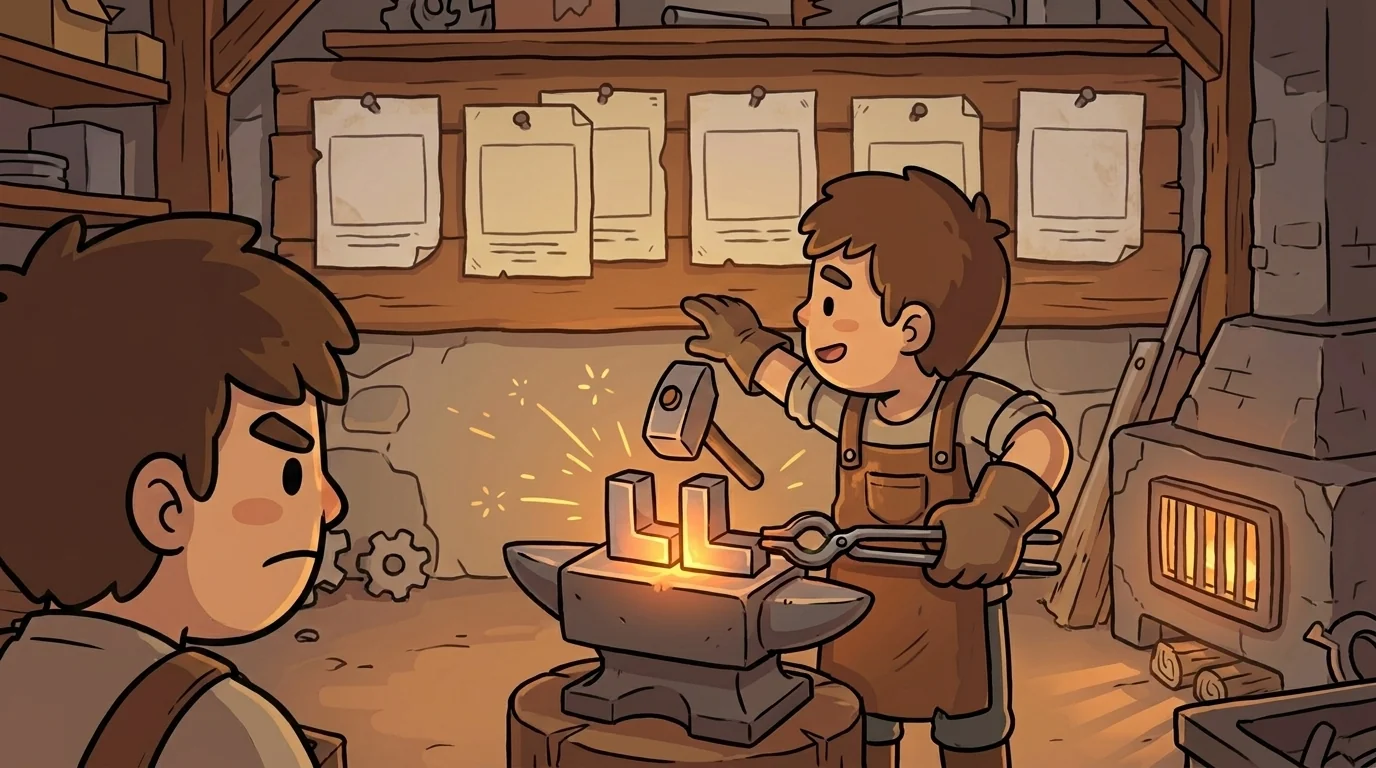
"Because you're using a good rule on the wrong word," Digby said, gentle. "You did nothing wrong. You just haven't met these two yet." He tapped the c and the h. "These two? When they stand together, they quit their own sounds and make one new one. Not /k/, not /h/. /ch/. Say it — like a little sneeze."
"/ch/," said Marcus, suspicious.
"Now the word. But treat ch like it's a single letter. One sound, not two."
"/ch/... /o/... /p/... chop." Marcus blinked. "That's cheating."
"That's the rule," said Digby. "It was never cheating. Nobody handed you this page, that's all." He pointed at the posters on the wall. "sh says /sh/. th says /th/. wh says /wh/. ph says /f/, believe it or not — that's how you read graph and phone. Six little teams. Learn these six and a whole pile of words that felt broken will just... work."
Marcus read chop, then ship, then bath, then when. One after another, words he'd been failing for years, and every one of them behaved.
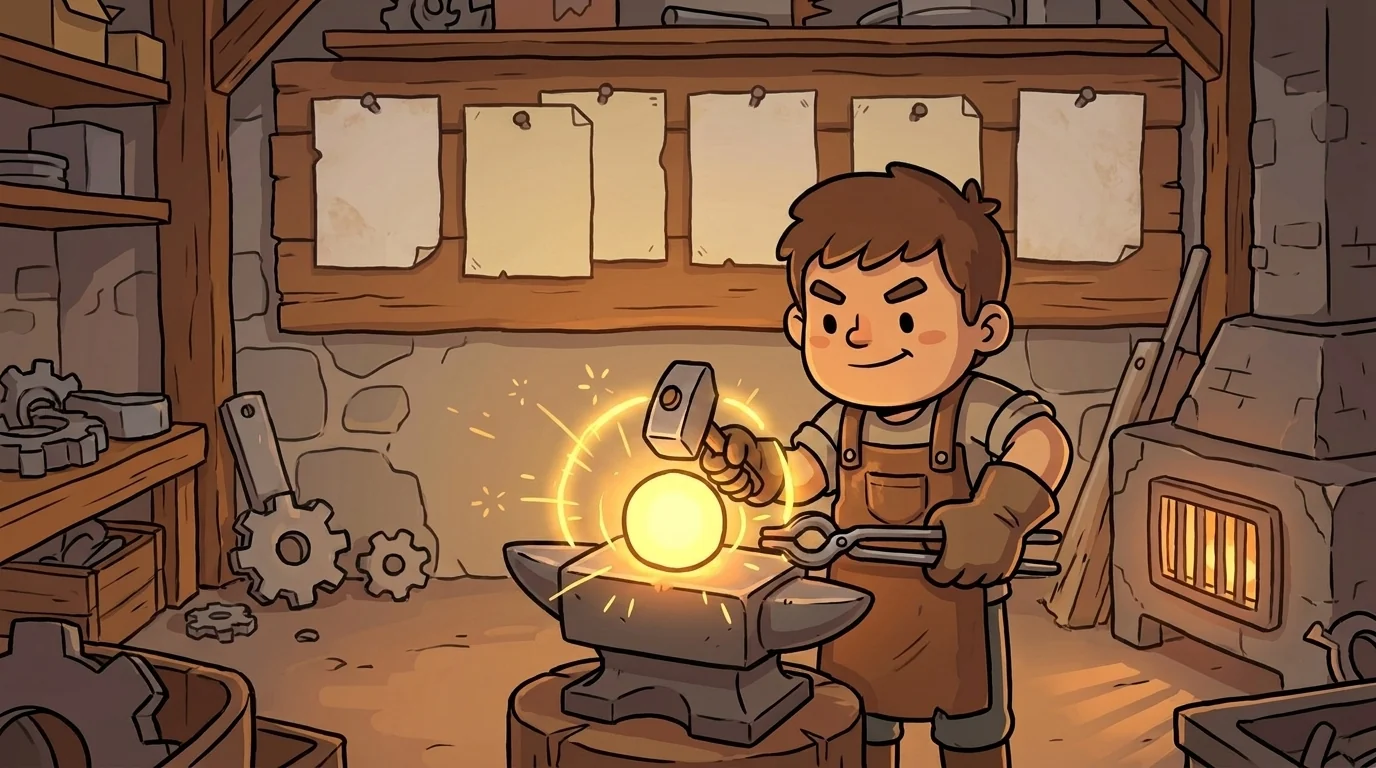
Marcus didn't smile right away. He just stared at the posters, and Digby watched something shift behind his eyes — not pride exactly, more like relief with an edge of mad.
"So I wasn't reading them wrong," Marcus said slowly. "I just never knew this was a thing."
"You were reading them exactly right, for the rules you had," said Digby. "That's the part I need you to hear. All those times a word like this beat you — that wasn't you being slow or dumb. That was a missing page. And a missing page isn't a thing that's wrong with you. It's just a page. Now you've got it."
And that's the feeling Digby chases, the one that made him set up his little anvil in the first place: the moment a careful kid who's been quietly deciding they're stupid finds out they were never wrong — they were just working from half a rulebook. The bad feeling they'd been carrying, the one that whispered why can't you do the easy thing — it wasn't the truth. It was a gap. And gaps close.
Marcus started keeping his own list of the six teams, drawn small on the inside cover of his notebook, where he could tap them whenever a word tried to make him feel stupid again — a small, steady comfort that the problem was never him, just a missing page. Two letters. One sound. Every time.
The DecodeForge ensemble
Digby is part of DecodeForge's distributed-narrative cast. Each character embodies a different curricular primitive; together they teach the full subject.
-
Segwyn
Segment & blend (mentor) — the master decoder who slides a word apart into its sounds and back together, and coaches the rest
-
Chip
Syllable division — chips a big word into syllable chunks you can actually say
-
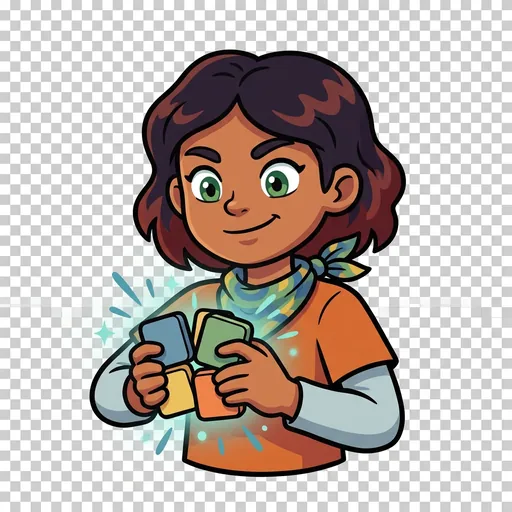
Blenda
Consonant blends — smashes a cluster together so each sound still shows
-
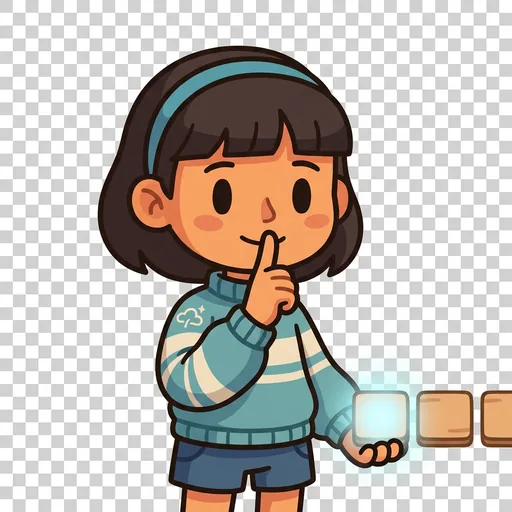
Silent Ellie
Silent / magic-e — stands silent at a word's end and makes the vowel say its name
-
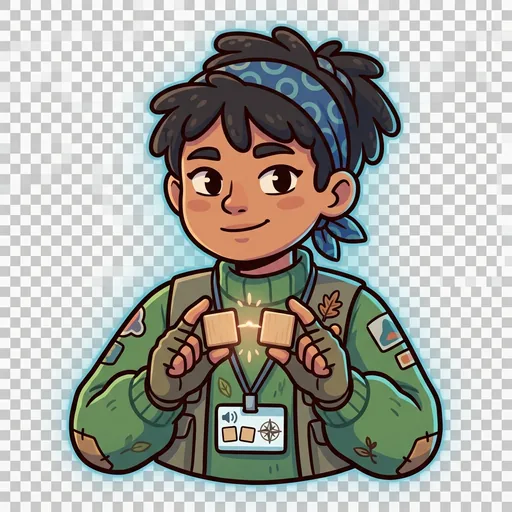
Sylva
Vowel teams — pairs two vowels so the first does the talking
-
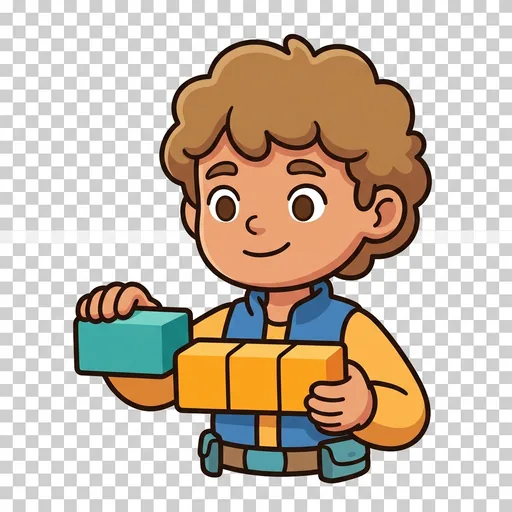
Prefa
Prefixes — clips a meaning-unit onto the FRONT of a word
-
Rootley
Roots / bases — holds the meaning core everything attaches to
-
Fixby
Suffixes — tacks a meaning-unit onto the END and guards the spelling-change rule
-
Fluenna
Fluency — reads the same passage until it flows, keeping the beat (repeated reading)
-
Mapper
Phoneme-grapheme mapping — maps each sound to its spelling tile on the board